Master thesis opportunity – Regenerative food systems and the changing interfaces of food production and consumption in Taranaki, New Zealand

An exciting, funded thesis opportunity for students interested in regenerative food systems in New Zealand

Introduction

Regenerative agriculture has gained momentum as increasing groups of farmers become preoccupied by ‘soil health’ and attentive to the practices required to augment and sustain soil biodiversity. Regenerative agriculture builds on the principles of circular farming, enhances biodiversity as ‘nature-inclusive’ farming, mitigates climate change, adopts ‘a true costs’ approach towards the impact of (diverse modes) of food provisioning, and includes more sustainable, inclusive business models. It has been identified as a major solution for carbon sequestration and a response to destructive environmental consequences of conventional or industrial agriculture on the planet and climate.

Farm Next Door, is an entrepreneurial initiative from the Taranaki region that applies precision tools to small-scale ‘hyper-localised, backyard’ urban, community supported farming/horticulture. Farm Next Door intend to nurture and facilitate the support structure for a new urban farming community. This network of local producers will farm regeneratively, earn income from their own land, and supply local, values-based produce for local consumption.

Exploring innovative and sustainable food systems, Like Farm Next Door requires attention to both production (regenerative agriculture) and consumption (the conscious and responsible consumer). What is required is a more holistic approach to how business is conducted – one that is inclusive of social good (Vishwanathan, Seth, Gau and Chaturvedi, 2009). A focus that is inclusive of consumption allows us to understand how more sustainable patterns of consumption might be co-created through an in-depth understanding of what, how and where we choose to onsume. Engaging with the forces required to alter consumption enables a greater transformative societal shift (Fuchs and Boll, 2018).

Research project and thesis opportunity

Within this context, Massey University and Wageningen University have set up a research project that allows for 2-3 Master thesis students to conduct their research on regenerative farming. Four broad research questions provide a framework for the overall project, with smaller subsets of emergent questions guiding the focus of each individual student thesis:

  1. How can regenerative, circular, zero-waste systems be embedded within the Farm Next Door initiative and multiplied across all urban farming practitioners that will be part of this operation? What are the challenges, constraints and opportunities presented by such a holistic approach?
  2. What innovative 21 st century economic and business models provide the basis for sustainable livelihoods and thriving communities? What lessons can be drawn from initiatives across various global contexts?
  3. How are changing food production-consumption interfaces and the increasing demand for traceable, environmentally sustainable, nutritious foods promoting co-creation of common or public goods or positive externalities of innovative food systems? How are these forms of value demonstrated?
  4. How can issues of equity, ethics and responsibility be integrated within agrifood transformations and changing land use practices to secure sustainable livelihoods and promote flourishing communities in Taranaki?

Research will entail immersion in the Taranaki region at different junctures by all the researchers, to enable the development of context-based understanding in addressing the broad research questions outlined above. It will also enable the practical action research derived from the series of targeted inquiries identified by Farm Next Door listed below:

  • To identify the emerging decentralised small scale organic farm movement in Taranaki – what? when? where? how?
  • To explore how precision horticultural practices and the latest AgTech solutions can be adapted and applied to the emerging decentralised small scale organic farm movement in Taranaki
  • Understand producer and consumer dynamics – motivations to engage and co-create a new way of producing and consuming food and how behavioural change in ethical purchasing behaviour is encouraged to a wider demographic than the current “local ethical consumer”

In consultation with their identified thesis supervisor(s), students will select one of the 4 broad questions listed above for their thesis topic and develop subsets of smaller, more focused research questions to guide their field work in Taranaki. Alongside this more academically-oriented focus, they will apply appropriate methodological approaches to integrate key action research components based on the targeted areas of inquiry developed by Farm Next Door. This dual aspect to the research undertaken in this project will provide academic rigour whilst retaining direct and practical relevance to the Farm Next Door initiative and its wider purview in Taranaki.

Planning

Expected start of the thesis: between January/February 2020.

Expected fieldwork period: April – July 2020 (4 months)

Requirements and procedure

Interested students can apply for this possibility by sending and email to Dirk Roep/Jessica de Koning/Mark Vicol to express their interest in this exciting opportunity. In order to be considered, students must meet the following criteria.

  • Students are enrolled at the Wageningen University
  • Students are preferably part of one of the following programmes:
    • MID programme, specialisation Sociology of Development
    • MOA programme, specialisation Sustainable Food Systems
  • Students preferably have completed RSO-31806 Sociology of Food and Place and/or RSO-30806 The Sociology of Farming and Rural Life
  • Students must be willing to work in a team led by Massey University
  • Students must be willing to stay in New Zealand for a period of 4 months
  • Students meet the criteria of entering New Zealand set by New Zealand immigration.

Final selection of candidates will be made by Dirk Roep, Jessica de Koning and/or Mark Vicol.

In return we offer

  • Relevant work experience in a research collaboration between Massey University and Wageningen University
  • Reimbursement of costs of travel, housing and transport (incl. return flight Netherlands-New Zealand).

Contact

Dirk Roep (dirk.roep@wur.nl), Jessica de Koning (jessica.dekoning@wur.nl) Mark Vicol (mark.vicol@wur.nl).

Thesis Opportunities “Circular economy for agri-food systems”

Thesis Opportunities “Circular economy for agri-food systems”

The following thesis opportunities are co-supervised by Dr. Vivian Valencia (Farming Systems Ecology) and Dr. Oona Morrow (Rural Sociology Group)

The circular economy is a hot topic these days, with innovations coming from the grassroots, public, and private sector. But the governance of the circular economy is lagging behind, and we lack a systemic and regional view that bridges the gap between innovation and policy, rural and urban, and the social, economic, and environmental. Taking a systems view can help us to identify where policy interventions would make the most impact, by for example focusing on producers instead of consumer waste streams. We advertise three interlinked projects on the circular economy, that will feed into a multi-stage four year project.

Our approach to the circular economy that takes a food systems perspective to map all of the flows, benefits, and burdens of our current agri-food and waste system in the Amsterdam city-region, as well as the governance structures and policy levers that keep this system in place, and have the potential to change it. Importantly, our approach proposes to capture not only environmental and economic impacts, but also social impacts in the AMA city-region, including for example quality of life, social inclusion, food security, and transitions potential.

We take a geographic, sectoral, and sustainability perspective on circularity, to ensure that not only are materials reused – but that they find their highest and best use in the local food economy. For example, surplus food is redistributed to people rather than bio-digesters, organic waste is composted or converted to animal feed rather being burned for home heating or converted to jet fuel. These re-generative loops are depicted in the diagram below by Feedback Global.  

feedback global

Furthermore, we take seriously the role of urban design in reproducing or disrupting our current agri-food-waste system through the (re)design of green space, logistics, waste, and waste water infrastructure. Approaching urban design and infrastructure as vital components of agri-food systems offers opportunities for crafting shorter and more regenerative loops at every stage in the agri-food system, including the “end of pipe” recovery of nutrients.

If you wish to pursue this as a thesis opportunity you will receive supervision in the development of a research proposal on the governance of the circular economy.  The following topics are possible:

  1. Mapping Circular Economy Innovations in the Amsterdam Metropolitan Area

We seek a motivated student to conduct a scoping study and stakeholder mapping of circular food innovations in the Amsterdam Metropolitan Area. We take a broad view of circularity, to include traditional and emerging innovations, and social, economic, and environmental impacts.

2. Governing the Circular Economy

We week a motivated student to conduct a scoping study, media analysis, and literature review on the governance of circular urban and regional governance for the circular economy practices that are being tested and developed in city-regions across the globe, while focusing in the Amsterdam Metropolitan Area. We seek to learn from inspiring examples, best practices, as well as failures.

3. Methods for Visioning the Circular Economy in Place

You will research visioning and futuring methods that are well suited for stimulating creative out of the box thinking on the governance of the circular economy, develop a workshop design, and test your methods. There are already many existing participatory methodologies for visioning the future and co-creating transformation pathways for the future. Which may work best when it comes to transitioning to a circular economy?

Questions: contact oona.morrow@wur.nl


Internship or Thesis Opportunity: Allotment and Community Gardens in Warsaw and Berlin


person wearing black lace up sneakers standing on green grass with fallen leaves

Photo by Artem Beliaikin on Pexels.com

Are you interested in the politics and governance of community and allotment gardening ? How these gardens can become more inclusive? And what lessons gardeners in Berlin and Warsaw can exchange?

The research project “Integration von Kleingärten und Gemeinschaftsgärten in Warschau und Berlin” seeks a German speaking research assistant.

We are looking for a person with:

– German language (spoken and written).

– Research interest in the topic of urban gardening;

– Training and experience with qualitative research methods

– Knowledge about Berlin allotment and community gardens’ and/or administrative situation and structure;

 
Project duration December 2019 – March 2021
  • November/December 2019 – Kick off. Interviewing gardeners, the city administration, city dwellers and other persons related to the topic – in Berlin (December and January)
  • May 2020 – Focus Groups in Warsaw and Berlin, a visit of Berliners to Warsaw
  • September 2020 – VISIS workshops on challenges and opportunities of this integration.
  • March 2021 – final meeting in Warsaw

The rest of the time is for research, reading, meeting with the project team, writing and meetings in gardens (action research).

The project is a cooperation with Humboldt University and Łódź University in Poland. With funding from the Deutsch Polnische Wissenschaft Stiftung.

Deadline: Please send expressions of interest to oona.morrow@wur.nl  by October 14

RSO supervisor: Oona Morrow oona.morrow@wur.nl

Field Research supervisors: Agnieszka Dragon and Anna Dańkowska

Thesis opportunity: Brewing Social, Economic and Ecological Change in the Global Hops Industry

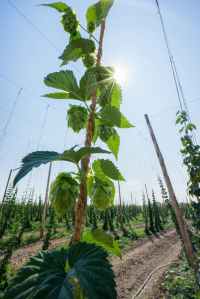
With the rapid expansion of the craft beer sector globally, the organization of hop production is changing in producing countries. We seek one or two MSc students to conduct a primarily qualitative study on how interrelated social, economic and ecological dynamics shape sustainability outcomes (broadly conceived) in a rapidly expanding and changing industry. Potential topics of focus include the role of plant breeding and new varieties, trade-offs between cooperative vs competitive relationships, and how changing beer markets are influencing how people produce, sell and use hops. Potential frameworks include STS, Assemblage Theory, Global Value Chain Analysis and Political Economy. Students may choose to complete fieldwork and data collection in one of the target countries of New Zealand, UK, Belgium, US, and Germany.

low angle photo of green leaves

Photo by ELEVATE on Pexels.com

Pre-requisites:

  • You have some training in qualitative methods and critical social theory
  • You have a keen interest in the sociology of agriculture, food systems, sustainability, food politics and/or foodscapes
  • You are willing to develop fieldwork-based methodologies
  • You have completed at least two social sciences courses, preferably with RSO
  • You are eligible to do your thesis with RSO

Questions? More information? Email mark.vicol@wur.nl

Thesis of stage project: Versterken Vernieuwende Landbouw Beweging

Er is een forse toename in het aantal netwerken en pioniers op gebied van innovatieve agri-food systemen. Ze ontstaan vanuit de agrarische produktiekant en ook vanuit de consumentenkant en willen een alternatief bieden voor de dominante voedsel- en landbouwpraktijk. Ze richten zich vaak op de lokale context, werken integraal met aandacht voor biodiversiteit, koolstof vastlegging, betrekken van burgers en een gezonde leefomgeving.  Voorbeelden zijn Heerenboeren, Community Supported Agriculture, Food Forests, Agro-ecological agriculture,  bodemboeren en toekomstboeren. Bij veel van dit soort innovatieve agri-food systemen wordt uitgegaan van agro-ecologische principes.

De verschillende initiatieven ontwikkelen zich tot grotere netwerken die de ambitie hebben om te komen tot een gezamenlijke beweging. Wellicht met een gezamenlijk loket en/of steunpunt om zo aanspreekpunt te kunnen zijn voor beleid, onderzoek en andere partijen.

Om een goede strategie en aanpak te ontwikkelen voor het creëren van een sterke beweging met impact is het van belang de verschillende initiatieven en hun onderliggende waarden en principes goed in beeld te brengen.

We zoeken studenten die interesse hebben mee te werken aan deze ontwikkeling van de vernieuwende landbouwbeweging.

Onderwerpen van een thesis of stage project kunnen zijn:

  • In beeld brengen van de initiatieven en netwerken
  • In beeld brengen van de onderliggende visie/principes van de verschillende initiatieven en initiatiefnemers
  • In beeld brengen aan welke maatschappelijke uitdagingen initiatiefnemers een bijdrage willen leveren.
  • Strategie en aanpak ontwikkelen om de impact van deze vernieuwende initiatieven meer bekend te maken en breder ingang te laten vinden en bruggen te slaan met meer reguliere vormen van landbouw produktie.


Meer informatie:


Jan Hassink

Wageningen Plant Research

Agrosysteemkunde

Jan.hassink@wur.nl

0317480576