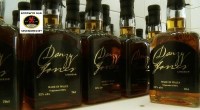
Churrasco

Meat. The most tender meat ever eaten. Here they distinguish between meat and chicken. Meat is red meat. This part of Brasil is known as Gaúcho country. It refers back to the only food that the first settlers were eating, meat for breakfast, lunch and diner. I always thought of the south of Argentina as the pampa land. But this landscape stretches well into Rio Grande do Sul. There is debate whether or not the Rio da Prata north of Buenos Aires is a division line, but those who do not take this consider all of Argentina, Uruguay and 63% of the state Rio Grande do Sul as “paisagem natural dos pampas”, some 700.000 km2. The Brasilian part is 178.243 km2 big and from a country perspective only 2 % of the Brasilian territory. However since it stretches over the most of this south state it is a significant landscape feature and cultural reference point here. In a way the southerners here have more in common with the “hermanos pampeanos do Uruguai e da Argentina” than with the north of Brasil.

So, I had my ‘initiation’ as a gaúcha helping out with the churrasco, the Brasilian bbq. Of course, it is a typical men’s thing the preparation of the churrasco. Who is cutting the meat on sundays? There is not much else to it than meat, some toasted garlic bread and beer. But what a meat! Especially the “picanha” cut of meat, the most tender meat you can imagen. So all you need is wood fire or wood coals, first quality meat, salt and a typical bbq place. These places you can find everywhere, for example on the roof of every tall apartment building. Stick your nose out of the window on a sunday at noon and you can smell the churrasco’s in the whole city. It is typical for sunday family life or ‘occasions’ such as the end of my time here. Thanks all for the wonderful time!


Bruno Benvenuti – in memoriam

Bruno Benvenuti

 On the 15th of September 2011 we received the sad news that Bruno Benvenuti has passed away. For several of us working in the Rural Sociology Group, Bruno Benvenuti has been a professor who left a strong imprint on our academic formation and research work. Benvenuti enriched the body of rural sociological theory with his analysis of the Technological-Administrative Task Environment (TATE) within which farmers have to operate – an analysis that proves to be even more valuable today than at the moment it was formulated for the first time. 

For Benvenuti the interest in TATE relations and the way they ‘discipline’ farmers, whilst simultaneously standardizing farm practices, represented a wider concern, i.e. the general relations between structure and agency. This wider interest resulted in a range of scientific papers, some still very well known. The same interest reflected, on its turn, part of the complex biography of Benvenuti. After the horrors of war and fascism (being an adolescent he lost his father during a bombardment after which he had to take care of the family) he met, as angry young man who was extremely worried about the agricultural situation in Italy, the later EU commissioner for agriculture, Sicco Mansholt. After considerable quarrels about the role of politics, the latter invited Bruno Benvenuti to come over to the Netherlands in order to get acquainted with Dutch agriculture and the Dutch agrarian policy. He came to know Evert Willem Hofstee, the founding father of rural sociology in the Netherlands who invited Benvenuti to study the ‘modernization’ of agriculture and to write a Ph.D. about it. 

The successful defence of his thesis was followed by a career, first in the then emerging European Commission, then in Mogadishu. This was followed by path-breaking research in the North of Italy where Vito Saccomandi, who later became Minister of Agriculture, was one of Bruno’s young research assistants. This was followed by a period of teaching, first in Italy, then again in Wageningen and finally, before his retirement, in Viterbo in Italy. 

Bruno Benvenuti experienced, as it were, in his own life, the overwhelming powers of e.g. fascism, neo-colonialism (in his Mogadishu period) and the supra-national state. At the same time he knew, from his own experiences, that differences could be made: that agency matters. This turned him into a very serious and dedicated man, permanently worried about the big contradictions of our time. Superficiality was a horror to him and as a teacher he made us feel, time and again, our responsibility in this ‘age of extremes’.

Bruno Benvenuti died in the Italian village Pietrasanta, where he spend the last years of his life in joy. We lost an important and thoughtful colleague. Several of us also lost a very good friend and a source of inspiration.

Che la terra che ha amato tanto, gli sia lieve.

On behalf of my colleagues,

Jan Douwe van der Ploeg

Urban Ag and Revolution

They claim to be the only example of rooftop farming in Porto Alegre. Hence, a revolutionary example in many ways. A student of last week’s class kindly offered to showed me around in Porto Alegre including unusual places such as the movement-community-cooperative COOPSUL. Right in the middle of the centre a building was squatted in 2005 related to the World Social Forum marches. The building was long-term abandoned and the movement of (somehow translated) ‘roofless’ people, the urban counterpart of the MST, asked with the squatting for the right to good housing. Their slogan; ‘Utopia e Luta’ which means Utopia and Struggle/Fight.

Against the odds, their fight was productive and they were given the right to stay in the building in 2007 under the condition that it would be a community place, open for the public. The building was turned into 42 individual apartments and community spaces for 5 separate cooperative economic activities; baking, gardening, sewing, laundry services and t-shirt printing. With the years, reality hit utopia from the inside. Tensions around individual needs and collective organisation, around leadership and running the cooperative emerged. It was originally envisaged that the people who were selected for the individual apartments would also work in the cooperative activities. This turned out to be difficult for various reasons. As a result, the 5 activities are not all running in the way it was envisaged and the rooftop farm is still very much in construction and produces for the building only.

Despite internal difficulties, the successful access to living space by squatting is still charged with a lot of symbolic energy. The movement and the building became a symbol for other urban groups and movements and the organisation is asked to assist in demonstrations and other revolutionary activities. For example today, they went out to assist MST land occupation demonstration in the face of evacuation.

Porto Alegre’s 22 year old farmers’ market

On the saturday of my arrival in Porto Alegre, the “Feira dos Agricultores Ecologistas” was celebrating its twenty-second birthday. The market is situated at the border of the big Parque Farroupilha Redenção in the city centre and is at least a kilometer long. Back then, the market started with a group of citizens in Porto Alegre in search for healthier food both for the environment and for human health. The environment was not something which was considered a ‘political’ issue at the time of the ‘dictatura’. The environment therefore, was a topic for groups to come together and of course, discuss politics more broadly. More than twenty years ago, an environmentalist consumer cooperative  was established which organised a wide network of farmers willing to produce differently which was back then, more of an activist- against mainstream – thing to do than today. The farmers called themselves ‘agricultores ecologistas’, which refers to this activism. They consider themselves different from the broader movement towards organic production which evolved later. The subtle difference between their name and terms like ‘organico’ or other terms such as ‘agro-ecologia’ can easily be missed by a visitor.

However, these things were explained to me by Flávia Marques with whom I went there and who is one of the professors at the Post graduate program for rural development (PGDR) and who has worked with various of the farmers for years. One of the farmers on the market is specialised in plants for medicinal uses, the topic of her doctorate thesis. Further down the market there was also an empty stand with an elderly woman sitting behind it. Here people can get free advice on ailments also from a natural medicinal or holistic point of view. This week, at the two farm visits near Pelotas, both farmers had an extensive garden with herbs for medicinal use near the house. Also the municipal garden in Dois Irmãos had an herbal garden organised around the various human organs. It is one of the many striking differences compared to home for me. I learned that knowledge of the beneficial use of herbs is widespread and is not limited to organic farmers or ecologically oriented consumers.

AFNs in Pelotas, Brasil

This week I am visiting the city of Pelotas, some 250 kilometers from Porto Alegre. As one of the three in the whole of Brasil, the Universidade Federal de Pelotas has a specialised Bachelor degree in anthropology. Today I will give a guest lecture within the course on food culture of Professor Renate Menasche on the link between Alternative Food Networks and food culture. Last week in the course for the PGDR in Porto Alegre, many students believed there are no AFNs in Brasil and that consumers are not willing to make an effort to engage with farmers. However, on our fieldtrip of yesterday we saw two very interesting examples of innovative farmers around Pelotas who produce differently ánd who market their produce differently.

Enio Nilo Schiavon took the time to lead us around his farm where he combines agro-forestry and agro-ecology practices in producing organic peaches, grapes, clementines, banana, sweet corn, broccoli, carrots, beets, fish and flowers and home-made juices. His production is organic but not organically certified, something which for smaller farmers is very normal; organic certification is too expensive. However, there are various ways to market organic produce without the official farm certification. For example by being part of a cooperative which has the certification and through this, the farm is also recognised as such. Or by building a trust relationship directly with consumers by way of selling on a farmers’ market. The latter is what Enio Nilo does, two times a week in two cities in this region. The farmers’ market are an initiative of the farmers themselves and are organised through their association ARPA-SUL. They are with 27  farmers, each offering other complementary products. Interestingly, they not only sell to the middle-class urban consumer, but also to many other small farmers in the region who are themselves tobacco growers.