DERREG – Final conference and proceedings

Two weeks ago, from October 12-13, we had our final conference of the EU-funded research project DERREG (www.derreg.eu)  in Murska Sobota, Slovenia. Here the major findings of the project were presented.

DERREG coordinator prof. Michael Woods first presented (see presentation) an overwiew of the project and an interpretative model (see below) on how regions are affected by and respond to forces of globalisation mediated by various catalyst and he ended with a typology of regional responses based on the research done in the 10 case study regions. See also the DERREG Summary Report by Michael Woods.


Successively the coordinators of the four Work Packages presented the main findings along four themes:

  1. Rural Businesses, Global Engagement and Local Embeddedness (presented by Andrew Copus)
  2. International Migration and Rural Europe (presented by Birte Nienaber)
  3. The Global Environment and Rural Sustainable Development (presented by Joachim Burdack & Michael Kriszan)
  4. Rural regional learning (presented by Dirk Roep and Wiebke Wellbrock)

Each overview was illustrated with findings for two case study areas presented by the respective partners.

A separate session was dedicated to policy perspective on globalisation and rural development in Slovenia and in particular the Pomurje region in the north of Slovenia were Murska Sobota is located and the Final conference took place.

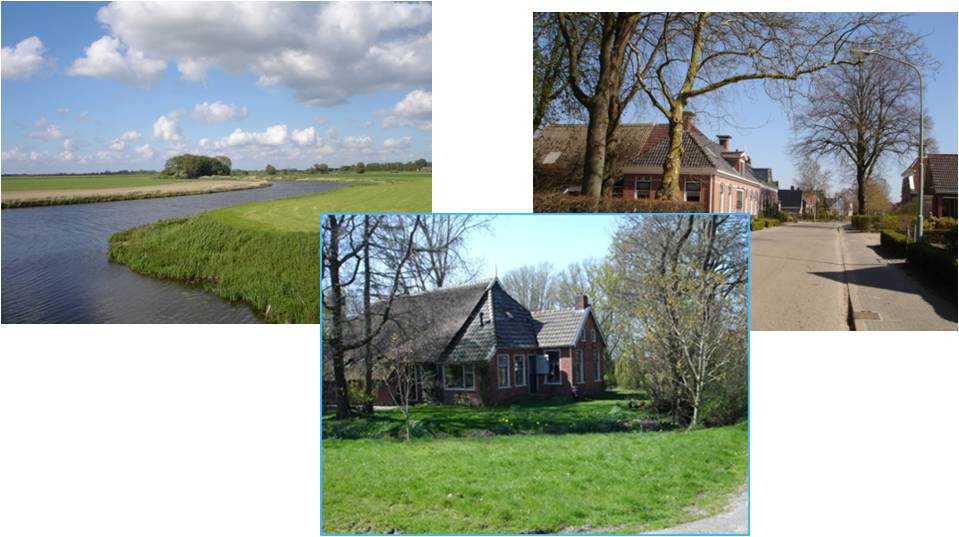
At the end, guest speakers from the Goriška region in Slovenia, the Övre Norrland in Sweden, the Westerkwartier region in the Netherlands and the Steirische Mur-Drau-Bioenergie-Region in Austria highlighted four good practices of how regions can respond to global processes and benefit from it.

All presentations can be downloaded from the DEREG website: http://www.derreg.eu/content/events/final-conference-derreg-project (at the bottom of the webpage).

At the DERREG resource-centre other proceedings are made accessible too, such as the WP reports, the case study context reports and case study summary reports. Look at http://www.derreg.eu/content/resource-centre.  Finally, a database of good practice across the WP theme’s and case study areas has been built and made accessible: look  at http://www.derreg.eu/content/good-practice-database.

Last but not least: video clips are made for each of the ten case study regions and when ready these will be published on You tube and announced at the website.

The project will finish by the end of this year. The partners are now working on several scientific publications in journals and books. By the end of this year and beginning of 2012 DERREG related articles will be published in two special issue of the European Countryside, an online journal (see the content of latest issue). Next will be an edited book published by Ashgate titled ‘Globalization and Europe’s Rural Regions‘  which will capitalise the findings for the 10 case study areas.

Publications will be announced at the resource-centre of the DERREG website, as for the video clips, and information will be posted on this blog.

A school meal in Dois Irmáos (3)

The school meal program in Dois Irmáos is an exceptionally good example for multiple reasons. First, there is a dialogue between rural extension, family farmers, the nutritionists and the municipality. This cannot be taken for granted and the absence of mutual understanding and trust is often a barrier in other places. The state is often not trusted by farmers, governments can change. Nutritionists may think too much in terms of nutrients and hygiene whereas family farmers are often not organised enough to meet the supply requirements.  Or the cooking staff might object. In class, the example was given of a land settlement women’s cooperative baking bread which was refused by a school because the breads were too big and the cooking staff objected against having to cut the bread (instead of individual bread rolls).

Secondly, the facilities were modern, clean and spacious with lots of different activities for children. The school meal is strictly speaking not served at school but at the after-school day care center. It is normal in Brasil that children only go to school half a day. Most children go home afterwards and eat at home. A school meal is for those who need it, this can be because there is food insecurity at home, or quite the opposite, because both parents are working. In the case of the center we visited, it was aimed at children from the latter category. One of the activities is cooking lessons.

Thirdly, the scale of Dois Irmáos is that of a small town which makes it easier to localise the school meal. Not only because there are not too many mouths to be fed but also because of the logistics and coordination of getting the supply at times and intervals needed. The city of Porto Alegre is only now starting to look at possibilities to localise the school food from surrounding family farmers. Quite a challenge with the amount of children in schools and the metropolitan landscape.

Vacture PhD Sociologie bij ILVO (Vlaanderen)

Het Instituut voor Landbouw- en Visserijonderzoek (ILVO) in Vlaanderen heeft een vacature voor een PhD (Rurale) Sociologie. Zie de website van ILVO voor nadere toelichting van de vacature. Contact persoon bij ILVO is Joost Dessein (joost.dessein@ilvo.vlaanderen.be).

Capita Selecta ‘Global sense of place’ – a tutorial reading group

Earlier the Capita Selecta course ‘A global sense of place’ was announced here as optional course for master students in the 2nd period, starting Monday October 31, 2011.  Seen the number of students attending the course, the earlier outlined weekly lectures and workshops are now replaced by a tutorial reading group that will meet once a week with the lecturers to discuss the literature of the week (as was listed in the earlier course outline). Those interested in joining the reading group can contact Joost Jongerden (joost.jongerden@wur.nl).

A school meal in Dois Irmáos (2)

Municipal garden farmer explains

The Brazilian School Food Program underwent a lot of changes and, as posted earlier, the biggest change is related to localisation of the school meals. Previously, national menu’s with national tendering contract for enormous quantities to which only big companies were able to bid competitively were what the program was about. To give an idea, for 2010 the estimation was a total school food procurement market of 3 billion dollar providing food for 47 million students. Now cities and municipalities are responsible for contract tendering and supply selection. This has created opportunities to shorten the food chain although many municipalities still follow the logic of mass production and long supply chains (Triches and Schneider 2010). Therefore, additional Law 11947 created the rule that 30% of fresh produce has to come from the ‘family farm’.

Opportunities, but it has also created challenges. At municipal level, capacity is now assumed for things like the nutritional balance of menu’s based on local products, the legal process of tendering and supplier selection with many more suppliers and overseeing the many other issues such as logistics. Not all municipalities do have this capacity yet. Equally, not all ‘family farmers’ are equipped to supply particular quantities and collaborate with colleague farmers to meet demand.

However, in the State of Rio Grande do Sul many good examples can be found too. One of these is the school food program in the city of Dois Irmáos (see also Triches and Schneider 2010 in Portuguese). The municipality created a municipal ‘huerta’, a vegetable production garden which produces almost all greens for the school meals. Furthermore in collaboration with Rural Extension a pool of 160 family farmers is working with the program. Every 6 months, the municipality calls a tender to buy its supply for the coming half a year. Each time, 10 to 15 farmers of this pool are selected to supply foods like potatoes, onions, milk and meat. Although the bureaucracy involved in this tendering process is one of the biggest problems, the family farmers are not subject to the same legal scrutiny as is normal for other products. Buying from family farmers is done through a separate program PAA (Food acquisition program) where a certificate is needed which proves that the farmer can be classified as a ‘family farmer’ but where the language is different and the product descriptions simpler such as ‘salad’ or ‘potato’ rather than a legal description. The after-school which we visited invested in its own meat-cutting room in response to buying fresh meat from local farmers. Local nutritional studies show that the children like the meat and other food better.