Field Notes: On the way

Today, I’m on my way with a friend to visit an agroecological farm started a few years ago by a group of purged academics—scholars dismissed from their university positions during Turkey’s 2016 political crackdown. Once part of the local university, they turned to cultivating a few acres of land just outside the city. The farm still survives, though not without struggle.

As we bumped along the road toward the fields, our conversation drifted across dozens of topics—including the use of pesticides. Then suddenly, my friend turned to me and asked, “Have you heard of the ‘Black Wounds’—Birîna Reş?”

I hadn’t.

It was the early years of the Cold War. Turkey had been included in the U.S. Marshall Aid plan—not for post-war reconstruction, but for building a strategic alignment near the border with the Soviet Union. Alongside shipments of powdered milk and food came military bases. And toward the end of the 1950s, a shipment of wheat seeds treated with pesticide arrived in Turkey. The government distributed these seeds for free to landowners affiliated with the ruling party. But instead of planting them, many landowners sold the wheat cheaply on the open market. Easy money.

Continue reading

New publication: Contesting an exclusive citizenship regime: the Kurdistan Workers Party (PKK) and its electoral mobilisation in Batman in the late 1970’s

Joost Jongerden and Francis O’Connor have been working on spatial (rural) dimensions of political mobilisation and violence. In this article, they look into the politics of the Kurdistan Workers Party (Partiya Karkerên Kurdistan, PKK) through its engagement in municipal politics in the late 1970s in Batman, then a rural town in the Kurdistan region in Turkey, which rapidly industrialised after the local discovery of oil. Using a citizenship analytical lens, this article makes two substantial contributions. The article challenges overly simplistic, linear narratives regarding the PKK’s origins and its eventual embrace of violence. By analysing the PKK’s electoral and representational politics in the late 1970s, it emphasises the political dynamics of that period rather than reinterpreting its emergence solely through the later insurgency. Empirically, the article illustrates how the Kurdish political movement’s pursuit of representation directly challenged the ethnically exclusionary citizenship regime of the Turkish state.

The article is published open access in Third World Quarterly.

https://www.tandfonline.com/doi/full/10.1080/01436597.2025.2518501?src=exp-la#abstract

Opinie: Universiteiten, jullie beperken ook zelf de academische vrijheid

De academische vrijheid staat onder grote druk in Nederland. Een recent KNAW-rapport is niet mild: Nederland zit op een glijdende schaal en doet het steeds slechter in Europa. Omdat academische vrijheid het fundament is van een goed functionerende academische sector, is het belangrijk dat universiteitsrectoren aangeven zich zorgen te maken over de bedreiging van de academische vrijheid in Nederland en een dialoog willen starten.

Als onderdeel van deze dialoog is het echter cruciaal dat rectoren en universiteiten ook naar hun eigen praktijken kijken die academische vrijheid steeds meer beperken. Dat dit niet naar voren komt in de verklaring is meer dan een gemiste kans.

Lees het volledige artikel hier: https://www.trouw.nl/opinie/opinie-universiteiten-jullie-beperken-ook-zelf-de-academische-vrijheid~b5cbf3d5/

Publication | Garden time and market time: Finding seasonality in diverse food economies

by Lucie Sovová and Petr Jehlička, available open access at https://doi.org/10.1016/j.geoforum.2025.104322

This paper combines two fast-developing perspectives on food provision: diverse economies and temporality. Building on an in-depth study of urban gardening in Czechia, we show that non-market economies play a central role in household food practices and that their specific temporality shapes how other parts of a household’s diverse food economy are mobilised at certain times and for certain purposes. Following the diverse economies approach of reading for difference and not dominance, this paper investigates the interrelations and hierarchies among market, alternative market, and non-market food economies on the household level. We decentre the presumed dominance of market-based provisioning by showing that gardeners’ food behaviours are crucially shaped by their engagement with food self-provisioning (FSP), which creates particular understandings of food quality. What is more, the cyclical, natural time of gardening seasons determines the social rhythm of food provisioning in a contemporary urban context. This provides a counter-narrative to the dominant account about the dislodging of cyclical time embedded in natural processes by modern, accelerated time, with the former carrying a lower value than the latter. Finally, we engage with temporality on a discursive level as we counterpose our case of traditional FSP against the fascination with novelty permeating much of the search for alternative foodways. With this, we contribute to the debate on the temporality underpinning the ideas of capitalist modernity as well as post-capitalist prefiguration.

Reflection | Workshop Sharing Field Notes

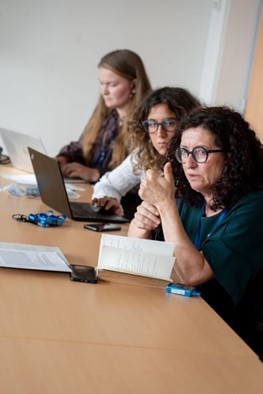
A reflection on the workshop Sharing Field Notes

On Monday May 26th, our colleague Anna Roodhof (PhD Candidate at Rural Sociology) attended a workshop on sharing field notes, which was organized by Leiden University, DANS-KNAW (Data Archiving and Networked Services), ISS (the Institute of Social Studies at Erasmus University), and PNN (the Netherlands’ PhD Candidates Network). This workshop was organized to discuss qualitative data – field notes in particular – in the context of open science, specifically the FAIR and CARE principles.

Field notes are a type of data collection that is very common at the Rural Sociology Group and elsewhere: they are prevalent in many disciplines, including anthropology, linguistics, sociology, archeology, ethnobotany, and ecology. These notes are often textual, but can include visual components such as sketches or photos. They can be written for a variety of reasons: to provide context, to serve as primary data, or to explicate the researcher’s positionality in the field. While it is uncommon for this type of data to be published in full, it can be done.

Continue reading