
Author Archives: Dirk Roep

First generation Farmers: values, practices and relations – MSc-thesis by Laura Genello
 Laura Genello, MSc-student Organic Agriculture, Wageningen University.
The average age of farmers is steadily rising across the United States and Europe, while the proportion of young and beginning farmers declines. Challenging economic conditions, coupled with agricultural consolidation and rising costs, have led to a decrease in farm successions. Simultaneously, the popular media has reported on increasing interest in agricultural careers among those from non-farming backgrounds.
This emerging population of first generation farmers has largely been ignored by the academic literature, with only a handful of studies that suggest the ways in which these farmers differ from others. This study aims to characterize the values, practices and supply chain relations of first generation, beginning farmers (FBFs). By incorporating concepts from research on farming styles, agricultural paradigm shifts and identity, I investigate to what extent FBFs represent change in agricultural attitudes and practice. To do so, I position their farming styles between the archetypes of the productionist and agroecological paradigms. These paradigms hold specialized, commoditized and production-centric traditions in agriculture on one side of a spectrum, and ecologically oriented, community embedded alternatives on the other. I took a comparative, exploratory approach, recruiting farmers who were both first generation (did not take over a family farm), and beginning (approximately less than 10 years experience) from two countries, the Netherlands and the U.S. state of Maryland. Data collection occurred in two phases: an online survey distributed using snowball sampling, followed by semi-structured interviews with 33 participants (15 in the Netherlands; 18 in the U.S.), selected strategically to represent a diversity of survey respondents. The survey yielded 95 responses that met the inclusion criteria: 38 from the Netherlands and 57 from the United States. Most FBFs were practicing small-scale, diversified agriculture, marketing direct to consumer, and using some level of unmapped organic methods. Interviews revealed FBFs to be motivated by a search for meaningful work, and generally have a strong environmental and community ethic. These principles were balanced with a high valuation of the business of farming. FBFs faced a variety of challenges, predominantly financial constraints, access to land and labor, lack of knowledge and regulatory barriers. Their farm practices and structure were the result of a negotiation between their values and business ethic as filtered through practical constraints. The solutions they employed included small scale, low-investment configurations, direct marketing, judicious application of web-based and small farm technology, strong online and in-person networks, and collaborations to access land, share knowledge and market products. While their practices, relations and values are heterogeneous, overall FBFs represent a shift towards the agroecological paradigm.
Key Words: beginning farmers, first generation farmers, new entrants, agroecology,
farming styles, farmer identity, alternative food networks.
The full thesis From Food Forest to Microfarm can be downloaded from the WUR-Library
From hunger to obesity – MSc-thesis by Sonia Zaharia
By Sonia Zaharia, MSc-student Organic Agriculture.
Many low-income countries deliberately pursue agricultural specialization to increase yields and thereby lift their population out of hunger and poverty. Trade is supposed to offset the implied lower diversity of food production and deliver a food supply that supports the health of their population. This study challenges this assumption. I investigate the link between the prevalence of overweight and agricultural specialization. Using a fixed-effects panel regression on data from 65 low- and middle-income countries over the period 1975-2013, I find that countries in which agricultural production is more specialized have a larger share of overweight women. The positive relationship is higher in countries with lower per capita income. The correlation is not statistically different from zero for the male population, which confirms existing empirical evidence that malnourishment tends to be more frequent for women than for men. My results suggest that there are negative health implications of agricultural specialization in poor countries.
My full thesis From hunger to Obesity: agricultural specialization and obesity in low- and middle income countries can be downloaded from the WUR-Library.
The @MSCActions project @SUSPLACE_ITN published two video’s
The @MSCActions project on sustainable place-shaping (@SUSPLACE_ITN), funded by the EU-commission and coordinated by the Rural Sociology Group (@RuralSociologyW), has published two video’s.
The first video explains sustainable place-shaping in theory and practice, the second introduces the training and networking. The video’s are produced by the Early Stage Researchers themselves as part of their training. Watch below or go to the You tube SUSPLACE playlist of the Rural Sociology Group.
Welcome Kees Jansen – Scholar in Critical Agrarian Studies
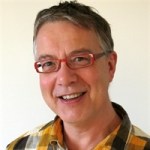 My name is Kees Jansen. A few weeks ago, I have started in my new job at the Rural Sociology Group. I am very honoured that I can contribute to the international development profile of the group and teach in the domain of critical agrarian studies. Rural Sociology is an exciting group with a long history of remarkable work on redesigning the agro-food system and developing a social justice perspective in agrarian and food policies.
My teaching activities will mainly focus on the courses Sociology of Farming and Rural Life, Globalization and Sustainability of Food Production and Consumption, and Advanced Social Theory.
Latin America is the region where I have done most of my own field work, but shorter stays in a number of Asian and African countries have been important for grasping the significance of comparative research. By working on an organic farm in France, by living with small potato producers high in Andes and with maize-bean producers in Honduras, through interviewing export crop producers in Costa Rica and Mexico, and by visiting farmer co-operatives in the Philippines, I have experienced the multiple pressures on different types of farmers in this globalizing world. In the Rural Sociology Group I will continue my research activities on agrarian political ecology (the greening of the agrarian question; nature-society issues), pesticide risk governance, and theoretical issues in agrarian studies.
The latest examples of my work have just been published in Global Environmental Politics: Business Conflict and Risk Regulations: Understanding the Influence of the Pesticide Industry (sorry, not yet open access) and in the Journal of Agrarian Change with Jaye de la Cruz: Panama disease and contract farming in the Philippines: Towards a political ecology of risk – open access).
The interesting aspect of doing sociology in Wageningen is the unique opportunity to collaborate with natural scientists on analysing social-technical configurations. Besides my own more specific research topics, I am always interested in exploring new, creative and challenging ideas of prospective thesis students and PhD candidates within the broader domain where international development studies and agrarian studies intersect. Examples are labour conditions of a flexible (often migrant) labour force, the social conditions for agroecology, social responses to risks of agricultural technologies, counter-expertise and social movements, people’s adaptation to climate change, agribusiness strategies, the future of corporate social responsibility, hunger and food security, sociology and politics of knowledge (including interdisciplinarity), autonomy/dependence in agrarian change, and comparative analysis of food sovereignty actions in the Global South. You can read more about me and my work on my website: www.keesjansen.eu.
Do not hesitate to contact me at kees.jansen@wur.nl to talk about your ideas.
 Rural Sociology Wageningen University