Unknown's avatar

About FoodGovernance

Jessica Duncan is Associate Professor in Rural Sociology at Wageningen University (the Netherlands). She holds a PhD in Food Policy from City University London (2014). Jessica’s main research focus concerns the practices and politics of participation in food policy processes, particularly the relationships (formal and non-formal) between governance organizations, systems of food provisioning, the environment, and the actors engaged in and across these spaces. More specifically, she maps the diverse ways that actors participate in policy-making processes, analysing how the resulting policies are shaped, implemented, challenged, and resisted, and she theorizes about what this means for socio-ecological transformation. Participation and engagement is at the core of her approach. In turn, she is active in a broad range of local, national and international initiatives with the aim of better understanding participation processes with a view towards transitioning to just and sustainable food systems. She is involved in several research projects including ROBUST, HortEco & SHEALTHY. Jessica is published regularly in academic journals. She recently co-edited the Handbook on Sustainable and Regenerative Food Systems (2020). Her other books include Food Security Governance: Civil society participation in the Committee on World Food Security (2015) and an edited volume called Sustainable food futures: Multidisciplinary solutions (2017). Jessica has received several awards for her teaching and in 2017 she was awarded Teacher of the Year for Wageningen University (shortlisted again in 2018 and 2019, longlisted in 2020). With the funds she has received for these awards she launched a story-telling workshop for students and faculty, with storytelling trainer, Emma Holmes. Jessica is on the Editorial Board of the journal Sociologia Ruralis and is an advisor to the Traditional Cultures Project (USA). She is a member of the Wageningen Young Academy and sits on the Sustainability Board of Experts at Wageningen University.

Call for Papers: Gendered food practices from seed to waste

Call for papers for the Yearbook of Women’s History (2016)
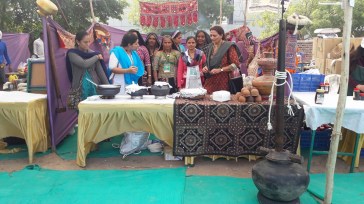
Traditional food festival

Pastoralist women at traditional food fair in Gujarat, India  (photo credit: MARAG)


Gendered food practices from seed to waste
Guest editors: Bettina Bock and Jessica Duncan

About the Yearbook

The Yearbook of Women’s History is a peer-reviewed academic annual covering all aspects of gender connected with historical research throughout the world. It has a respectable history in itself, reporting on issues concerning women and gender for 35 years. The Yearbook has addressed topics such as women and crime, women and war, and gender, ethnicity and (post)colonialism. Overtime the Yearbook has shifted focus from purely historical analysis to a broader historical and gender analysis, focused on women’s and men’s roles in society. By focusing on specific themes, the Yearbook aspires that each issue crosses cultures and historical time periods, while offering readers the opportunity to compare perspectives within each volume. There has been one previous issue related to food: Gender and Nurture (1999). The present volume is a follow-up and aims to testify to differences in scholarly approaches in this field since the 1990s.

About the Annual Issue

In nearly all societies gender has been and continues to be central in defining roles and responsibilities around food production, manufacturing, provisioning, eating, and disposal. Food–related work and practices along with context and cultures serve to construct and reinforce identities and social structures. At the same time, the gendered practices around food are complex and often contradictory. Much of the literature on gender and food explores these complexities and contradictions but continues to make use of dichotomies (i.e., rural/urban; local/global; producer/consumer; large-scale/small-scale; man/woman; past/future) that are increasingly less suited to critical analyses of the fluidity of experiences and science and thus limit our ability to better understand relationships between food and gender.

Continue reading

Call for papers: Re-embedding the social: New Modes of Production, Critical Consumption and Alternative Lifestyles

FoodGovernance's avatarFood Governance

Mini-Conference at the Annual Conference for the Advancement of Socio-Economics (SASE)

https://sase.org/2016—berkeley/mini-conferences_fr_232.html#MC13

Mini Conference Title: ‘Re-embedding the social: New Modes of Production, Critical Consumption and Alternative Lifestyles’

Location: Berkeley, University of California

Date: June 24-26, 2016

Mini-conference organisers: Francesca Forno, Lara Monticelli, Torsten Geelan, and Paolo R. Graziano.

Extended abstract: approx. 1000 words to be submitted through the SASE website, clearly stating that you wish to be considered for this mini-conference (https://sase.org)

Deadline for abstracts submission : 18th January 2016 

Expected output: edited collection or special issue

Extra-conference activity: visiting/dining at a local co-operative/eco-village (tbc)

Any questions: email (miniconf13.sase@gmail.com)

View original post 840 more words

Thesis opportunity: Effective strategies for civil society engagement in global food security governance

New Thesis Opportunity with Rural Sociology Group, Wageningen University

Proposed title: Effective strategies for civil society engagement in global food security governance: An analysis of CSO interventions in the Committee on World Food Security

Key words: Food security; civil society; policy; global governance; Committee on World Food Security; Civil Society Mechanism; theories of change

Context: The world food price crisis of 2007/08 shook global food governance. Pressured to find solutions for unprecedented prices increase of led to the development of new global initiatives and the reform of old ones.  One of the most promising actions was the reform of the United Nation’s Committee on World Food Security (CFS), who transformed itself from “the most boring UN body of all” – in the words of an experienced diplomat based in Rome – to the foremost inclusive international and intergovernmental platform for food security, with substantive participation of different actors including member states, civil society and private sector. Continue reading

The UN’s most inclusive body at a crossroads

FoodGovernance's avatarFood Governance

By Matheus Alves Zanella and Jessica Duncan

The world food price crisis of 2007/08 shook global food governance. Pressured to find solutions for unexpected prices increase of several food products, many initiatives were launched at the global level.  One of those was the reform of the United Nation’s Committee on World Food Security (CFS), who transformed itself from “the most boring UN body of all” – in the words of an experienced diplomat based in Rome – to the foremost inclusive international and intergovernmental platform for food security, with substantive participation of different actors including member states, civil society and private sector.

That was 2009 and there was a general sense of urgency in addressing claims that over 1 billion people were going hungry worldwide. The reformed CFS was well positioned in this debate, by giving voice to all actors, notably those most affected by food insecurity, and transitioning from…

View original post 2,132 more words

Emmelien Venselaar reflects on attending the Committee on World Food Security

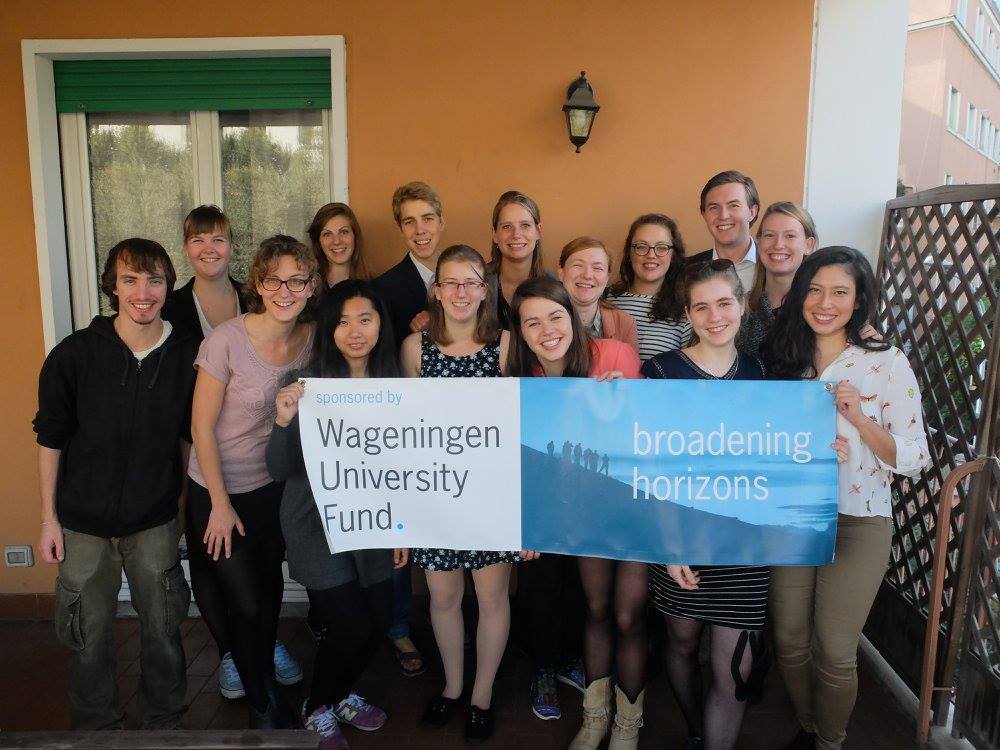
As part of a voluntary course offered by Rural Sociology, 16 students visited Italy to look at two different examples of global food security in action. Emmelien Venselaar, who studies International Development, has written a short blog wherein she reflects on her experiences. Happy reading.

Students get ready to observe politics in action at the UN's Committee on World Food Security (photo by X. Jiang)

Students get ready to observe politics in action at the UN’s Committee on World Food Security (photo by X. Jiang)

As part of the Capita Selecta “Global Food Security Governance” from chair group RSO, 16 students got the chance to visit the Committee on World Food Security (CFS) in Rome. This Committee is an intergovernmental body addressing global food security governance. It aims to be inclusive and thus takes the interests of states, civil society, NGO’s and the private sector into account. In practice this means that a discussion can be conducted by Coca Cola, Finland, peasants and a representative of the FAO. This conference is an annual event hosted by the Food and Agricultural Organization, a UN agency, in Rome. During three days we experienced what is it like to formulate international guidelines at nighttime, watch African students pitch their business ideas, discuss matters over lunch on the roof terrace of the FAO office, take one minute espresso breaks to get us through the day and network our way through the side events. As students, we are quite used to short nights, networking events and important discussions. Only this time it was much more official than at our student associations or student board events back in Wageningen. This time we were talking politics.

Continue reading