Conference State College, Pennsylvania

At the joint AFHVS and ASFS conference at State College Pennsylvania, we started with a day of excursions. I joined the ‘local food and flavors’ tour where we visited Tim Browser’s Elk Creek Café and Aleworks and tasted his home-brewed beer and locally sourced food. The local food tasted very good and was as Tim explained, centered around Nouveau Dutchie Cuisine. With humous and black beans as part of the menu, I could not really make a Dutch connection there, but it certainly was delicious.
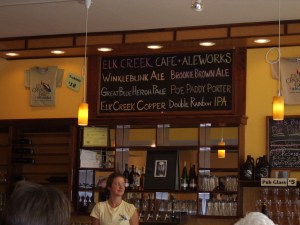
STA71528

The next stop was the Tait Farm Foods in the Happy Valley where the owner Kim Tait explained the manifold activities of the farm. They work as a Community Supported Agriculture (CSA) farm and have around 120 families as members. Members come to the farm on a weekly (summer) or bi-weekly (winter) schedule to pick up their seasonal share. STA71544

There are different types of shares, but a full year share for a family costs 1100 dollars. It is also possible to have a workshare, where members can work on the farm for a share of the produce to reduce costs. They have to commit 5 hours a week.

After this we visited a local vineyard the Mount Nittany Vindeyard and Winery in the Brush Valley and tasted some great wines as well as cheeses from a neighboring dairy farm.

What was striking to me especially in the visit of the CSA farm is the strong emphasis you can find here on ‘the community’. As the leaflet of the Tait Farm explains:

“In its most simplified form, the farm grows food for the community and the community supports the farm”.

Yesterday, at the first day of presentations, a session on ‘terroir’ explained differences between the US and Europe regarding their sense of territoriality. Whereas the notion of ‘terroir’ has a strong connection with proximity and social ties in the US, in Europe it has more relation with the specificity of food, the cultural heritage and the cultural history this food expresses. So whereas a ‘local’ sausage from a French region can be found in extralocal market places in Europe, the US understanding of local food as direct marketing, locally embedded in social ties, confines the produce much more to a specific place. Hence, you won’t find many geographical indications protecting specific products here (also because of other reasons).

Rural development in Iowa

The coming two months, I will join the North Central Regional Center for Rural Development in Ames, Iowa. This center, part of the Iowa State University, is working with rural communities, native American communities and small producer groups to increase the capacity and resilience of these communities in tackling their problems. In the United States, the development of modern agriculture had a large impact and often devastating effects on rural communities. And, nowadays changing lifestyles, declining knowledge of food and less connection with farming and land have resulted in an obesity epidemic and diet-related diseases. Native American communities also suffer from diet-related diseases. One of the communities the center works with is a Hopi community in Arizona. A recently finished project worked with Hopi women to search for how they define, access and use traditional Hopi food. Using a community capitals approach, the participants assessed together their natural, cultural, social, political, financial and built capital. Through this, they identified their strong and weak or lacking capitals in search for improving health and living circumstances. See this website for an example of a Hopi farm.

RuDI meeting in Rome

From 22 to 24 of April, the RuDI project held its third project meeting in Rome. The aim of the meeting was to inform each other about the first year of the project, to make a synthesis of key results and to develop case study methodology. Once we have finalized the case study methodology this summer, the next phase of the project will be to conduct 20 case studies for in depth understanding of key practices in the policy process and their potential effects. For example, in the Netherlands, the European Rural Development Plan has been incorporated into a broader process of rural policy change. A key element of this process is the ‘performance contract’ between the national and the provincial authorities in which both levels of government agree on policy priority, investment budgets, co-finance responsibilities and performance indicators. The question is how different RDP Axis are brought into a system of performance contracts and whether these contracts are indeed a stimulus for more integrated rural policy design and delivery

sta71393We also presented our work to the International Expert Group (IEG) which was established for the duration of the project. In Rome, eight experts joined us, coming from a wide range of organisations including the European Commission, the OECD, consultancies and universities. The IEG helped us to reflect upon our first results and to gain new insights. They formulated recommendations for further elaboration. The experts encouraged us to find a qualitative way to analyse the transformative effects and potential impact of the rural development policy process; the ‘forgotten middle’ in current evaluation practices.
Geleerd in het Westerkwartier

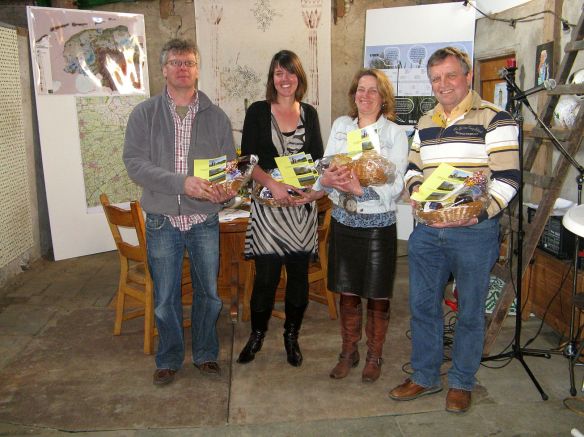
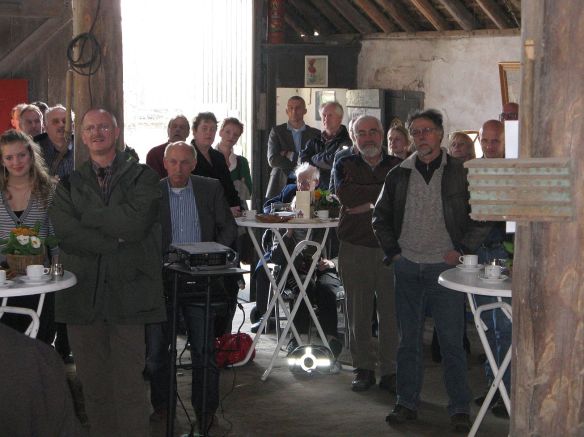
Afgelopen donderdag 2 april werd in Lutjegast, Westerkwartier Groningen het boek gepresenteerd over vijf jaar samenwerking tussen Van Hall Larenstein, Wageningen Universiteit en een groot aantal betrokkenen in het (zuidelijk) Westerkwartier.

simon-petra-jifke-arien3

Het boek doet verslag van de betekenis van dit onderwijsproject (2003-2008) voor het gebied, de studenten en de onderwijsinstellingen. In het gebied kwam een proces van sociaal leren en bewustwording over ontwikkelkansen op gang terwijl ruim 50 studenten leerden omgaan met interactief onderzoek doen. Voor de onderwijsinstellingen vormde het project een belangrijke brug naar de praktijk. Het kennisarrangement dat gedurende de jaren werd ontwikkeld wordt tegenwoordig wel ‘werkplaats‘ genoemd en is in het hele land volop in ontwikkeling. Ook het Westerkwartier streeft naar een vervolg op dit project, naar een werkplaats in eigen stijl.

schuur-binnen22De gezamenlijke betrokkenheid die de afgelopen jaren kenmerkend was voor de samenwerking is ook terug te zien in de publicatie van het boek, waaraan RIGO, de vakgroep Dierlijke Produktiesystemen, LEADER Westerkwartier en Staatsbosbeheer financieel hebben bijgedragen. Het project heeft een belangrijke basis gelegd voor toekomstige samenwerking in de driehoek gebied, beleid en onderwijs.

Manual for Cross Cultural Learning

Since 2005 I particpate in the ENDLT network with people from the area Westerkwartier in Groningen. Together we form a Dutch team and we have been visiting other teams in Ireland, Wales, Sweden and Finland trying to learn in-depth from other rural development practices in other cultures. Along the way we developed a manual for cross cultural learning which was discussed and tested this year January (see blogs 26-1 and 29-1). Our Swedish partners have taken up initiative to write the manual which is available now for all who want to set up cross cultural exchanges.

Our network, based on LEADER funding, differs in three ways from usual transnational LEADER visits:

  1. Teams involve different types of expertises, from local activists, to scientists, to local government officers and governors
  2. Visits are multi-team visits in which learning not only takes place in confrontation with the visiting area but also in the confrontation with other cultural perspectives from other visiting teams
  3. Multiple visits within the same network over the years

All three factors serve to make knowledge exchange and learning more effective. It pays off to invest in longer term relationships because for in-depth learning people need time, trust and enabling/safe interaction. We indicated this as one of our success factors in the factsheets that we produced for the ruract network. This network describes itself as:

1) A cooperation network gathering European Regions politically involved for promoting rural innovation at operational and regional level. 2) A resource centre providing methodological tools and an updated database with regional good practices for rural areas and analyzed in terms of transferability. 3) A field of experimentation for European Regions allowing them to exchange and find solutions face to global challenges of rural territories.

This French initiative links up good practices in rural development all over Europe. Our experience in the ENDLT network will be available on this website early summer.