Rural regional learning in ‘Upper Lusatia’ (Oberlausitz), Germany

Following my visit to Alytus County, Lithuania in October, I travelled to Leipzig, Germany to visit our DERREG project partners Michael Kriszan, Robert Nadler and Joachim Burdack (Leibniz Institute for Regional Geography) in their case study area ’Upper Lusatia’. In this blog, Michael, Robert, Joachim and I would like to share some of our experiences.

We first discovered that the case study regions Westerkwartier and Upper Lusatia are very different in their geographical and demographical characteristics. The LEADER region Westerkwartier in Groningen province comprises four municipalities on an area of 374km² and has a population density of 173.4 inhabitants/km² (as of 2007). In 2006, its GDP per capita was estimated at 55,400 Euro and the area has recently witnessed a population increase due to its popularity amongst young families who work in the city of Groningen and value the countryside as their residential area. The Southern part of the Westerkwartier is thus characterized by a high population density and a number of conflicting interests regarding the use of the countryside while the North of the Westerkwartier is primarily used for agriculture.

Upper Lusatia consists of the two Saxon districts Landkreis Görlitz and Landkreis Bautzen that have only been established in 2008 in the process of a reform of the administration units in Saxony. The case study region has an area of about 4,500 km² and has a population density of 135 inhabitants/km². It comprises 122 municipalities- of which 30 are urban centers- and had a GDP per capita of 18,329 Euro (district Görlitz) respectively 19,396 (district Bautzen) in the year 2007 . The region is divided into ten rural development areas, six ILE regions and four LEADER regions. In contrast to the Westerkwartier, the population of Upper Lusatia is shrinking rapidly. Young inhabitants are leaving the area due to a lack of employment opportunities, leaving the elder people behind. Rural development in this region is therefore not only affected by an aging population but also by a shrinking human capital available for development purposes. Through the reform of administrative units altogether four previously distinct districts (Landkreise) and two cities (kreisfreie Städte) have been incorporated into the two “new” districts of Görlitz and Bautzen. The previous Landkreise, however, are very distinct in their physical appearance. The former district Niederschlesien-Oberlausitz for example is characterized by a low population density and shaped through past and present coal mining activities while the hilly district Löbau-Zittau is recognized as a touristic area and winter sport resort. Due to the lack of a common history and the physical distinctiveness, there is no regional identity of the population within both districts.

To evaluate the support and facilitation available for learning and innovation within local grassroots development initiatives in Upper Lusatia, Robert, Michael and Joachim organized a workshop for regional stakeholders.
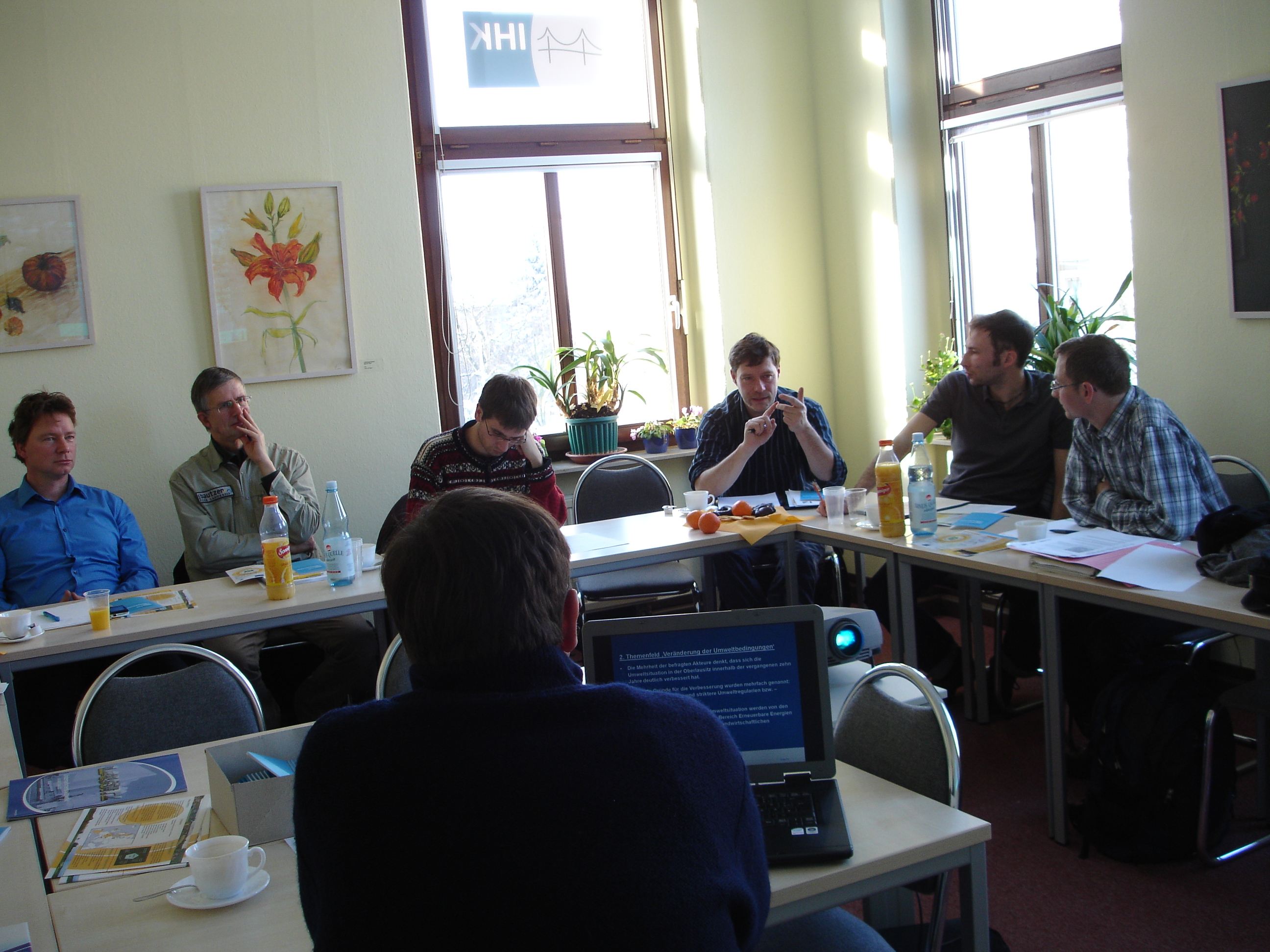
Workshop in Upper Lusatia, Germany
Continue reading

Rural regional learning in Alytus County, Lithuania

Last week (October 21-22, 2010), I was given the opportunity to visit our DERREG project partner Emilija Kairyte (Institute NeVork) in her case study area of Alytus County in the South of Lithuania. In this blog, Emilija and I would like to share our experiences.

Like the Dutch DERREG case study region Westerkwartier in the province of Groningen, Alytus County comprises four rural municipalities. In terms of demography and economy, both areas are very different from each other. For example, the Westerkwartier has a population density of 173.4 inhabitants/ km², whereas the population density of Alytus County is estimated as 32.6 inhabitants/ km². While the Westerkwartier has witnessed an increase in citizens over the last years, amongst them a large number of young families, rural development in Alytus County is strongly affected by an increasing out-migration and an aging population. Living standards differ considerably. In the Westerkwartier, the GDP per capita was estimated as 55.400 Euro in 2006 while the GDP in Alytus County was estimated as 19.100 Litai in 2007 (equals 5.531,74 Euro, October 2010). Also in geographical terms the two regions are very different. The Westerkwartier is characterized by open grasslands in the North and small fields with framing hedgerows in the South. Alytus County is renowned for its vast forests and lakes.

During my visit to Alytus County, I accompanied Emilija to two workshops, one for the LAG and other public administration authorities on the 21st of October and one for rural initators and actors on the 22nd of October, which she organized in order to evaluate existing arrangements for support and facilitation of joint learning-by-doing activities within rural development initiatives. At these workshops, I presented supportive arrangements and benefiting rural development initiatives that we found during our investigations in the Westerkwartier and which we evaluated together with local stakeholders at a workshop organized by the Rural Sociology Group in the Westerkwartier on the 18th of October.

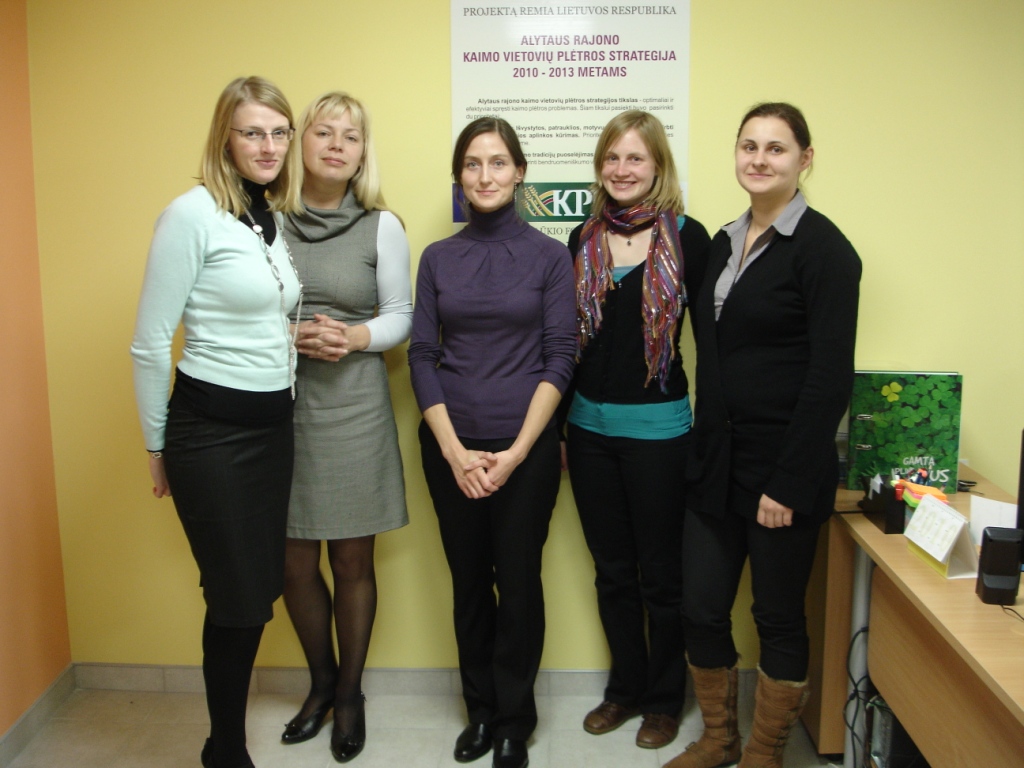
Meeting with rural development initiative supporters in Alytus District LAG office, Alytus

To my surprise, both regional learning supporters (including the LAG) and rural initiators did not see striking differences between the existing arrangements and support given to rural development initiatives in Alytus County and the Westerkwartier. Emilija and I however learned that there are some basic differences in the foundation and operation of the Countryside House (Plattelandshuis) in Westerkwartier and Seniūnija (NUTS5) in Alytus County. Continue reading

Wichterwest: A network meeting with gains for everybody

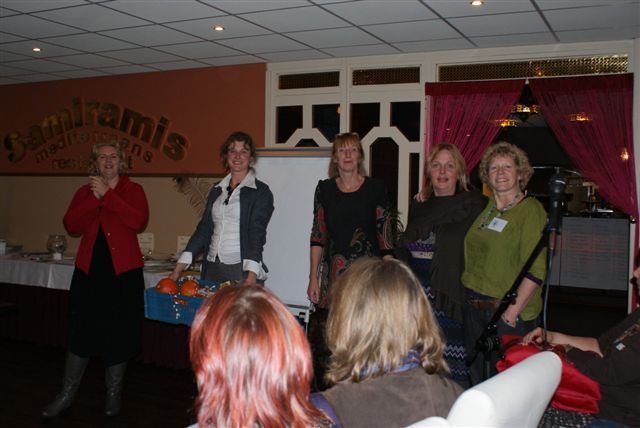
Yesterday, I – together with 66 rural business women- attended a meeting of the rural women’s business network ‘Wichterwest’ at Restaurant Samiramis in Grootegast.

 The establishment of women business networks was initiated by Groningen Province in an attempt to stimulate networking amongst rural business women in the province. Today, each region within Groningen province has a rural women’s network. In the Western region of Groningen province (a.k.a. Westerkwartier) the network is called ‘Wichterwest’ and is organised by the project leader ‘Vereiniging Groningen Dorpen.

 ‘Wichterwest’ acts as a platform for business women to network, to exchange ideas and to receive information about business. The organisers also arrange offers for business courses and trainings. For example, the organisers are arranging a new training programme which will focus on three different business aspects: a) business start-ups, b) business management and c) market/ marketing strategies. To respond to the great interest of business women in the network and to accommodate its growing number of participants, the organisers are now considering options to set up a foundation with the aim to increase income and offers.

 Yesterday’s meeting started with a speed dating session in which everybody got to know the fellow participants and their businesses. I was impressed by the variety of activities carried out by the women of the Westerkwartier. For example, I met a photographer, a Bed & Breakfast owner, an administrator, a clothes designer, several advisors, an interior designer and the owner of an online farm shop for regional products. The evening proceeded with an exercise to practice efficient networking skills and a delicious three course menu made of organic products produced in the Westerkwartier. Filled with food, excitement rose as the winners of a lottery game were announced. Each business woman was asked to bring a gift made by her company. By winning vouchers for advice, massage and acupuncture sessions, bags of sheep wool and cushions for man and beast, everybody was able to get an impression of the variety of products offered by business women in the Westerkwartier. The evening was completed with three different workshops concerning a) optimal business plans, b) press releases and c) the importance of the entrepreneur for making business.

Even though I am not a business women myself, I returned home filled with positive impressions regarding the innovative spirit and versatility of business women in the Westerkwartier- and a business arrangement made during the networking game- let me recall, I said I was not a business women?

Good welfare of farmers as a precondition to provide welfare to pigs on farms

Last week, I was invited to the Animal Science Days in Padua to present my Master thesis results concerning the effect of farm modernization on the welfare of pigs in Croatia. I was given the opportunity to present my results twice; first, I presented my main results as an invited speaker and later I presented some aspects of my thesis in the form of a poster.

The main point of my study was that the modernization of Croatian housing systems, particularly small ones, does not necessarily ensure a better standard of pig welfare. This is because it often entails the removal of bedding and intensification of production, amongst others to reduce labour time and costs. Bedding such as straw is, however, important because it reduces injuries resulting from behavioural abnormalities directed towards pen mates (i.e. belly nosing, ear and tail chewing) and floor qualities. Also, across Europe intensification has risen much concern regarding the welfare of intensively housed animals. One can therefore suggest that Croatia needs to find a way to modernise its production units while retaining its beneficial aspects such as small scale and straw bedding.

In the course of my study, however, I found out that small pig farmers-which make up the majority of Croatian pig farmers- often lacked knowledge about the concept of pig welfare and the EU pig welfare directives. In fact, they seemed to be uninformed about the exact changes which will occur in the course of implementing the EU rules and regulations. This resulted on the one hand in frustration regarding their own lack of future perspective and on the other hand in a lack of interest regarding their motivation to ensure or improve the welfare of their pigs. The results thus suggest that motivations to ensure pig welfare are also dependent on the welfare of the pig farmers.

My main conclusion was therefore that in order to ensure animal welfare, it is necessary to ensure welfare of farmers as well. In order to ensure and improve pig welfare in the future, this topic needs to be approached from both social sciences and animal sciences in order to understand the close link between human and animal welfare. My presentation received great interest from the audience and I hope that this topic will be further elaborated in order to support small Croatian farmers and their pigs in the future.

Inspiring encounters in the Westerkwartier

On Wednesday evening, I participated in a Plattelandscafé (countryside-café) at the Natuurboerderij Lammerburen (nature development farm) in Oldehove, Westerkwartier, Groningen. The aim of the gathering was to present results of past projects, ongoing projects and project ideas aimed at ensuring the sustainability of the predominantly rural Westerkwartier. Jan Oomkes, chairmen of the LAG Westerkwartier (LEADER) and alderman of Zuidhorn municipality, opened the evening with a summary of activities in the Westerkwartier, including activities of the citizen action group (WSI), the Westerkwartier as LEADER-region, the community house in Grootegast and numerous projects which have been realised using money from the EU (LEADER), the Rural Area Programme of the province of Groningen as well as the different municipalities. Thereafter, the word was given to different project leaders and the present 60 visitors were informed about ongoing projects and activities.

With regard to my upcoming DERREG  (see previous post) research activities on rural business networks and the support of rural initiatives and regional learning in the Westerkwartier, the presented projects were highly interesting. For instance, one suggested project idea described the construction of hiking routes through the Westerkwartier, improving the touristic infrastructure and stimulating tourism as a new economic source for the region. Potentially, the project would thus provide possibilities for farmers to engage in side activities such as farm cafés and touristic accommodation and would help to establish networks between different stakeholders of similar interest. A further interesting project that was introduced is a new network for local business women (Wichterwest). Since the DERREG project aims to put special emphasis on the role of women in rural development, the newly formed network would be an interesting idea to study and could act as a best practise example for other rural areas throughout Europe.

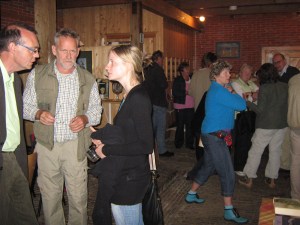
Conversations at the plattlandscafé

Conversations at the plattlandscafé

The evening was accompanied by guitar music- including a self-composed song about the Westerkwartier-, drinks and snacks. The inspiring atmosphere provided a good opportunity for everyone to exchange thoughts and ideas about the development of the Westerkwartier. Considering the enthusiasm of the people present at the gathering and their commitment to the development of their region, the event was also for me a motivating experience, highlighting once again the significance of research towards ensuring the sustainability of rural regions in the era of globalization.