Unknown's avatar

About Han Wiskerke

Chair and Professor of Rural Sociology at Wageningen University (The Netherlands) Research domains: rural development, multifunctional agriculture, city-region food systems

Business models in urban agriculture – MSc thesis by Shuang Liu

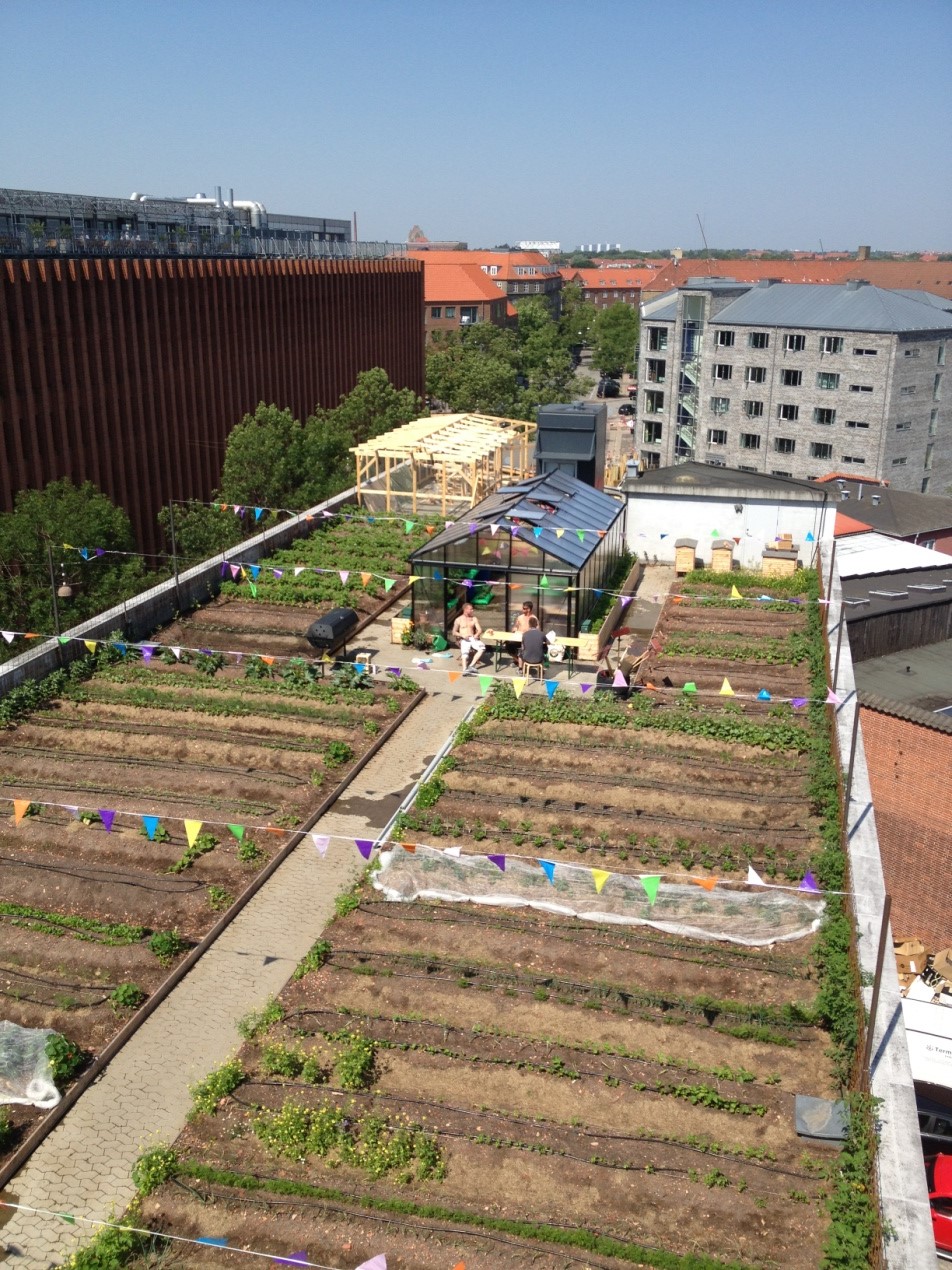
Urban Agriculture (Shuang Liu)

By Shuang Liu (MSc student in Organic Agriculture)

Urban agriculture is thriving across the world along with rapid urbanization. It is usually valued as a public-good generating activity for its social and ecological benefits. Recently, however, there is a growing trend of urban farmers becoming commercial and they seem to be extremely diversified in practice. Yet, little is known about the business approaches developed by entrepreneurial urban farmers.

In this research, I took urban agriculture as a revenue generating and job creation activity by focusing on more market-oriented projects. I tried to describe individual urban agriculture business operations under the framework of the business model. An online questionnaire was distributed worldwide followed with statistical analysis. The questionnaire was designed using nine business building blocks from Business Model Canvas. Based on the reported business characteristics, a cluster analysis was performed in order to find patterns underlying the diversity of their businesses. In total 46 respondents from 18 countries across 6 continents completed the questionnaire and as sucht contributed to the results of my thesis.

Great diversity in their business operations was found among the 46 projects. Various projects produce a wide range of products and conduct activities for diverse functions. They also manage different relationship with their customers and clients. Distinctions were also found between continents and projects with different purposes. All this heterogeneity brings challenges to describe and understand urban agriculture business. Thus an exploratory cluster analysis was adopted in order to simplify the diversity.

Drawing on the business characteristics, cluster analysis has generated five types of business model: Diversification, Primary Food Production, Value Differentiation, Service Provision and Innovative Operation. For more information about the diversity encountered and for the characteristics of the five business models, please have a look at my MSc thesis

This study provides a rough picture of how initiatives across the world are operating their projects. Classification of business models could be a precursor for future studies on topics such as the relationship between business model and performances, innovation of urban agriculture business models, and economic performance of urban agriculture etc.

For more information you can also contact me: lsabab@163.com

Exploring Dar es Salaam’s foodscape: spatial design meets rural sociology

IMG_6198

Seeing Dar” is the first of a series of publications resulting from my Foodscapes professorship at the Amsterdam Academy of Architecture in which I have involved Master students in Landscape Architecture, Architecture and Urbanism in research projects of the Rural Sociology Group. This publication is the result of a 12 week design studio, which commenced with a 10 day field visit of Academy of Architecture students to Dar es Salaam, linked to Marc Wegerif’s PhD project and the work of Daniel Mbisso on markets at the School of Architecture and Design of Ardhi University. The publication is a collection of individual design projects and essays focussing on different aspects of Dar es Salaam’s foodscape: food markets, food and food-related waste, climate change adaptation, gender, public space and distribution infrastructure. For the students the 10 day exploration of Dar es Salaam’s foodscape was crucial to come up with spatial designs that aligned well with the everyday life and cultures of people living, working, travelling and eating in Dar es Salaam. For me it was an interesting experience to link spatial design to sociological research. More publications in which spatial design meets rural sociology will follow later this year and next year.

Urban agriculture does not always result in better neighbourhoods

Esther Veen - Community gardens in urban areasWhile urban agriculture is often used as a tool for increasing social cohesion in neighbourhoods, Esther Veen believes that it does not always lead to better relationships between residents. This is the subject of her doctoral thesis, which she successfully  defended at Wageningen University on Monday 15 June 2015.

For her doctoral research, Esther Veen observed various community gardens where people from the same neighbourhood came together. She noted that not everyone participates in these gardens and how there is a tendency for groups to form.

“It is often assumed that community gardens benefit the neighbourhood, but the gardens are also a ‘real world’ in which issues arise,” Veen explains. “Municipalities, initiators of urban agriculture projects and other stakeholders should adjust their often high expectations. A neighbourhood community garden does not break through existing social structures just like that, and it is hard to bring people from different socio-economic backgrounds into contact with each other.” Veen’s research does show that neighbourhood community gardens allow people to get to know each other better and ask each other for help more easily.

Interchangeable conversations

In addition to studying neighbourhood community gardens, Veen also observed community gardens where residents are mainly interested in growing fruits and vegetables but do not necessarily come from the same area. It showed that people like chatting to each other in a community garden, but that these contacts are easily exchangeable for conversations with others. Moreover, these chats rarely lead to contacts or friendships outside the community garden.

Not against ‘the system’

Scientific literature often assumes that people who actively use community gardens have a certain resistance against the current food system, and that for them the community garden functions as an alternative food network. Veen’s studies showed that these assumptions were erroneous in the community gardens she researched. People mainly like to garden because they enjoy the act of gardening, not because they want to change the world or oppose the conventional food system. Veen: “Food from neighbourhood community gardens may fit into a lifestyle in which organic or local products play a major role for some people, but this is a personal consideration to them. They don’t see themselves as part of an alternative food network.”

Participative observation

By means of interviews and surveys, Veen studied seven community gardens in Almere (two), Amsterdam, Assen, Leeuwarden, Rotterdam and Zutphen. She also observed four of the seven community gardens via ‘participative observation’ – taking part and helping in activities organised by the community gardens, such as an Easter brunch and a harvest market. “This method allowed me to experience personally what it’s like in the community garden,” she says. “Interviewing people helped me learn much more about the social relationships that develop.”

This blog is a copy of a Wageningen UR press release and a follow-up of a previous blog announcing the public defence.

Urban Food Forum at ICLEI Resilient Cities Conference

Resilient Cities 2015 At the upcoming Resilient Cities conference of ICLEI (the international network of local governments for sustainability) a special Urban Food Forum will be organized by ICLEI and RUAF in collaboration with the SUPURBFOOD program. The Resilient Cities conference will take place from 8 – 10 June in Bonn (Germany): for more information about the program, click on this link. The Urban Food Forum will take place on Wednesday 10 June 2015.

The Forum will feature a Panel with city leaders on good practices for managing resilient city-region food systems. Participants will include representatives from cities such as Cape Town, Nairobi, Ghent, Amman, Medellin, and Walvis Bay. A SUPURBFOOD supported policy brief and the Urban Agriculture Magazine special issue on city region food systems will be presented.

Following the opening session, two technical sessions will be held.  The first, organized in cooperation with GIZ, will focus on Planning resilient food systems at an urban and metropolitan scale with speakers from UNEP, GIZ, and START with a discussion on how to  operationalize the water-urban-food energy nexus. The second will examine the role of small and medium enterprises in urban food system development and will feature innovative SMEs working in the field of city region food systems from the cities of Rotterdam (The Netherlands), Riga (Latvia), Vigo (Spain) and Bristol (UK).

.

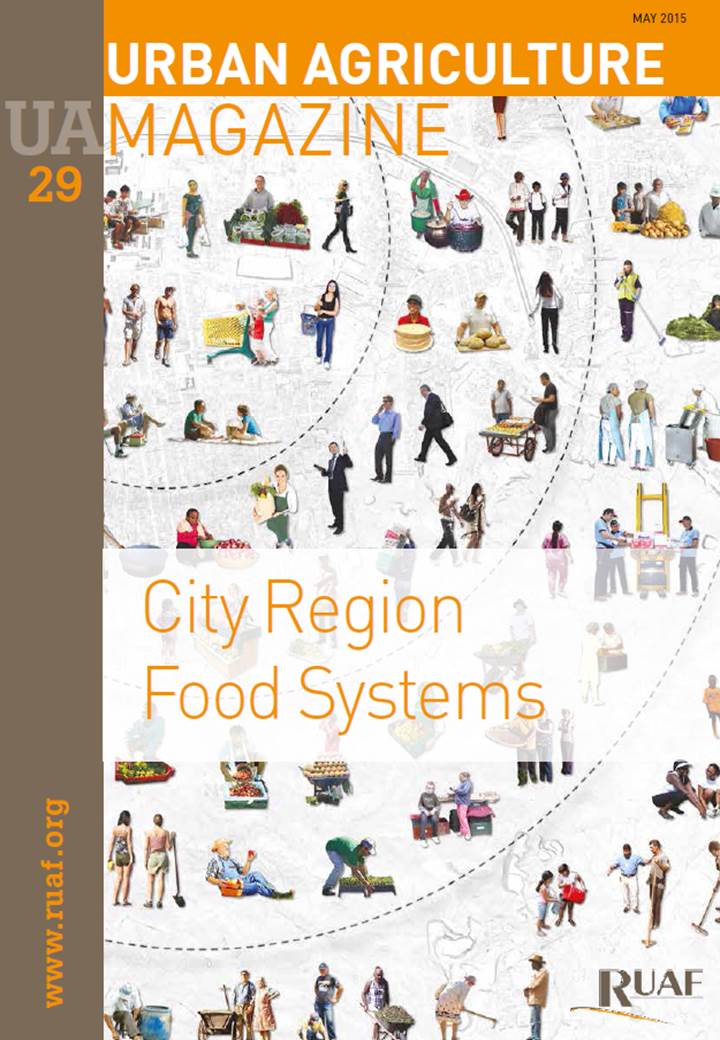
Urban Agriculture Magazine no. 29 – special issue on City region food systems

Today the 29th issue of the Urban Agriculture Magazine has been published online, featuring a special issue on city region food systems.

UAM29 coverThis issue addresses the growing attention for policy and practice approaches that focus on food issues in urban areas from a city-regional perspective, taking into account possible contributions from urban and periurban agriculture and a strengthening of urban-rural relations. It is largely based on our EC funded research programme SUPURBFOOD but also features articles from other projects and initiatives.

The Magazine will be officially launched in hardcopy at the ICLEI Resilient Cities Congress on 10 June 2015 in Bonn, Germany, during which event three Urban Food Forum sessions are held in collaboration with the SUPURBFOOD consortium together with policymakers and SMEs from the SUPURBFOOD city regions.