PhD course on spatial thinking in the social sciences

2014 a 2013 IMG_2719Today, the concept of socially produced space appears in publications with little apparent need for justification or explanation. Yet it was not so long ago that “space” was generally ignored in social theory. In this course we critically engage with the spatial turn in social sciences. This spatial turn brings into focus a relational approach, showing how the social comprises the spatial, and the spatial comprises the social.

Building upon a brief introduction about the return of spatial thinking in the social sciences, we will discuss three themes: the construction of the rural, in relation to the urban, our understanding of local in relation to the global, and constructions of nature. The course ends with a special session by prof. Ash Amin of Cambridge University on the spatial dimensions of democratic renewal.

The course “Spatial thinking in the social sciences ” is meant for PhD students in the social, environmental and political sciences. In the course we will switch between close reading of texts, workshops, and discussion. Students following this course will not only learn to think about place as an analytical category, but also learn to ‘work with place’ by applying various perspectives to concrete cases.

The course will be given from April 22 to April 29, 2016.

For more information contact Joost Jongerden at joost.jongerden@wur.nl

RSO student participation in Kyoto University summer school

IMG-20150915-WA0006

By MSc-students Sacha Buisman and Susanne Maenen (pictures).

It is the third day of the Kyoto Graduate Seminar on Economic Development and Sustainability. Three professors, respectively called sensei, from the Kyoto University gave lectures today on topics related to the theme: ‘agriculture, environment and sustainability’. The whole week, we will discuss a wide range of themes with a very multi-disciplinary group of students coming from Thailand, Laos, Korea, Denmark, the UK and Wageningen. In the city where the Kyoto Protocol was signed in 1997 and in the country where there was a massive nuclear disaster in 2011, we will look back at the economic development of the Asian continent while we try to envision possible sustainable pathways for the future economic developments. Today we discussed if, and how, economic growth and environmental conservation can be achieved simultaneously. In the last lecture of today we looked at food security from a Japanese perspective. One of the main challenges that Japan faces, just like almost every other country in the world, is the population shift from the rural areas to the urban areas. The average age of a Japanese farmer is 65 years, which will soon cause the diminishing of active farmers and the utilization of farm-land. How is the Japanese politics responding to this scenario? Mainly by following the US way of reasoning: ‘increase the efficiency and the productivity’. Which might be not the right solution, given the fact that a Japanese farm has an average of 2 hectare farmland. There are multiple Japanese bottom-up movements, such as the shura ku-eino (village farming collectives), who suggest ‘another’ sustainable pathways that focuses on small-scale farming of ‘diverse local actors with a diverse and multi-layered commitment’. Continue reading

Course Global sense of place in period 2

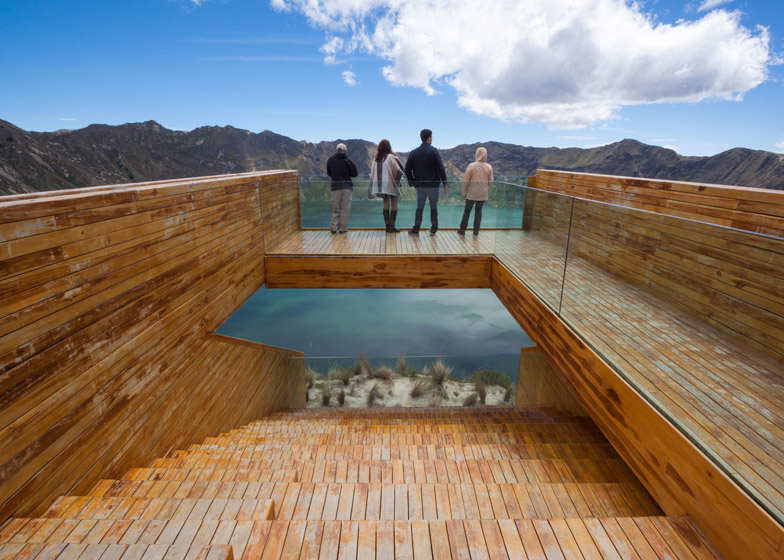
Volcano-crater-observation-deck-by-Javier-Mera-Jorge-Andrade-and-Daniel-Moreno_dezeen_784_3The course RSO-55306 A Global Sense of Place starts soon, so please register if you are interested to follow this. It  is an optional interdisciplinary course on sustainable place-based development for students from various master programmes (e.g. MDR, MES, MID, MLP, MUE, MOA, MFN). The course builds on the BSc course RSO-56806 Sociology and Anthropology of Place-shaping providing an introduction to place-based approaches in development. Knowledge of this introductory course is an advantage, but is not assumed. The course aims to make students acquainted with an interdisciplinary and place-based approach to development.

A relational place-based approach is seen as key to the understanding of interrelated rural and urban transformation processes and ergo sustainable development. In a relational approach places are considered as contingent but in time and space differentiated outcomes of three interrelated interdependent and unbounded transformative processes: political-economic, ecological and social-cultural. Places are time and space specific constructs, like their boundaries and connections.

By means of this course students will achieve profound understanding in key-concepts and methods on place-based sustainable development. Work from key thinkers in sustainable place-making will be critically discussed and examined on the basis of various cases. Guest speakers are invited to reflect on place-based approaches to sustainable development and illustrate these through case studies. Ultimately students will acquire a place-based perspective on development.

Main themes of the course

Central to a place-based approach is the conceptions of place as: 1) Arenas for negotiation, conflicting interests and power struggles; 2) Endowed with meaning and the constitution of identities, subjectivities and difference.

Different interdisciplinary themes will be addressed such as:

  • a relational approach of place and space;
  • key thinkers on place and space;
  • politics of place;
  • community development;
  • cultural approaches of place-based development
  • ‘the human dimension’, encompassing collaboration and leadership
  • ‘defence’ of places and conflicts

For more information, you can contact lummina.horlings@wur.nl

Farm Experience Internship 2015

By Lucie Sovová and Elske Hageraats (FEI coordinators ‘Stichting Boerengroep’).

Farm Experience Internship 2015

Farm Experience Internship 2015

The Farm Experience Internship (FEI) is a 3ECTS summer course on agroecology that offers the students to get hands on experience from organic and bio-dynamic farms in the Netherlands. This year it took place from 20th of July till 14th of August. The main organizer of the course was Stichting Boerengroep with the academic support of the Rural Sociology Group. Continue reading

Business models in urban agriculture – MSc thesis by Shuang Liu

Urban Agriculture (Shuang Liu)

By Shuang Liu (MSc student in Organic Agriculture)

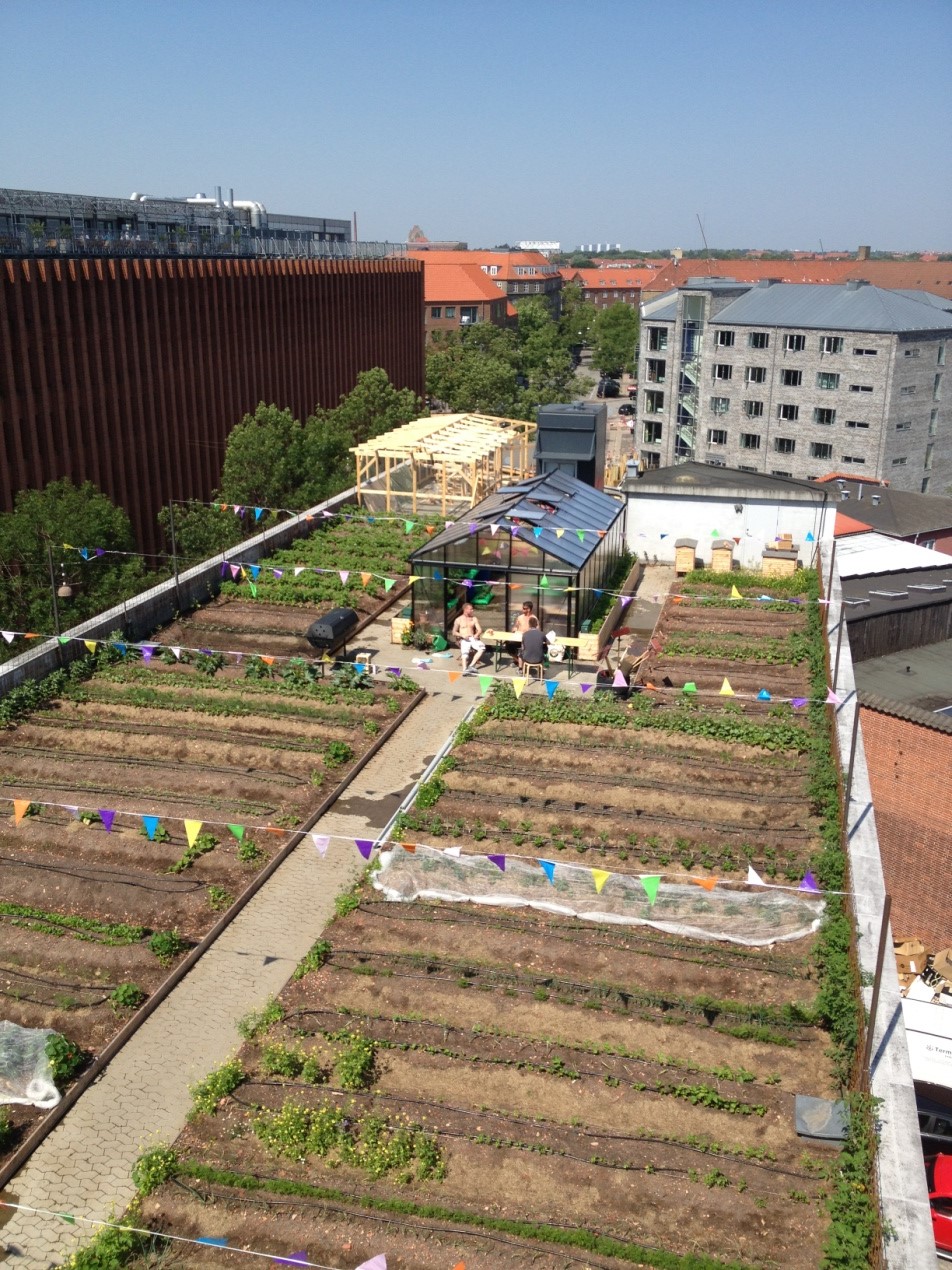
Urban agriculture is thriving across the world along with rapid urbanization. It is usually valued as a public-good generating activity for its social and ecological benefits. Recently, however, there is a growing trend of urban farmers becoming commercial and they seem to be extremely diversified in practice. Yet, little is known about the business approaches developed by entrepreneurial urban farmers.

In this research, I took urban agriculture as a revenue generating and job creation activity by focusing on more market-oriented projects. I tried to describe individual urban agriculture business operations under the framework of the business model. An online questionnaire was distributed worldwide followed with statistical analysis. The questionnaire was designed using nine business building blocks from Business Model Canvas. Based on the reported business characteristics, a cluster analysis was performed in order to find patterns underlying the diversity of their businesses. In total 46 respondents from 18 countries across 6 continents completed the questionnaire and as sucht contributed to the results of my thesis.

Great diversity in their business operations was found among the 46 projects. Various projects produce a wide range of products and conduct activities for diverse functions. They also manage different relationship with their customers and clients. Distinctions were also found between continents and projects with different purposes. All this heterogeneity brings challenges to describe and understand urban agriculture business. Thus an exploratory cluster analysis was adopted in order to simplify the diversity.

Drawing on the business characteristics, cluster analysis has generated five types of business model: Diversification, Primary Food Production, Value Differentiation, Service Provision and Innovative Operation. For more information about the diversity encountered and for the characteristics of the five business models, please have a look at my MSc thesis

This study provides a rough picture of how initiatives across the world are operating their projects. Classification of business models could be a precursor for future studies on topics such as the relationship between business model and performances, innovation of urban agriculture business models, and economic performance of urban agriculture etc.

For more information you can also contact me: lsabab@163.com