The agrarian mind

Not so well-known in Europe is Wendell Berry, farmer, teacher, poet, activist, ecologist. I came across his writing in Iowa in 2009  and I was deeply moved. His writing resonated. The agrarian mind. The feeling of depth of place, of connection to land, of mysteriousness of nature. Rhythm, cycles, seasons, belonging, acceptance; place and sense making. I found his poetry incredibly powerful. Indeed, to touch land and grow food is a vital energizing force for me. In a contribution to the book Fatal Harvest he wrote:

To the agrarian mind, which is the only mind capable of rebuilding the culture of healthy soils, water cycles, richness, and diversity. May it multiply in future generations so they can recoup what has been lost and create farms and economies that are sustainable, humane and beautiful.

With lots of pleasure, but barely making a living, I see the agrarian minds in this region who work hard to create this culture of healthy soils and healthy food.  They are heralded as good examples of sustainable food production but are at the same time scraping for an income. Their effort not only nourishes people but also nourishes and rebuilds local resilience, an impact far beyond current prices. Book after book appears which critiques the current culture of profit and greed, the myth of self-regulating markets, the power concentration in the food industry and the urgency for sustainable alternatives. But the larger audience seems intoxicated by passiveness. As if food, land and the planet are not urgent matters to all of us. Who wakes up the agrarian minds?

Planting trees with the neighborhood

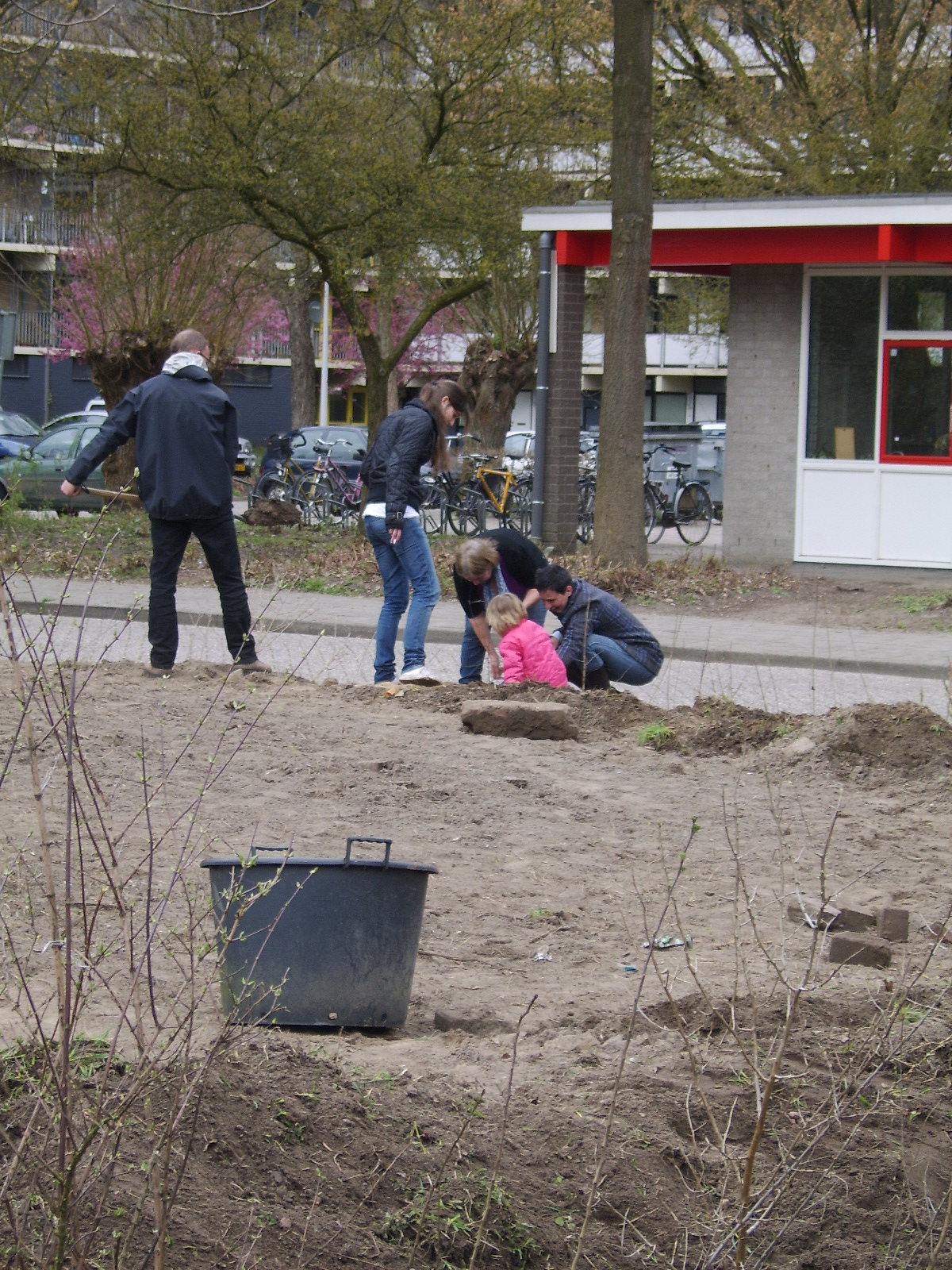
Finally, after one and a half year preparation, we planted lots of new trees, hedges and bushes in the Pomona neighborhood ‘forest garden’ (see here for the history behind). Old varieties fruit trees, such as ‘moerbei’ and ‘mispel’ together with peer, plump and apple will complement the 6 trees of the old orchard which will be renovated and protected by an extra inner hedge which we planted saturday. Another hegde was planted all around the area to guard it off from the road. This latter hegde contains many different species, some with thorns, planted in small series with here and there a bigger bush and roses.  

Some 20 people, including a group of childeren, came to help during the day starting at 10 and finishing at 4.30. The neighborhood centre provided freshly made soup and sandwiches. Not everybody who wanted to help felt physically capable of doing so. A woman who had been coming to the planning evenings stopped by with a just baked apple pie to contribute to the hard working. We certainly worked hard. The soil is extremely dry and was – at places – very compact and full of stones. However, we got all trees and most of the hedge in and will finish the job next saturday. In the meanwhile we drew up a roster for watering and we wait for the spring to make it all green.

Mogelijke Msc Thesis via Wetenschapswinkel

Achtergrond informatie

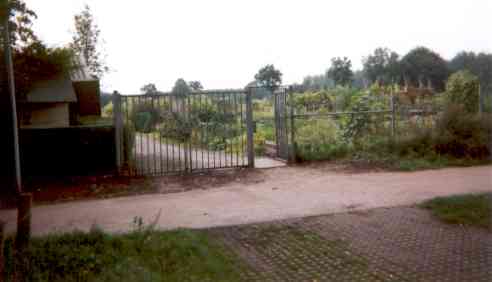
De Koekelt is door zijn samenwerking met maatschappelijke organisaties steeds meer midden in de maatschappij komen te staan en heeft besloten om van een gesloten volkstuincomplex te gaan veranderen naar een open multifuntioneel tuinenpark. Met ingang van 15 September 2011 dienen op het complex De Koekelt de acviteiten te worden beëindigd. In het voorjaar 2012 kunnen de tuinders weer aan de slag, maar dan op een tuincomplex in parkse0ng. De Koekelt maakt als volkstuincomplex deel uit van het Peppelensteeggebied in Ede, een sterk versnipperd door de stad omsloten groengebied. De tuinders van De Koekelt kenmerken zich door een zeer grote diversiteit en vormen een afspiegeling van onze multiculturele samenleving. De verschillen in cultuur zijn terug te zijn in het beheer van de individuele tuinen. Helaas moet er geconstateerd worden dat het veranderingsproces naar een multifunctioneel tuinenpark niet breed gedragen wordt door de tuinders van de Koekelt. De mensen betrokken in het veranderingsproces zijn geen afspiegeling van de multiculturele diversiteit aanwezig op het tuinenpark.

Onderzoeksvraag

VAT-Ede wil graag een onderzoek naar hoe de betrokkenheid van alle tuinders te versterken op de tuin De Koekelt. Daarnaast willen ze graag weten of en welke rol er is weggelegd voor de omringende wijkbewoners van de tuin, zodat de tuin een duidelijker plek gaat in nemen in het stedelijke groenaanbod in Ede. Naast de activiteit wandelen, zou je kunnen denken aan snoeien, imkercursussen, natuur en milieueducatie en nog vele andere vormen van medegebruik afhankelijk van de interesses die er is.

Dus ben je geinteresseerd in een Msc Thesis over social learning, sociale integratie, stadslandbouw en multifuctioneel ruimtegebruik en wil je een directe maatschappelijke impact tot stand brengen, neem dan contact op met de Wetenschapswinkel: hansje.eppink@wur.nl

Master thesis possiblity on Insect Food Acceptance

As the world population is growing and increasingly urbanising – the UN (2009) predicts 69% of the population to be living in cities by 2050 – the question of how to feed the world is becoming critical. Meat consumption is more and more the focal point in debates about worldwide environmental degradation, food security in developing countries and health costs in developed countries. Momentum is building around the topic of insects as alternative protein source in the Western world and in the Netherlands more in particular (see the recent article in the NY Times).

Lots of research in bio- and food technology is currently taking place on insect protein, yet, it is unclear if and how consumers will accept the various possible foods from insects. At the moment, insects are not regarded food and responses of disgust are common in the Netherlands. Disgust responses may indicate a food taboo and a deeper culturally bound rejection which may form a barrier for the acceptance of radical innovations.

The Research

This Master thesis opportunity will focus on the cultural level that informs or interferes with the acceptance of insects as food. The thesis research possibility is part of a larger interdisciplinary collaboration between the chairgroups of Rural Sociology, Management Studies and the Agricultural Economics and Rural Policy group on food culture, institutional adaptation and consumer acceptance of insect food.

The student will work within the interdisciplinary team and take part in the development of a theoretical framework. From the hypothesis formulated the student will develop a survey in order to gather empirical data on people’s willingness or rejection regarding insect food. Fieldwork will be done in various cities in the Netherlands depending time and resources.

There is space for more than one student, and for each student to do its own independent research. More information; petra.derkzen@wur.nl

Eating insects; moral pressure and fashion

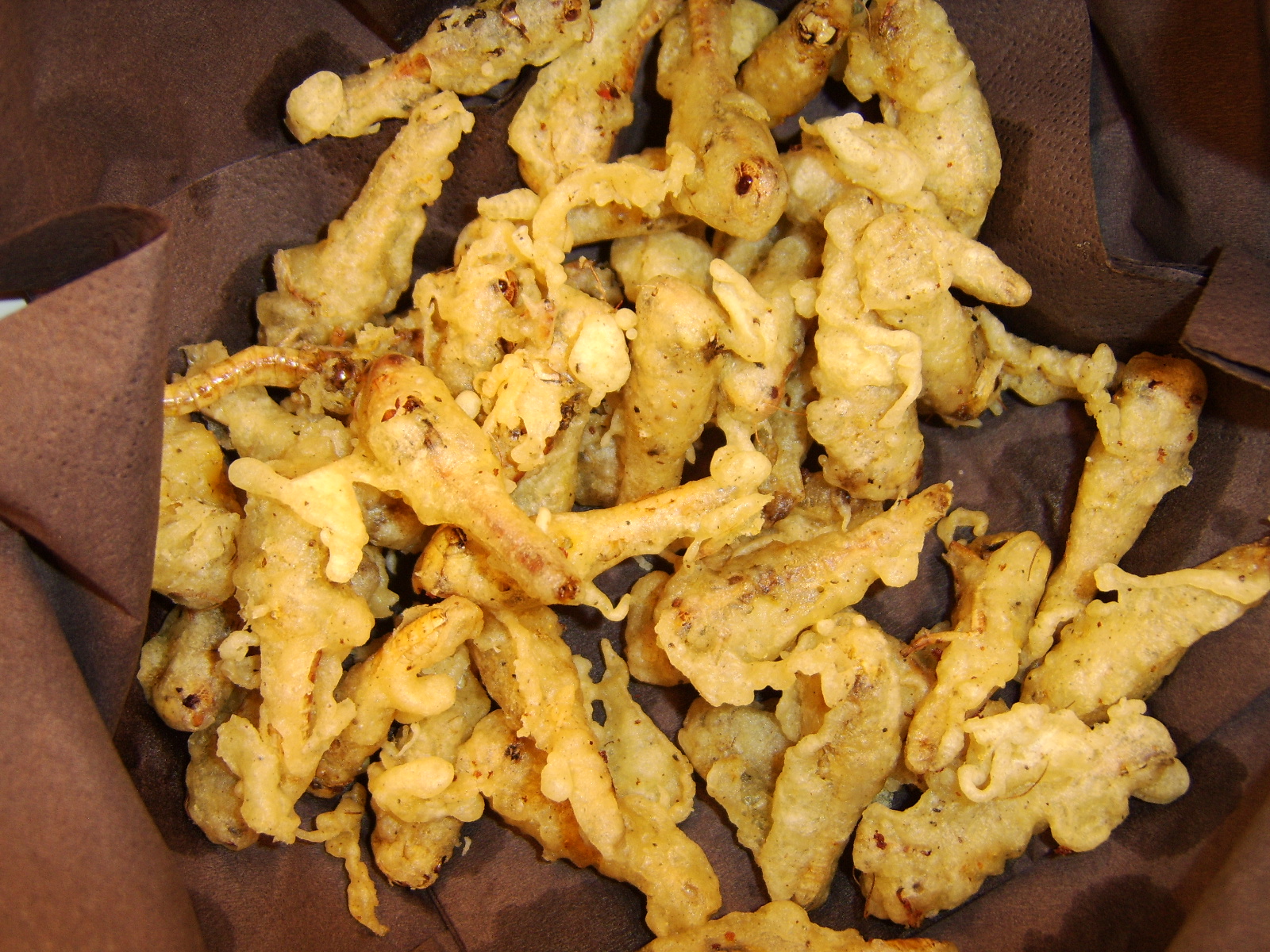
Trying to change ‘Ick’ into ‘Yum’” is the heading of an article in the NY Times on how the Dutch are preparing their homeland market for insect food. The article is referring to the research done at Wageningen University on insects as food and Dutch government efforts to facilitate the insect breeding sector. Wholesaler Sligro sells insects, such as mealworms or locusts, mostly to restaurants. Will insects soon be in the supermarket? ‘Market penetration’ is certainly an ambition of the insect-as-food protagonists in the Netherlands. It seems, after decades in the margins, that momentum is building up for large scale introduction (see also this coming debate).

jasonfking.com

Not too many respondents had an ‘Ick’ reaction much to the surprise of the students of the Food Culture course. They found a remarkably high rate of respondents who were willing to try (60%). The respondents, mainly fellow students, often referred to the expected protein scarcity in the future and the environmental devastation associated with current livestock production. How to feed the world? Moral pressure by environmental consciousness may be an important factor in the willingness to accept insects as food. Another factor, which, at least in theory, should help consumer acceptance is to construct trendiness around eating insects. If Angelina Jolie is eating insects, we of course, cannot stay behind…where is the Dutch role model?