Internship possibility with Stroom Den Haag

 In 2009 Stroom Den Haag (www.stroom.nl) kicked off the program Foodprint. Food for the city. The program takes place over the course of several years and focuses on the influence food can have on the culture, shape and functioning of the city, using The Hague as a case study. The program invites artists and designers to develop appealing proposals on the subject, while at the same time establishing a clear connection with entrepreneurs, farmers, food experts and the general public. 

Foodprint as a project ends in 2012. To mark the end of the three year project, a book will be published and a symposium organised around the same theme: How do we feed our cities of the future (2050) in a sustainable way? Stroom is looking for a student to assist them with the organisational work but also to do additional research. For instance, there is an idea to create a visual essay with a timeline starting around 2050 B.C. (Sumerian clay tablets being the oldest judicial document, communicating about barley) with on it the most important laws and inventions in the field of production and trade of food in urban areas.

If you are curious about the possibilities, please contact Els Hegger (els.hegger@wur.nl).

Moonlight farmers and Lump suckers; The ICRPS Summer School in Norway

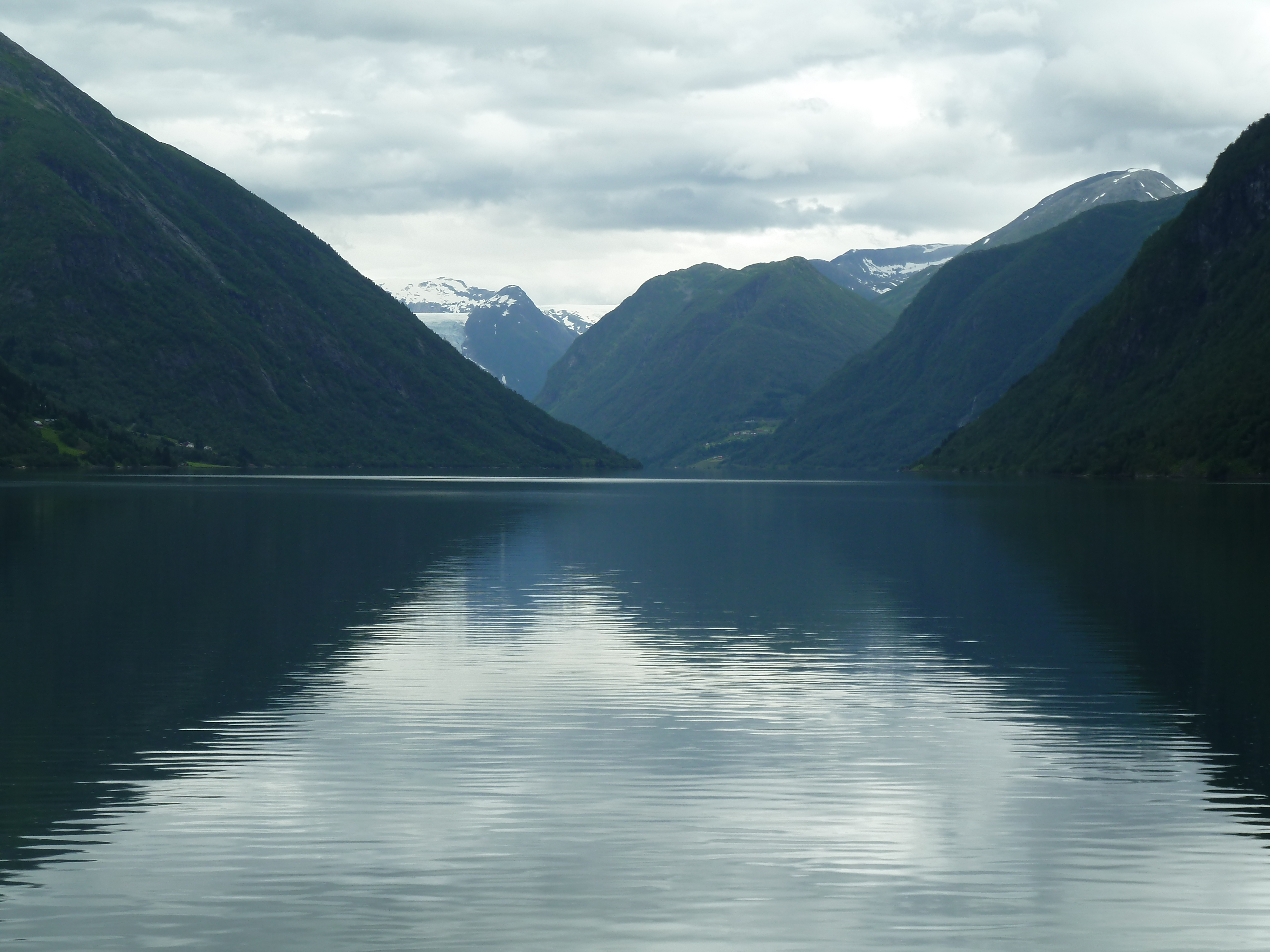
This Summer School about policies for rural development took place from June 25th to July 9th 2011 on 2 locations in Norway, in Oslo and in Sogndal. The course involved a variety of lectures, discussions and group word on issues such as natural resources, community development, rural services, renewable energy, food & agriculture, policy and climate change. The diverse group of students (some of them already working in rural development), faculty members and two OECD researchers included mainly people from Europe and the US (especially Canada) and discussed not only rural development in Norway, but compared this with interesting cases in their own countries. I only attended the second week in Sogndal, a town located between Bergen, Oslo and Trondheim, at one of the most beautiful fjords in Norway. Sogndal is located near the largest glacier in Europe.
Moonlight farmers refers to the agricultural situation in Norway: only 3% of the land is used as arable land, the average size of a farm is small and many landowners have a job which they attend in the daytime, while doing farm work during ‘moonlight’ (in fact in summer the daylight lasts very long in Norway).
Lump suckers refers to innovation in aquaculture in the Norwegian fisheries. Norway is a large exporter of fish, especially salmon. In aquaculture farms salmon is produced under controlled conditions. One of the biggest problems is lice-infection on salmon. An ex-professor which runs a research station and aquaculture farm in Sogndal is developing some important innovations: he grows a special type of fish, called lump suckers, which suck the lice of the salmon. He also experiments with improving the immune system of salmon.

More information can be found on the ICRPS website: http://www.umb.no/icrps2011. The papers and presentations are on the X-drive of the Rural Sociology Group. For a report with some impressions of the lectures or other information you can  mail to lummina.horlings@wur.nl . There is also a special Linked in group: International Comparative Rural Policy Studies Consortium.

Continue reading

Conference Call – Agriculture in an Urbanizing Society

A major demographic milestone occurred in May 2007. For the first time in the history of mankind the earth’s population became more urban than rural. This process of urbanization will continue in an accelerated pace in the forthcoming decades: the growth of the world population from 6 billion people in 2000 to 9 billion people in 2050 will mainly occur in urban areas. By 2050 the urban population will approximately be twice the size of the rural population.

However, this does not mean that urban areas are or will become of greater importance than rural areas. On the contrary, the urban and the rural have always heavily relied on each other and will do so even more in an era characterized by rapid urban population growth. Cities will continue to need resources such as food, fibre, clean water, nature, biodiversity, and recreational space, as well as the people and communities that produce and provide these urban necessities and desires. Hence, key questions for the next decades are how, where and by whom these urban necessities and desires will be produced and provided and if and how this can be done in manner that is considered to be socially, economically and ecologically sustainable and ethically sound.

In recent years the concept of multifunctional agriculture has emerged as an important reference in debates on the future of agriculture and the countryside and its relations with the wider and predominantly urban society. This is an expression of the fact that agriculture is not only valued for its contribution to food and fibre production and the economic development of the agro-industry, but needs to be assessed according to a much wider range of social, environmental, economic and ethical concerns. At farm level multifunctional agriculture is characterized by a variety of entrepreneurial strategies and activities, such as processing and direct marketing of food products, energy production, care for elderly and disabled people, and tourism. But multifunctional agriculture is also expressed at higher scales, such as the regional level (e.g. collective nature and landscape management schemes and regional branding) and the national level (e.g. policymaking and implementation).

Due to the multiplicity of activities, the multi-scalar character of multifunctionality and the geographical contextuality of expressions of multifunctional agriculture, research on multifunctional agriculture and changing urban-rural relations is highly fragmented, disciplinarily as well as geographically. Hence, this conference aims to advance the scientific state of the art in research on multifunctional agriculture and urban-rural relations by bringing together scholars of different disciplines (sociology, economics, spatial planning, land use planning, regional planning, urban planning, crop sciences, animal sciences, soil sciences, architecture, etc…) from all parts of the world.

Working group themes
The conference facilities allow for a maximum of 21 parallel working group sessions. The scientific committee has proposed 21 working group themes (see http://www.agricultureinanurbanizingsociety.com/UK/Working+group+themes/)   and is inviting prospective working group convenors to submit a short (max 500 words) call text for the theme they would like to convene. Proposals for a working group call text can be send to the chair of the scientific committee by email (han.wiskerke@wur.nl) before the 1st of September 2011. The deadline for submission of abstracts will be 1st of December 2011. Abstracts will have to be submitted to the convenors.

More information

Please check the conference website for more information.

Growing food in the neighbourhood

Tilburg’s City Garden- Lise Alix

This winter I did an internship in which I set up a city garden in Tilburg. I found ten enthusiastic, mostly female neighbours, ready to cooperate in creating their neighbourhood’s kitchen’s garden. We learned about designing and preparing a garden, working together, and about physical endurance while spreading manure, transporting unwanted sand, and carrying and breaking paving stones.

I was assigned to manage this project by the Brabantse Milieufederatie (BMF), an organization that tries to protect the  environment. One of their focus points is on food, because food is a daily need that links many environmental problems like food transport, food packaging and unsustainable agriculture with use of pesticides and fertilizers.
One way of solving these problems is by growing our local vegetables, for example in neighbourhoods kitchen’s gardens. The BMF has, in cooperation with other organizations, tried to raise consciousness and support by the municipality of Tilburg on city gardens. As an example of how well it functions, BMF wanted to have one tangible kitchen’s garden in Tilburg. That’s where I came in.

Continue reading

Gastronomic field trip Rhederoord 2011 – new video clip

Like last year (see the respective blog on the field trip and the rather amateuristic video clip I made of it) students attending the course Origin Food: a market for identity made a field trip to the Rhederoord estate to learn more about the passion for local food and actually taste excellent local cuisine. Jidi Xu, one of our enthousiast students made a ‘cool’, dynamic video clip of the field trip that will especially be appealling to young people, although I liked it very much too!