The scholarly debates in Ottoman /Kurdish studies regarding the Armenian and Kurdish issues from late 19th century onwards, reveals that the national question is usually viewed as a product of competing nationalisms— that is, political ideologies built around conceptions of communal belonging and statehood. The scholarship on sectarianism in the Arab Middle East, too, despite critical work in the last decade, has been dominated by rather ahistorical and primordial assumptions concerning the relationship between religion, modernity and politics in the Ottoman imperial and (post-Ottoman) colonial contexts.
Insurgent movements have commonly re-located to isolated rural areas with weak state presence where their security was guaranteed by a hostile environment to launch insurgencies. The more recent field of rebel governance also draws on predominantly rural cases. Yet, some groups have chosen to predominantly base their armed mobilisations in cities with much higher security risks where they are obliged to mobilise clandestinely. Clandestinity is often seen as an impediment to insurgent consolidation. This article explores the forms of rebel governance adopted by the M-19 in Colombia to construct networks of social ties needed to embed itself in urban environments. It highlights a case of urban rebel governance without territorial control, thus extending the scope of the rebel governance literature. It addresses the spatial variation of the M-19’s insurgency by analysing its diverging experiences of its clandestine mobilisation in Bogota and Cali, as well as a brief window where it conducted more public urban mobilisation. Based on qualitative interviews conducted with former militants and an extensive qualitative, coding of M-19 primary archival sources, the findings show that M-19 could maintain its urban campaigns because of its parallel rural infrastructures. When the conditions for urban mobilisation deteriorated, its militants could flee to the relative safety of the rural fronts. The article’s findings hint at potential avenues for further research, notably more detailed assessment of the ties between urban and rural units and support networks, and a more explicit comparison between patterns of social tie creation in urban and rural environments.
“Clandestinity and insurgent consolidation: The M-19’s rebel governance in urban Colombia” is a new publication by Francis O’Connor, a Marie Curie Skłodowska Post-Doctoral Fellow in Rural Sociology at Wageningen University in the Netherlands. Read the full article here: https://doi.org/10.1016/j.polgeo.2023.102930
The issue of gender and agriculture has been on the research agendas of civil society organisations, governments, and academia since the 1970s. Starting from the role of women in agriculture, research has mainly focused on the gendered division of work and the normative constitution of the farm as masculine. Although the gendered division of work has been questioned, the idea of binary gender has mostly been taken as a given. This explorative research shifts the attention from the production of (traditional) gender roles to the making and unmaking of binary gender. An ethnographic study of four farms in Switzerland is drawn on to explore queer farming practices and investigate how queer farmers navigate gender normativity and what this tells us about gender in agriculture more broadly. After considering the mechanisms through which queer farmers are discouraged from farming as a livelihood on the basis of their sex, gender or sexuality, this article argues that queer farmers de- and re-construct gender and farming identities differently, which has research and policy implications for a more diverse and resilient rurality.
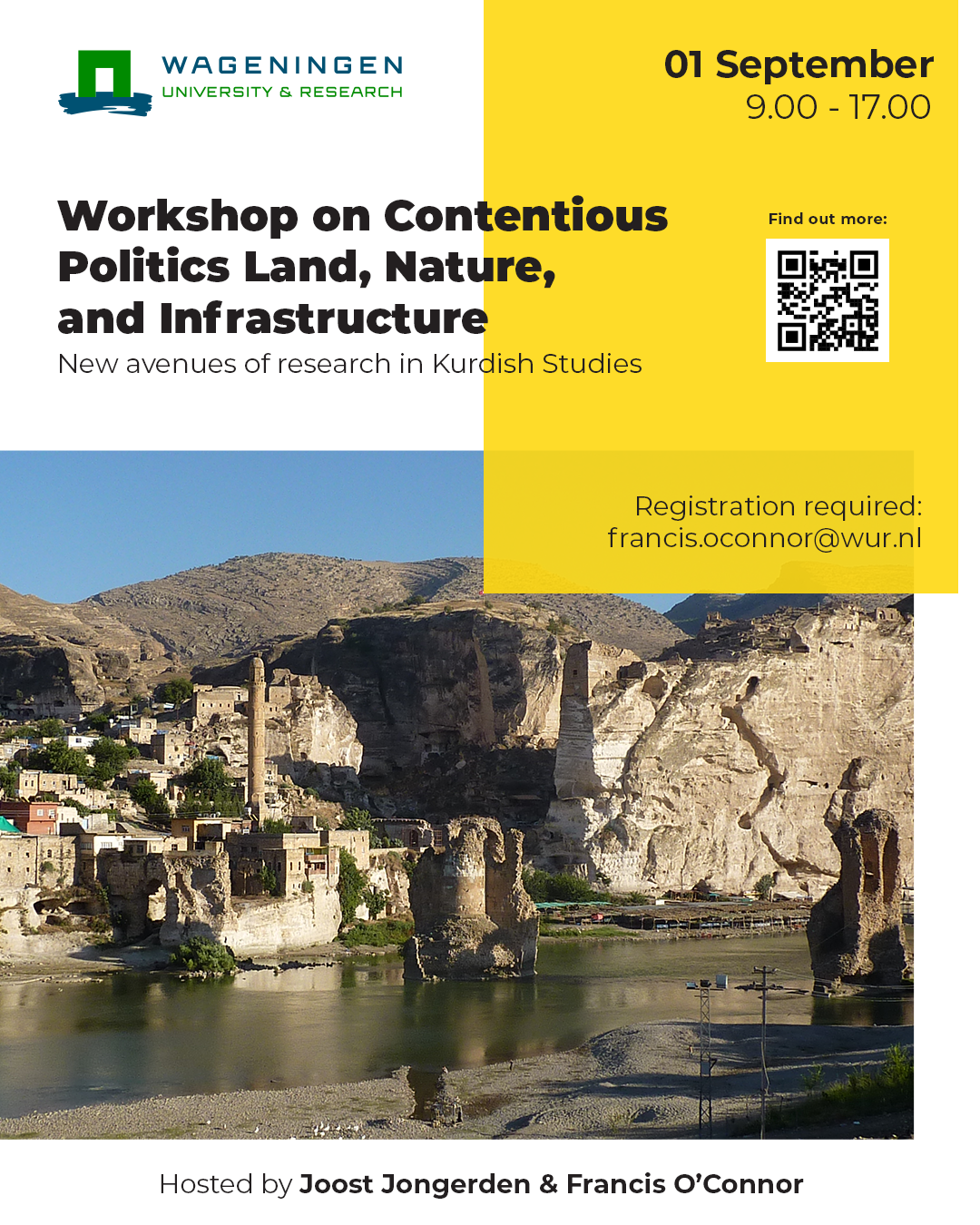
Hosted by the Rural Sociology Group, Wageningen University and Research, September 1, 2023
In Kurdistan occupations and demonstrations by landless workers and peasants demanding land reform have taken place on a large scale since the middle of the 20th century. In more recent years, this contestation over land has overlapped with the rise of environmental activism. The workshop Contentious Politics in Kurdish Studies: Land, Nature, and Infrastructure addresses a number of theoretical debates and questions related to land.
Affiliations of the participants
Kamuran Akin is an independent researcher who recently defended his PhD at the Institut für Europäische Ethnology, Humboldt Universität zu Berlin.
Seda Altuğ is a lecturer at the Atatürk Institute for Modern Turkish History at Boğaziçi University, Istanbul.
Aysegul Aslan is a Ph.D. candidate in geography at Fırat University, Turkey, and a visiting fellow at the Environmental Policy Group at Wageningen University, the Netherlands
Eray Çaylı is a professor of Human Geography with a Focus on Violence and Security in the Anthropocene, Hamburg University, Germany
Pinar Dinc is a researcher at the Centre for Advanced Middle Eastern Studies at Lund University.
Ayhan Işık is a Postdoctoral Researcher at Centre de Recherche Mondes Modernes et Contemporains, Université libre de Bruxelles.
Adnan Mirhanoğlu is a researcher in the Department of Earth and Environmental Sciences at KU Leuven, Belgium.
Zeynep Oguz is a lecturer in Social Anthropology at the University of Edinburgh.
Murat Öztürk is associate professor at the Department of Economics at Kırklareli University in Turkey.
Marcin Skupiński is a Ph.D. candidate at Warsaw University, Poland.
Necmettin Türk is a PhD Candidate in the Working Group “Critical Geographies of Global Inequalities” at the Institute of Geography, Hamburg University, Germany.
Filyra Vlastou-Dimopoulou is a Ph.D. candidate in Human Geography (NTUA & Paris 1 Panthéon-Sorbonne University.
Dobrosława Wiktor-Mach is professor of Economics, Cracow University, Poland.
Organizers
Joost Jongerden – Associate professor at the Rural Sociology Group, Wageningen University, the Netherlands joost.jongerden@wur.nl
Francis O’Connor – is a Marie Curie Skłodowska Post-Doctoral Fellow in Rural Sociology at Wageningen University in the Netherlands. Francis.oconnor@wur.nl
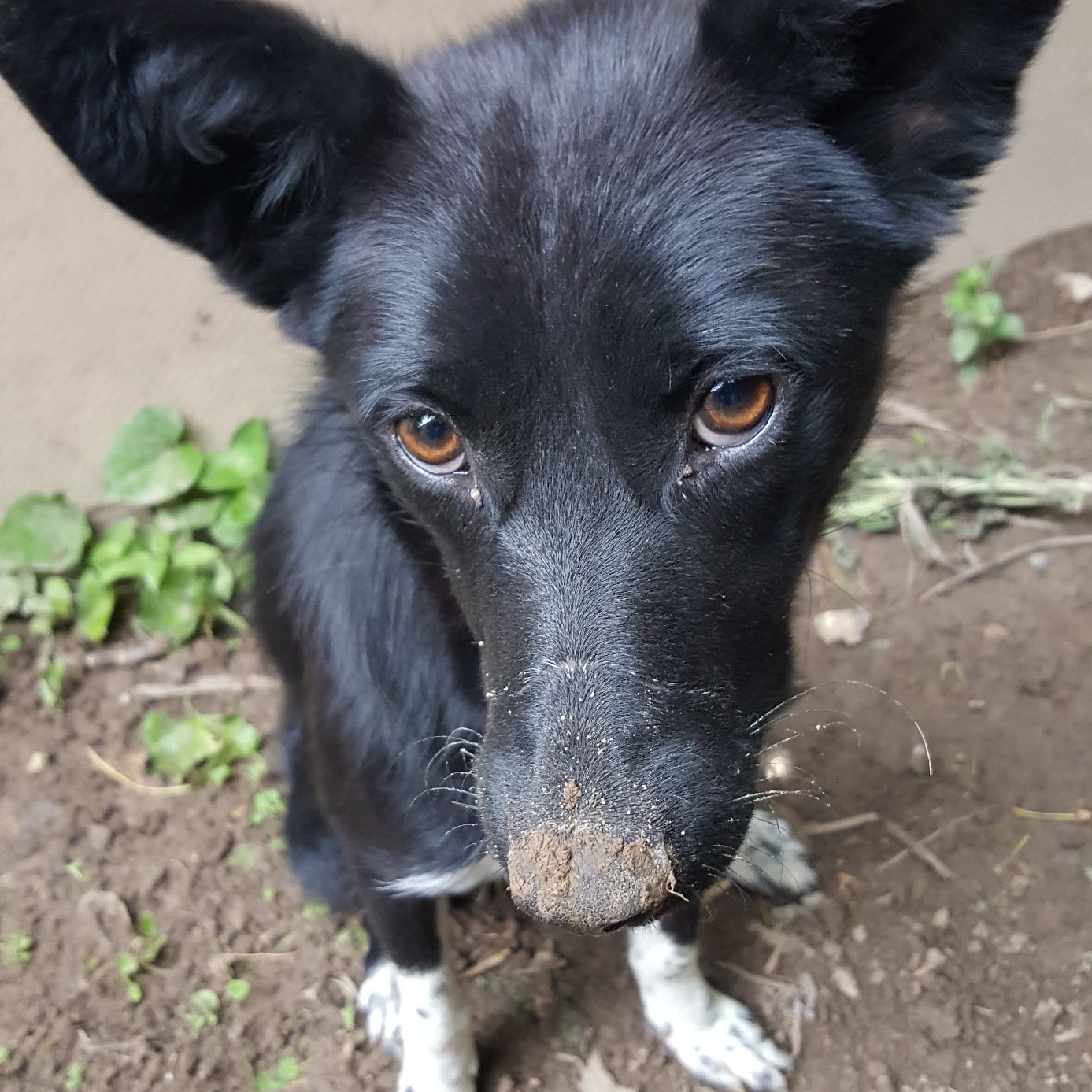
“I am afraid of the dog, but I like its owner” (Az in sag metarsam, lekin sohibashro naghz mebinam), the senior state official stated while staring at my Lada Niva parked by the road and inside, waiting for me to return, my dog Bim.[*] The official and I were standing at a crossroads, talking about land use issues. I had known him for years and tried to laugh off the statement, but it took me some time before I could pick up the conversation again. It was late in my fieldwork in Tajikistan, and his words, later caused me to reflect on one of the roles Bim had taken on during my fieldwork. She was my posbon, my guard.