
Flora Sonkin, MSc. International Development Studies at Wageningen University, followed the course of Global Sense of Place (RSO-55306) of the Rural Sociology Group. For the course, she wrote an essay on Eco-villages. Below, a summary of her essay.
 Debates in contemporary social theory and political geography on the use of relational theory as a conceptual framework (found in the works of Escobar, Harvey, Massey and others), have generated a fertile ground to the deconstruction of the concept of place as bounded space. Through the use of a relational approach, space is seen as a social construction (Harvey, 1994). Consequently, it becomes a result of interactions, which are neither static nor limited to boundaries. In other words, thinking space relationally means that place is not defined as a locality or mere geographic position, but as a complex network of relations, a product of multiple trajectories and practices (Massey, 2004).
The aim of the paper I wrote on eco-villages is to contribute to the academic and activist discussion on the creation of different realities or “other worlds” in the present, using the case of eco-villages and the Global Ecovillage Network to illustrate the possibility to live within alternative forms of socio-economic organization without withdrawing from mainstream connections and social relations. Here, eco-villages and the global network are first characterized as a social movement which aims for self-sufficient living, being also put into the category of an ‘autonomous geography’ (Pickerill & Chatterton 2006). Continue reading
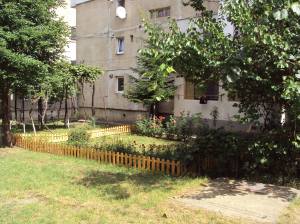 This MSc thesis by Anamaria Alupoaie (MSc Organic Agriculture) investigated the reasons for failure of urban gardens, and the impacts of gardens on resident’s ‘sense of place’, in Dorohoi city in Romania.


