
Last year I taught in this Summer School and I am excited to be a part of it again this year as we explore how to feed cities.
For more information contact: segreteria_dmmt@med.unibs.it

Last year I taught in this Summer School and I am excited to be a part of it again this year as we explore how to feed cities.
For more information contact: segreteria_dmmt@med.unibs.it
 By Merel Scheltema – Msc. Urban Environmental Management, specialisation in Spatial planning, WUR.
I propose that an investment in quality public space, through urban agriculture and multi-functional land use, can improve the access of people to basic needs. According to the UN habitat executive Director of Joan Clos i Matheu public spaces are therefore a vital asset. The quality of public spaces affects the quality of private spaces and the city as a whole. A ‘good’ public space is part of the solution to create ‘healthy’ cities, by revitalizing the environment, economic development and fostering social capital. The concept of ‘sustainable place-shaping’, answers this call for healthy public spaces. It is a holistic approach to strengthen collective agency, participation and leadership of people who engage in places.
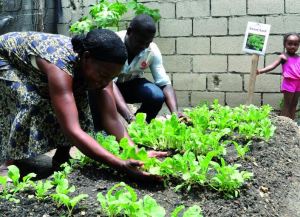
In my essay for the RSO course ‘A global sense of Place’, I applied the SUSPLACE framework, developed by the Rural Sociology Group to investigate: how urban agriculture as an investment in public space contributes positively to sustainable place-shaping. I studied this by examining urban sack farming in the Kibera slum of Nairobi, the largest Slum in Africa. I reason that urban gardening offers basic needs as well as improves social capital, environmental quality and economic opportunities. Continue reading
As part of the perfect storm seminar series at the University of Edinburgh, Dr Jessica Duncan gave a seminar about civil society participation in the global governance of food security on the 26th of January. ‘The Perfect Storm Scholars‘ interviewed her afterwards and posted a podcast that resulted of this interview on their blog.
As part of the perfect storm seminar series (see poster), Dr Jessica Duncan, Assistant Professor in Rural Sociology at Wageningen University, The Netherlands, gave a seminar about civil society participation in the global governance of food security on the 26th of January at the University of Edinburgh.
She kindly made the time to talk to me about her seminar and research when she was in Edinburgh. You can find the result of this conversation in a podcast. Click HERE to listen to it.
Podcast structure
We talk about her seminar and research until around 24:40 min. From that point onwards we discuss the practical dynamics of undertaking empirical research in general, and specifically on global governance. At 30:00 min Dr. Duncan shares her views on interdisciplinary research.
Podcast notes:
You can find out more about Jessica’s research in her latest book: Global Food Security Governance: Civil society engagement in the reformed Committee…
View original post 229 more words
By Tian Yu, a PhD candidate at Wageningen University, who’s research focusses on organic farming and rural development.
Since the ecological movement came into being in the sixties, organic farming has kept on developing and now has a history of half century in the Netherlands. Today’s organic farm is different from what it was in the beginning. Some ‘modern elements’ have been added, but the underlying social and environmental principles are still the same.
After doing some readings and interviews about organic farm in the Netherlands, I finally got the chance to experience a real, tangible Dutch organic farm. The farm I visited is located in the famous Dutch ‘polders’ in the Flevoland province, and produces mainly vegetables. It has 75 hectares of land, which is bigger than the average organic farm in Holland. Even though it has no plants or work in the field during wintertime, still I have experienced and seen a lot, especially regarding energy- and labour use on the farm. It’s easy to notice at first that some fuel-based and electricity-based machines were used for planting, harvesting and washing vegetables, which is kind of out of my imagination. But also the so-called new energy – solar energy and methane – are used here.


The WASS PhD Masterclass on methods is full! You can no longer subscribe for it. Of course you are welcome to attend the public lecture.
We have invited dr. Per Olsson from the Stockholm Resilience Centre to visit Wageningen and give a public lecture on the 24th of February. He will give a public lecture on his primary field of research which is focussed on linked socio-ecological system dynamics and resilience. In this lecture he will be putting sustainability transitions central, while discussants from the groups RSO, KTI and PAP will reflect on the lecture taking their own research in mind.


