Moonlight farmers and Lump suckers; The ICRPS Summer School in Norway

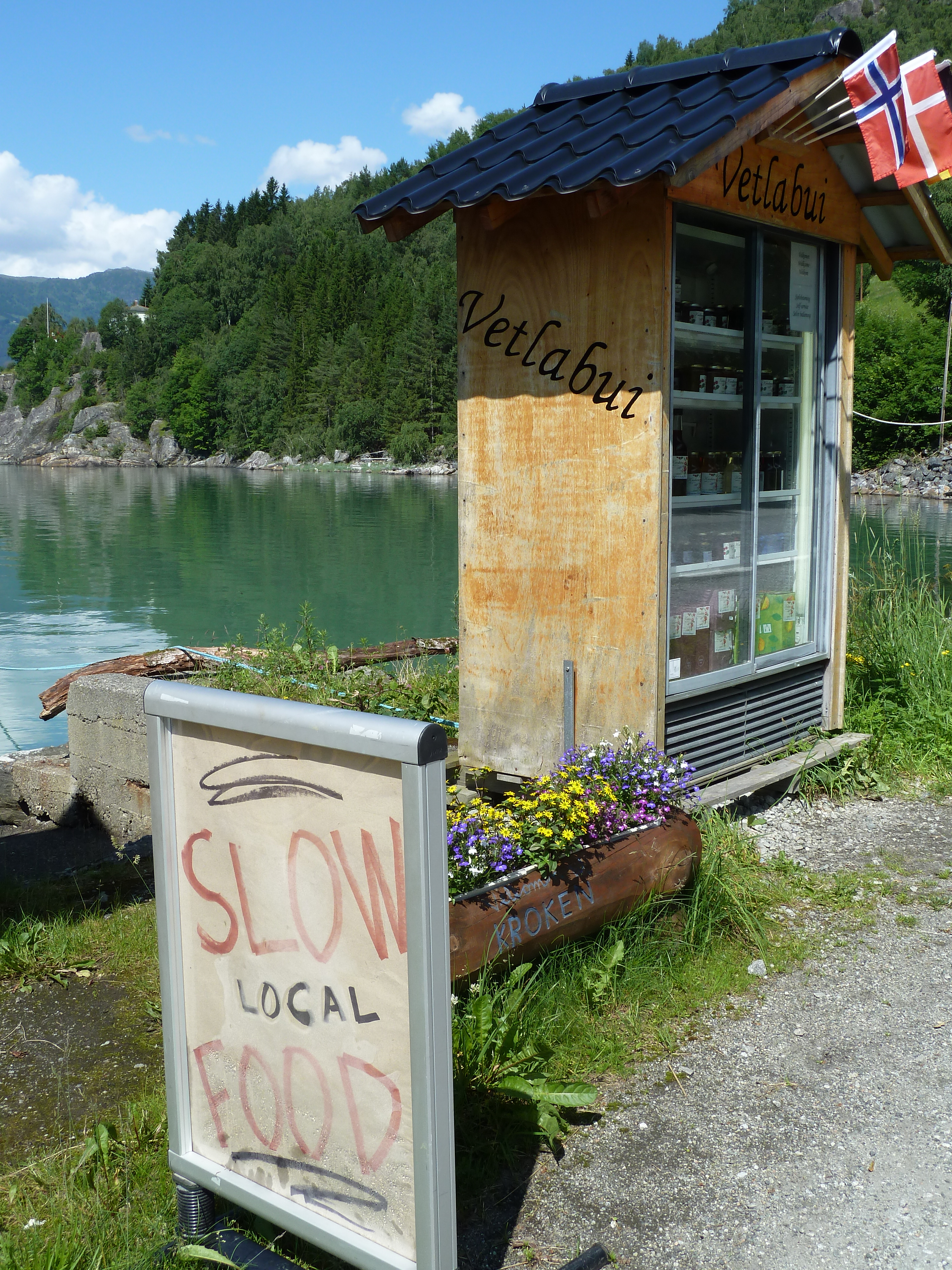
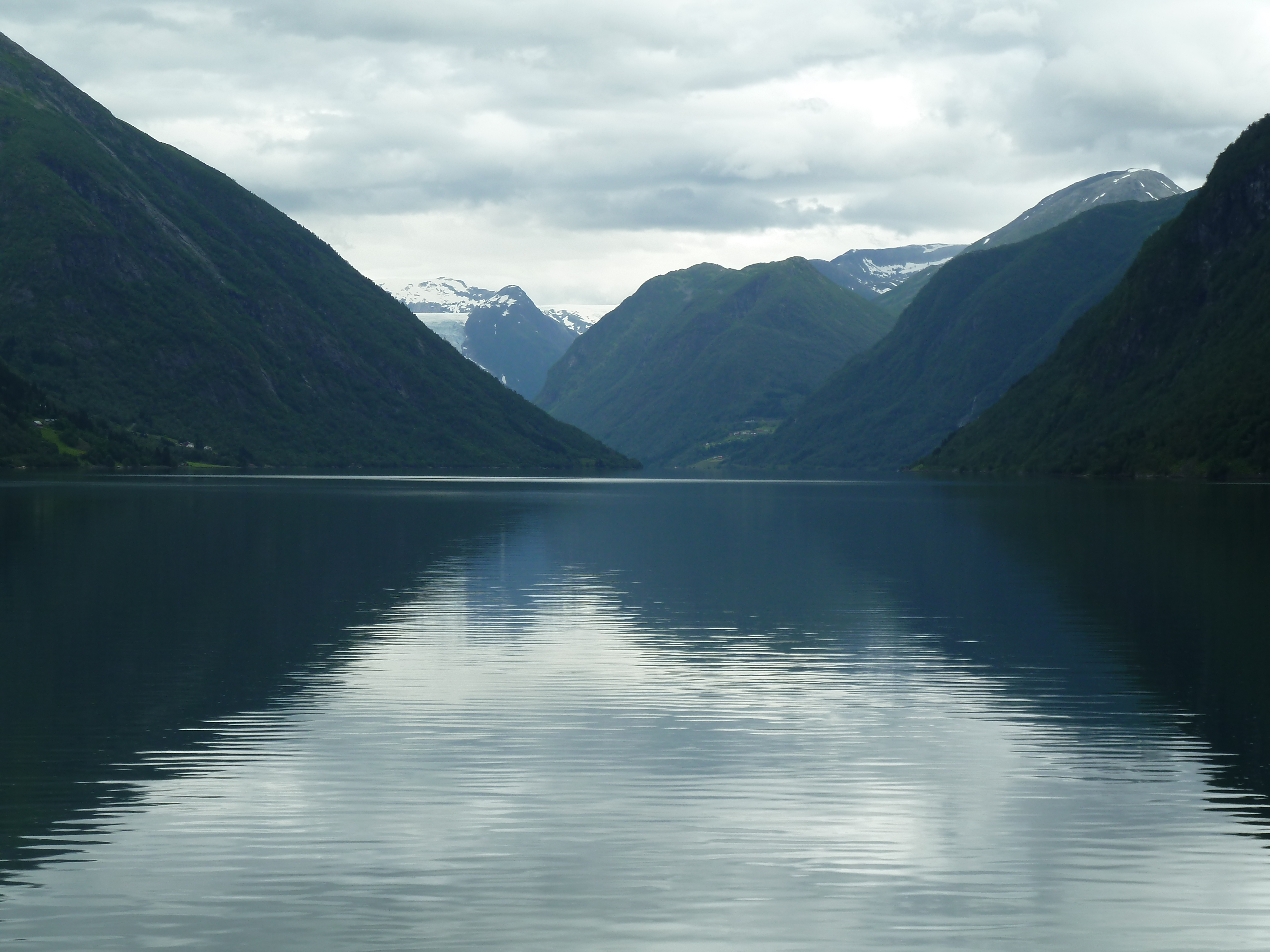
This Summer School about policies for rural development took place from June 25th to July 9th 2011 on 2 locations in Norway, in Oslo and in Sogndal. The course involved a variety of lectures, discussions and group word on issues such as natural resources, community development, rural services, renewable energy, food & agriculture, policy and climate change. The diverse group of students (some of them already working in rural development), faculty members and two OECD researchers included mainly people from Europe and the US (especially Canada) and discussed not only rural development in Norway, but compared this with interesting cases in their own countries. I only attended the second week in Sogndal, a town located between Bergen, Oslo and Trondheim, at one of the most beautiful fjords in Norway. Sogndal is located near the largest glacier in Europe.
Moonlight farmers refers to the agricultural situation in Norway: only 3% of the land is used as arable land, the average size of a farm is small and many landowners have a job which they attend in the daytime, while doing farm work during ‘moonlight’ (in fact in summer the daylight lasts very long in Norway).
Lump suckers refers to innovation in aquaculture in the Norwegian fisheries. Norway is a large exporter of fish, especially salmon. In aquaculture farms salmon is produced under controlled conditions. One of the biggest problems is lice-infection on salmon. An ex-professor which runs a research station and aquaculture farm in Sogndal is developing some important innovations: he grows a special type of fish, called lump suckers, which suck the lice of the salmon. He also experiments with improving the immune system of salmon.

More information can be found on the ICRPS website: http://www.umb.no/icrps2011. The papers and presentations are on the X-drive of the Rural Sociology Group. For a report with some impressions of the lectures or other information you can  mail to lummina.horlings@wur.nl . There is also a special Linked in group: International Comparative Rural Policy Studies Consortium.

Continue reading

The diversity of rural areas as background for place-based policy and planning

Last week June 22 Dr. Sylvia Herrmann gave a presentation titled ‘The diversity of rural areas as background for place-based policy and planning’ (see the Presentation WASS-seminar by Dr Sylvia Herrmann).

Dr Sylvia Hermann is affiliated at the Institute for Environmental Planning, Leibniz Universität Hannover and was coordinator of the EU-funded FP7 research project RUFUS (www.rufus-eu.de). Based on the findings of RUFUS dr Hermann pleads for place-based policy and planning to cope with rural diversity in the EU.

In her lecture she presented findings of the RUFUS project and argued that the specific characteristics of places have to be included in planning and policy to reach a more successful implementation of sustainable and site related policy measures. Ergo: policies and planning need to be more place-based.

In the discussion about future rural development, the diversity of rural areas in Europe increasingly raises the interest of policy makers and stakeholders. The strategic paper Europe2020 states that the common EU targets for future development ‘must be … capable of reflecting the diversity of Member States situations and based on sufficiently reliable data for purposes of comparison’. Rural areas have to be recognised as places with diverse combinations of historical, social, cultural and environmental features and the installation of relations among local actors (Cisilino et al., 2010). This shows that the diversity of rural European areas is more and more recognized as a key potential for intelligent growth. Thus, society seeks for development approaches based on regional diversity to better understand the development opportunities and challenges of diverse types of rural areas in Europe. Consequently, research has to combine quantitative and qualitative approaches to deal with the diversity. It also has to support the improvement of endogenous potential and governance approaches reflecting the diversity of the specific regions.

The EU FP 7 project ‘RUFUS’ (Rural Future Networks) tried to meet these challenges with a research approach supporting politicians with knowledge about the diversity of rural regions. RUFUS combined a set of methods to provide a’ mosaic’ of answers to policy makers and stakeholders. It has created a new classification system to map the diverse combinations of economic, social, and ecological conditions of European rural regions in nine EU countries (the UK, Germany, France, Portugal, the Netherlands, Italy, Sweden, Poland, and Hungary). This could help target rural development policy and provide insight into the need for CAP’s interaction with other policy areas. Maps showing the diverse development potentials of rural areas have been created. By the help of case studies the linkage between the top-down approaches of mapping with the reality in the regions has been established. The findings have been translated to policy relevant recommendations.

Support of Learning and Innovation Networks for Sustainable Agriculture (SOLINSA): new EU-funded project

In March we had the kick-off  meeting of the EU-funded research project SOLINSA: Support of Learning and Innovation Networks for Sustainable Agriculture. The website has been launched recently and provides information on the project and will publish reports of findings. At the front page of the website can find a link a flyer on the SOLINSA project.

Agriculture is in transition. Among others agriculture respond to market developments, policy reforms, consumers and societal concerns and more generally sustainability issues, but in various ways.  From a rather one-sided production perspective , agriculture has become many-sided or even versatile. This has in turn has implication for Agricultural Knowledge System (AKS), i.e. the formal education, research and advice directed to agriculture and its development and is reflected in the different tasks and roles AKS can and is asked to fulfill in the support of learning and innovation practiced in often less formalised networks (i.e. the LINSA’s). AKS is in transition too, with regard to the need of building versatile expertise as well in how its is formally organised and funded (private, public or mixed funding). This is core of what will be studied in SOLINSA: how AKS can support more effectively and efficiently learning and innovation networks for sustainable agriculture. For this purpose two Learning and Innovation Networks for Sustainable Agriculture (i.e. LINSA) of various kinds in the eight participating countries will be studied in depth. In the Netherlands for example the network of sustainable dairy farmers (www.duurzaamboerblijven.nl).

The Rural Sociology Group (RSO) and Communication and Innovation Studies (CIS) of Wageningen University jointly participate as a partner in SOLINSA. For information you can contact either Laurens.Klerkx@wur.nl (CIS), Frans.Hermans@wur.nl (CIS) or Dirk.Roep@wur.nl (RSO).

Gracious Empowerment?

By Alexandra Rijke

Minor Thesis
Title: Gracious Empowerment? Evaluating the impact the GRACE-network project had on the empowerment of female university students in their stance against Gender-Based Violence.

This minor thesis (click here for the complete thesis) is part of the Research Master International Development Studies at the Wageningen University and Research Centre. The objective of this minor thesis was to evaluate the GRACE-network project. This project was conducted in Irbid, Jordan. The aim of the GRACE-network project was to investigate how ICTs could be used to empower female university students in their stance against Gender-based Violence (GbV). The project was evaluated during four months of field work in Irbid, Jordan. During these four months the women participating in the project were interviewed and a focus group discussion was organized. The women, participating in the project as participants and as researchers, were asked during these interviews what empowerment meant for them, how they had experienced the GRACE-network project, if they felt empowered because of their participation in the GRACE-network project and how their stance against GbV was influenced.

Continue reading

Guest lectures on ‘A global sense of place’

In the context of the new Capita Selecta course ‘A global sense of place’ several guest lectures are organized by the Rural Sociology Group. These lectures are open for all students, PhD’s and staff members. Coming up are the following events, please join! More information: lummina.horlings@wur.nl.

Monday May 23th (15.30-17.00, room C63): Will Day.

Will Day is a PhD candidate in Harvard University’s dual PhD program in Middle Eastern Studies and Social Anthropology. His main interests are in economic and political anthropology, Marxist thought and its legacy in anthropology, urbanization and urban political economies defined by displacement and dispossession, and political geography and political ecology. He has carried out two years of ethnographic fieldwork in Diyarbakir, Turkey (June 2007-June 2009). His dissertation is focused on urban livelihoods and cultural politics in Diyarbakir the wake of massive state counterinsurgency campaigns that led to the displacement and dispossession of, very likely, well over 1,000,000 rural Kurds. He is interested in how family histories of rural displacement and dispossession and subsequent urban realities of mass unemployment have resulting in the transformation of not only the practices of work, but also the meaning of productivity, work, and masculinity, wealth, value, masculinity, and, ultimately, political belonging and citizenship and the imagination of political futures in this space of rapid and radical political economic transformations.
Content of the lecture: Will Day will talk about urban development in a place in Turkey. He will focus on ”political economy and urban livelihoods in the city through the lens of Massey’s concepts about thinking spatially which might help to clarify what it means to think of a space (a city, a village, etc) as less a fixed, stable entity and more a temporary, contingent crystallization of dynamic processes that link localities to wider geographies and relations of political community, economic life, and cultural imagination”.

Continue reading