Rural regional learning in Alytus County, Lithuania

Last week (October 21-22, 2010), I was given the opportunity to visit our DERREG project partner Emilija Kairyte (Institute NeVork) in her case study area of Alytus County in the South of Lithuania. In this blog, Emilija and I would like to share our experiences.

Like the Dutch DERREG case study region Westerkwartier in the province of Groningen, Alytus County comprises four rural municipalities. In terms of demography and economy, both areas are very different from each other. For example, the Westerkwartier has a population density of 173.4 inhabitants/ km², whereas the population density of Alytus County is estimated as 32.6 inhabitants/ km². While the Westerkwartier has witnessed an increase in citizens over the last years, amongst them a large number of young families, rural development in Alytus County is strongly affected by an increasing out-migration and an aging population. Living standards differ considerably. In the Westerkwartier, the GDP per capita was estimated as 55.400 Euro in 2006 while the GDP in Alytus County was estimated as 19.100 Litai in 2007 (equals 5.531,74 Euro, October 2010). Also in geographical terms the two regions are very different. The Westerkwartier is characterized by open grasslands in the North and small fields with framing hedgerows in the South. Alytus County is renowned for its vast forests and lakes.

During my visit to Alytus County, I accompanied Emilija to two workshops, one for the LAG and other public administration authorities on the 21st of October and one for rural initators and actors on the 22nd of October, which she organized in order to evaluate existing arrangements for support and facilitation of joint learning-by-doing activities within rural development initiatives. At these workshops, I presented supportive arrangements and benefiting rural development initiatives that we found during our investigations in the Westerkwartier and which we evaluated together with local stakeholders at a workshop organized by the Rural Sociology Group in the Westerkwartier on the 18th of October.
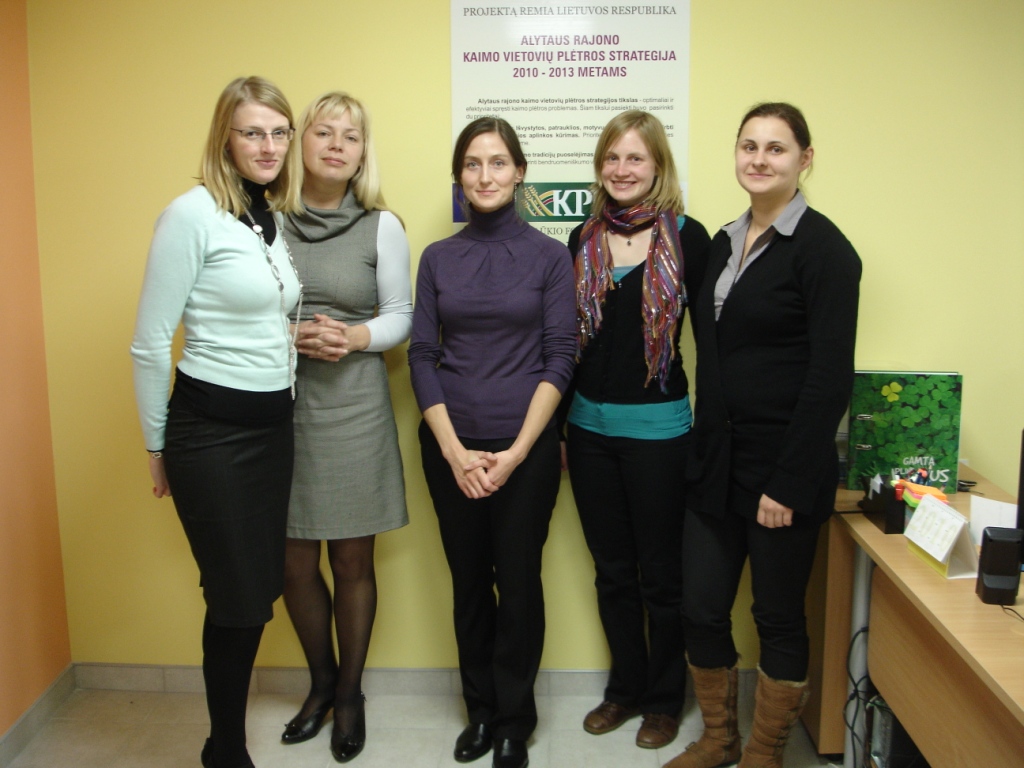
Meeting with rural development initiative supporters in Alytus District LAG office, Alytus

To my surprise, both regional learning supporters (including the LAG) and rural initiators did not see striking differences between the existing arrangements and support given to rural development initiatives in Alytus County and the Westerkwartier. Emilija and I however learned that there are some basic differences in the foundation and operation of the Countryside House (Plattelandshuis) in Westerkwartier and Seniūnija (NUTS5) in Alytus County. Continue reading

PhD position: Knowledge brokerage to promote sustainable food consumption and production

In January 2011 the project ‘FOODLINKS’ (Knowledge brokerage to promote sustainable food consumption and production: linking scientists, policymakers and civil society organizations) will start. This project is funded by the European Commission and will be carried out by a consortium of 14 partners (universities, regional and local governments and civil society organizations) from 9 European countries. The overall project aims at developing and experimenting with new ways of linking research to policy-making in the field of sustainable food consumption and production. FOODLINKS will be coordinated by Prof. Han Wiskerke and Dr. Bettina Bock of the Rural Sociology Group of Wageningen University.

Job description

Within the FOODLINKS project we are looking for a a PhD candidate who is interested in issues of science-society dialogue, science-policy collaboration and social learning in the field of sustainable production and consumption. The PhD candidate will combine the writing of a PhD thesis with hands-on participation in a EC-funded project and contribution to project deliverables. 

Within the overall FOODLINKS project,  the PhD project monitors and evaluates the processes of social learning taking place in three Communities of Practice that are established as part of the project. In these Communities of Practice researchers, policymakers and civil society organization exchange knowledge and experiences and commonly define new research questions in the field of short food supply chains, sustainable public food procurement and urban food strategies. The PhD project will evaluate the knowledge brokerage activities and processes of social learning that are taking place in the Communities of Practice as well as in the project as a whole. 

Requirements

  • A Master degree in sociology, communication science or innovation studies.
  • Knowledge of relevant theoretical concepts in science and technology studies, science-society dialogue and science-policy collaboration, such as boundary work, knowledge brokerage, multi-stakeholder participation and social learning.
  • Knowledge of and experience with monitoring and evaluating processes of (social) learning.
  • Some knowledge of or interest in agro-food research and issues of sustainable food production and consumption. 
  • Good analytical and writing skills.
  • Fluent in English
  • Willing to travel as the project will include frequent meetings within Europe.

 Appointment conditions

A PhD position for a period of 18 months, extended with another 30 months upon favourable evaluation. Gross salary will increase from € 2042 per month in the first year up to € 2612 per month in the last year based on a full-time appointment (38 hours per week). In addition, we offer a holiday bonus of 8% and an end-of-the-year bonus of 8.3% of your annual salary. 

 Additional information

Additional information about the vacancy can be obtained from:

  • Prof. dr. ir J.S.C. Wiskerke, Chair of Rural Sociology, Telephone number: +31 317 482679/4507 and
  • Dr. Ir B.B. Bock, Associate Professor Rural Sociology, Telephone number: +31 317 483275/4507 

Additional information about the FOODLINKS project can obtained through this link. The PhD position is mainly related to Work Packages (WPs) 2, 6 and 7 of FOODLINKS.

Additional information about the organisation can be obtained through one of the following:

Interested? Apply now via www.jobsat.wur.nl before November 8th 2010 (Vacancy number: SSG-RSO-0005).

Rural regional learning in the Westerkwartier (NL)

The Westerkwartier is a predominantly rural area in the province of Groningen (NL), situated between the cities of Leeuwarden and Groningen. The Westerkwartier is one of the case-study areas in the research project DERREG funded by the European Commission (see www.DERREG.eu for more info). Capacity building and governance of regional learning and innovation is one the four research task (see also previous posts on DERREG).

Last Monday, October 18, Rural Sociology Group facilitated a group discussion in the Westerkwartier. The discussion focussed on: a) how the support rural regional learning and innovation is actually arranged in the area and b) how beneficiaries evaluate the quality of the support.

DERREG Group discussion at the Hayema Heerd

17 representatives from collective (grassroot) development initiatives in the area, from local and regional government and from knowledge institutes participated in the discussion.

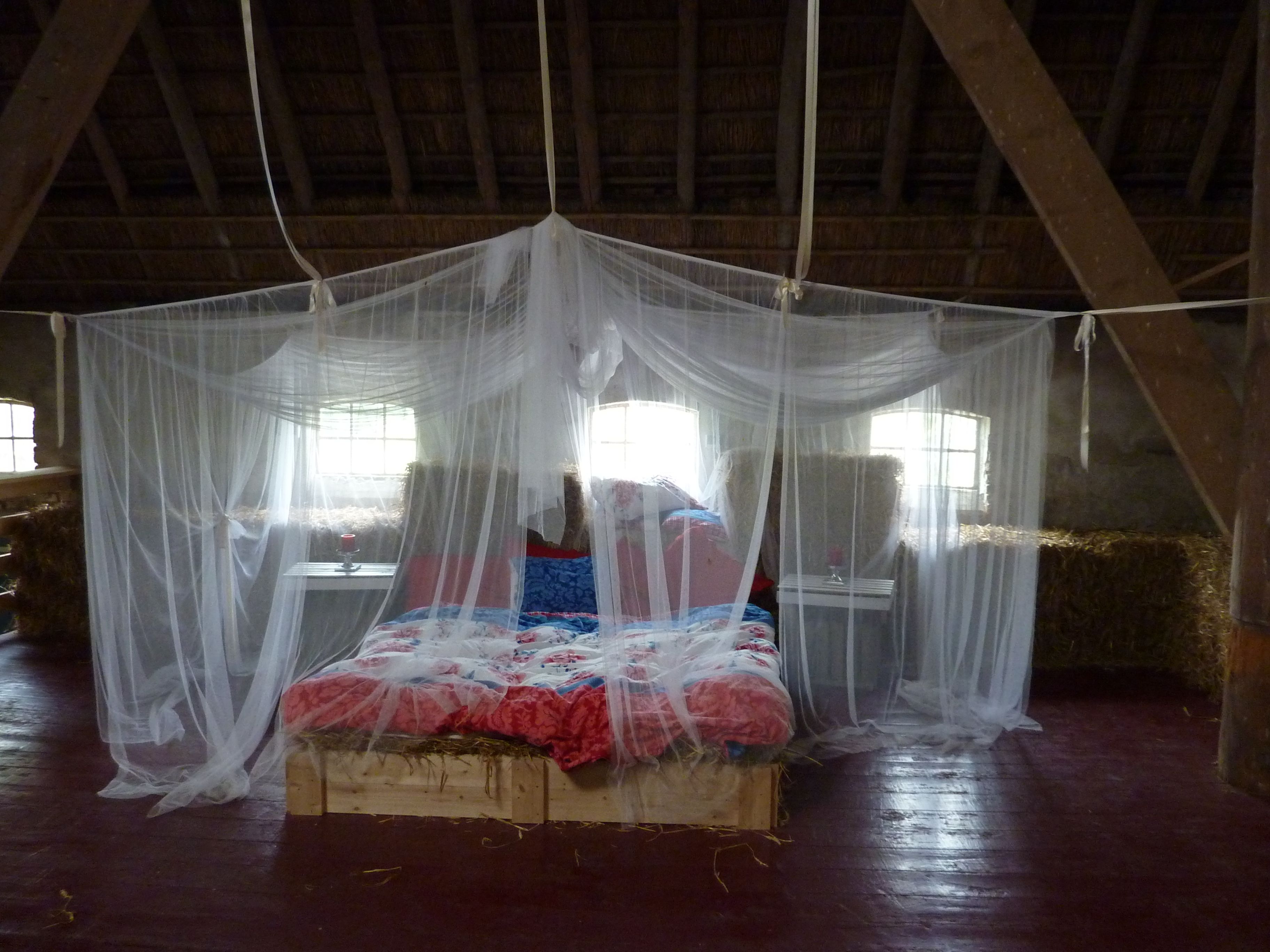
Sleeping in straw beds at Hayema Heerd

The workshop was organised at an inspiring location: the barn of the former farm Hayema Heerd in Oldehove (see www.hayemaheerd.nl), now offering citizens the special countryside experiences to sleep on straw beds. In addition Hayema Heerd also offers to learn more about real-life farming at nearby farms. this has been set up jointly with local farmers and is called In-Boeren, what refers to learning about being a farmer.

Mapping the governance of rural regional learning and innovation (Source: Wellbrock and Roep, 2010)

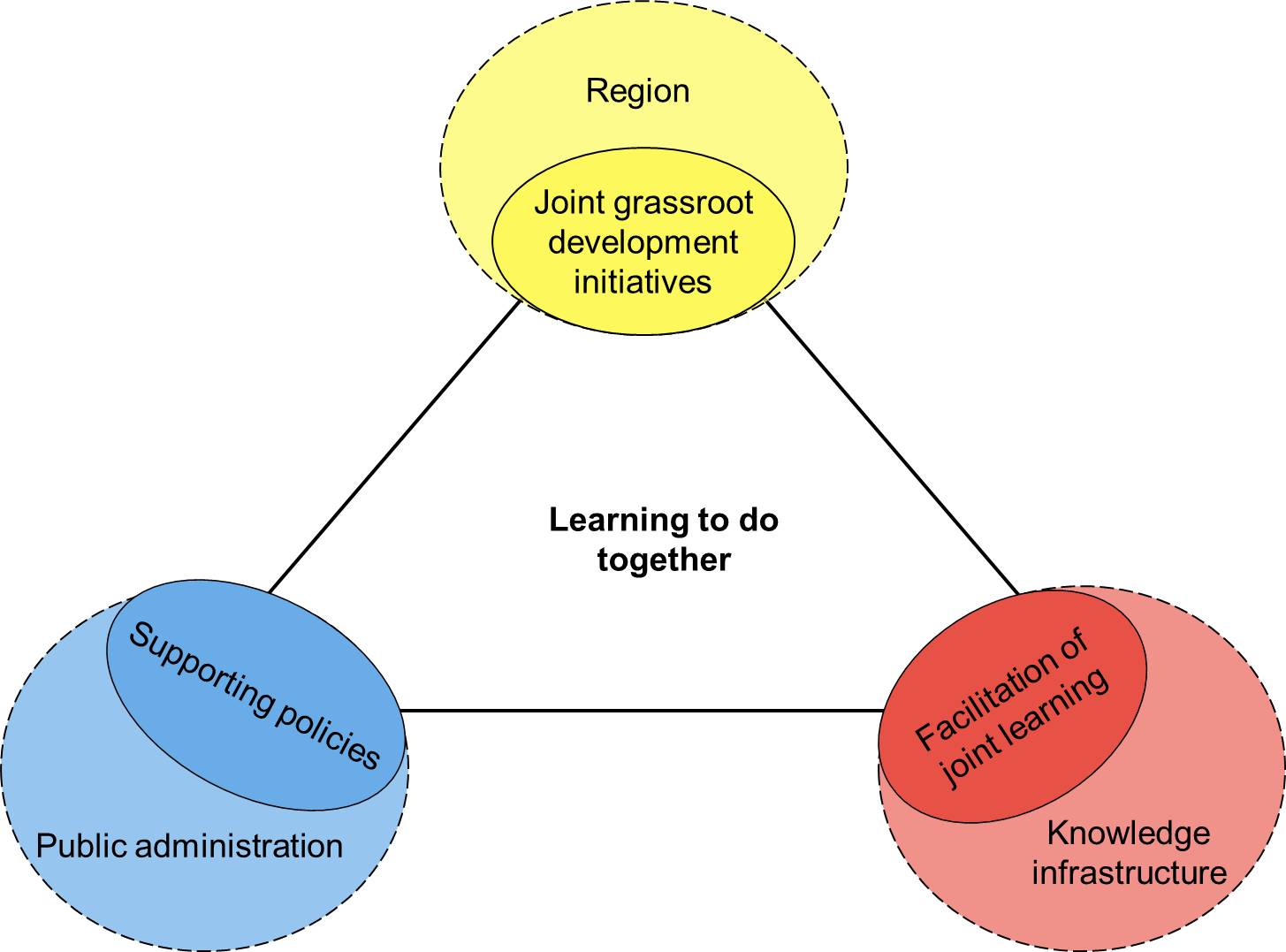
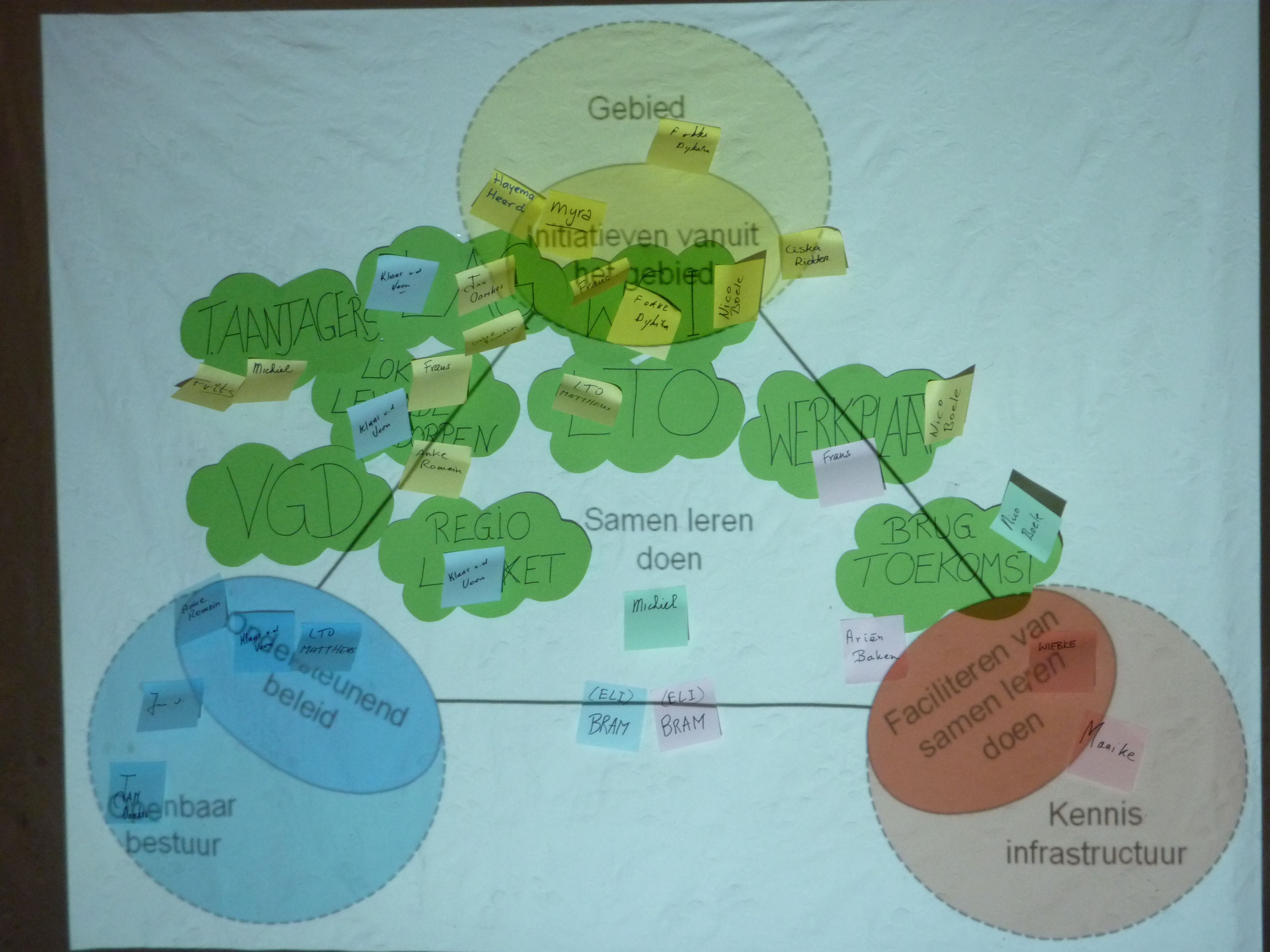
Other collective initiatives represented in the workshop were Wichterwest, a group of women entrepreneurs setting up their own business, and the regional Agricultural Nature Association. The collaboration and joint learning-by-doing in these networks is supported by several arrangements. These arrangements can be mapped as operational interfaces between grassroot development activities in the region, supporting public policies and learning and innovation supporting facilities in the framework of what we call a learning region (see the figure), reflecting thus a map of how the support of joint rural regional learning is actually arranged (see picture).

Mapping the arrangements and personal roles of the participants

Examples of arrangements operational in the Westerkwartier are:

  • The Local Action Group (Leader);
  • The Countryside House (Plattelandshuis) serving amongst others as a window for entrepreneurs and citizens with new ideas and development initiatives;
  • An Atelier, which is under construction building on previous experiences with the aim to get public funded education and research engaged on a structural base in the support of development activities in the region;
  • Three Touristic catalysts, supporting indivudual and collective initiatives of recreational entrepreneurs in the area.

The discussion made clear that these arrangements are important to channel the various types of support to individual and collective development activities: information, financial suport, expertise, feedback, maneuvring within (public) regulations, etc. Especially the Countryside House serves well as an entry to support as it lowers the threshold for initiators, a place were people from the area can meet and find themselves someone who coaches them and get them known in the unknown, complex world of numerous subsidies, regulations and networks. Continue reading

Een toekomstbestendig platteland – samenwerkingsverband van 10 plattelandsgemeenten die kampen met krimp en vergrijzing

P-10 is een nieuw samenwerkingsverband van de 10 grootste plattelandsgemeenten die te kampen hebben met vergrijzing en krimp. Ze willen zoveel mogelijk kansen creëren en benutten voor de mensen die nu en in de toekomst wonen in plattelandsgemeenten. De P10-gemeenten beslaan met hun gezamenlijke oppervlakte van 280.000 ha (evenveel als de provincie Zuid-Holland) het grootste aantal vierkante kilometers aan oppervlakte van ons land (zie www.p-10.nl). De P10-gemeenten zijn: Aa en Hunze, Berkelland, Borger-Odoorn, Bronckhorst, Hulst, Ooststellingwerf, Opsterland, Schouwen-Duiveland, Sluis en Westerveld.

Op 7 oktober hebben de P-10 gemeenten een congres gehouden waar een handreiking voor het versterken van de leefbaarheid op het platteland is gepresenteerd, getiteld ‘Zomer in Nederland: open oog voor toekomstbestendig platteland‘  (te downloaden vanaf homepage P-10). Uit de vooraankondiging:

Bij een krapper geworden economie en een krimpende bevolking met daarbinnen een relatief grote groep ouderen, zijn traditionele waarden en beelden niet meer toereikend voor de duurzame leefbaarheid van het platteland. Er zijn nieuwe impulsen nodig om mensen op het platteland een adequate leefomgeving te bieden, met geschikte en rendabele voorzieningen en mogelijkheden tot werk en andere ontplooiing.

De P10, het samenwerkingsverband van de tien grootste plattelandsgemeenten van Nederland, stelt zich samen met het Ministerie van BZK, provincies en gemeenten tot doel de media, bestuurders en ambtelijke en private beleidsmakers te overtuigen van de noodzaak tot een gezamenlijke aanpak. Kennis en reële mogelijkheden, nieuwe technologieën en nieuwe samenwerkingsmogelijkheden moeten de plaats innemen van aannames, emoties en belemmerende tradities. Sinds begin dit jaar werkt de P10 gestructureerd aan de concrete lading van het begrip leefbaarheid op het platteland. Er zijn praktische methodieken en modellen ontwikkeld om tot afspraken en voorzieningen te komen voor een maximale samenlevingsparticipatie van plattelandsbewoners, voor de benutting van het platteland door bewoners van stedelijke gebieden, voor passende mobiliteit, voor winkel- en recreatievoorzieningen, voor een evenwichtige relatie tussen de mens en zijn omgeving, voor de bevordering van bedrijvigheid en werkgelegenheid en voor een duurzaam gebruik van ruimte, energie en materialen.

The role of social capital, leadership and policy arrangements in rural regional development

Social capital and the role of leadership therein can play an important role in rural regional development and can be stimulated by specific policy arrangements. This conclusion was drawn from an analysis of in-depth case studies of 12 European regions. The empirical material was gathered in the context of a large European research project on regional development, ETUDE, carried out by RSO and other research groups in six European countries.

Leadership is the heart of social capital and -like a stone in the water- it creates rings of waves. Social capital is a segment of a wider circle of what is called ‘the rural web’. The rural web captures the interrelations between different domains of rural development: endogeneity, novelty, production, social capital, market governance, new institutional arrangements and sustainability Social capital and nested forms of leadership can play a role as initiator, lubricant and outcome in rural development.

Leadership helps to raise awareness, to mobilize actors, to generate innovations, and to bridge and bond public and private actors. Leaders bridge the distance between their own innovative network and the existing institutions, and constantly switch between networks and related cultures, logics and languages.

Regional competitiveness and quality of life are enhanced in those situations where there is an effective interplay between leadership, social capital and policy arrangements. Policy arrangements can play a constraining role towards social capital but also function as a lubricant. In order to play this last role under the following conditions: a) purposive local government; b) the use of European funds and programmes; c) cooperation, cohesion and coordination at the regional level (public-public as well as public-private). Factors such as ‘localism’ and lack of social capital can seriously undermine regional cooperation. An underlying shared regional storyline can foster regional coherence.

The cases show that the way to achieve sustainable development is highly context-dependant – however, this should not discourage us from developing a more robust theory of social capital and leadership, in its central and dynamic role as a motor for rural regional development. For more information the full paper can be downloaded: http://www.brass.cf.ac.uk/uploads/WP58.pdf, or send a mail to lummina.horlings@wur.nl.