New book on the role of culture in regional development

book launch 2This book, edited by Joost Dessein, Elena Battaglini and Lummina Horlings, launches the concept of ‘territorialisation’ and explores how the natural environment and culture are constitutive of each other. The concept of territorialisation allows us to study the characterisation of the natural assets of a place; the means by which the natural environment and culture interact; and how communities assign meaning to local assets, add functions and ascribe rules of how to use space.

The book contributes to our understanding of sustainable regional development by highlighting the time-space dimension of development and the varied ways in which people use resources.

The cases represent different scales, a variety of locations and several continents (Europe, North and South America, Africa, Australasia). The authors analyse these cases as the outcome of interaction between human intentionality, place-based characteristics and cultural history. The book provides empirical and theoretical insights into how these cultural expressions can contribute to sustainable regional development.
The book is published by Routledge in the new Series Routledge studies in culture and development.

Marie Curie programme SUSPLACE will kick-off October 1 2015

marie curieOur Marie Curie Action Initial Training Network Programme SUSPLACE (Sustainable place-shaping) will be funded by the EU-commission and kick-off October 1, 2015. SUSPLACE has a budget of €3,8 million and offers a three year position for 15 Early Stage Researchers. Ina Horlings and Dirk Roep will coordinate SUSPLACE.

The overall aim of the SUSPLACE programme is to train 15 Early Stage Researchers (ESR) in innovative, interdisciplinary approaches to study sustainable place-shaping practices. Vacancies for these 15 ESR positions will be published midst of August at this blog and the respective websites of the host universities.

The SUSPLACE approach will provide insight into how to utilize the full potential of places and communities for development and help to build capacities of people to engage in place-shaping processes and thus strengthen connectivity between policy-makers, academics, businesses and civil society. Sustainable place-shaping is seen as a way to strengthen the participation, collaboration, collective agency, self-efficacy and leadership of people, engaging in places. Continue reading

Best practices in nutrition-sensitive landscapes, Zambia – MSc-thesis Minke Stadler

By Minke Stadler, MSc Organic Agriculture

Below a summary of my MSc-thesis Productivity in Nutrition-Sensitive Landscapes; 
Evaluating agricultural best practices, mindset and social values systems in Barotse floodplain, Zambia.

Best agricultural practices in Kapanda, Zambia

Best agricultural practices in Kapanda, Zambia

Nutrition-sensitive landscapes address the relationship between agriculture, nutrition and environment. Increasing farm productivity and diversification of nutritious food crops are key issues in agricultural development, as improved productivity and diversification provide opportunities to reduce poverty, food insecurity and malnutrition. Adoption of new practices is one, out of many, key issues to help improving food and nutrition security. Farmers’ mindsets and social values systems are therefore important, as people interact with their environment and decide what and how to farm.

Can development be taught?…  No. It can only be learnt. (Clapham, 1996)

The study was part of the CGIAR Research Programs on Aquatic Agricultural Systems (AAS) and Agriculture for Nutrition and Health (A4NH). The aim was to develop a better understanding of the mindset and socio-cultural aspects that influence the relations between nutritious food production and landscape, while studying successes. The underlying hypothesis is that: “Geographical location and position in the landscape results in different mindsets and values systems, which in turn influence agricultural practices and adoption strategies.” Continue reading

Summer School Development Studies at Kyoto University, Japan

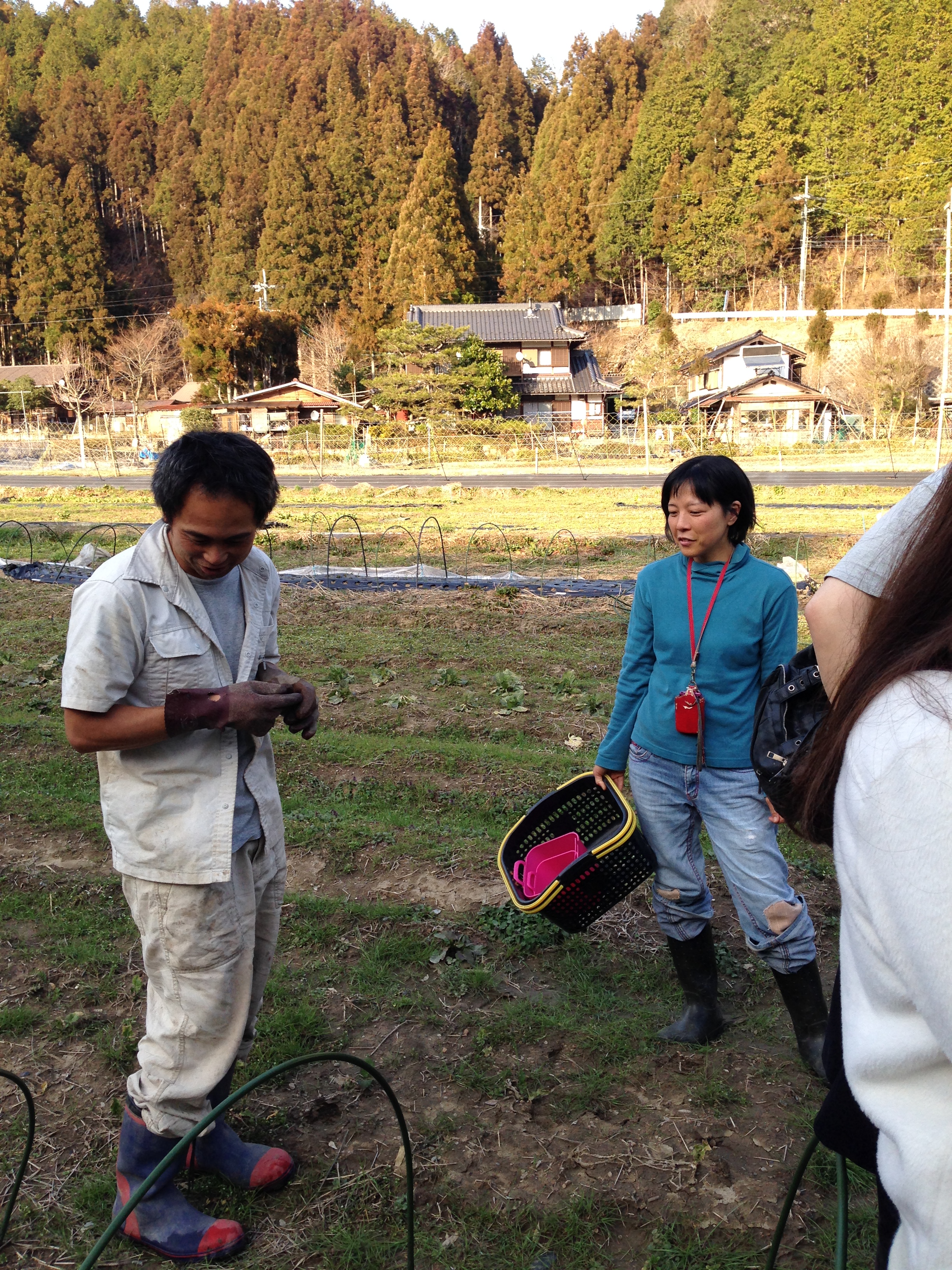
In September the Kyoto University (Faculty of Economics) will organize a summer school on East Asia Sustainable Development Studies. The summer school will be composed of lectures and field trips. Professors from various units ofIMG_2253 - Copy Kyoto University will give lectures on themes like: culture and history, corporate governance, political economy, and development and sustainability issues. The focus will be on Japan and the ASEAN region. The schedule of the lectures and field trips are synchronized in order to allow students to examine both theory and practise. Kyoto University has funds for covering the travel expenses of 1-2 students who are interested in participating. Students must have an interest in development studies. Want to know more? Contact Joost Jongerden at joost.jongerden@wur.nl


Globalization and Europe’s Rural Regions – Ashgate

Globalization and Europe’s Rural Regions is edited by John McDonagh, Birte Nienaber and Michael Woods. Read their Introduction: Globalization and Europe’s Rural Regions – Challenge and Opportunity. Check the Contents or have a Preview.

This book examines the multiple ways in which rural regions in Europe are being restructured through globalization and the regional development responses that they have adopted. It provides an understanding of the key challenges and opportunities for rural regions arising from the major economic, social, political and cultural changes associated with globalization, including trade liberalization and economic deregulation, increased international migration, and the rise of global consciousness about environmental issues. Drawing on examples and findings from a major European research project, DERREG, the book presents detailed case studies of ten regions in different parts of Europe, exploring the factors that lead to different experiences of globalization in each of the regions, and highlighting examples of good practice in regional development responses. The book concludes by proposing a typology of regional responses to globalization and considering the policy implications of the research findings. As such, ‘Globalization and Europe’s Rural Regions’ is important reading for geographers, sociologists, planners and economists interested in understanding the impact of globalization in rural regions, and for rural development professionals seeking to mobilize effective responses.

Chapter 3 Raising Self-efficacy and Resilience in the Westerkwartier: The
Spin-off from Collaborative Leadership by Dirk Roep, Wiebke Wellbrock and Lummina  (Ina) Horlings is a contribution of the Rural Sociology Group. Continue reading