European farmers and agricultural practices

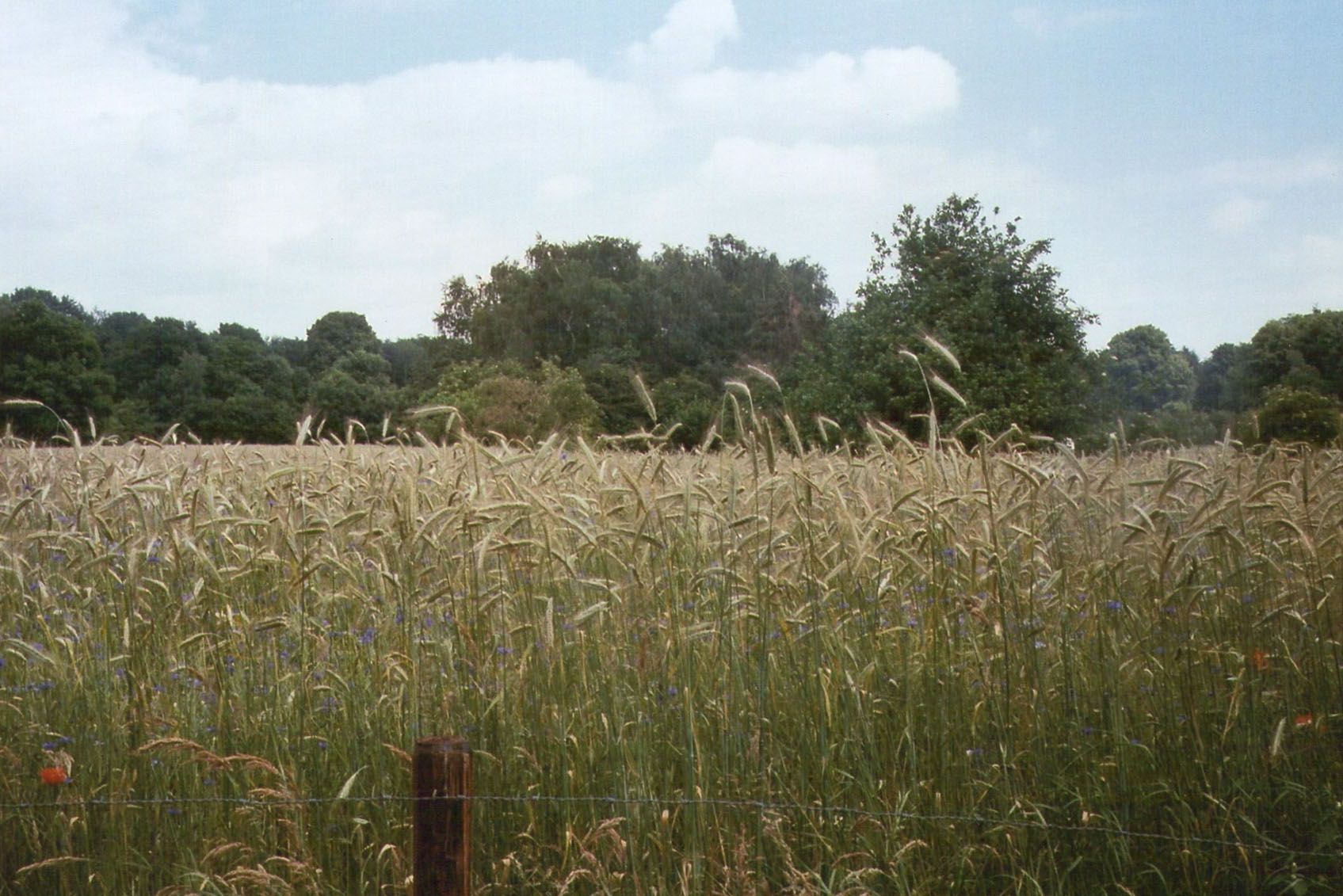
Barley field Critical Discourse Analysis of the Common Agricultural Policy on the ‘Payment for agricultural practices beneficial for the environment and the climate’

Thesis for the International Development programme – Rural Sociology – Wageningen UR

By Alberto Serra

The world population increases, the world food production increases but the number of farmers declines. Although agricultural production increased (United Nation 2014) in the last decade three million farms disappeared in Europe (La Via Campesina 2013). Farmers are facing many challenges and threats. Nowadays they have to deal with market price fluctuations, market competition, access to capital and technology and high difficulties in the intergenerational succession of farming activities (Davidova and Thomson 2014).

In contrast, large scale farmers are able to cope better with such stresses, nevertheless contributing to reduce the competiveness among farmers, due to their production capacity and better access to capital (Evans 2014). Technological and policy choices by large producers and landholders fuelled the growth of inequality in rural areas contributing to squeezing out small farms (van der Ploeg 2006; De Schutter 2014). According to the 2014 State of Agriculture 1% of farmers control 65% of all agricultural land (FAO 2014). Although many small farmers keep on struggling to survive, Europe became in last decades one of the leading power in agricultural trade (Fritz 2011).

Continue reading

Localizing Urban Food Strategies – Farming cities and performing rurality: call for abstracts for the 7th AESOP Sustainable Food Planning Conference

The 7th Aesop Sustainable Food Planning (SFP) Conference entitled “Localizing Urban Food Strategies: Farming cities and performing rurality” will take place in Torino (Italiy) from 7 to 9 October 2015.

Localizing urban food strategies refers to embedding sustainable food planning issues in place and in time within each specific local context. Moreover, by targeting planners, agronomists, designers, geographers, administrators, activists etc. engaged in the urban food debate, Farming cities and performing rurality aims at representing a platform for the development of fruitful perspectives for sustainable food planning policies and practices.

On the one hand, Farming cities refers to the development of innovative roles for agricultural production in and around the city, approaching in a structural manner the way agricultural issues are dealt (or should be dealt) with in contemporary urban policies. On the other hand, Performing rurality considers urban food strategies as a tool to define a cooperating relationship between the urban and the rural, reversing in terms of equality the traditional ideological subordination of the countryside to the city.

The activities of the Conference will be articulated around the following tracks: (i) Spatial planning and urban design, (ii) Governance and private entrepreneurship, (iii) Relevant experiences and practices, (iv) Training and jobs, (v) Flows and networks. There will be a specific activity for PhD students and young scholars.

Abstracts for one of the aforementioned tracks can be submitted until the 31st of May via the submission form on the conference website.

RETHINK – Farmers from Salzburg (Austria) explain diversification as a strategy to strengthen resilience

RETHINK is a transdisciplinary research project supported by the European Commission and funding bodies in 14 countries under the umbrella of FP7 and the RURAGRI ERA-NET. The Rural Sociology Group has a seat in the RETHINK Advisory Board.

Researchers from BOKU have made three short films (also with English undertitles) in which farmers explain their family farm strategie in terms of strengthening their resilience.

Resilience refers to the capacity of social, economic, and environmental systems to cope with a hazardous event or trend or disturbance, responding or reorganizing in ways that maintain their essential function(s), identity, and structure

1. Resilience needs diversity – Diversity needs balance

Five farmers form Salzburg (Austria) farmers talk about the advantages of having different income sources (both on- and off farm) to strengthen their resilience. But they also point out the challenges related to managing diversity. They talk about what it takes to successfully manage diversity, especially to ensure that the workload for the various family members is not too high and that quality of life does not suffer.

Continue reading

Family Farming Futures – PhD-thesis by Henk Oostindie

Cover FFF

March 20, 2015 at 1.30 pm Henk Oostindie will publicly defend his PhD-thesis Familiy Farming Futures. Agrarian pathways to multifunctionality: flows of resistance, redesign and resilience‘ in the Auditorium of Wageningen University. The defence ceremony will be streamed live by WURTV but can be viewed later as well. A hard copy of the thesis can be ordered by sending an email to Henk.Oostindie@wur.nl or a pdf can be downloaded from Wageningen Library (embargo untill March 20).

The PhD-thesis compiles different national and European research projects on multifunctionality and multifunctional agriculture Henk Oostindie was involved since 1999. He has thus gained both a broad and profound knowledge of multifunctionality as a concept and as practice. He is a highly esteemed colleague at our Rural Sociology group.

MSc course Sociology of Food Provisioning and Place-based Development

On the 16th of March 2015 the MSc course ‘Sociology of Food Provisioning and Place-based Development’ (RSO-31806) starts. Students that want to participate in this course can contact the course coordinator Han Wiskerke (han.wiskerke@wur.nl) as the deadline for online registration has passed.

IMG_0315

The course aims to provide a theoretical, empirical and methodological understanding of place-based development processes, with an emphasis on food provisioning and rural and territorial dynamics in urbanizing societies. The course is based upon recently completed and ongoing research activities within two of the main research domains of the Rural Sociology Group:

  1. The sociology of food provisioning;
  2. The sociology of place-based development.

Being based on recently completed and ongoing research projects implies that this course provides an up-to-date  insight into current theoretical debates and research findings. These are mainly derived from international collaborative research programmes (see ‘our projects’), carried out by multi-disciplinary research teams in different countries inside and outside Europe. Within and linked to these programmes the Rural Sociology Group has approximately 30 ongoing PhD projects. Some of these projects will also feature during this course.

The course is divided into four main themes: Continue reading