
Yesterday evening, Dirk Roep and I informed various Master students of Wageningen University about the possibilities for doing a thesis or internship with the Rural Sociology Group. As always, it was an evening full of enthusiasm, questions and confusion. The Wageningen education system is not always easy to understand and thus difficult to make choices. The best advice we give students: think about something that makes you want to jump in the air, then you have a topic of interest (that could be something on certain themes, but also on approaches). Starting from that, look for someone that would fit that interest. Of course, you can always get some inspiration from past thesis stories or thesis possibilities in the special section of this blog. Furthermore, the various EU research projects that run at our group offer wide possibilities for doing an internship or thesis with our partners in these projects (within and outside of Europe). If you have difficulties coming up with a topic or want to get some input on your ideas, make an appointment with our education coordinator. Don’t feel lost!
Towards Implementation: Reflecting on 10 years of the Right to Food
Today an interim report by the Special Rapporteur on the right to food, Olivier De Schutter, made to the 68th Session of the UN General Assembly has been released. You can download a PDF copy here: Assessing a decade of progress on the right to food
The report – Assessing a decade of progress on the right to food– provides insight into practical aspects of realizing the right to food. It notes that the right to food has “become an operational tool” that is “widely recognised as a key to the success of food security strategies” (para 3).
Focusing on progress made since the 1996 World Food summit, the report identified:
- Best practices
- Roles of key actors: governments, parliaments, courts, national human rights institutions, civil society organisations and social movements.
The report also notes that systems of national protection are being redefined in terms of rights, a welcome move away from the understanding social benefits as charitable hand-outs. It argues that the right to food has entered a new phase: implementation. This is key as it moves from theory and law to practice. Grievance redress mechanisms (e.g. courts, social audits) are playing a role in promoting this change.
MSc thesis onderzoek Landbouw en Omgeving in Mastenbroek
Hoe zien boeren-ondernemers de mogelijkheden voor hun eigen bedrijf als er vanuit de omgeving beperkingen zijn? Doe mee in het promotieonderzoek van Ron Methorst deze winter.
Ron Methorst is docent CAH Vilentum Dronten en doet promotieonderzoek bij de leerstoelgroep Rurale Sociologie van Wageningen Universiteit. Zijn onderzoek richt op de vraag hoe boeren inspelen op een veranderende omgeving. Vraag Ron voor meer informatie: ron.methorst@wur.nl. Of bekijk zijn blog over het verloop van het onderzoek.
Een goede relatie tussen het agrarisch bedrijf en haar omgeving is –opnieuw- van belang. Zeker in een dichtbevolkt land als Nederland is er al gauw sprake van ‘spanning’ tussen de omgeving van het agrarisch bedrijf (natuur, landschap, stad) en de ontwikkelmogelijkheden van het bedrijf. Met gebiedsprocessen en projecten worden op allerlei plekken mogelijkheden onderzocht, Mensen ‘om de boer heen’ houden zich volop bezig met de ontwikkelmogelijkheden van die boer. Hoe ziet die boer, die agrarisch ondernemer het nu zelf? Hoe zie hij de mogelijkheden voor zijn bedrijf in zijn situatie? Welke factoren zijn daarin met name bepalend?
In Kampereiland, het grootste aaneengesloten pachtgebied van Nederland, is in februari 2013 een uitgebreide enquête uitgevoerd met een goede respons. Deze enquête willen we (aangepast) herhalen in de polder Mastenbroek, een van de oudste polder van Nederland. Beide gebieden zijn onderdeel van ationaal Landschap IJsseldelta (dus bijzondere landschap en natuurwaarden). Het grote verschil: 100% eigendomsbedrijven en 100% pachtbedrijven.

The Incredible Micronutrients Series – presented by RUW
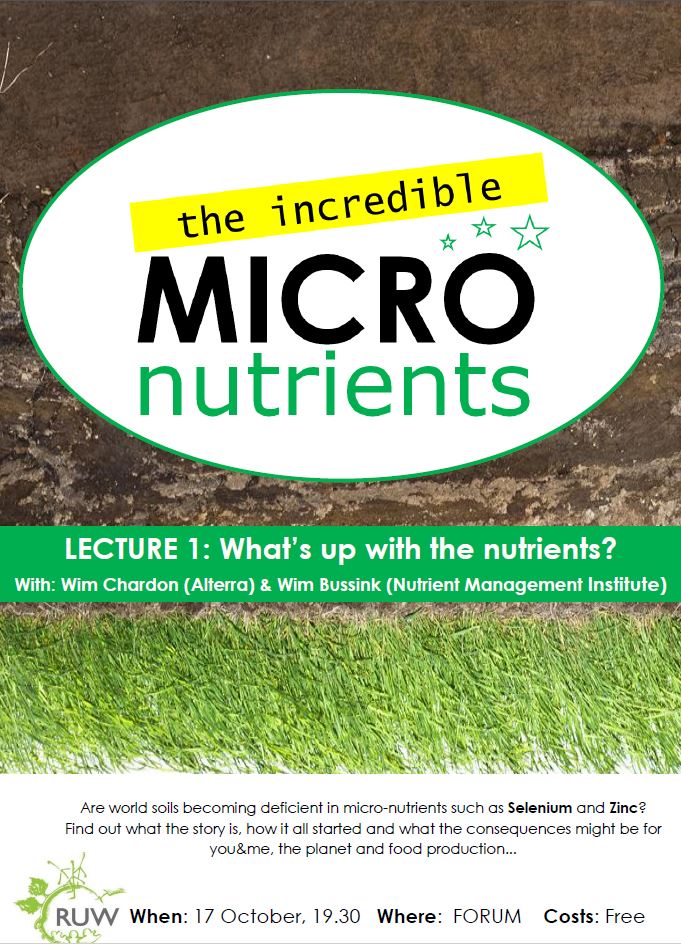 The kick off lecture of the RUW Series is October 17th: What’s up with the nutrients by Wim Bussink (Nutrient Management Institute) and Wim Chardon (Alterra), 19.30 in the Forum building, room C221.
Other upcoming activities:
- Excursion to Agrifirm (cattle feed factory) in Oss (November 1)
- Lecture on Micronutrients, Food and Health (November 7 or 14)
- Excursion to Sea Weed Teststation (November 7or 14)
- Lecture on Micronutrients and Geopolitics (November 21)
Leadership and regions: unlocking the potential of communities
Every year the European Commission organizes Open days in Brussels, where EU Members of Parliament, national, regional and local policy/decision makers, Academics, students and researchers, can inform themselves on a variety of subjects. These Open Days host workshops and debates, and exhibition route, presentation of RegioStars -the most innovative projects co-financed by EU Structural and Investment Funds – and “Open Days University and Master Class”. See the programme.
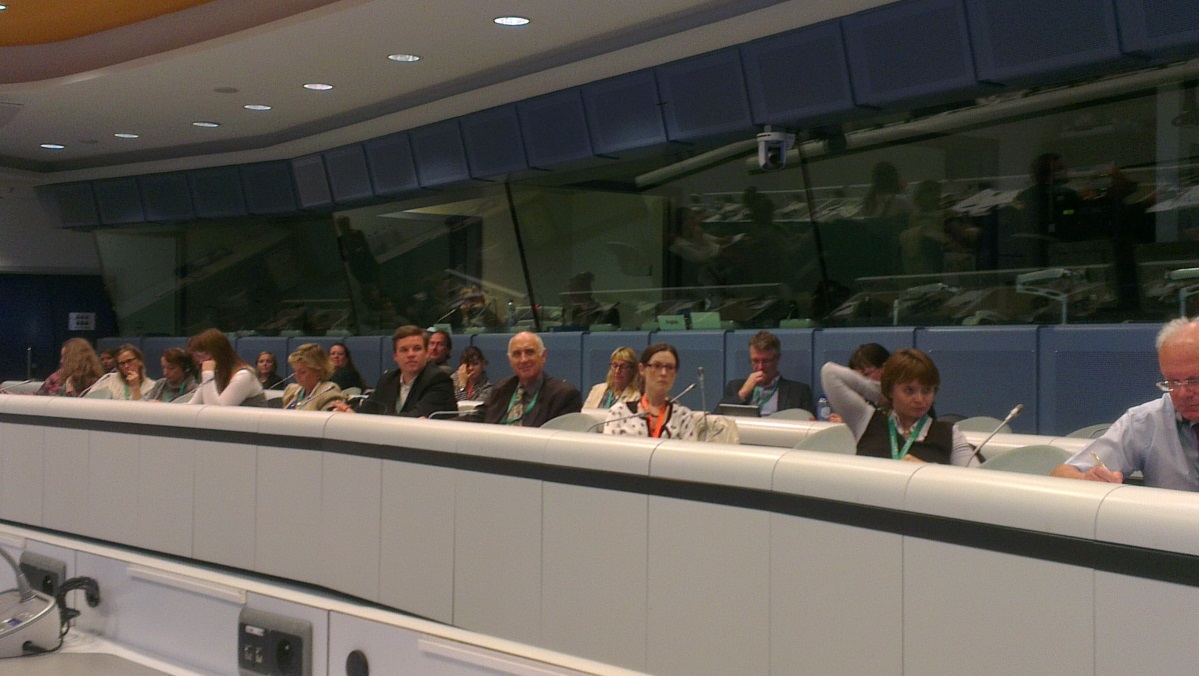 The Regional Studies Association (RSA) and the European Commission (DG Regio) organized 4 Master Classes, including a session for more than 100 participants on Oct. 9th 2013, on the topic of ‘Leadership and Regions: Unlocking the Development Potential of communities’, chaired by Prof. Dr. Andrew Beer. Besides Prof. Beer, Dr. Terry Clower (Texas), Dr. Henrik Halkier and myself were the speakers. This report is based on the their presentations and the discussion with the audience.
 Rural Sociology Wageningen University