
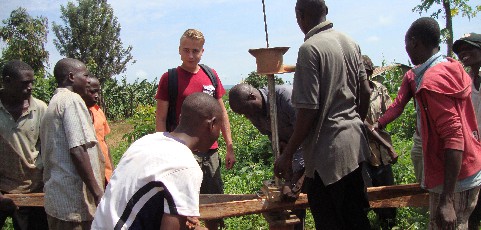
 Looking for a challenging and adventurous internship or thesis for your Master studies in Africa? Take a look at the website of the organisation Ex-change and if inspired, contact Henk Haring (info@ex-change.nl) for more information. Currently, there are various concrete vacancies for students, available at the Rural Sociology Group. Contact our education coordinator Els Hegger (els.hegger@wur.nl) for more info.
A Collection of Rural Sociology Christmas Feasts
The Rural Sociology Course “Food Culture and Customs” wrapped up just before Christmas.
As a side-project (read: homework for no credit), I asked students to photograph their holiday meals and share the pictures so that we could all get a little taste of Christmas around the world.
Here are some of the photos.

Traditional Danish Christmas dinner! White potatoes, caramelized potatoes, pork roast, duck, red cabbage and gravy
Internship possibility
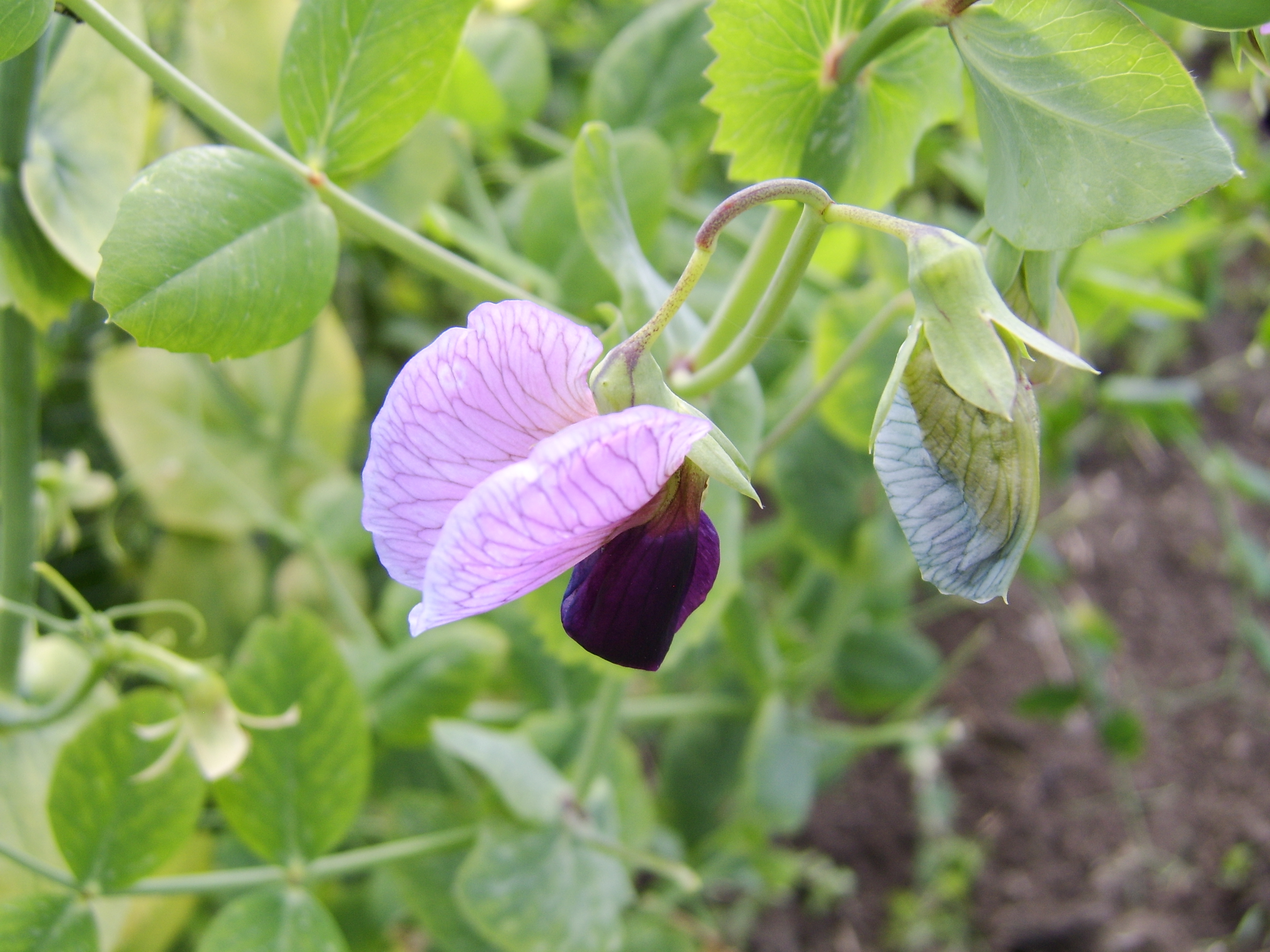 Earlier this year Clara Celestino Siurana completed her internship at the PeeRGroup in Donderen. She developed a design and building of a vegetable garden (see here for original description of the intership). Their terrain, a former ammunition depot has now the status of an ‘estate’ and ecologically rare species have been discovered because nature on that terrain has not been fertilized by convential agriculture for the past 50 years. They have a long way to go in making the terrain a multifunctional space open for public and connected to the care farm with which they collaborate. The small kitchen garden by Clara is only one of the things they want to develop.
Therefore, the PeeRGroup Donderen is still looking for students that want to play a role in further developing this unique project. Contact Marin de Boer (marin@peergroup.nl) or Sjoerd Wagenaar (sjoerd@peergroup.nl) if you are interested. Look at their website (http://www.peergroup.nl/donderboerkamp/) for more information.
Introduction into Sociology and Anthropology of Place Shaping – optional course and free choice minor
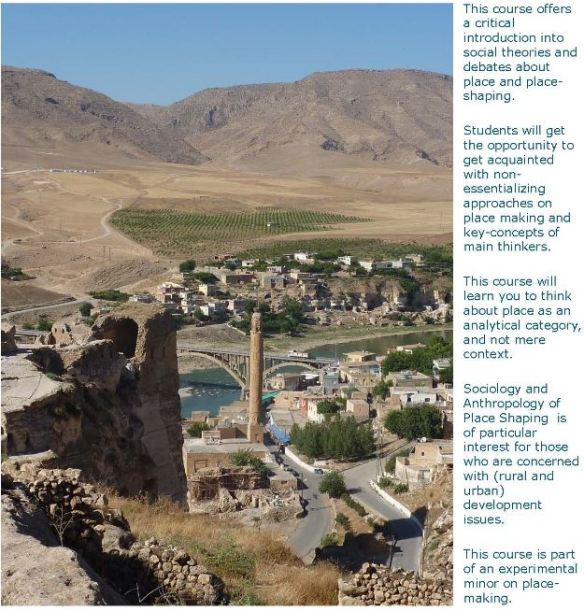 Starting Monday 17 Februray 2014, in the 4th educational period of Wageningen University, the optional course RSO-56806 Introduction into Sociology and Anthropology of Place Shaping will be offered again in collaboratyion with Cultural Geography Group and Land Use Planning Group. For more information on the course contact the course coordinator Joost Jongerden: joost.jongerden@wur.nl
The course can be the first of four succeeding courses in period 5 and 6 up to a total of 24 ects as part of the free choice minor ‘Place and space in planning and development‘ open to BSc-students from WU and other high education institutes, such as the Van Hall Larenstein University of Applied Sciences.
The course offered as part of the minor are:
- Period 4: RSO-56806 Sociology and Anthropology of Place-Shaping, whole days
- Periode 5: RDS-30306 Sociological Theories of Rural Transformations, morning or GEO-23306 Cultural and istorical Geography, afternoon
- Period 6: LUP-33306 Methods for strategic planning, whole days in week 34-39 and LUP-32306 Studio strategic planning, whole days in weeks 40-43
For more information contact minor coordinator Dirk Roep: dirk.roep@wur.nl
Global nutrient fight: micronutrients and geopolitics – lecture and debate December 10
Will monopolies, cartels and export restrictions define the future of your food?
RUW foundation will explore the world of the micronutrients in a lecture and debate featuring Wouter van der Weijden (director of CLM), Ellis Hoffland (WUR) en Petra Berkhout (LEI).
Venue: December 10, 2013 in the Grand Café of the Forum building, starting at 19.30.
Free entrance and drinks afterwards.
 Micronutrients are irreplaceable and are essential for plant, animal and human health. Only about 4% of the world’s micronutrient stocks can be found in the EU (Platform LIS,2012). In the near future Europe will become dependent on other countries, including China, Chili, US, Turkey and Peru for the supply of micronutrients such as selenium and zinc for its agriculture. Find out how borders and international relations influence the struggle for micronutrient supply, how it will affect our food production and what options the EU has to ensure the availability of micronutrients.

