The Rural Sociology Group of Wageningen University will celebrate its 75th Anniversary on the 13th of May 2022. Over the 75 years of the Group’s existence, characteristic features of the “Wageningen School” approach in rural sociology have been its comparative research, empirically grounded theoretical development, and a research output renowned for its scientific as well as for its political and practical relevance. At this celebration we will present, discuss, and reflect upon the past, present, and future challenges of rural sociology. We will do that in a lively, interactive setting with debate, workshops, and presentations.
The anniversary celebration will be organized around three thematic clusters:
Agrarian and rural development, with special attention to socio-economic dynamics and potentials at farm and regional level;
Food provisioning, the socio-spatial organization, and co-ordination of food production and consumption, with special attention to circularity, diverse food economies, and place-based food networks;
Urban-rural relations, with special attention to counter-urbanization, urban-rural fluidity, identity, and governance.
Register here if you want participate in our conference and join our celebration.
More details about the conference program will be published on this website soon!
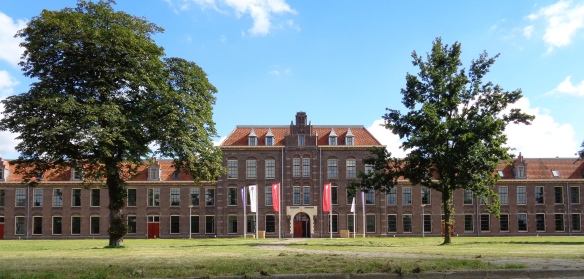
Rural Sociology: Past, Present and Future is organized at the Akoesticum conference center, Nieuwe Kazernelaan 2D42, 6711 JC Ede, the Netherlands.
No, this is not a mantra from a self-help book for success or therapeutic healing but rather the final sentence in Ece Temelkuran’s new book Together, 10 choices for a better now. The book is a collection of ideas woven into stories that help to think new ways of relating to each other. The book invites the reader to think beyond the individualizing millstones of neoliberalism, which divides by reducing us to a-social transactional entities, and beyond those of the populist right, whose parochial cultural pride separates us into belligerent communities. Spinning and weaving moments and experiences of many kinds, novelist and commentator Ece Temelkuran presents 10 threads through which we can start doing and thinking another future in the here and now. Food for thought for rural sociologists.
The opening of the book recalls the phrase attributed to Frederic James, that it is easier to imagine the end of the world than to imagine a political alternative for the economic and political system causing the world to end. This is what Temelkuran refers to as the magical ability of a status quo to make people believe that if the political and economic system we live in collapses, everything else will collapse with it. Around us we find mesmerizing experts who warn us like fearful ancient sailors that if we dare to sail into uncharted waters, we will fall off the edge of the world, notes Temelkuran. The “build back better” calls for post-pandemic times seem to confirm this atrophied imagination, that there is simply no alternative to the current economic and political system.
Fast backward. When, in 2001, George W. Bush called Americans to get over the 9/11 trauma, he found no better words than ‘go back shopping’, as Zygmunt Bauman reminded us. Consumption is the medicine. Today, no one has to tell us to go shopping, as the smart and less smart lock-downs are experienced first and foremost as a restriction of our ability to consume, now defined as the primary, sometimes only pillar of ‘freedom’. As the fullness of life has morphed into taking our fill of enjoyment and entertainment we queue to be allowed into Zara, Primark, or Footlocker, performing the entry rituals at disinfection stations. We do not even have to feel the guilt of collaboration with the dictates of consumerism since it has now become our very duty to consume with a larger mission: to save the economy through our marketplace activities and, in so doing, bail out the sinking ship of capitalism.
Ece Temelkuran’s sharp contextual sketch forms the starting point for series of key questions. Can we reshape our existence to survive a world that has transformed itself into a corporation? Can we imagine an economic policy beyond private property, one that renders the accumulation of capital both illegal and immoral? Can we learn to see the world again from an ethical perspective instead of a consumerist one? Yes, we can, she argues; we can reinvent ourselves and the world through even the smallest things, and not just to tranquilize our discomfort. All the small things we are actually already doing in which we address precarity and vulnerability can determine our future. Yet, the reader of this book should expect no recipes or prescriptions. Together offers leads, ideas from which we can start to further explore and give words to new possibilities and other futures.
One such lead is dignity, something our economic and political system not only does not value but also cannot come to terms with since, Temelkuran explains, it has no idea of the good. Another lead is enough, a term that she borrows from the novelist Kurt Vonnegut and which invalidates the contemporary ‘consumer’ identity through which we have learned to conceive ourselves. Yet another lead is faith, which Temelkuran contrasts with hope, or better, I would say, with messianic hope, which i) pacifies (as it puts the expectation of salvation onto others outside ourselves and submits to some higher power), ii) subjugates (since the hope that justice will be done keeps people obedient), and iii) procrastinates (since while hope remains unfulfilled, we are condemned to waiting). What Ece Temelkuran refers to as ‘faith’ could also be characterized as a ‘critical hope’, which is based on doing, questioning, and learning, a hope grounded in (daily) social practices and struggles.
In Together, economic and political morality emerge through the “10 choices” in addressing what Ece Temelkuran refers to as a “housing problem”: the national and international institutions through which we inhabit the world. These are worn out and offer no solutions. The question she raises is that of how to reinvent new ways to inhabit the world, together, to create new institutions based on a moral, political, and economic triangulation. The end of the book, however, also carries a warning: those who work with words have a responsibility to be careful in what they write and say. Mismanaged words have a habit of destroying lives – as the crushing weight of ‘modernization’ narratives in our own field of rural sociology has shown.
For a rural sociology celebrating its 75th anniversary, Together is a timely work. It raises questions about the world, this world, and the relentless economic and political foundations on which its rests. Importantly, this book also opens up an imaginative of possible futures in the now that develop the principles from which they are made in our daily living and social struggles. Thus, Ece Temelkuran has taken her writer’s responsibility seriously, presenting us with carefully selected words that have something important to say, also for the research agendas of our own discipline.
Ece Temelkuran, 2021. Together, 10 choices for a better now, 4th Estate: London, ISBN 978-0-00-839380-9, 199 pages.
The 75th anniversary of the Rural Sociology Group also marks another milestone: 100 completed and successfully defended PhD theses. The first PhD graduate was Jan Doorenbos, who successfully defended his PhD thesis entitled ‘Opheusden als boomteeltcentrum‘ (Opheusden as tree-growing centre) on 14 June 1950. His PhD study was supervised by Prof. E.W. Hofstee. The 100th PhD graduate was Lucie Sovová, who successfully defended her PhD thesis entitled ‘Grow, share or buy? Understanding the diverse economies of urban gardeners‘ on 13 October 2020. Her PhD study was supervised by Dr. Esther Veen, Dr. Petr Jehlicka and myself. Below the covers of the 1st and 100th PhD thesis.
In this blog about 100 PhD graduates in 75 years Rural Sociology at Wageningen University, I want to present and reflect on some trends related to these 100 PhD graduates. In another forthcoming blog I will present and reflect on some trends related to the content and focus of these 100 PhD theses.
Trend 1: from less than 1 to close to 4 PhD graduates per year
The 100 PhD theses that were completed in the last 75 years are not evenly distributed over the years, as the figure below shows. In the first 50 years 23 PhD theses were completed, meaning that the average number of PhD graduations was below 1 per year (with no PhD graduations at all in the years 1966-1970 and 1986-1990). This increased to approximately 2 per year in the 1996-2005 period and to almost 4 per year in the last 15 years. There are multiple reasons for this. First, until the 1980s having a PhD degree was not that important for an academic career as it is now. When I did my Masters in Wageningen in the late 1980s and early 1990s a large part of the courses I took were taught by assistant, associate and even full professors without a PhD degree. Nowadays, having a PhD degree is a prerequisite for an academic career. Second, in the early 1980s the Dutch government introduced the so-called ‘Two-phase structure’ for university education, with the second phase referring to a 4 year PhD program. The ambition was that 20% of the MSc graduates would continue with a PhD, and as a result universities created more PhD positions (which were then called assistant-in-training or researcher-in-training positions). Alongside, tenured staff without a PhD degree was also encouraged to write a PhD thesis. While these two reasons may explain the increase from the early 1990s onwards, they do not explain the relative high numbers in the last 15 years, with an average of 3 to 4 PhD graduations per year. These figures are a result of: a) the growth of externally funded research projects in which (part of) the research was/is carried out by PhD students; b) the acquisition of specific PhD programs with multiple PhD projects (NWO-WOTRO, INREF, and EU Marie Curie Training Networks); c) the internationalization of our PhD community (more about this below) with a growing number of PhD scholarships funded by NUFFIC and national governments in Asia (mainly China) and Latin-America. In addition, there has been an internal push for more PhD students due to PhD supervision criteria for RSO staff in Tenure Track. And last but not least, the PhD graduation allowance that we get from the national government (currently approximately € 60,000 per PhD graduate) also implies that there is a financial incentive to have a steady and preferable high inflow of PhD students and outflow of PhD graduates.
Trend 2: The average age at which a PhD degree is obtained remains the same (but becomes more diverse)
The average age at which a PhD degree is obtained has remained fairly stable over the past 75 years (just below 40 in 1950 and just above 40 in 2020), but has become more diverse in recent decades (ranging from 27 to 76 years). When making this overview I had actually expected that the average age at PhD graduation would have shown a downward trend as I assumed that the role of the PhD thesis had changed from someone’s life’s work (a middle- to end-career achievement) to a first stepping stone (an early-career achievement) in an academic career. The latter certainly holds true for a large group that obtained their PhD degree at the age of 35 or younger. However, among the PhD graduates of the last 20 years, the PhD degree has also been an important mid-career stepping stone. Many, in particular international, PhD graduates, who got their PhD degree at the age of 40 to 50, have moved up to senior academic or management positions. And throughout the years we’ve had PhD candidates that embarked on their PhD study more towards the end of their career or even after retirement (with two obtaining their PhD degree at the age of 76). For this relatively small group the PhD thesis has remained a life’s work.
Trend 3: From men only to more gender balance
One aspect that has really changed over the past 75 years is the male/female ratio of PhD graduates. In the past 75 years we’ve had twice as many male graduates as female graduates, as the figure below shows.
However, this 2:1 male-female ratio has not been like that over the past 75 years. In the first 55 years the vast majority of PhD graduates were men (32 men versus 2 women), and this changed considerably in the last 20 years (34 men versus 32 women), as the figure below shows. It clearly reflects the changing male-female ratio of BSc and MSc students at Wageningen University (and most likely also at many other universities in and outside the Netherlands). And this also has had an impact on the gender balance within the current academic staff at the Rural Sociology Group.
Trend 4: From mainly Dutch to ‘all over the world’
Over the past 75 years the PhD community at the Rural Sociology Group has really become international. Although there were a few non-Dutch PhD graduates in the early years, in recent years PhD students come from all over the world: other European countries, Latin America, Africa and Asia (see figures below: Europe refers to all European countries excluding the Netherlands). A large number of the PhD projects of these international PhD students are projects jointly supervised with staff members of the Sociology of Development and Change group, which traditionally has a strong network in Latin America and Africa. The former chair of Rural Sociology, Jan Douwe van der Ploeg, also has a large international network, in particular in Italy, several Latin American countries and China, and this has clearly contributed to the inflow of PhD students from these parts of the world. The aforementioned growing importance of external research funding and international PhD scholarships has also contributed to the internationalization of our PhD community. I also assumed that the international focus and status of Wageningen University, with all its MSc and part of its BSc programs taught in English, would have contributed to the internationalization of our PhD community. However, hardly any of our international PhD students has an MSc degree from Wageningen University.
In addition to looking at the countries/regions where our PhD graduates come from, I have also made a figure of where they are currently residing/working or where they were residing when they retired. This basically shows that the vast majority of PhD graduates is residing/working in the country/region where they originate from. Some have moved to other countries and a few of the international PhD graduates have stayed in the Netherlands.
Trend 5: From government official to academic/researcher
A last topic related to 100 Rural Sociology PhD graduates I want to present is their current or last (in case of retirement) sector of employment. Is a PhD degree really a stepping stone for an academic or research career or does it result in careers in a variety of sectors? This has been summarized in the figure below, which shows that many of the PhD graduates in the early years continued their career in government. To be fair, many of those PhD graduates actually had a government job and were given the time and space to do their PhD research while keeping their job as government official and continued as a government official after obtaining their PhD degree. Since the 1990s the PhD degree seems to have been favorable for a career in academia/higher education or at a research institute. Many of our international PhD graduates now have tenured positions at foreign universities as assistant, associate or full professor or as senior scientist or senior manager at a research institute. Some are self-employed as advisors/consultants and a few ended up working for a NGO or in the private sector (in or related to agriculture or elsewhere). But as the primary aim of our PhD program is to train PhD students to become independent researchers/academics, it is great to see that so many do indeed succeed in building a career in (academic) research (and higher education).
In “Does the Arab region have an agrarian question?” Max Ajl argues that the Arab region is not part of broader discussions on the agrarian question and even though the political economy is having a small renaissance in Arab region studies, the leading agrarian publications – Journal of Peasant Studies, Agrarian South, Journal of Agrarian Change, Agriculture and Human Values, and Sociologia Ruralis publish lightly on the region.
“Discussion on food sovereignty and agro-ecology, and Anglophone rural sociology have blind spots when it comes to the Middle East/North African (Arab) region. This article explores them; outlines some initial concepts, discusses avenues for research, and notes some socio-political features of the region which make it distinct from others. It focuses on the necessity to include war and the national question to understand the regional agrarian question and advances and retreats in regional knowledge production. It proceeds by (1) establishing the relative absence of the region from the leading peasant studies journals; (2) synthesizing the region’s political economy and waves of knowledge production; (3) highlighting local traditions which speak to the questions of food sovereignty and agro-ecology; and (4) listing a series of theoretical, historical, and analytical avenues which remain to be addressed.”
The idea of a Green New Deal, a set of proposal to address climate change and its effects, was launched into popular consciousness by US Congressperson Alexandria Ocasio-Cortez in 2018. Evocative of the far-reaching ambitions of its namesake, it has become a watchword in the current era of global climate crisis. But what – and for whom – is the Green New Deal?
In this concise and urgent book, A People’s Green New Deal, RSO postdoc Max Ajl provides an overview of the various mainstream Green New Deals. Critically engaging with their proponents, ideological underpinnings and limitations, he goes on to sketch out a radical alternative: a ‘People’s Green New Deal’ committed to the decommodification of social reproduction, anti-capitalism, anti-imperialism and agro-ecology.
Ajl diagnoses the roots of the current socio-ecological crisis as emerging from a world-system dominated by the logics of capitalism and imperialism. Resolving this crisis, he argues, requires nothing less than an infrastructural and agricultural transformation in the Global North, and the industrial convergence between North and South. As the climate crisis deepens and the literature on the subject grows, A People’s Green New Deal contributes a distinctive perspective to the debate.