How food production in the city contributes to a sustainable future
21 & 22 October, 2021 [Hybrid Event]
The industrialization of our global food system and growing urbanization not only exacerbate the effects of climate change and accelerate the loss of biodiversity, but also significantly cause the spatial and mental decoupling of food production and consumption.
Against the backdrop of the associated socio-ecological challenges, a “renaissance” of various forms of urban agriculture can be observed worldwide over the last decade, accompanied by the emergence of new multifunctional productive ecosystems in urban spaces. Especially in the Global North, the manifold forms and different dimensions of urban agriculture increasingly show potentials how negative effects along the food value chain can be reduced and how ecological, economic and social added values can be created.
The 14th Weihenstephan Symposium will therefore revolve around a provocative question:
“Urban agriculture – A trend phenomenon or transformative element for the development of resilient cities and food systems?”
To explore this controversial question, the professorship for Urban Productive Ecosystems at Technical University of Munich invites practitioners from science, business, politics and civil society to debate their expertise and experience in the form of keynote speeches and subsequent discussion. Different forms and aspects of urban production – their limits and potentials – will be critically examined and their practical potential discussed from ecological, social and economic points of view.
We invite you to participate in the forum and discuss with us – participation is open to the interested public.
Registration & Participation
Due to the current Covid-19 related regulations, the event will take place hybrid, i.e., with a limited number of participants at TUM Campus Weihenstephan in Freising (Konferenzsaal iGZW, 3G rules apply) and the possibility to participate in the full program via Zoom. Please note that registration for on-site participation is required by October 18 to allow for planning the logistics and catering according to Covid rules. All admitted registrants will receive final information and the access link for Zoom closer to the event. The event will be held partly in German (GER) and partly in English (ENG) with no simultaneous translation. It is open to all and is free of charge.
We are excited to announce that three world-class academics will co-teach in our PhD course on Agrarian and Food Citizenship: Prof. Hannah Wittman, Prof. Aya H. Kimura and Prof. Haroon Akram-Lodhi. For participants in this course this provides a unique opportunity for learning and exchange.
Hannah Wittman is professor at the University of British Columbia in Canada. Her research examines the ways that the rights to produce and consume food are contested and transformed through struggles for agrarian reform, food sovereignty, and agrarian citizenship. Her projects include community-based research on farmland access, transition to organic agriculture, and seed sovereignty in British Columbia, agroecological transition and the role of institutional procurement in the transition to food sovereignty in Ecuador and Brazil, and the role that urban agriculture and farm-to-school nutrition initiatives play in food literacy education. http://ires.ubc.ca/person/hannah-wittman/
Aya H. Kimura is professor of sociology at the University of Hawai`i-Manoa. Her research analyzes the intersections of technoscience, gender, and sustainability. She has had research projects in Indonesia, Japan, and Hawai`i, and has written on agrobiodiversity, fermentation, food safety, nutrition science and the idea of “smart food.” Among others, she examines diverse practical experiences with citizen science on a range of food and farming issues, from seed development to toxicants to biodiversity. https://ayakimura.weebly.com/
Haroon Akram-Lodhi is professor of economics and international development studies at Trent University, Canada. His research interest is in the political economy of agrarian change, the future of smallholder peasant communities in the world food system, on the sustainability of rural social structures, relations and institutions, and gender and rights based economics. https://sites.google.com/site/aharoonakramlodhi/home
The course is organized as a one-week intensive discussion seminar.
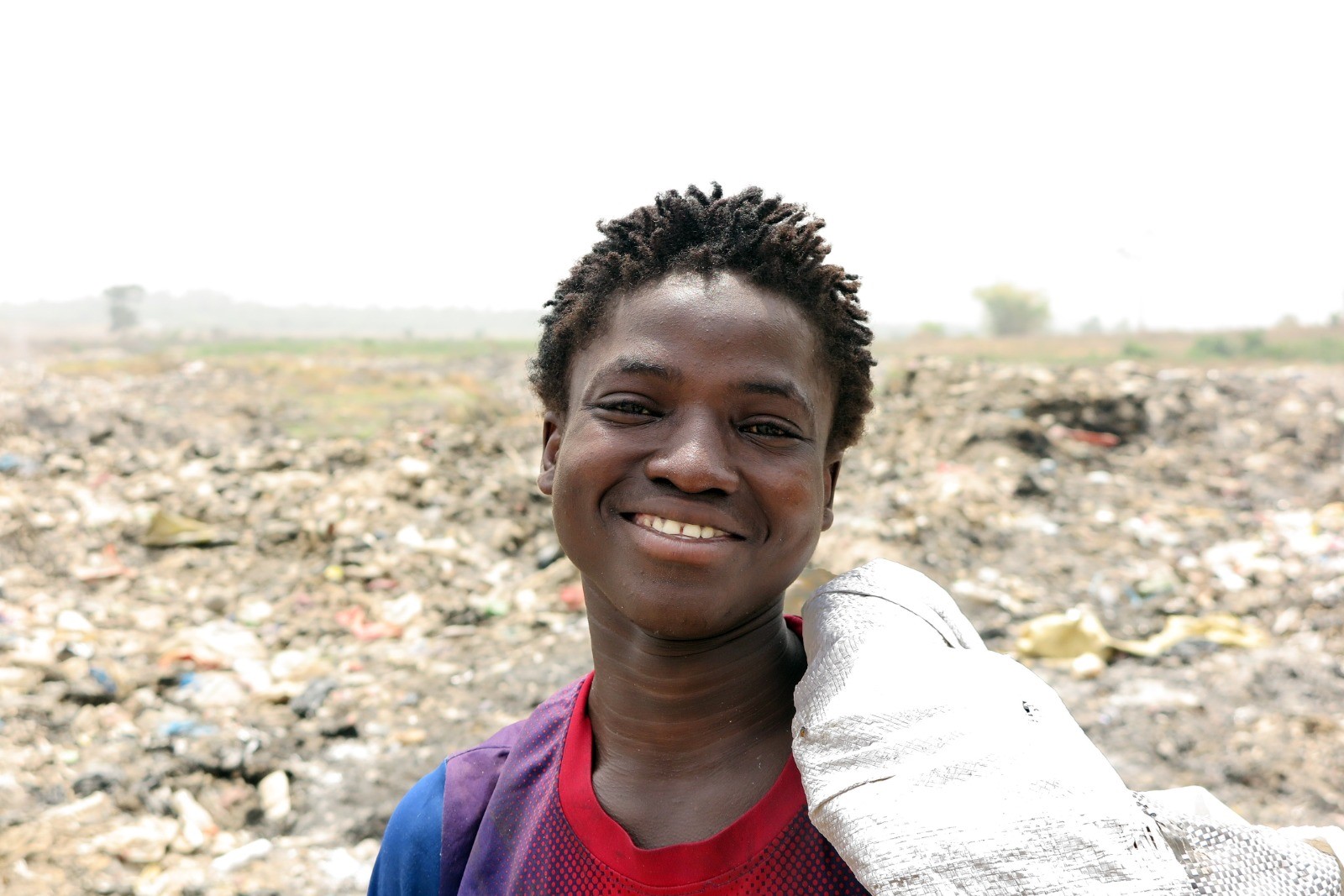
Afgelopen vrijdag was het zover. Medewerkers van de WUR verwijderde de tentoonstelling “Power of the Wasted” van de buitenexpositieruimte op de Wageningse campus. Dit na bezwaren tegen de tentoonstelling van de United Community of African Students (UCAS). De foto’s, op billboard formaat geëxposeerd, lieten de veerkracht zien van mensen die werken in de informele afvalindustrie in Ghana. Ze waren gemaakt door Jurrian Veldhuizen, een Wageningse alumnus International Development Studies. De foto’s waren een bijproduct van zijn master-thesis onderzoek naar afvalverwerking in Kumasi, na Accra in omvang de tweede stad in Ghana. Echter, de tentoonstelling geeft volgens de Gemeenschap van Afrikaanse Studenten een verkeerd beeld. De studenten spreken van een linguïstische en culturele misrepresentatie van de mensen die op de dump werken, en er zou niet zijn geweekt met “informed consent”.
Photograph: Jurrian Veldhuizen
UCAS meent dathet gebruik van de term “scavenger”denigrerend is naar de informele afvalverwerkers. Nu betekent het woord “to scavenge” zoveel als het verwijderen van afval. “Scavenger” verwijst naar een persoon die op zoek is naar afval dat kan worden hergebruikt, een veel gebruikte term in de academische literatuur. Belangrijker nog, voor de mensen die het afval recyclen op de dump in Kumasi is “scavenger” als een geuzennaam. En dat matched met de foto’s, die waardigheid en kracht uitstralen. Niet voor niets heet de tentoonstelling “Power of the Wasted”. Het laat de kracht zien van degenen die zijn gemarginaliseerd. Aan de rand van de samenleving leven en overleven zij.
De “scavengers” werken met afval – producten waar wij afstand van nemen, omdat ze geen waarde meer voor ons vertegenwoordigen. Eenmaal aangekomen op de dump, is het afval uit zicht, en zo hebben we dat graag. In haar ondertussen klassieke werk “Purity and Danger”, maakte de antropologe Mary Douglas[1] duidelijk dat wat wij afval noemen een categorie van dingen en producten omvat, maar ook mensen, die zijn afgewezen. Deze horen niet (meer) thuis in de wereld zoals we die voor ons zien, en daarom ontdoen we ons hiervan. En hier zitten twee ongemakkelijke dimensies van de tentoonstelling.
Ten eerste laten de foto’s van Jurrian Veldhuizen duidelijk zien dat ons afval, eenmaal uit zicht, dus niet verdwenen is, maar een tweede leven tegemoet gaat. Dit afval wordt weer tot waarde gemaakt, maar onder zware en ongezonde omstandigheden. Kennelijk houden we die werkelijkheid liever uit beeld. Ten tweede, maakt de tentoonstelling de mensen zichtbaar achter het afval – mensen waar in de regel op wordt neergekeken. Geïdentificeerd met het afval zelf, staan ze voor datgene dat uit zicht moet blijven. Kennelijk roept het zien van deze wereld aversie op, en willen we het weren uit ons gezichtsveld in plaats van kritisch te reflecteren op de omstandigheden die deze wereld mogelijk maken. Een thema dat ook aan bod komt in ons zogenoemde “Bauman vak” (Sociology in Development”, SDC-32806).
De nu verwijderde tentoonstelling laat dus deze ongemakkelijke wereld van het afval zien. Jurrian Veldhuizen kwam in deze wereld terecht door de producten te volgen waar wij ons van ontdoen. Na het eerste contact gelegd te hebben, begon Veldhuizen zelf als “scavenger” te werken op de dump. De foto’s die hij maakte toont mensen in hun kracht, zonder oordeel en vooroordeel jegens hen. Het laat ons de moeilijke omstandigheden zien waaronder ons afval wordt gerecycled, en de waardigheid in de mensen die hier werken. Met het, als is het tijdelijk, weghalen van de tentoonstelling wordt die ongemakkelijke werkelijkheid dus weer onzichtbaar gemaakt. Wellicht voelt dat comfortabel voor ons, voor degenen die het goed hebben en het afval in grote hoeveelheden produceren, en de gemarginaliseerde kant van de samenleving liever niet zien.
In het bericht van Resource over het verwijderen van de tentoonstelling, zien we dat een foto met daarop een jongeman van een bilboard wordt verwijderd. Weggehaald, omdat hij en zijn mede “scavengers” gezien worden als een negatieve culturele representatie. Dat zegt dan ook weer meer over de tegenstanders van de tentoonstelling, dan over de foto’s en de mensen die daarop zijn geportretteerd. Het, ook al is het tijdelijk, verwijderen van deze tentoonstelling geeft het verkeerde signaal af.
Oh ja, en had ik al gezegd dat de tentoonstelling in nauwe samenwerking met de “scavengers” tot stand is gekomen?
Uncomfortable
Last Friday was the day. WUR staff removed the “Power of the Wasted” exhibition from the outdoor exhibition space on the Wageningen campus. This followed objections to the exhibition from the United Community of African Students (UCAS). The photographs, exhibited in billboard format, showed the resilience of people working in the informal waste industry in Ghana and were made by Jurrian Veldhuizen, a Wageningen alumnus of International Development Studies. The photographs were a by-product of his master thesis, for which he studied waste management in Kumasi, after Accra the second largest city in Ghana. According to the community of African students, the exhibition gave an incorrect cultural and linguistic representation of Africa and the people who work at the dump. They also claim that the participants in the exhibition did not give their “informed consent”.
UCAS believed that the designation “scavenger” is derogatory to informal waste pickers. Now the word “to scavenge” means as much as to remove waste. “Scavenger” refers to someone who is looking for waste that can be reused, a term commonly used in academic literature. More important, the people who recycle garbage at the dump in Kumasi use the name “scavenger” with dignity. And that matched the photographs, which exude this dignity and power of the “scavengers”. After all, the exhibition is named “Power of the Wasted” for a reason. It shows the power of those who have been marginalized, living and surviving at the fringes of society.
The “scavengers” work with waste – products that we have distanced ourselves from because they no longer represent value to us. Once arrived at the dump, the waste is out of sight, and that’s how we like it to be. In her now classic work “Purity and Danger,” anthropologist Mary Douglas made it clear that what we call waste includes a category of things and products, but also people, that have been rejected. And this brings us to two uncomfortable dimensions of the exhibition.
First, Jurrian Veldhuizen’s photographs clearly show that our waste, once out of sight, is not gone, but gets a second life. This waste is made into value again, but under harsh and unhealthy conditions. Apparently we prefer to keep this reality out of sight. Second, and relatedly, the exhibition makes visible the people behind the waste – people who are generally looked down upon. Identified with the waste itself, they represent that which should be kept out of sight. Apparently, we are more comfortable with removing this reality out of sight than with questioning the political and economic conditions by which these conditions are produced. A theme also addressed in our so-called “Bauman course” (Sociology in Development, SDC-32806).
The exhibition brought the uncomfortable world of waste in front of our eyes. Jurrian Veldhuizen entered this world by following the products we dispose ourselves of. After making contact with those working there, Veldhuizen began to work as a “scavenger” at the dump. The photographs he took show the resilience of people working at the dump, without judgment and prejudice towards these people. It shows us the difficult conditions under which our waste is recycled. So with the, even if temporary, removal of the exhibition, that uncomfortable reality is made invisible again. Perhaps that feels comfortable to us, to those who are well off and produce the waste in large quantities, and would rather not be confronted with this reality at the margins of the world we made.
In Resource’s post about the removal of the exhibition, we see that a photograph showing a young man is removed from the billboard. Removed because he and his fellow “scavengers” are seen as dirty, and as a negative cultural representation. Then again, that says more about the opponents of the exhibition, than it does about the photographs and the people portrayed. Removing this exhibition, even temporarily, clearly gives the wrong message.
Oh yes, and did I mention already that the exhibition was created in close cooperation with the “scavengers” themselves?
[1] Douglas, Mary. (2003). Purity and danger: An analysis of concepts of pollution and taboo. Routledge
Have you heard there is an exciting all-virtual, all-free, all-asynchronous experimental conference taking place October 4-9, 2021, organized by Wageningen University and Massey University Political Ecology Research Centre?
CONVIVIALITYbrings us together to ask, “How can we live – not at the expense of others?” Together, we will explore predicaments of agriculture, biodiversity, and conservation with a focus on the ways humans, animals, plants, and broader ecologies attempt to live and thrive together.
A traditional Maori welcome: the conference opens with a livemihi whakatau, including a kōrero/word performance on Monday 4th October at 9:00 AM NZST (or Sunday October 3rd at 22:00 PM UCT+2 / CEST). The video will be available to watch on the site afterward. https://massey.zoom.us/j/3573384756
6 keynote provocations from scholars, indigenous practitioners, and farmers from around the world share what is urgent about building convivial worlds! For example, indigenous cultivator Pounamu Skelton tells us how Maori wisdom infuses her approach to agroecology, https://www.youtube.com/watch?v=w9HUIp0FC64, while Maywa Montenegro de Wit relates the latest scholarship and mobilization critical of the upcoming UN Food Systems Summit, Annu Jalais considers convivial politics of water, and Bram Buscher reflects on the promises and limits of entanglement.
Accessible content to watch at your convenience! Each day will focus on a theme and 1-2 panels of research presentations, with commentary from scholar discussants. Each panel has a unique comments section for participants to engage in with written, video, and audio submissions, which will continue through the conference and following weekend.
Making an international distanced conference ‘convivial’? In a time of pandemic and unprecedented demands on our time and attention, the asynchronous, virtual format means that your engagement can be as flexible or immersive as you can accommodate at this time. We view the experimental format as a proof of concept toward reimagining academic mobility, emissions, accessibility, and connection. The model rests on dynamic engagement: attendees are asked to watch presentations and engage creatively, with written comments, while audio and video interventions are possibilities, as well.
By Paul Swagemakers, Department of Applied Economics, Public Economics and Political Economy, Complutense University of Madrid
A long time ago, in the 1990s, a friend of mine told me he was going to Wageningen to check out what one could study there. Forestry was among his interests. I came along with him and Wageningen sparked my interest too, as I saw numerous possibilities. I chose a course in rural development studies. I initially intended to follow it just for one year only, thinking it would widen my scope, and teach me about the world’s cultures and economic development, before I would decide what to do and study next.
Once started, I was trapped. I learned to analyse rural development issues: I choose a trajectory that taught me how the study of the heterogeneous social configurations and functional relationships between ‘man’ and nature could help combat rural marginalisation and spirals of economic decline and to identify and help develop departure points for sustainable rural development. I learned how pride and collective ideals among rural dwellers shaped their farming practices and how these were embedded in the wider institutional context of markets and policies. I learned that these external factors are often perceived as the drivers for economic development and that this often brought externalised costs. In the classes I learnt about a, now very well-known, example that illustrated this: to sustain the Dutch animal husbandry, a surface many times that of the Netherlands was (and still is) in use for feed production, including former tropical rain forests now used for soy bean production. Apart from realizing that these forests were lost, I asked myself what happened to the people who used to live in, and from, these former rain forests? And I asked myself what can Dutch farmers do to become less dependent on external inputs, and reduce their negative impact on nature elsewhere? At that time in Wageningen, I learned how neo-liberal economic theory advocates reducing the role of government and policies, and sees markets as the most efficient way to regulate supply and demand and to optimise the allocation of resources. I also learned that the revenues, split up in chunks of value added in the food chain, are highly unequally distributed among the participants in the value chain. I was taught about some innovative governance mechanisms that were emerging in those years, called environmental cooperatives. I wondered what I could learn from the farmers in this movement, and got a job helping analyse how new social configurations and relationships could result in the protection and conservation of the environment, studying the dynamics at the farm level in relation to support from markets and policies.
Over the years I learned how many farmers value and manage their land and herd in ways that differ from the dictums of economic theory that teach one to maximise production and minimise costs, and how many of them attempt to gain a living from what otherwise would often be abandoned because of lack of investment and respect: our environment. I also learned that many values produced at farms are poorly valorised in the food chain.
Triggered by this continuous manifestation of abandonment and disrespect, I continue to study where best to invest, and what to respect. This path has led me to a PhD in Social Sciences at Wageningen University, to several lecturing and researching posts at the University of Vigo, and, currently, to a position as assistant professor at the School of Political Sciences and Sociology of the Complutense University of Madrid. So much for just a year’s study! I am afraid, I am permanently trapped.
Related publications:
Swagemakers, P., Schermer, M., Domínguez García, M.D., Milone, M., Ventura, F. 2021. To what extent do brands contribute to sustainability transition in agricultural production practices? Lessons from three European case studies. Ecological Economics 189: 107197, https://doi.org/10.1016/j.ecolecon.2021.107179
Swagemakers, P., Domínguez García, M.D.., Torres, A., Oostindie, H., Groot, J.C.J. 2017. A values-based approach to exploring synergies between livestock farming and landscape conservation in Galicia (Spain). Sustainability 9 (11): 1987, https://doi.org/10.3390/su9111987