Imaginary futures of food provisioning practices in peri-urban areas – Martin Ruivenkamp

Since a couple of months, I’m employed as postdoc researcher by the Rural Sociology Group and assigned to the project Urbanising in Place, a selected project of the Sustainable Urbanisation Global Initiative (SUGI) that is funded by the European Commission under the Horizon 2020 ERA-NET Cofund scheme. Let me introduce myself to you, but I’m interested in getting to know you too! So, please do not hesitate to contact me at martin.ruivenkamp@wur.nl.

I do feel ‘at home’ at the Rural Sociology group. Surely, this might be related to the fact that I heard many good stories about Rural Sociology from people close to me… And, the work carried out by members of Rural Sociology intrigue me and motivate me to contribute to the three themes RSO focuses on: 1) the development of ecological and socially sustainable agrarian and food policies by studying the role of agricultural and rural activities, products and services in metropolitan and peri-urban regions; 2) the identification and reconfiguration of modes of connectivity between the production and consumption of food, by taking a multidimensional approach to food and reconnecting food to the social, cultural and environmental context of food provisioning practices; 3) the generation of images and narratives of ‘other’ values that build on a reappropriation of space through practices that reflect both rural-urban differences and symbiosis and overcome commoditisation of rurality. These themes link up nicely, however maybe creatively, to my previous meanderings through the landscape of social science. Looking back, the pathway that emerged through my wanderings in the fields of social psychology (MSc in 2004), sociology (Ba in 2005), and Science and Technology Studies (PhD in 2011; postdoc research since 2013) foregrounds my interests in the interwovenness of the real and imaginary, the practised and the envisioned and I look forward to apply these concepts as a lens for exploring food provisioning practices in peri-urban areas. I will further elaborate these issues within the contexts of ‘Urbanising in Place’ project. This project investigates how small-scale food provisioning practices on the metropolitan fringe, threatened by ever-expanding urbanisation dynamics, may be reimagined and reconfigured in such ways that rather than being pushed out of metropolitan areas they can be enabled to claim an active role in managing the food-water-energy nexus in the (near) future. Within the confinements of the overall research programme I am not to take the future as an extension of a dominant now, but rather to explore the envisioning of various potentialities of multitudinous futures and investigate how to shift perspective from the obvious, mainstream food system, to the multitude of food provisioning practices, developing and emerging from ‘below’ and how to appraise their roles in social and ecological sustainable futures.

Aside from the above, my roots also explain my contentment to have become part Rural Sociology. As a kid, I always enjoyed visiting my grandparents in Italy. Being originally peasants from Calabria (a region in the ‘poor’ southern parts of Italy) who for economic reasons had migrated to the ‘rich’ north of Italy, working the land was part of their being. Therefore, next to a small two-room apartment in the centre of smoggy Milan, where my grandfather had started a restaurant serving traditional Calabrian food, they had a cottage in the hills of Alessandria (one and a half hour drive from Milan). Here they had an orchard with various fruit trees (apricots, peaches, prunes, cherries), a vineyard and they grew their own vegetables. I always loved to climb the trees and pick and eat the fruit while sitting in the trees and have lunch with the whole family underneath the umbrella pine close to the house. My grandma processed the tomatoes and basil from the garden into pasta sauce, which, with the fresh homemade pasta she made, needed just a little parmesan cheese to make it taste beautiful. The wine came directly from the neighbours and was made partly with the grapes my grandfather grew. Also, years later, when my grandparents had to sell the cottage and were stuck in their two-room apartment, my grandmother kept huge basil plants on the balcony, which, with an open window, smelled up the whole living room. My grandfather rented a small plot next to a power station a couple of blocks from their house, to be able to continue to work the field and grow his tomatoes. In Milan, due to his connections in the catering industry, he sometimes was able to obtain from friends ‘Sardella’, a typical fish conserve from Calabria – also known as ‘Poor man’s caviar’.

These memories, the smells and tastes are to my opinion important points of focus manifested in studies of regional food dynamics, diverse modes of food provisioning (in peri-urban and urban areas) and interlinked food networks (as in this case emerging from migration flows). I do believe in the relevancy of giving affective credence to food knowledge, food appreciation and consciousness in the identification and generation of socially just and ecologically sustainable food futures. And, I hope, without sounding too histrionic, in the coming three years to be able to combine ‘heart’ and ‘mind’ and form new personal pathways that contribute – e.g. through action research approaches – to the identification of diversity, making visible the potentialities of unconventional food practices, broadening the scientific, policy-oriented and public visions of food provisioning activities and advancing multiple food futures and policy decisions. In elaborating these ‘small-scale’ ambitions I guess I will very much appreciate an automatic wifi connection.

Thesis Opportunities: Social Economies of food, agriculture, and nature in Gelderland.

Social economy is an umbrella term used to describe a variety of third sector, cooperative, voluntary, non-profit, and social enterprise initiatives that put social and environmental well-being before profit.  They operate in different sectors of the economy, and provide a number of important goods and services – that range from food to social services and care. The social economy is also an important part of the solidarity economy, a term used to describe diverse economic practices that seek to strengthen local economies and communities and create alternatives as a form of resistance to the social, economic, and environmental injustices associated with capitalism, colonialism, racism, and neoliberalism. The cities of Ede, Arnhem, and Nijmegen are home to a growing number of social economy initiatives, especially in the areas of agriculture, food, and nature (e.g. ecosystems services, green infrastructure). Here they play a vital, yet often unrecognized role. With these three thesis topics –  on (WP1) mapping, (WP2) diverse economies analysis, and (WP3) assessment –  we hope to change that.

Start date: January or February 2019

Qualifications:           

  • You are able to conduct qualitative research in Dutch.
  • You are able to engage diverse stakeholders in participatory and collaborative research
  • You can use basic excel and mapping tools (WP1)
  • You have an interest in diverse economies and social innovation (WP2).
  • You have some experience in assessment and evaluation (WP3)
  • You are registered for one of the following MSc programmes: MID, MCS, MLP, MFT, or MOA
  • You have completed at least 2 RSO courses (or relevant social science courses)

Questions? Please get in touch!

Supervisors: Oona Morrow (RSO) oona.morrow@wur.nl and Jan Hassink (PRI) jan.hassink@wur.nl

  1. Mapping social economy in food-health valley

What/ Where is the social economy in food-health valley?

This MSc thesis will seek to inventory and categorize social enterprises in the greater Ede, Arnhem, and Nijmegen region. Through online research and field research you will construct a database and map of social economy initiatives in the agriculture, food and nature domains providing social services. You will work closely with a MSc student specializing in diverse economies to develop a typology for categorizing these initiatives in terms of their organizational model, funding, sector and services,  etc. The data you collect is important for measuring the size and scope of the social economy. And ultimately for making the social economy visible to itself, the general public and policymakers. You will organize several stakeholder events in each city to reflect on the reflect on your data, and also what is missing. You will use your research practice to strengthen existing social economy networks in the region by bringing stakeholders together. Your MSc thesis will thus also reflect on the role of mapping as a method for making networks visible.

  1. Diverse economies of social economy in food-health valley

What are the diverse economies of the social economy?

This MSc thesis will work closely with the Mapping the social economy thesis to adapt the diverse economies framework (Gibson-Graham 2008) to create a typology of social economy initiatives and practices. You will draw upon  the database and map created by MsC 1 to select case studies from several different sectors (e.g. food, agriculture, nature care, etc.) and analyse them for their diverse economic practices and business and funding models. You will examine the social and institutional relationships and policies that shape these practices – e.g. health policy, access to land from the city. And identify emerging social innovations and best practices to share within this network social economy initiatives.

  1. Co-designing Impact and Assessment tools for social economy initiatives in food-health valley

What are the impacts of the social economy, and how can we measure them?

Social economy initiatives have important goals. But how do they know they are achieving them? What metrics and indicators are meaningful? And what types of evaluation tools are actually useful and usable ? And how can they best communicate their impact (to funders, policy makers, and participants)? You will answer these questions, in collaboration with social economy initiatives working in different sectors of the region. Together you will co-design impact and assessment tools that are tailored to the unique needs of social economy initiatives yet also replicable and can be implemented by the initiatives. You will organize communities of practice around evaluation that are rooted in the concrete needs and practices of different sectors.

Further Reading:

Amin, A. (Ed.). (2013). The social economy: International perspectives on economic solidarity. Zed Books.

Gibson-Graham, J. K. (2008). Diverse economies: performative practices for other worlds’. Progress in Human Geography32(5), 613-632.

Gibson-Graham, J. K., Cameron, J., & Healy, S. (2013). Take back the economy: An ethical guide for transforming our communities. University of Minnesota Press.

Loh, P., & Agyeman, J. (2018). Urban food sharing and the emerging Boston food solidarity economy. Geoforum.

Miller, E. (2010). Solidarity Economy. In Eds. E. Kawano, T. Masterson, and J. Teller-Ellsberg. Solidarity Economy I: Building Alternatives for People and Planet. Amherst, MA: Center for Popular Economics. 2010


The EU Protein Plan: shifting to sustainable supply-chains or more of the same?

Chris Chancellor, WU Graduate

The impact that our industrialised global food supply-chain has on diverse ecosystems and communities around the world is receiving greater attention than ever before. Scholars and activists have for decades emphasised how European agricultural demand has driven deforestation and environmental destruction in species-rich biomes such as the Amazon and Cerrado regions in Latin America.  Now it is becoming clear that the consequences extend far beyond the environmental harm generated by the production stage itself. When looking at the wider chain, the implications of industrial food systems for issues such as food and nutritional security, human health, social justice, rural vitality, employment, and the concentration of market control, become apparent.

Having found its way onto the political agenda, the European Union (EU) has come up with the idea of a European Protein Plan. The EU is currently heavily reliant on imports of protein crops, primarily soybean from Latin America’s Southern Cone region. As well as being linked with major environmental and human rights concerns, the reliance on imports also makes the EU agricultural industry vulnerable to shocks in international commodity prices. Soybean is the favoured ingredient in animal feed for the EUs powerful livestock industry, and therefore a price shock would have major socio-economic consequences.

The Protein Plan essentially proposes increasing the amount of domestic protein crop production. The idea is that this would lift the burden on Latin American ecosystems whilst at the same time providing the EU with greater ‘protein independence’. This has been presented as a win-win situation, and yet the manner in which this production would take place has received little or no critical attention.

A report published by civil society organisation European Coordination Via Campesina (ECVC) highlights the dangers of simply transplanting the same corporate industrial supply-chain into Europe. Last year, an agreement called the European Soya Declaration was signed by 13 member states, highlighting the suitability of fertile and ‘underused’ lands in Central and Eastern Europe (CEE) for expansion of European soybean production. The ECVC report details the recent emergence of agribusinesses and financial investors in the CEE region. Land here is cheaper and often more fertile than in Western Europe, and offers suitable agro-climatic conditions for commodity soybean cultivation. There is therefore an opportunity for large profits to be made if land is bought up now, cultivated with soybean or other commodity protein crops, and potentially sold later when land prices have reached western European levels. As one company puts it: ‘protein crops are the new gold bars’. However, this process is not a neutral one, and entails radical reformulations of arable land ownership and control, threatening the livelihoods of the region’s small-scale producers and rural communities.

Another report from the Land and Resource Lookout reaches a similar conclusion, pointing out that ‘a control-blind approach’ to sustainability is evident. Much attention is given to the fact that this soy would be non-GM, would be deforestation-free, and would help to fix nitrogen in crop rotations. These are undoubtedly positive, yet these traits in isolation don’t automatically equal sustainable supply-chains. The manner in which this soy is produced, distributed and consumed, as well as how and who controls these processes and relevant markets, are key for building a truly sustainable and inclusive food system. It argues that sustainable food system strategies must explicitly address the issue of corporate control if effective progress is to be made.

With the European Commission set to release a report on the EU Protein Plan before the end of the year, both reports advocate for the inclusion of agroecological principles and the concept of food sovereignty in any future EU protein strategies. An agroecological transition offers a potential pathway for a truly inclusive, interconnected and mutually beneficial food system to be built, but this must receive political backing in order for it to really take hold.

The fact that the sorts of headline issues emphasised in the European Soya Declaration are receiving genuine political attention is a positive step. It provides an opportune moment to address deep-seated systemic problems in our current industrially-based food system; policy-makers must now be brave enough to seize it!

Note: are you a WU master student and interested in doing a thesis research on this issue, please contact joost.jongerden@wur.nl

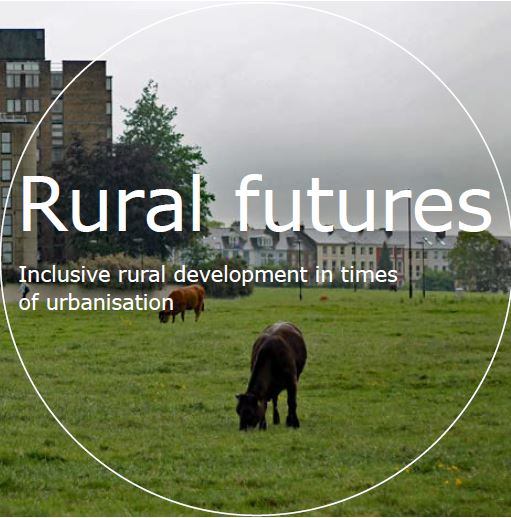
Rural Futures – Inauguration Bettina Bock as Personel Professor of Inclusive Rural Development

BB Rural Futures

Thursday October 25 2018 at 16.00 Prof. dr Bettina Bock will give her inaugural address as Personel Professor of Inclusive Rural Development titled Rural Futures.

The inauguration will be broadcasted live by weblectures.wur.nl and can be viewed later as well.

Vacancy: the Rural Sociology group will recruit an Assistant Professor in Agrarian Sociology

The Rural Sociology group will recruit an Assistant Professor in Agrarian Sociology (Tenure Track). For more information see: https://www.wur.nl/en/vacancy/Assistant-Professor-in-Agrarian-Sociology-chair-group-RSO-Tenure-Track-.htm