Rural regional learning in ‘Upper Lusatia’ (Oberlausitz), Germany

Following my visit to Alytus County, Lithuania in October, I travelled to Leipzig, Germany to visit our DERREG project partners Michael Kriszan, Robert Nadler and Joachim Burdack (Leibniz Institute for Regional Geography) in their case study area ’Upper Lusatia’. In this blog, Michael, Robert, Joachim and I would like to share some of our experiences.

We first discovered that the case study regions Westerkwartier and Upper Lusatia are very different in their geographical and demographical characteristics. The LEADER region Westerkwartier in Groningen province comprises four municipalities on an area of 374km² and has a population density of 173.4 inhabitants/km² (as of 2007). In 2006, its GDP per capita was estimated at 55,400 Euro and the area has recently witnessed a population increase due to its popularity amongst young families who work in the city of Groningen and value the countryside as their residential area. The Southern part of the Westerkwartier is thus characterized by a high population density and a number of conflicting interests regarding the use of the countryside while the North of the Westerkwartier is primarily used for agriculture.

Upper Lusatia consists of the two Saxon districts Landkreis Görlitz and Landkreis Bautzen that have only been established in 2008 in the process of a reform of the administration units in Saxony. The case study region has an area of about 4,500 km² and has a population density of 135 inhabitants/km². It comprises 122 municipalities- of which 30 are urban centers- and had a GDP per capita of 18,329 Euro (district Görlitz) respectively 19,396 (district Bautzen) in the year 2007 . The region is divided into ten rural development areas, six ILE regions and four LEADER regions. In contrast to the Westerkwartier, the population of Upper Lusatia is shrinking rapidly. Young inhabitants are leaving the area due to a lack of employment opportunities, leaving the elder people behind. Rural development in this region is therefore not only affected by an aging population but also by a shrinking human capital available for development purposes. Through the reform of administrative units altogether four previously distinct districts (Landkreise) and two cities (kreisfreie Städte) have been incorporated into the two “new” districts of Görlitz and Bautzen. The previous Landkreise, however, are very distinct in their physical appearance. The former district Niederschlesien-Oberlausitz for example is characterized by a low population density and shaped through past and present coal mining activities while the hilly district Löbau-Zittau is recognized as a touristic area and winter sport resort. Due to the lack of a common history and the physical distinctiveness, there is no regional identity of the population within both districts.

To evaluate the support and facilitation available for learning and innovation within local grassroots development initiatives in Upper Lusatia, Robert, Michael and Joachim organized a workshop for regional stakeholders.
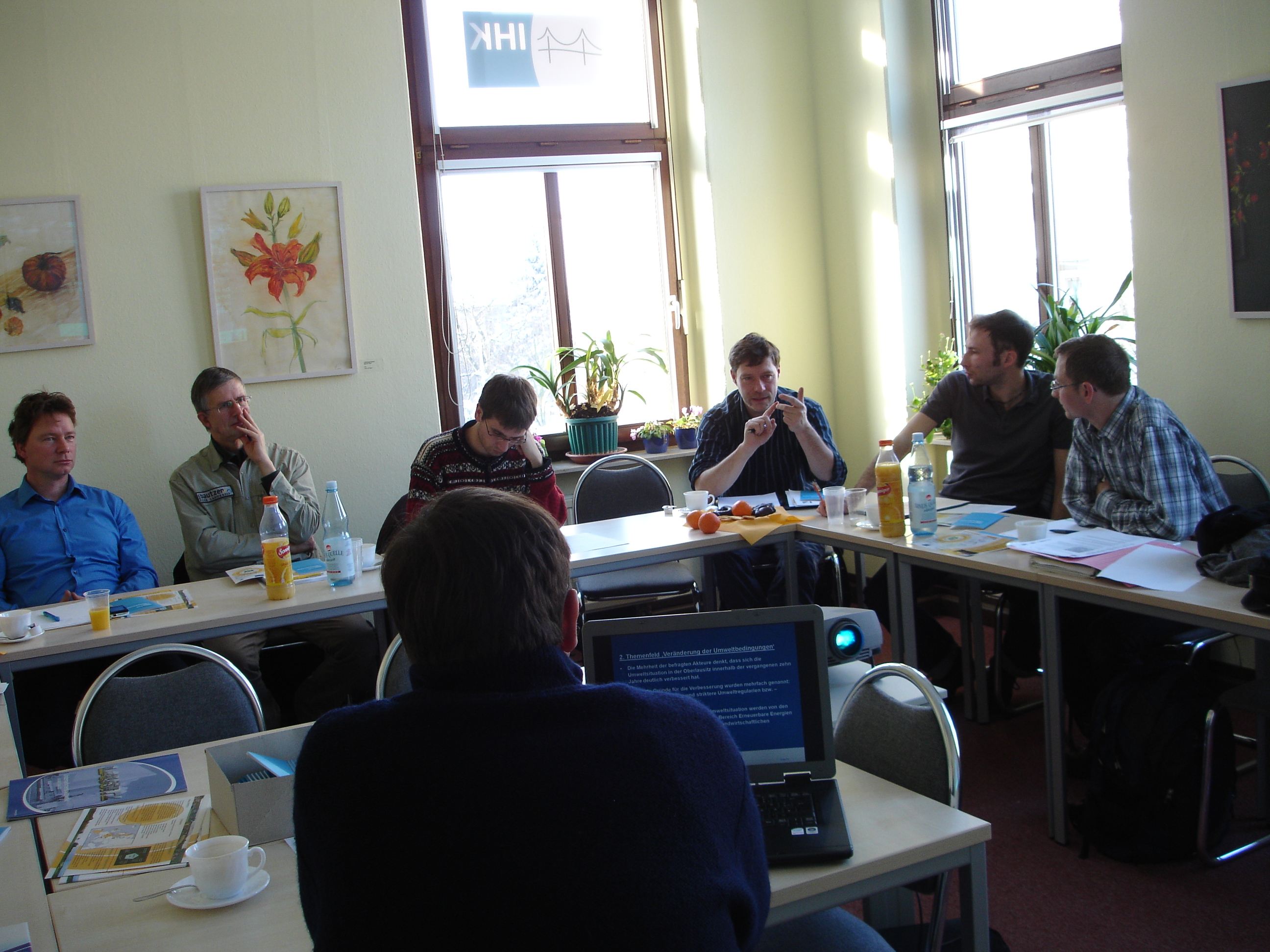
Workshop in Upper Lusatia, Germany
Continue reading

Rural regional learning in Alytus County, Lithuania

Last week (October 21-22, 2010), I was given the opportunity to visit our DERREG project partner Emilija Kairyte (Institute NeVork) in her case study area of Alytus County in the South of Lithuania. In this blog, Emilija and I would like to share our experiences.

Like the Dutch DERREG case study region Westerkwartier in the province of Groningen, Alytus County comprises four rural municipalities. In terms of demography and economy, both areas are very different from each other. For example, the Westerkwartier has a population density of 173.4 inhabitants/ km², whereas the population density of Alytus County is estimated as 32.6 inhabitants/ km². While the Westerkwartier has witnessed an increase in citizens over the last years, amongst them a large number of young families, rural development in Alytus County is strongly affected by an increasing out-migration and an aging population. Living standards differ considerably. In the Westerkwartier, the GDP per capita was estimated as 55.400 Euro in 2006 while the GDP in Alytus County was estimated as 19.100 Litai in 2007 (equals 5.531,74 Euro, October 2010). Also in geographical terms the two regions are very different. The Westerkwartier is characterized by open grasslands in the North and small fields with framing hedgerows in the South. Alytus County is renowned for its vast forests and lakes.

During my visit to Alytus County, I accompanied Emilija to two workshops, one for the LAG and other public administration authorities on the 21st of October and one for rural initators and actors on the 22nd of October, which she organized in order to evaluate existing arrangements for support and facilitation of joint learning-by-doing activities within rural development initiatives. At these workshops, I presented supportive arrangements and benefiting rural development initiatives that we found during our investigations in the Westerkwartier and which we evaluated together with local stakeholders at a workshop organized by the Rural Sociology Group in the Westerkwartier on the 18th of October.

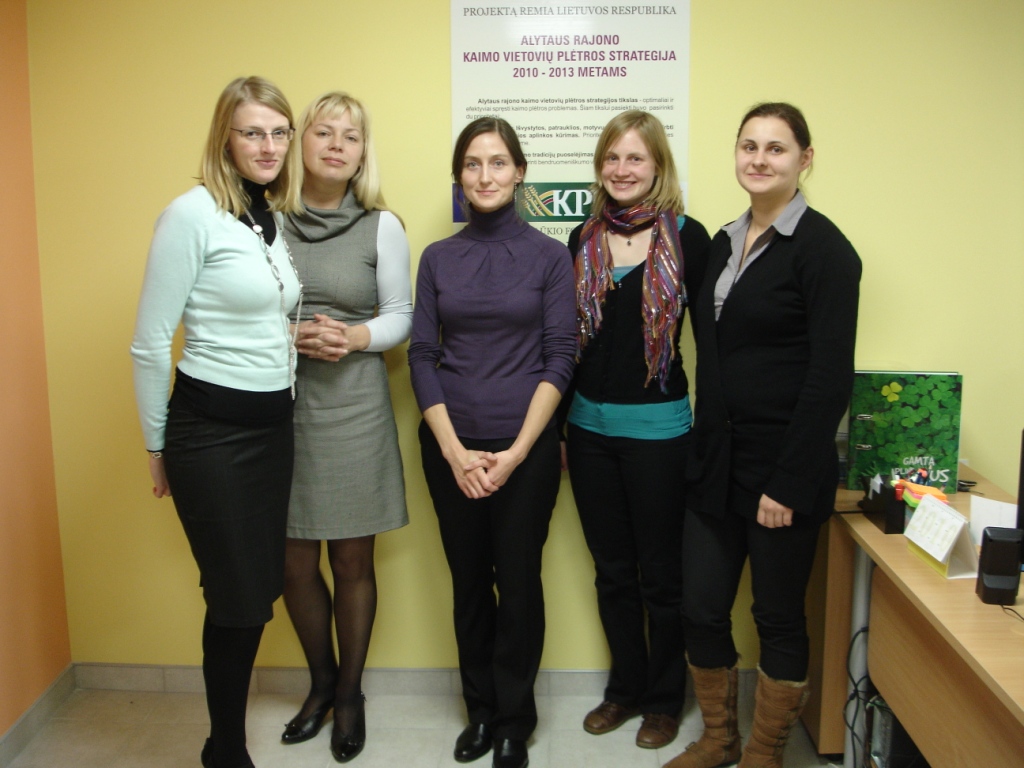
Meeting with rural development initiative supporters in Alytus District LAG office, Alytus

To my surprise, both regional learning supporters (including the LAG) and rural initiators did not see striking differences between the existing arrangements and support given to rural development initiatives in Alytus County and the Westerkwartier. Emilija and I however learned that there are some basic differences in the foundation and operation of the Countryside House (Plattelandshuis) in Westerkwartier and Seniūnija (NUTS5) in Alytus County. Continue reading

Resistance and Autonomy in Western Mexico – local actors creating a place of their own

 By Peter R.W. Gerritsen, Department of Ecology and Natural Resources, South Coast University Centre, University of Guadalajara, Av. Independencia Nacional 151, 48900, Autlán, Jal., Mexico. Email: petergerritsen@cucsur.udg.mx

 The local effects of global processes in the Mexican countryside are well documented; describing problems related to the quality of rural producers’ life, identity and traditional practices, as well as their resource management practices. Alike initiatives all over the world,  also in western Mexico local actors joined forces to counter these problems and created ‘a place of their own’ in a globalised world, a place for their own wellbeing.

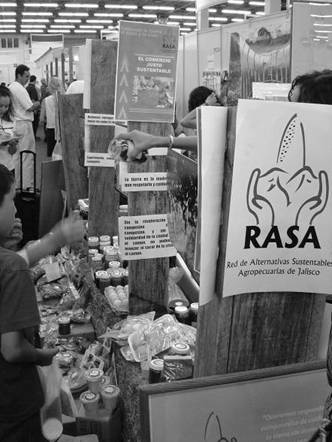
RASA - Peter Gerritsen

In the state of Jalisco, located in western Mexico, 20 groups of peasants and indigenous farmers, supported by professionals from non-governmental organizations and local universities, joined forces in 1999 and created the Red de Alternativas Sustentables Agropecuarias (RASA: the Network for Sustainable Agricultural Alternatives). As such, the RASA can be considered an umbrella organization for many local organized producer groups.

The RASA is also a social organization with characteristics of the so-called new social movements. New social movements have emerged since the late 1970s in the Mexican countryside, due to the problems created by global processes. The struggles that have led to their emergence originate from the demand to defend local structures and to remain control over the different domains of daily life. As such, these movements stress the need for endogenous development approaches. Closely related to the issue of specific life styles is the defense of the territory, being the place of local identity formation. It is also here, where innovative forms of resource management have emerged.

RASA 2 PGThe RASA´s main objective is strengthening a development model that aims to mitigate the local impacts of global processes and that permits the transition towards sustainable local development. In practice, the RASA organizes workshops on organic agriculture and fair trade, and organizes farmer-to-farmer meetings for sharing experiences (including political discussions on the countryside). These activities take place in the rural and peri-urban areas of Jalisco. The RASA also designs and implements new fair trade-channels, mainly in the metropolitan area of the Jalisco state capital Guadalajara. As such, the RASA´s actions are also directed at urban consumers. Finally, articulation with other social movements is actively sought for. Thus, the RASA seeks to create new room for maneuver by establishing strategic alliances with different societal actors.

The creation of local transition paths towards sustainable development, such as promoted by the RASA, is related to the issues of agency and power. These, in turn, are (often) related to resistance and autonomy. Both elements are also recognizable in the RASA experience.

To start with, the RASA has created its own socio-political space in the Jalisco countryside, which has permitted to resist to and counter the dominant rural development model in Mexico and in Jalisco that follows global tendencies. However, the RASA´s efforts must be understood as heterogeneous in nature; not all groups are involved in fair trade, but only those with a production surplus. Moreover, some groups focus more on basic grain production, while others cultivate horticultural crops. Furthermore, the RASA emerged outside the realm of governmental intervention in rural areas. In fact, it has been systematically neglected by formal institutions, as the RASA has been considered a threat to the established formal – historically-determined – political spaces in the rural arenas. Moreover, within the rural communities the RASA-members are perceived as outsiders. In this sense, the RASA conceptual approach has permitted strengthening their self-consciousness and self-organization, as well as improving their position in their communities. It has also led to the dimension of autonomy in the sustainable development model, as designed and implemented by the RASA.

Suburban Ag

Land use planning and housing development can bring farming and food production closer to (sub)urban citizens. Similar to trends in the Netherlands, suburban agriculture is taking form in new developments projects. There are two pathways. First, development organised by citizens in co-housing projects such as the Ecovillage in Ithaca. Co-housing projects often involve the creation of an ‘intentional community’ of people who have chosen to live and work together in a lifestyle that reflects their shared core values. Projects often include a community owned and operated farm.

Intentional communities rebel against two dominant American features; individualism and property rights/ownership. Both features are reflected in the overall perspective on land use planning and housing development here. In order to understand it, Dutch assumptions on land use planning need to be left behind.  In most places, state and county legislators refrain from ‘interfering’ with land ownership. Without zoning or specific designations, any land, no matter how far from an urban centre, represents a bundle of rights. For example water rights (see blog), and more importantly ‘development rights’. Development takes place where developer and landowner agree. Around cities, this causes a large ring of ‘urban sprawl’; fragmentation of land and a random patchwork of malls, offices, agricultural land, housing and roads without any visible coherence. Although farmers, who farm in the middle of this, oppose to the developments, they oppose to land use planning at the same time; nobody wants to give up their right to sell their rights.

A second type of suburban agriculture, therefore, is often led by private or public land trusts.  This means that land use planning is applied on the coherent whole of land owned by the trust on a certain location. Some parts are developed for housing, other parts for farming and other parts for nature conservation. A good example of this is Prairie Crossings, set up in 1987 by a group of citizens. This can only take place if development rights are taken off the land even though it is not used for building (‘easement’) to prevent future unwanted development. Rights are taken off by conservation easements in two ways; by being sold or being donated to the trust (the latter for receiving advantagous tax breaks). Whereas until 10 years ago, easements were only for nature conservation, nowadays there are agricultural easements possible too now environmentally sustainable farming is becoming a practice.

It is remarkable how absent the state is in land use planning. Planning in the Netherlands, such as Reconstruction Law land use planning, including the movement of entire farms for preserving natural habitats, equals to an unthinkable intrusion of property rights here.

Sioux City and Community Development

Monday, I embarked on a 15 day travel with Cornelia and Jan Flora, stopping by various meetings, projects and conferences in a south west direction from Ames, Iowa to Arizona and back. The amount of car miles involved would get me twice around the Netherlands I suppose. We started with a meeting in Sioux City, a city in the north west of Iowa bordering Nebraska.

STA71678We are meeting in a recently restored old boiler building which once served 46 building in this neighborhood. This old industrial neighborhood is being redeveloped as Sioux City tries to reinvent itself as an arts and cultural city. However, its history is tightly connected to agriculture through the stock yards, the traditional trading place for farm animals. Therefore it stays as somebody said “a cowmen’s town with an opera”.

Well, I heard last night that it was not only about men. Traditionally, the stock yard was surrounded by cowboy saloons and brothels. The brothels, where a Madame ruled, were important places for local business and access to capital.The Madame had a very powerful position and was often involved in providing micro loans and other financial services in a time where banks were not easily accessible.

However, we are here for another type of community development…. Faculty members of 5 Midwestern universities discuss here the Community Development On-line Master’s Program in which they are involved together. This is quite a unique situation, a full online course offered jointly by the universities of Iowa State, North Dakota State, Kansas State, South Dakota State and Nebraska-Lincoln under the Great Plains Interactive Distance Education Alliance.

The Community Development Program began in the fall of 2005, and it was initially funded through a National Higher Education grant. Since the grant has ended, the program continued and supports itself. Students in the program are from all over the United States, as well as other countries. Many of them combine the Master with their (community) work and/or family. The program won two awards in 2008, a state and a national award. Jan and Cornelia Flora are both involved in the Program as teachers and Jan Flora won two grants in 2008 which allow for the development of two new courses within the Master, one on Sustainable Communities and the other on Immigrants in Communities.

Online Bachelor and Master programs are becoming rapidly popular. For universities, such as those in the Midwest it represents an opportunity to new attract students to universities in States which show a downward demographic trend. And the online – placeless programs also attract new categories of students, such as those who are forced to come out of retirement because of financial problems and need to ‘rewire’ themselves.