
During the International event of Science Shops in Europe, The Inspiration days 2012, an award will be given to the author of the best Science Shop report. The Wageningen Science Shop nominated 3 projects from Wageningen University. Lise Alix, completed the Master International Development Studies at Wageningen University with a thesis research on an allotment park in Ede at Rural Sociology commissioned by the Science Shop of Wageningen University. Lise Alix is one of the nominees. Her thesis is in Dutch and called “Zo tuinieren zij dus“ (That is how they garden), but has an English Summary. The thesis was examined as excellent. The research by Lise was part of a larger project on ‘Tuinenpark Koekelt’ (allotmentpark De Koekelt), see the project site for more information. The final Science Shop report “Welkom op Tuinenpark De Koekelt” is largely based on the nominated thesis. Below a clip of the allotmentpark ‘De Koekelt’:
Tag Archives: Msc-thesis
Project “Weerbaar vee” – thesis onderzoek
Voor het project “Weerbaar Vee” moeten data geanalyseerd en geïnterpreteerd worden, afkomst uit gesprekken die het afgelopen jaar met een groep van 45 veehouders zijn gevoerd. Deze melkveehouders nemen allen deel aan het project “Weerbaar vee” dat in 2010 is gestart. Het projectteam is momenteel naarstig op zoek naar een student Agrarische of Rurale Sociologie die in nauwe samenwerking met Ingrid den Uijl onderzoek wil doen naar verbanden tussen karakteristieken van bedrijven, stijlen en persoonlijkheden enerzijds, en parameters van weerbaar vee anderzijds. Het onderzoek staat gepland voor najaar 2012.
Contactpersonen zijn onderwijscoordinator Jan Schakel (Leerstoelgroep Rurale Sociologie; jan.schakel@wur.nl) of Dr. Ingrid den Uijl, Veterinair epidemioloog Geneeskundige Dienst , Deventer (i.d.uijl@gddeventer.com)
Project ‘Weerbaar Vee’
Kunnen we het niveau van natuurlijke weerstand meten? En zo ja, kunnen we die meetwaarden dan gebruiken als navigatiemiddel voor het voorkomen of beperken van dierziekten? Die vragen staan centraal in het project Weerbaar Vee dat, na jaren van voorbereiding, in 2010 van start ging. Het project Weerbaar Vee is een onderzoek naar biomarkers voor weerbaarheid op het melkveebedrijf. Een biomarker is een parameter die gemeten kan worden in melk, bloed of weefsel van een dier. In dit onderzoek wordt gezocht naar biomarkers die gemeten kunnen worden aan een gezond dier die een maat zijn voor de weerbaarheid van het dier. Het project borduurt voort op en maakt gebruik van resultaten van het project Natuurlijke Weerstand van Wageningen Universiteit in samenwerking met het UGCN.
Next student seminar August 29th afternoon: programme
The Section ‘Sociology and Anthropology of Development’ offers students every two month the possibility to present their thesis or thesis proposal. All students doing a thesis with one of the chair groups within the SAD section, are requested to present during one of these student seminars.
The next seminar will take place Wednesday August 29th, starting from 13.00 hours, room C76 at De Leeuwenborch. This will be the last opportunity within the academic year 2011/2012. The seminar is open to everyone, student or staff. Please, join (part of) a session (or more)!
If you are interested to present either a thesis proposal or a thesis report, please contact Jan Schakel (Jan.Schakel@wur.nl, room 3013)
Programme August 29:
13.00 – 13.30 Evelien Hennekens (MID): ’Biogas as domestic energy solution? Potentials and barriers of the technology for low-income households in South Africa’.
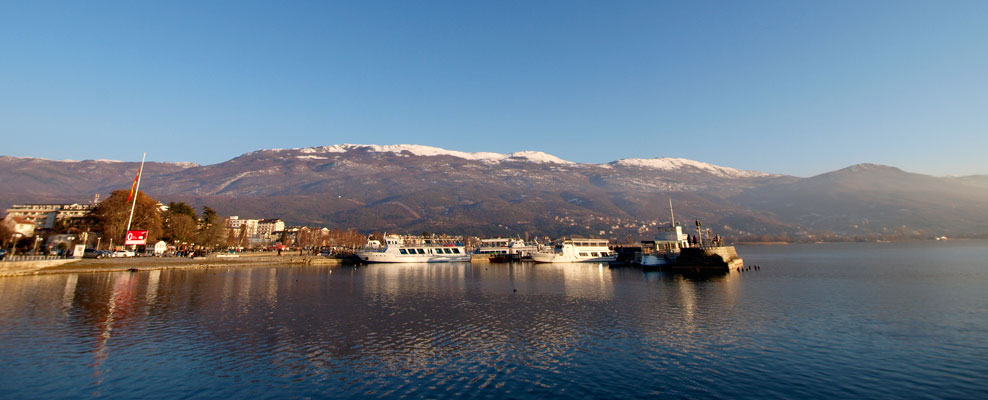
A day in researching sense of place in the National Park “Galicica” in Macedonia
By Bojan Rantasa, MSc-student International Master of Rural Devleopment (IMRD)
Earlier I introduced my thesis research regarding the ‘Sense of place in Galicica national park‘. My research is coming to an end, but I am still cautious to speak of results prematurely. So I will share how my research days look like. Embarked on the mission to do a field research in the National Park “Galicica” in Macedonia, I begun packing my backpack:
- Field audio recorder. I will do open interviews with people, and writing notes whilst doing interviews is out of the question. First, if I write, I will have to pause the conversation and that will take a lot of time, and the person might forget what he or she was talking about, but most important, I am too lazy to write.
- Photo camera. I am researching sense of place, and having visual records of the places is a must. At least this is how I see it.
- Video camera. Photography is beautiful and my favourite art, but sometimes it does not say enough. Image and sound is compelling to more senses than just image.
- Handheld GPS. I should not get lost, but it will also come handy in marking those places that people see important, and making a map of what I’ve researched, as places reside in locations.
- Replacement batteries. I do not think that I will bump into a MediaMarkt shop behind that mountain peak.
- Walking stick. It is a mountain, dogs wondering around, thorny bushes, and my left knee is not really in a good shape. Besides, this one has a ¼” screw on the top, so I can use it as a monopod for the camera.
- Some snacks. I will spend a full day out.
- Sun tan cream. I hope that there will be some sun today.
- Toilet paper. No need to stress this importance.


Well, if people are not scared from my looks, I figure that means that they are open for a conversation on their sense of place. So I’m off on the first bus to the next village on my list. I arrive there around mid day. At this time only retired people are in the village. I walk around and I meet an old granny. But she refuses to speak with the recorder on. She says that afterwards someone might come to look for her. I, on the other hand, refuse to talk to her without the recorder. It is not only the issue of not noting all the detail of the conversation, but it is the issue that at a later stage of my research I will see some interesting correlation, something I might use to build a theory on. Now if I have only my written notes, I will not have this new thing noted. But if I have an audio recording of the conversation, I can check if there is really a pattern or something to relate to my new discovery in the interviews I’ve did in the past. Additionally, people that refuse to talk with the recorder on are people that have something to hide. So those people will tell me less or even lies, thus I can consider them as a misleading factor, or simply a waste of time. So I go my way. The granny did give me a boiled egg, as it was Eastern just yesterday, it will come in handy for my lunch later.
Sense of place in National Park Galicica – using new media in MSc-thesis research
By Bojan Rantasa, MSc-student International Master of Rural Development
Last Friday, 23 March 2012, I presented my MSc-thesis research proposal for fellow students and researchers of the Rural Sociology Group. My thesis research is titled “The Sense of Place of National Park Galicica” is part of my Msc-study International Master Rural Development (www.imrd.ugent.be). Joost Jongerden of the Rural Sociology Group is my sepervisor. My thesis presentation can be viewed at www.galicica.rantasa.net, a website on my thesis research where I will post research proceedings as well.
In my research I will use new media as tools for communication with the public but also as research method. I developed a website at the proposal stage of the research (www.galicica.rantasa.net). It enables dedicated communication with stakeholders and public, by offering updates on the research and a contact form. The web page also hosts the questionnaire on the sense of place of “Galicica”, thus becoming an important and integrated tool to the research. The information on the research currently presented on the web page is limited. This is not to lead the visitors of the web page, thus creating biased answers in the questionnaire.
To spread the questionnaire, I will use Facebook and targeted e-mail messages that are disseminated by the participants, causing a domino effect. This approach resulted in more than 50 completed questionnaires in the first week.
 Rural Sociology Wageningen University