
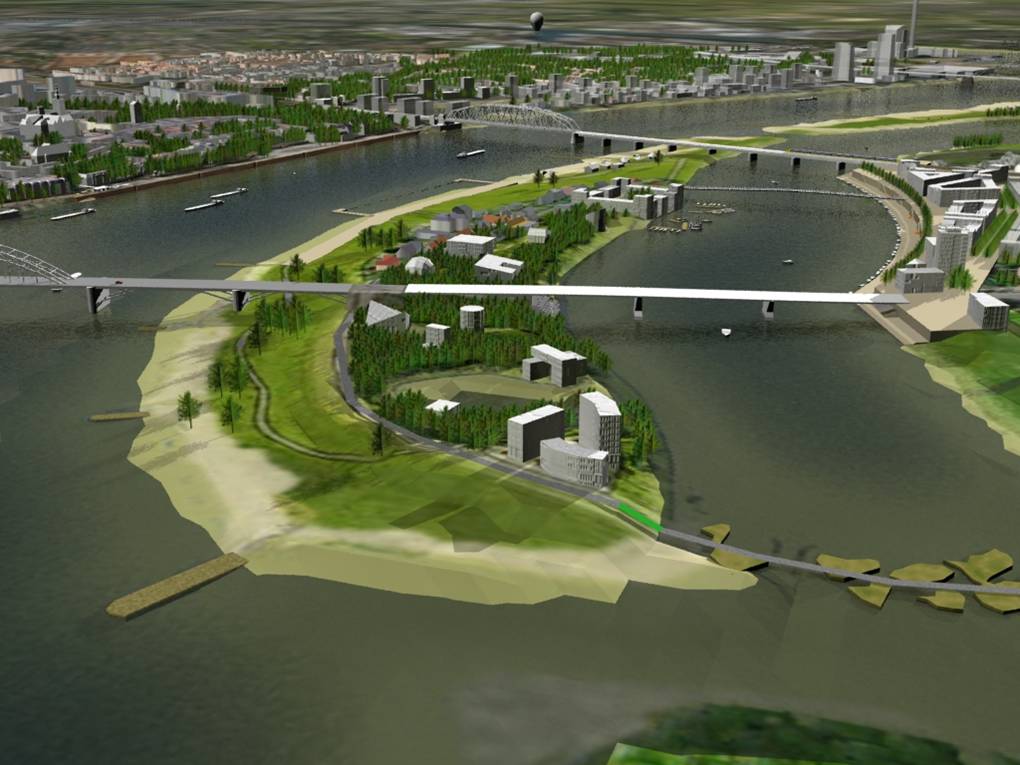
At Wednesday morning 23th of March, an excursion will be organized to Lent/Nijmegen on place-based development. This excursion is not only for students who follow the course Understanding Rural Development, but also open for other students. Karolien Andela of the city of Nijmegen will inform us about recent projects such as: ‘Space for the river Waal’ to adapt to climate change), the shift of the river dike which will create a new island and space for recreation and events, ‘the Waal jump’ (new urbanization in Lent), the ‘Waal front’ (reconstruction of a business area) and landscape development.
If you are interested, please sign in by sending a mail to lummina.horlings@wur.nl before March 16th.
Tag Archives: Rural Development
Rural women in Europe: invest in the vitality of rural areas to improve their position
The report ‘Personal and social development of women in rural areas of Europe’, prepared for the European Parliament’s Commit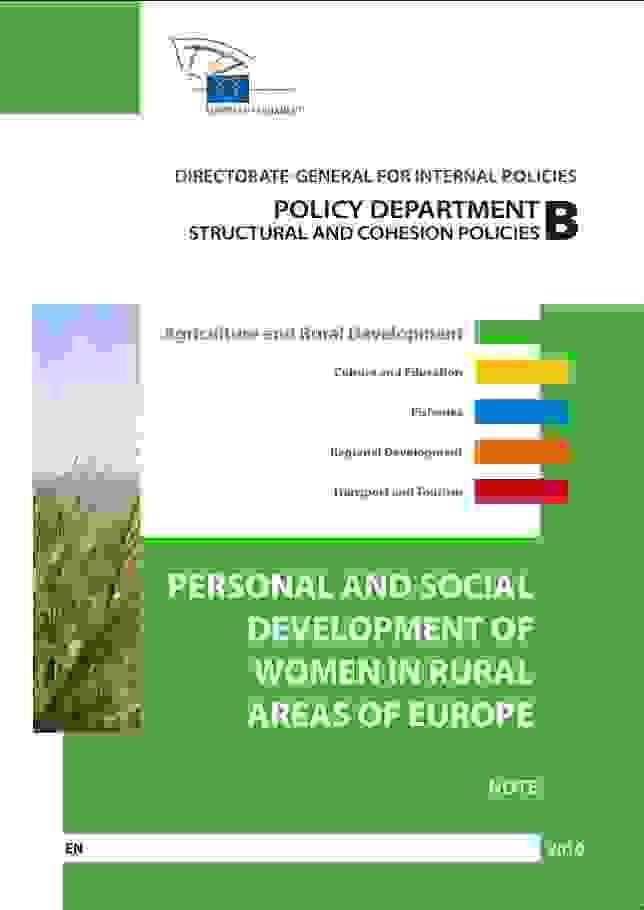 tee on Agriculture and Rural Development, provides an overview of the social situation of women in the rural areas of Europe. It looks into rural women’s work, political participation and their experience of the quality of life in rural areas. It points at the great diversity between and within Member States but also states that there is no evidence of a general rural disadvantage. Women experience specific problems only in the peripheral rural regions of Europe and in particular the Central-Eastern Member States. These areas are maladapted to women’s needs in terms of employment and services, as well as cultural norms and values. It is also in those areas that young rural women (and men) decide to leave and to search for a better life elsewhere.
Analysis of rural development policies reveals that women seldom participate in the formation of rural development plans or the decision making on the distribution of funds. There are some projects designed for women often focusing on self-employment. There are also some projects aimed at improving the supply of social services. Most projects are fragmented attempts to solve some problems for some women. A coherent plan on how to address gender equality is lacking.
To improve the situation of rural women it is recommended to focus on the situation in the peripheral rural areas where the low quality of life and lack of work, income and services constraints women’s development and perpetuates unequal gender relations. It is important to invest in the vitality and quality of life of those areas and to improve their accessibility. Upgrading the local quality of life may convince rural women (and men) to stay. It may also help to mobilize individual and collective action for local development.
Wanted: Students for an international experience!
Every year, the Rural Sociology Group participates in a two week intensive programme on rural development in the EU. A diverse group of students from various European countries (a.o. Portugal, Poland, Germany, Hungary, Italy, Spain, Lithuania, Slovenia) work together on a case study. Through lectures and field trips scientific and practical knowledge will be aquired and then implemented in the case study analysis. See past experiences of Marlies, Petra and Wiebke.
This year the IP is organised by the university of Padova and takes place in San Vito Di Cadore in the Italian Dolomites. The general topic is: “the role of agriculture in territorial identity and competitiveness of rural areas”. More specificly, the general question is related to how these (territorial identity and competitiveness) contribute to rural development in the Dolomites (Alps region). For more information on the content see below.
Are you a student of Wageningen University and looking for an international learning experience? Then sign up for two intensive weeks from 3 to 16 April 2011! For subsciption or more information contact Els Hegger (els.hegger@wur.nl).
Rural regional learning in ‘Upper Lusatia’ (Oberlausitz), Germany
Following my visit to Alytus County, Lithuania in October, I travelled to Leipzig, Germany to visit our DERREG project partners Michael Kriszan, Robert Nadler and Joachim Burdack (Leibniz Institute for Regional Geography) in their case study area ’Upper Lusatia’. In this blog, Michael, Robert, Joachim and I would like to share some of our experiences.
We first discovered that the case study regions Westerkwartier and Upper Lusatia are very different in their geographical and demographical characteristics. The LEADER region Westerkwartier in Groningen province comprises four municipalities on an area of 374km² and has a population density of 173.4 inhabitants/km² (as of 2007). In 2006, its GDP per capita was estimated at 55,400 Euro and the area has recently witnessed a population increase due to its popularity amongst young families who work in the city of Groningen and value the countryside as their residential area. The Southern part of the Westerkwartier is thus characterized by a high population density and a number of conflicting interests regarding the use of the countryside while the North of the Westerkwartier is primarily used for agriculture.
Upper Lusatia consists of the two Saxon districts Landkreis Görlitz and Landkreis Bautzen that have only been established in 2008 in the process of a reform of the administration units in Saxony. The case study region has an area of about 4,500 km² and has a population density of 135 inhabitants/km². It comprises 122 municipalities- of which 30 are urban centers- and had a GDP per capita of 18,329 Euro (district Görlitz) respectively 19,396 (district Bautzen) in the year 2007 . The region is divided into ten rural development areas, six ILE regions and four LEADER regions. In contrast to the Westerkwartier, the population of Upper Lusatia is shrinking rapidly. Young inhabitants are leaving the area due to a lack of employment opportunities, leaving the elder people behind. Rural development in this region is therefore not only affected by an aging population but also by a shrinking human capital available for development purposes. Through the reform of administrative units altogether four previously distinct districts (Landkreise) and two cities (kreisfreie Städte) have been incorporated into the two “new” districts of Görlitz and Bautzen. The previous Landkreise, however, are very distinct in their physical appearance. The former district Niederschlesien-Oberlausitz for example is characterized by a low population density and shaped through past and present coal mining activities while the hilly district Löbau-Zittau is recognized as a touristic area and winter sport resort. Due to the lack of a common history and the physical distinctiveness, there is no regional identity of the population within both districts.
To evaluate the support and facilitation available for learning and innovation within local grassroots development initiatives in Upper Lusatia, Robert, Michael and Joachim organized a workshop for regional stakeholders.
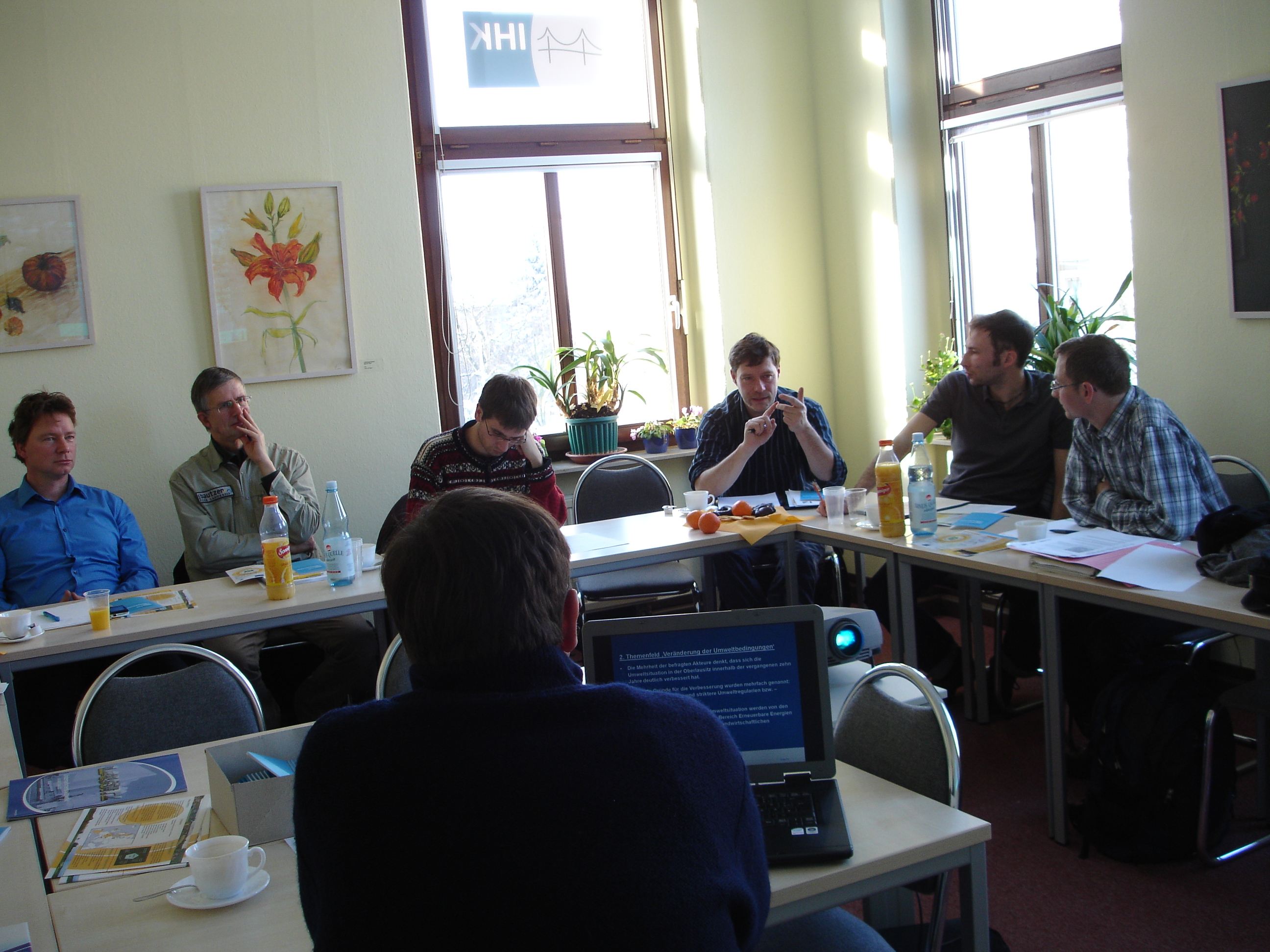
Workshop in Upper Lusatia, Germany
Kempen international conference day, Nov.19th, Oud-Turnhout, Belgium
De Kempenconferentie was organized by the Dutch Rural Network (Netwerk Platteland) in cooperation with Belgium partners. The second international day workshops on several rural themes were held such as entrepreneurship, new markets, public services, governance, strategic networks and knowledge. Hereby some of my own observations. More information can be found the website of the Dutch Rural network.
New alternative food networks can bridge the gap between cities and rural hinterlands and function as an interface between producers and consumers. The challenge is to develop not only new products for existing markets or existing products for new markets, but really new products for new markets.
Private entrepreneurs can play a role as inspiring leaders in rural development, contributing to social networks, mobilizing and inspiring people, introducing new agendas and innovations and bridging the gap with institutions. Social networking and inspiring others are important competences of these entrepreneurs. Needs of entrepreneurial entrepreneurs are: public leadership and administrators who are less afraid administrative failure. There is also a need for coalitions, which means informal networks which are inspiring and productive and create capacity to act.
The workshop on public services described the new markets approach and a case on small-scale energy production in the province of North-Holland. The cases showed that the variety of stakeholders in regional co-operation is broadened, citizens, companies, businesses and governments are involved. Public/private networks in territorial development can be effective. Conditions for effective territorial development are:
- Innovative entrepreneurs, ‘nested’ in social capital.
- A pulling, objective actor which can function as an intermediate organization and facilitator. Help in building business cases is an important task.
- Regional storylines, which can help to connect these initiatives, mobilize new actors and create a basis for joint marketing. Ownership is important, and a relation with private interests.
‘Territorial Metabolism’ is an attempt to reconnect products and services to the region. It is about closed loops of energy, food on the territorial level. This can lead to a re-coupling to places, socially, economically and ecologically.
The workshop on strategic networks showed that there is often a tension between short term private interests and long term. Important for strategic networks is:
- The availability of bricks (networking), cement (involvement) and sand ( communication).
- A sense of urgency, such as unemployment in a region.
- Exchange & learning, e.g. with organisations abroad. The Rural House Plays a role in the connection of networks and up-scaling to other regions.
- The role of new social media which create new networks. It is the instrument for civil society (social movements). Twitter makes knowledge direct and explicit and democrats it. Weblogs such as food log, create new social networks, function as a discussion arena and put new issues on the agenda . E.g. AGCHAT, agricultural chatting, is in a way a decentralized organization in the form of a community.
The plenary, concluding session at the end was a discussion on European policy. The conference showed that there is a large diversity in European, rural regions. Regions are more than economic entities. The challenge is a re-connection of activities to space and place in European regions.
 Rural Sociology Wageningen University