Unknown's avatar

About FoodGovernance

Jessica Duncan is Associate Professor in Rural Sociology at Wageningen University (the Netherlands). She holds a PhD in Food Policy from City University London (2014). Jessica’s main research focus concerns the practices and politics of participation in food policy processes, particularly the relationships (formal and non-formal) between governance organizations, systems of food provisioning, the environment, and the actors engaged in and across these spaces. More specifically, she maps the diverse ways that actors participate in policy-making processes, analysing how the resulting policies are shaped, implemented, challenged, and resisted, and she theorizes about what this means for socio-ecological transformation. Participation and engagement is at the core of her approach. In turn, she is active in a broad range of local, national and international initiatives with the aim of better understanding participation processes with a view towards transitioning to just and sustainable food systems. She is involved in several research projects including ROBUST, HortEco & SHEALTHY. Jessica is published regularly in academic journals. She recently co-edited the Handbook on Sustainable and Regenerative Food Systems (2020). Her other books include Food Security Governance: Civil society participation in the Committee on World Food Security (2015) and an edited volume called Sustainable food futures: Multidisciplinary solutions (2017). Jessica has received several awards for her teaching and in 2017 she was awarded Teacher of the Year for Wageningen University (shortlisted again in 2018 and 2019, longlisted in 2020). With the funds she has received for these awards she launched a story-telling workshop for students and faculty, with storytelling trainer, Emma Holmes. Jessica is on the Editorial Board of the journal Sociologia Ruralis and is an advisor to the Traditional Cultures Project (USA). She is a member of the Wageningen Young Academy and sits on the Sustainability Board of Experts at Wageningen University.

Lunch Time Lecture Dr. Gyorgy Scrinis on ‘Big Food Corporations’ Nutritional Strategies in Response to Under- and Over- Nutrition’

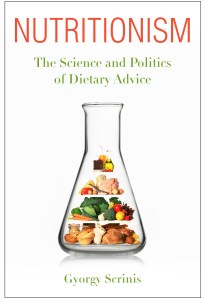
NutritionismEveryone is welcome to an open lecture by Dr. Gyorgy Scrinis.

Monday June 29, 2015
12:30 – 13:30
Room C71   (Leeuwenborch)
Bring your lunch

The world’s largest food and beverage manufacturing corporations (i.e. Big Food) have responded to recent health concerns associated with their processed foods by developing and marketing a range of ‘healthy’ or ‘healthier’ products. In this lecture, Dr Gyorgy Scrinis identifies three nutritional strategies that define these corporations’ nutritional engineering and marketing strategies:

  • the micronutrient fortification of foods to address nutrient deficiencies, particularly targeted at developing countries;
  • the reformulation of products to reduce harmful food components; and
  • the ‘functionalisation’ of foods marketed as providing optimal nutrition through addition of functional nutrients.

Continue reading

Call for abstracts: “Future solutions for a food secure world”

FoodGovernance's avatarFood Governance

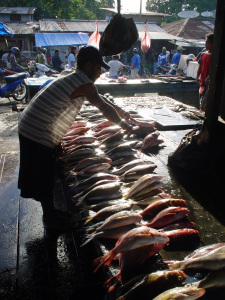
Fish pic

Deadline for abstracts 31 July 2015

More details here

Future solutions for a food secure world

The challenges ahead to feed 9 billion people by 2050 are well articulated (and contested), but innovative solutions remain elusive and time is of the essence. One possible reason that solutions are slow to surface is the generally homogenous pool of ideas from which to draw inspiration: neoliberal and patriarchal ideologies continue to dominate the discourse on global solutions. A platform for diverse perspectives on these problems and for proposals of solutions, can identify potential solution pathways that are key to operationalizing timely strategies for a just and sustainable food future.

In this Special Issue of Solutions, young thinkers (under 40 years of age) from around the globe are invited to propose innovative solutions for a food secure world. The Special Issue will provide a platform for emerging scholars to contribute to solutions…

View original post 679 more words

Global Food Security Governance: Capita Selecta course Period 1 (2015-2016)

There are just a few spots left in the new RSO Capita Selecta course on Global Food Security Governance: Linking Theory and Practice.

This Capita Selecta course will examine global food security governance from theory to practice. Making use of the key themes for research on food security as identified by the Expo 2015 EU Scientific Steering Committee, this course will give students the opportunity to:

  1. Explore the complexity of global food security governance;
  2. Focus on a key challenge that threatens global food security;
  3. Attend two international events (i.e., the 42nd Session of the Committee on World Food Security (Rome) and Expo 2015 (Milan)) to see, first hand, how global food security governance plays out.

More information about the course can be found here:  https://www.facebook.com/groups/FoodGovernance/

If you want to follow what we are doing but do not what to attend the course, you are most welcome to join the Facebook Group as well.

If you do not have facebook and want more details, email the logistics coordinator Wouter van den Hengel: wouter.vandenhengel@wur.nl Global Food Security Governance

European farmers and agricultural practices

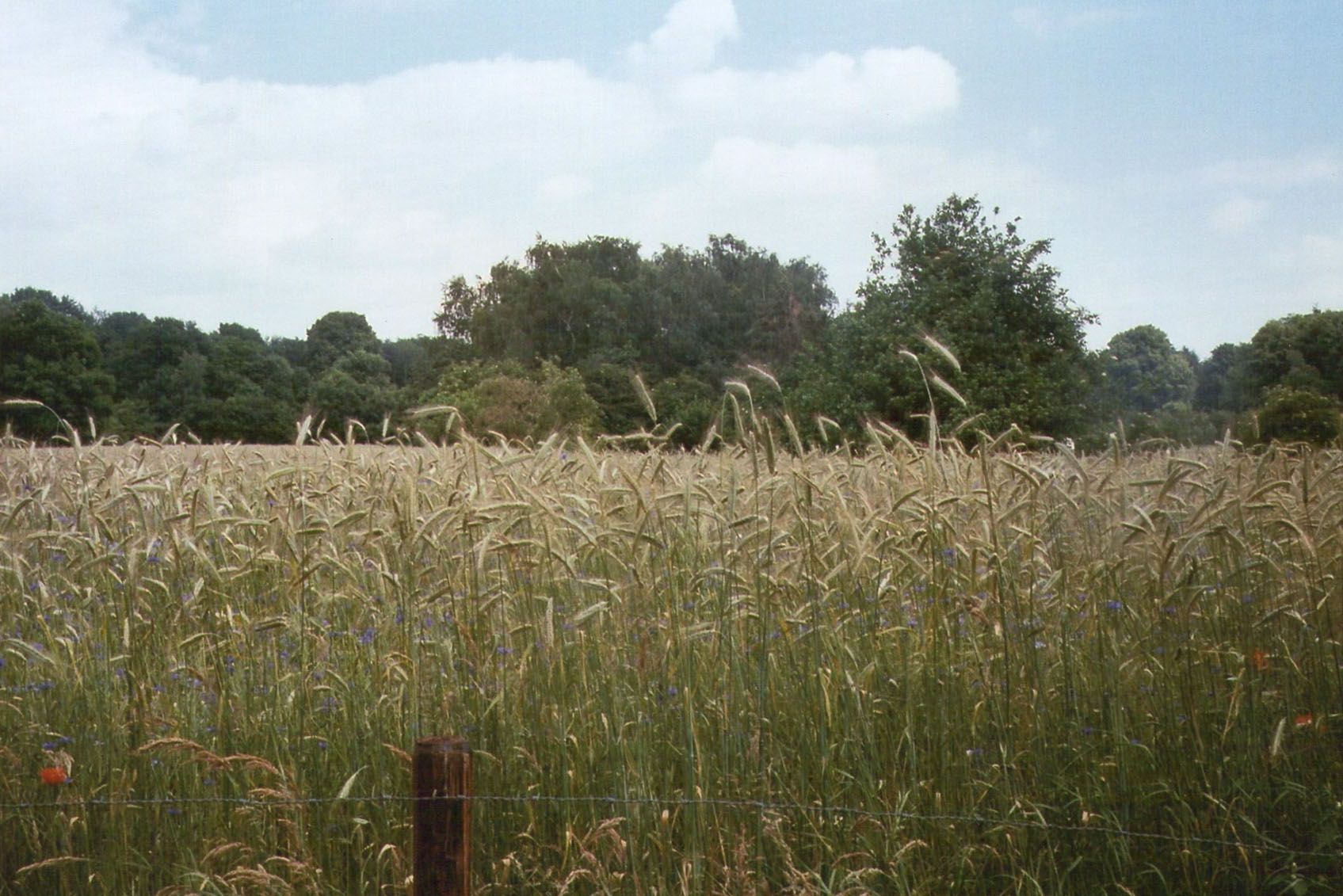
Barley field Critical Discourse Analysis of the Common Agricultural Policy on the ‘Payment for agricultural practices beneficial for the environment and the climate’

Thesis for the International Development programme – Rural Sociology – Wageningen UR

By Alberto Serra

The world population increases, the world food production increases but the number of farmers declines. Although agricultural production increased (United Nation 2014) in the last decade three million farms disappeared in Europe (La Via Campesina 2013). Farmers are facing many challenges and threats. Nowadays they have to deal with market price fluctuations, market competition, access to capital and technology and high difficulties in the intergenerational succession of farming activities (Davidova and Thomson 2014).

In contrast, large scale farmers are able to cope better with such stresses, nevertheless contributing to reduce the competiveness among farmers, due to their production capacity and better access to capital (Evans 2014). Technological and policy choices by large producers and landholders fuelled the growth of inequality in rural areas contributing to squeezing out small farms (van der Ploeg 2006; De Schutter 2014). According to the 2014 State of Agriculture 1% of farmers control 65% of all agricultural land (FAO 2014). Although many small farmers keep on struggling to survive, Europe became in last decades one of the leading power in agricultural trade (Fritz 2011).

Continue reading

Breakfast presentation about Local food initiatives and sustainable diets

Everyone is invited to learn more about a local food initiative in Tilburg. The presentation is based on the MSc research of Nicole van Riel.

Date:     Wednesday May 27

Time:     9:00-9:30

Where: Room 3011

What:  For the last six months I have been working on my master thesis, where I studied if participation in a local food initiative contributes to more sustainable diets. To answer my research question, I have done participant observations and semi-structured interviews at one particular initiative: ‘Goei Eete’ in Tilburg. To put the results in perspective, I have made use of transition theory. If you are interested in the findings, you welcome to join the final presentation next Wednesday.

If you are planning to attend in advance, please let me know via Nicole.vanriel@wur.nl so there will be enough croissants (and little food waste!).