Embracing and exploring diversity in sustainable transition pathways to food and nutrition security

A recent post on the local case-studies in TRANSMANGO. A diverse selection of 18 case-studies in Europe (and Tanzania) represent the Fragmented Foodscape that will improve our understanding of transition pathways to a sustainable food system.

Aniek Hebinck's avatarTRANSMANGO

Through the project TRANSMANGO we hope to contribute to a better understanding of sustainable transition pathways to changing food systems. Especially in WP6 we put focus on the diverse food practices performed on the local level all over Europe and their contribution to food and nutrition security[1]. The European ‘fragmented foodscape’[2] is constituted by a range of various and often contrasting social practices that co-exist and interact with another. Hence we have selected a diverse range of food practices all over Europe in order to explore whether and if so how they enhance food security. These practices range from urban food (policy) initiatives in the UK to food assistance in Italy.

The 18 diverse case-studies that have been selected for WP6 illustrate the European[3]  heterogeneity in Food and Nutrition Security (FNS) practices and transition pathways. The selection covers predominantly ‘counter movements’andmore radical FNS transition…

View original post 844 more words
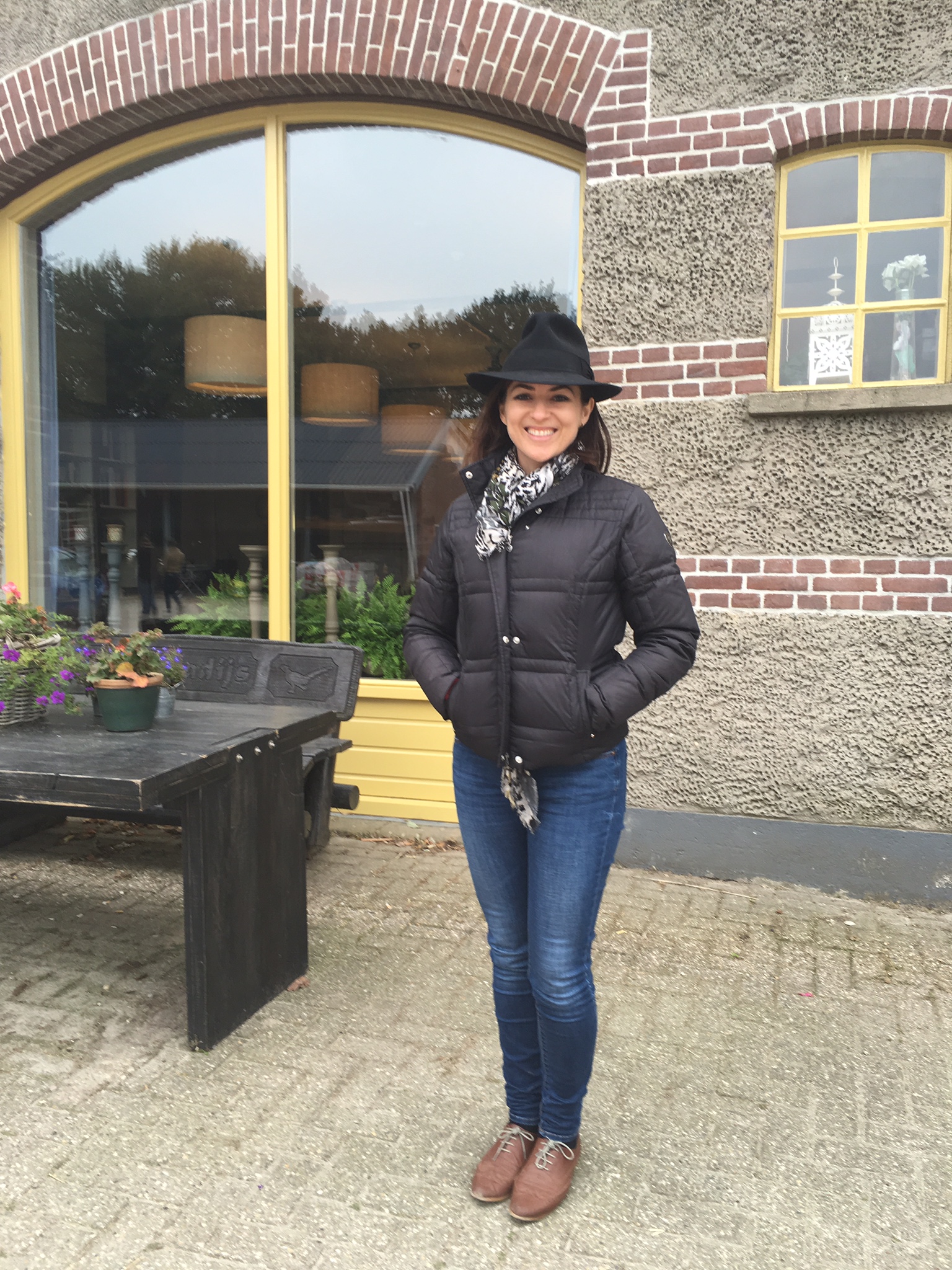
Visiting scholar Claire Baker – how global transformations affected a small rural community in Australia

Claire Paradise 2

Claire Baker visiting the social care farm ‘t Paradijs: http://www.boerderijparadijs.nl

By Claire Baker, PhD-student from the University of New England in Australia.

Working title of my PhD-project: ‘Experiencing change in a globalising agricultural economy: An Australian ethnographic case study 1945-2015′.

I have been very fortunate to have spent some time with the dynamic Rural Sociology Group at Wageningen University as a Visiting Scholar over the last couple of weeks. This has been an intensive period of discussion and reading during which I have further refined the theoretical and methodological framework for my research project. Continue reading

Multifunctional Agriculture in Madagascar

By Marc Wegerif. PhD Candidate, Rural Sociology Group Wageningen University, carrying out research on food provisioning in Dar es Salaam. Contact: marc.wegerif@wur.nl

Mila Soa multifunctional farm: Livestock, Tourism, Relaxation, Sport, Training

I immediately thought of Wageningen and multifunctional agriculture when I visited the Mila Soa farm (https://www.facebook.com/pages/Mila-soa-page-officielle/232818760177070 ) in Madagascar. Richard Rabetrano was showing me around. He is a local farmer and farmer organiser who is part of the leadership of the Eastern and Southern Africa Small Scale Farmers Forum (ESAFF – http://www.esaff.org/). Richard had asked if I wanted to see a farm with pigs, dairy cows and fish.

When we arrivFish ponds at Mila Soaed we parked next to an events hall that is used for weddings and other functions. The pigs and chickens are in sheds built on the hillside opposite the main part of the farm, I suppose they do not make the best accompaniment in sound or smell for your special day, whether it be saying I do or graduating from university. Most of the fish are tilapia and the farm is experimenting with new methods of hatching the fish eggs and different feeding regimes as well as adding more fish ponds. Continue reading

Agroecology for Food Security and Nutrition – account of symposium hosted by the FAO

Maria Alicia MendoncaBy Maria Alice Mendonça, PhD-student Rural Development at the Federal University of Rio Grande do Sul (UFRGS, Brazil) and guest PhD at the Rural Sociology Group of Wageningen University

During the days 18 and 19th of September, the FAO (Food and Agriculture Organization of United Nations) hosted the International Symposium of Agroecology for Food Security and Nutrition, in Rome, Italy. See the FAO webpage for more information on participants, presentations, poster, videos and so on.

The conference was attended by over 400 people. Amongst them were academics and representatives from government and social movements from all over the world. The aim was to discuss agroecology in the context of global debates and strategies related to: food security, sustainable agriculture and local food systems. The symposium was divided in three parts. The first was a plenary session with presentations by experts at the forefront of scientific research and bystate officials involved in the construction and implementation of innovative policies on Agroecology and Food Security. This was followed by parallel sessions where social movements, such as La Via Campesina and the Articulation in Brazilian Semiarid – ASA, as well as academics and government representatives shared on the ground experiences with Agroecology in diverse countries. At the closing session, State’s ministries of France, Nigeria, Japan, Senegal, Costa Rica, Brazil (video message), the Commissioner of Agriculture and Rural Development of the European Union (video message) and the FAO’s general director, José Graziano da Silva made their statements and commitments to Agroecology and Food Security. Continue reading

Regulation of Participatory Guarantee Systems in Brazil: Achievements and Challenges

Maria Alicia MendoncaBy  Maria Alice F. C. Mendonça, Ph.D. student in Rural Development at the Federal University of Rio Grande do Sul/Brazil and Wageningen University/The Netherlands

Below my contribution to the IFOAM Global newsletter on Participatory Guarantee Systems published bimonthly. See the IFOAM PGS webpage for more information. Participatory Guarantee Systems (PGS) are locally focused quality assurance systems that certify producers based on active participation of stakeholders and are built on a foundation of trust, social networks and knowledge exchange.

The Brazilian regulation for organic and agroecological production was introduced in the 1990’s in response to international restrictions on Brazilian organic products. Nevertheless, the agroecological movement stayed prominent and actively participated in discussions and negotiations with the government. As a result of this interaction between government and the agroecological movement, a series of laws, decrees and federal regulatory instructions for organic and agroecological production was enacted, e.g. the Organic Law and its respective regulatory instructions. Moreover, the National Policy on Organic Production and Agroecology (Política Nacional de Agroecologia e Produção Orgânica) and the National Action Plan for Organic Production and Agroecology (Plano Nacional de Agroecologia e Produção Orgânica) were released in 2012 and 2013 respectively. They settle the strategies for government investments in the expansion of agroecological production.

Currently, Brazilian farmers have three options to ensure the organic and agroecological quality of their produce: 1) Third-party certification; 2) Participatory Assessment Bodies; and 3) Social Control Organizations. These last two are systems operate at a local level and rely on the active participation of stakeholders. However, only the Participatory Assessment Bodies are considered as Participatory Guarantee Systems (PGS) in the legal sense and authorized for the use of the national organic label, which is required for non-direct sales of organic products. In contrast, the Social Control system does not grant the right to use the national label and allows only the direct sale from small-scale family famers to the final consumers.

Continue reading