Local food at the Rhederoord estate – gastronomic highlight

By Renee Ciulla  – Msc-student attending the course Origin Food: a market for identity

On April 8th, the Origin Food course (see earlier post) was treated to a gastronomic excursion to the Rhederoord estate near the town of Arnhem in De Steeg. Located on 12 ha, the estate provides a magnificent view over the foothills of the IJssel valley and Veluwe forests. The Rhederoord  is mainly known for it’s restaurant which offers a fine dining experience, sourcing most of their products from the surrounding countryside or within the Netherlands. However, the estate also caters events, hosts weddings and can accommodate over 250 guests in their 22 rooms. Possibilities also exist to book business and private meetings.

Despite the snowy morning, grey clouds and traffic delays in Arnhem, our group was in high spirits when we saw what greeted us in the foyer of the Rhederoord: a cheerful group of staff awaited to take us to a tastefully decorated coat room followed by a delicious estate-made apple tart on a delicate butter crust. As we mingled with our steaming cups of coffee, the sounds of clinking forks and laughter drifted up the wood-paneled walls and out the large paned windows to the manicured gardens and rolling fields. After our mid-morning feast we sat for an entertaining and inspiring history of the Rhederoord. The goals are to support local farmers and producers in every culinary aspect of their restaurant which they believe is reflected in the flavors and visual appeal. Additionally, the estate tries to educate other chefs and visitors about how to grow their own vegetables and herbs. A garden near the entrance of the restaurant displays various herbs, strawberries and vegetables enabling chefs to see first-hand what these foods look like in their growing state. Sheep and cows are also owned by the estate for their own supply of local meat.
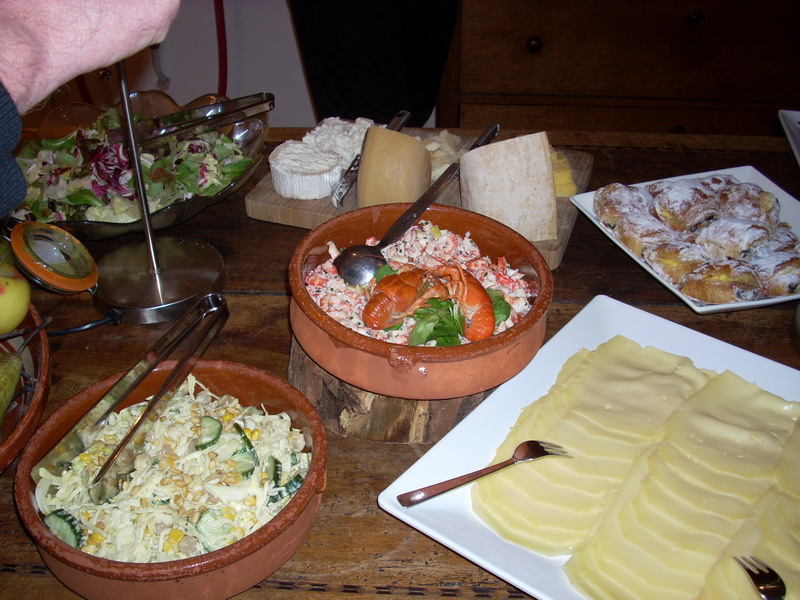
Buffet of local food at the Rhederoord estate

After our outdoor tour we couldn’t have been more surprised when we saw the buffet that welcomed us downstairs. Glowing in the atmospheric, perfectly positioned lights was an assortment of local gastronomic gems: pates, organic sheep, goat and cow cheeses, savory thinly-sliced ham, loaves of freshly baked breads with Dutch wheat, and mounds of warm rolls. Local greens and cabbage made some delicious salads. Meats included blood sausage, sea bass and river lobsters. The food was bursting with flavor and succulent textures- the entire room fell silent during our first ten minutes of eating as everyone floated in their personal eating heaven. A wine tasting of foud Dutch wines followed with ample joking about the quality of Netherlands wine. As for me, I was too distracted with the dessert still sitting on the buffet table: beautiful croissant-type cream puffs filled with fresh-egg custard and pieces of dark chocolate; every bite melted in my mouth.

The entire experience to Rhederoord was reminiscent of a family Christmas dinner. We all left feeling extremely grateful for the learning experience and culinary delights. Thanks to Dirk for organizing a spectacular and delicious trip!
Internship in the ‘Friesische Schafskäserei’ (Friesian sheep dairy), part 2

By Corinna Feldmann – MSc Student

March, 13th
Life on the sheep farm is very busy right now. More and more lambs are getting born, which have to be fed and of course more sheep have to be milked. All the milk is now used for cheese production, as we are expecting many tourists during the Easter holidays. I am already looking forward to the first guided tours and cheese tastings on the sheep farm. And I am interested to find out about the reasons for tourists to visit a farm during their holidays. Right now we have a lot to do to manage all the preparations. I hope the weather will be better soon, so that at least the sheep can get out of the stable and into the fields…

March, 21st
Finally spring arrived in Northern Friesland; the snow melted and the grass is turning green. Early spring flowers are blossoming. Hopefully the sheep and lambs can be sent out to the fields soon. Many of the lambs are already big enough to survive without their mothers. So, now we can concentrate on cheese making and selling. During the Easter holidays the first visitors are expected. But some of the cheeses still need to ripe in the cellar; they will be ready in May, when the tourist season begins.

Romashki or a Life Less Ordinary, part 2

By Thomas Mcintyre

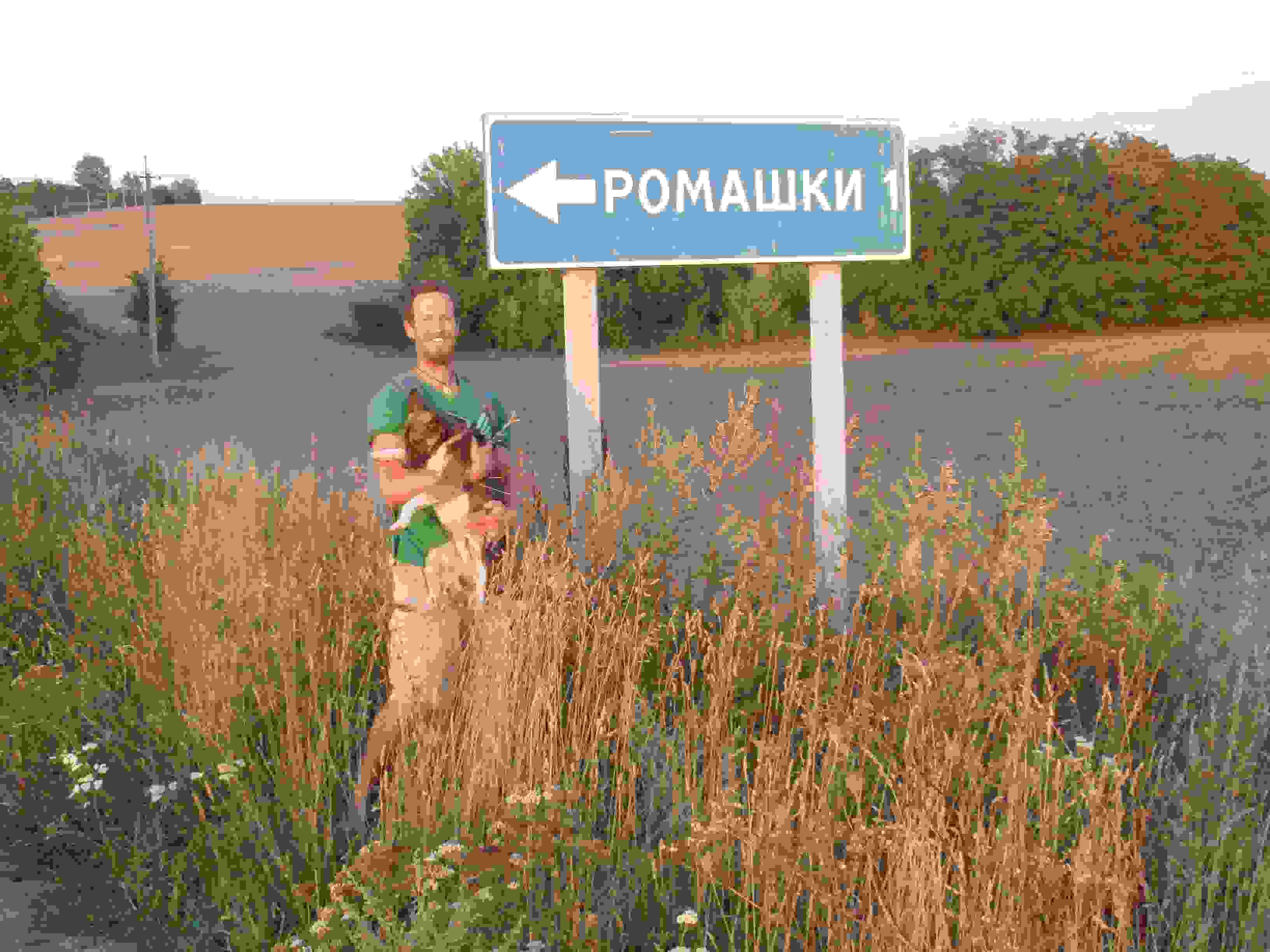
Once upon a time…Do you, my dear reader, believe it is possible to live in a fairytale? This may seem like a strange question on a rural sociology blog, and indeed it is. It is not a question I thought seriously about before, though I confess I have been predisposed to curling up on a chair in front of the fire and entering the world of fairytales through a book or through my imagination… but to live in one! This seems rather preposterous, and you would be forgiven for wondering what this has to do with serious anthropological research. But like any good research, setting out into the unknown has raised some strange questions I have had to stew on. If you answer a tentative yes to the opening question, as I am now inclined to do, then would you entertain the thought of writing a fairytale thesis? After all, if the reality you are studying is a fairytale, then would it not only be appropriate that the written representation of this reality should also be a fairytale? Now, I suppose you would like me to explain what I mean by living a fairytale and writing a fairytale thesis, especially its academic justification and application. But first things first: my arrival to Romashki.
Continue reading

Internship in the ‘Friesische Schafskäserei’ (Friesian sheep dairy), part 1

By Corinne Feldmann – MSc student

After finishing my master thesis with the RSO department and FiBL in Switzerland, I decided to do some more ‘practical work’ during the internship for my MSc Organic Agriculture.

So, here I am…on an organic sheep dairy farm in Northern Germany. The tourists are not yet here, since it is icy and cold – not very attractive for holidays right now. But in a few weeks they are supposed to come in order to visit the farm, look at the sheep, and try the cheese.

Right now the lambs are getting born. They are cute but freezing outside in the stable – just like me. There are quite a lot of lambs already, so that we will start to milk the sheep soon and than we can also start to produce cheese…for all the expected tourists.

Voedsel als brug tussen beleid

Door Simone Plantinga – MSc-student

Eerder verscheen er op deze blog al het persbericht over mijn afstudeeronderzoek. Volgens de toenmalige planning had het rapport er ondertussen al moeten zijn. Helaas is dat niet gelukt. Het onderzoeksvoorstel vergde meer tijd, maar het resultaat mag er zijn (geïnteresseerden kunnen contact met me opnemen door een reactie op dit bericht plaatsen). Op dit moment ben ik bezig met het benaderen van mensen voor de interviews, als het goed is zijn de interviews en het overige onderzoek half maart afgerond. Vervolgens kan ik dan aan de slag met de data-analyse en het schrijven van het eindrapport.

Ik zal een korte samenvatting geven van waar het onderzoek over gaat en wat het doel is. Het onderzoek gaat over stedelijk voedselbeleid. Verschillende Nederlandse steden zijn hier al mee bezig, in reactie op de diversiteit aan problemen die er zijn met en rond voedsel. In Amsterdam is er bijvoorbeeld ‘Proeftuin Amsterdam’, in Utrecht ‘Lekker Utregs’ en in Rotterdam is er ‘Eetbaar Rotterdam’. Deze drie steden zijn verschillend in hun aanpak. In Amsterdam nam de (vooral) overheid in 2006 het initiatief om te komen tot een ‘Metropolitane voedselstrategie’. In Utrecht ontstond het initiatief bij milieucentrum Utrecht en Stichting Aarde. In Rotterdam ligt het initiatief bij onder meer architecten en onderwijzers. Continue reading