Times of change?

At the Changing Lands Changing Hands conference in Denver, Jess Gilbert reminded us in his opening speech of the agricultural policies that were put in place with the New Deal policy in the depression of the thirties. Henry J. Wallace was the driving force behind a set of progressive and innovative policies, many of them, still existing today. One of the policies was aimed at land reform establishing 100 new communities from nothing all throughout the country. The state bought the land, built houses and health centers for poor shared croppers. A loaning program offered 100 to 150 families to buy the land, house and tools in one community. Much of the organization was coordinated in tens of different cooperatives per community.

The experiment ended in World War II but the places became strongholds in the civil rights movement of the sixties. What the example illustrates is how powerful a working combination of bottom up and top down can be; activism among the shared croppers and visionary leadership of the ruling elite. Our current time has been compared with the time of the Great Depression, for the severity of the financial and economic crisis. And so maybe the analogy also has to be, that this can be a time of progressive social change.

Not everybody here at this conference is a believer of such ‘sociologist talk’. At the end of one of the sessions, an agricultural economist said me that we can not get around the market forces dictating what farmers will do. “And I don’t see anyway in how that is going to change.”

The session was about farm viability and business transfer. Session presenters all stressed the need for financial management. “Farmers try to produce their way out of trouble” one of them said, but it is not production what counts, “it is financial management which makes the farm profitable”. The session was aimed at the ‘real’ farmer. Statistics were misleading, the agricultural economist said. It was said that the US has around 2 million farmers. Not true, according to him, maybe 200.000 could qualify as a farmer, if you would be able to distinguish them from hobby and small farmers as well as those who are registered for tax reasons.

And besides that, “all this fuss about corporations nowadays I don’t understand, these are still family farms” he said, “who put their business in business models to manage them”. These several million worth ‘family farms’ are, like any other industrial operation, a high capital investment, high sales volume and low profit margin operation. Future successors certainly cannot do without financial training.

Land abandonment in Galicia

By Marlies Meijer (MSc-student)

Land Abandonment in Galicia

Land abandonment in Galicia

As I wrote earlier, I am balancing between the multiple realities of Galicia. Now, several weeks later I’m still balancing. Off course everything is different than the assumptions and hypotheses I had in the Netherlands. The rural situation here is complex and has many faces. For the moment I am trying to untangle the different storylines I encounter here. Hopefully one or two are nice enough to work out and to connect to a more theoretical storyline. It is a delicate job, which can only be completed in Spanish (I never realised that almost closed scientific communities existed because of language barriers) and with as less generalisation as possible, as ‘everything is different is Galicia’. It also implies that I have to let go of my Dutch reality and leave behind the loose ends I developed back home.

Land abandonment  – One of the storylines I encountered is land abandonment. Almost 25 % of the Galician countryside is abandoned, with far-reaching effects. In the Netherlands we would call an abandoned parcel new nature or verrommeld (messy). Here it implies higher chances for forest fires and agricultural devaluation. Rural Galicia exists of many small farms, with small parcels and above all many land owners. Most landowners simply own land, they do not live there, nor do they use the land for (agricultural) production. Because of low costs it is possible to own land, and leave it more or less abandoned. Most owners do not want to sell their land, they prefer to keep it as a capital resource for economically bad times, or in case its value increases because of urban expansion or afforestation. Some owners are simply not aware of the fact that they own land. Because of a malfunctioning administrative system and a lack of a clear spatial policy these situations can occur everywhere and to everyone, only no one knows exactly where.

On the other hand most farmers or peasants are not able to buy extra land. Their resources are limited. In the past decades the most substantial farmers already invested in milk quota, machinery and other devices in order to catch up with the rest of Europe.

The result is a situation where spatial and rural developments are fixated. Measures are developed to loosen the situation; for instance a land bank to facilitate renting land to other users, in order to mobilise the land market. But also these measures encounter problems.

On the one hand, Galicia struggles with policies from the past and large measures (top down) that are needed to change and improve the rural situation. Modernisation, like elsewhere in Europe, did not take place in Galicia. Notwithstanding the problems it brought to other countries, it is a phase needed in this country to improve the quality of life on the countryside. On the other hand, we do live in an era where bottom-up approaches and local participation are preferred, also in Galicia this is an hot item. How these two extremes are intertwined seems to me an interesting starting point for further research in Galicia.

Foodprint manifestatie – voedsel voor de stad

Van maart 2009 tot en met december 2010 wordt de Foodprint manifestatie gehouden op diverse locaties in de stad Den Haag.

Foodprint is een twee jaar durend programma over de invloed van voedsel op de cultuur, de inrichting en het functioneren van steden en van Den Haag in het bijzonder. Voedsel en de stad zijn onlosmakelijk met elkaar verbonden. Straatnamen als de Grote Markt, de Kalverstraat of de Lammerschans verwijzen naar die historische band tussen voedsel en stad. Toentertijd was de lijn tussen oorsprong en eindpunt van voedsel vaak nog kort en duidelijkzichtbaar. Tegenwoordig zorgt een wereldwijd netwerk van veelal anonieme producenten en supermarktketens hoe voor het dagelijks voedsel van miljoenen mensen. Wat zijn daarvan de gevolgen voor ons dagelijks handelen? En wat betekent dit op voor het aanbod, de smaak en de keus keuze van ons voedsel? Welk effect heeft dit op onze dagelijkse omgeving: zowel op de inrichting en werking het functioneren van de huidige stad als die van het platteland? Het (terug) naar de stad brengen en zichtbaar maken van de voedselproductie kan zowel het bewustzijn van de waarde van voedsel versterken als helpen te voorzien in een gezonde, groene, leefbare en duurzame stad.

Op vrijdag 26 juni a.s. is het Foodprint symposium waarbij  het thema ‘Voedsel voor de stad’ belicht wordt vanuit de wetenschap, de praktijk van stadsboeren, kunstenaars en ontwerpers en ondernemers. Het programma is gevuld met tal van sprekers en inspirerende voorbeelden uit binnen- en buitenland (zie info sprekers).  Een van die inspirerende voorbeelden is Will Allen, boegbeeld van urban farming in de USA. Will Allen is voormalig basketballspeler bij o.a. Anderlecht, en initiatiefnemer van Growing Power

Hij startte met een kas midden in een buitenwijk van Milwaukee en heeft inmiddels meerdere locaties in parken in Chicago. Hij teelt hier tientallen soorten verse sla en groenten, tilapia, voor een markt van lokale restaurants, consumenten en sociale voedselprogramma’s. Het gaat om biologische teelt voornamelijk op hydrocultuur en compostsubstraat. Er wordt gebruik gemaakt van stedelijke afvalstromen als basis voor de compost -via wormen. Het is ook een werkplek voor re-integrerende ex-verslaafden, etc. Will Allen (zie video clip en online artikel van New York Times) kreeg onlangs de MacArthur fellowship.

Volgens Jan Willem van der Schans (Jan-Willem.vanderschans@wur.nl) werkzaam bij het LEI en een van de trekkers van Eetbaar Rotterdam) is Will Allen daarmee het boegbeeld van urban farming in de VS, en misschien wel wereldwijd. Dus reden genoeg om Will Allen op zaterdagmiddag 27 juni ook naar Rotterdam te halen voor een bijeenkomst met bedrijfsleven, ondernemers in land en tuinbouw, adviseurs, studenten agrarisch onderwijs, docenten en ook stedelijke partijen die geïnteresseerd zijn in urban farming als business concept. Zie voor meer info de vooraankondiging op de weblog van Eetbaar Rotterdam.

Changing Lands, Changing Hands

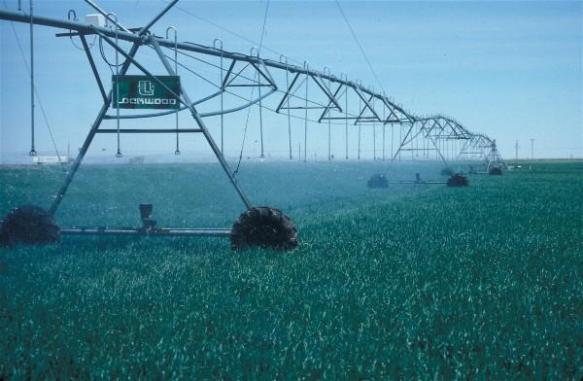
Yesterday we drove a bit more than a thousand kilometers and crossed all the way through Nebraska into Colorado to arrive in Denver for a two day Changing Lands, Changing Hands conference. Nebraska is even more sparsely populated than Iowa and driving through I saw more irrigation installations than houses!irrigation corn


This national conference is part of the FarmLASTS project. This project addresses one of the “most pressing issue inUS  agriculture”; the access to, the affordability and security of agricultural land to (young and new) farmers. This conference addresses many of these topics, to a mixed audience of farmers, NGO members and academics from land grant public universities (such as Iowa State University).

The statistics provided by the project are quite startling. Agricultural land is increasingly in the hands of older owners (60+ years). Of all farm landlords, over 60% are over the age of 60 and 40% are over 70 years old. Many of them are women, because women often outlive their husband. Investor ownership is increasing. For example, in Iowa, 34 % of farmland owners were investors (2002). Nationally the percentage of farmland owners who are NOT farm operators is as high as 88%. So there are multiple challenges in farm entry, exit, tenure relationships and transfer to discuss here. Especially, because the estimates are that half of the US farm land will change hands in the next 20 years, which amounts to approximately 400 million acres.

Regional identity and wine walks in the Alsace region (Fr)

I recently traveled to France for a short walking spring break. In the north eastern part of the country I visited the Alsace region. I stayed in the area left of the city of Colmar near the village called Munster (well known for its ‘smelly’ cheese). Although the break was a way of resetting my brain, I couldn’t stop myself from observing some interesting things.

The Alsace region
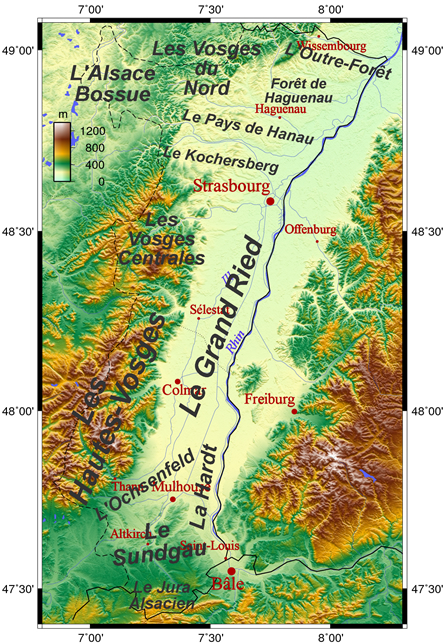
Although the Alsace is French, the area is characterized by many German influences. Not surprisingly because the area changed hands many times. The area has a strong regional identity which expresses itself physically, culturally and historically (architecture (timber framed houses), landscape, dialect, kitchen and regional products). The stork can be seen as the region’s main symbol and almost disappeared in the 1970’s. The region put a lot of effort in bringing baThe Alsace region (Wikipedia)ck the bird (by starting breeding programs) and now storks can be found on roofs of houses and public buildings everywhere. All these things are characteristic to the Alsace region.
Wine walks
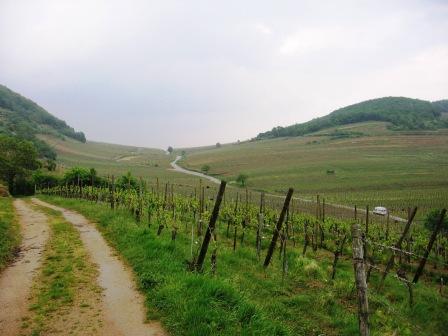
An important and unnoticeable regional product is wine (Vin d’Alsace) like Riesling, Gewürztraminer and Pinot Blanc. Since Roman times the Alsace has a strong tradition in growing grapes and over time has developed as a centre of viticulture. The area has an excellent terroir: good weather, climate, fertile soils and sunny slopes. Part of the rocky hilltops every small piece of the area is cultivated for growing grapes. This viticulture can bee seen as the (historical) backbone of this region into which over time whole sets of other activities got interwoven: visiting historical villages, local products / food, touristic walks etc. Central to this all is the wine and the attractiveness of the region. On my break I explored one of these really nice walks near the village of Kaysersberg. The walk started in climbing a woody and rocky hill and lead through the village of Riquewihr and via extensive vineyards back to were we started. In the vineyards information panels were placed to give information growing techniques, pruning, different varieties and the winemaking process. During the walk we stopped at several wine farmers / cooperatives for some refreshments and wine tasting. 

These wine walks are an interesting way of using regional identity and products for regional development. The combination of activities, services and goods attracts tourists, strengthens the regional economy and contributes to the vitality and livability of this specific region. I got the impression the Alsace region is very succesful in this!

Wine walk