75th Anniversary: 24) Rural Sociology and the making of the Health and Society Group

The inaugural lecture by Maria Koelen upon taking up the post of Professor of Health and Society at Wageningen University on 10 March 2011 (source: Health and Society website)

By Maria Koelen (Professor Emeritus of the chairgroup Health and Society)

Belief it or not, but the young Health and Society Group has its origin in the 75 years old Rural Sociology of Wageningen University. In fact, Professor Evert Willem Hofstee, the founder of Rural Sociologie (1946) as has been mentioned often in this blog, started to pave the road to it. The Agricultural University (at the time Landbouw Hogeschool) developed a lot of scientific, technological and economic insights for farming practice, which was transferred to the farmers through agricultural extension educators employed by the Ministry of Agriculture and Fisheries. The prevailing idea was that farmers would appreciate these insights and, from a kind of self-interest, would apply these insights into their daily practice. However, as Hofstee argued in 1953, just transferring these insights to the farmers would not suffice. He advocated an additional, sociological approach and to pay attention to social groups and culture. This idea caught on with the Ministry of Agriculture and Fisheries. To operationalise the idea, in 1955 the Ministry seconded its employee Anne Van Den Ban to the Rural Sociology group to advance this type of research. With his appointment, the foundation has been laid for a new interdisciplinary field “extension education”, in Dutch “Voorlichtingskunde”. In 1963 Van Den Ban obtained his PhD under supervision of Professor Hofstee and in 1964 he was appointed to be the first professor in this field. Continue reading
75th Anniversary: 21) Geographies of power and rebellious social sciences

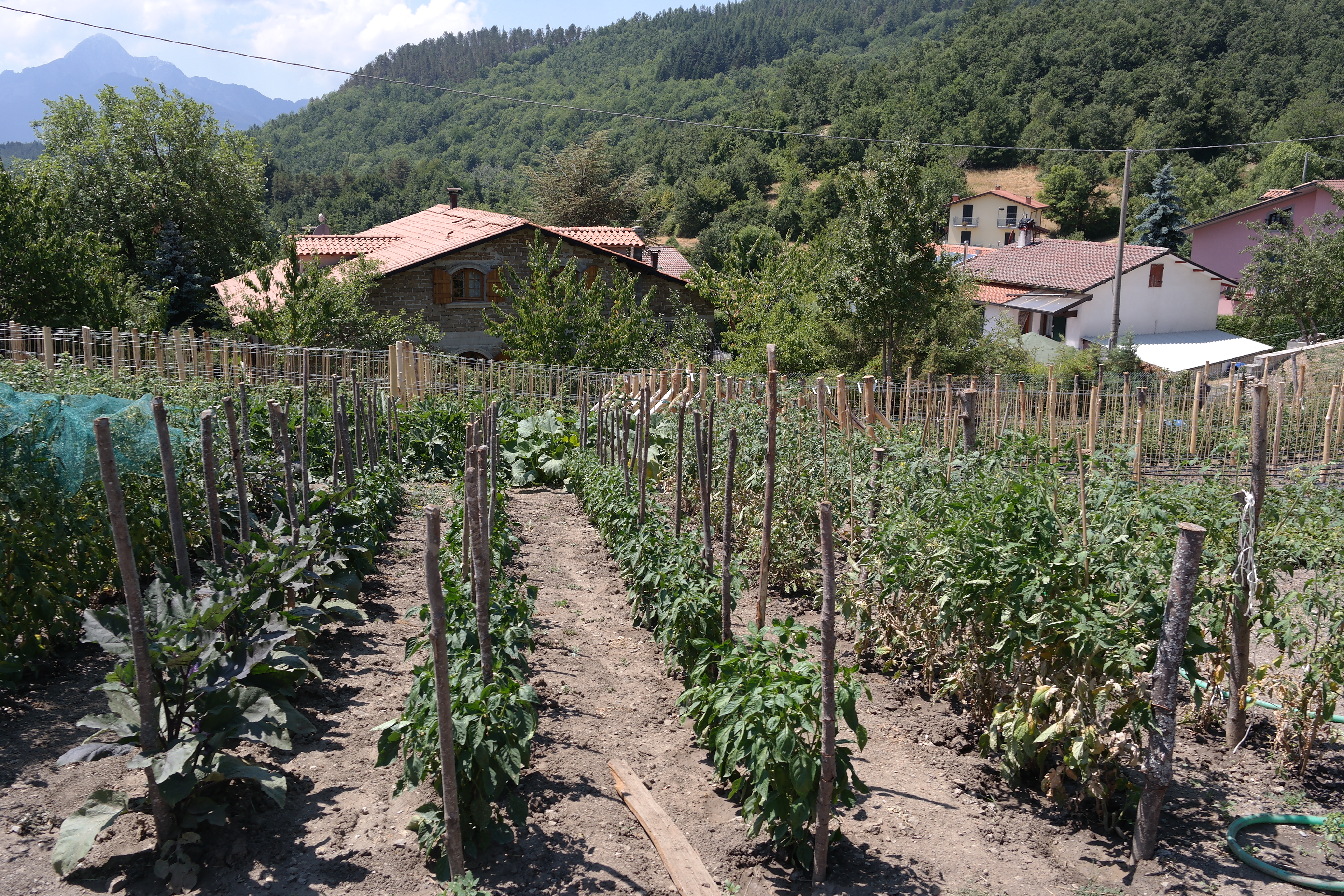
Garfagnana, Italy – picture by Jordan Treakle

by Jordan Treakle

My path to WUR’s Rural Sociology Group (RSO) differed from most of my fellow Masters students when I first arrived to Wageningen in August 2015. As a second-year student in the International Masters in Rural Development (IMRD) programme[1], I had spent the first year of my programme nomadically exploring the academic halls of the University of Ghent (Belgium), Humboldt University (Germany), and the University of Pisa (Italy) with my 27 fellow IMRDers. This unique and fast paced academic tour of Europe gave me a range of academic lens on agricultural economies and cooperative development in food systems that were enriching and informative. But these perspectives generally had not touched on the complex geographies of power and agency that I found most compelling. Luckily WUR’s small but worldly campus, with all of its contentious influences of corporate agribusiness research and rebellious social science scholarship, offered a critical forum to both intellectually digest the lessons of the other academic institutions I had visited during the first year of my programme, as well as dive into rural sociological concepts that reconfigured my relationship to place and later guided young career in farmer advocacy and agricultural policy. Continue reading

75th Anniversary: 20) Boerengroep

Boerenprotest tegen melkprijs- ongedateerd, archief Boerengroep

Het is al weer 50 jaar geleden dat de Boerengroep[1] werd opgericht in een roerige tijd van grootschalige boerenprotesten. Een Europese demonstratie van boeren in Brussel op 23 maart 1971 liep uit op een confrontatie met de politie. Er gingen tientallen auto’s in vlammen opgingen en één boer vond de dood (klik op deze link voor een nieuwsverslag over deze betoging uit 1971)[2]. De demonstratie maakte duidelijk dat er onder boeren en boerinnen grote ontevredenheid was over het gevoerde Europese landbouwbeleid. Continue reading

75th Anniversary: 19) The Boerinnengroep Wageningen: looking back

In the 1977, we, a group of women students and graduates, mostly in Rural Sociology, founded the so-called ‘Boerinnengroep’, which translates as ‘farm women’s group’[1]. The Boerinnengroep has contributed to new agendas of farmer and rural women’s organisations, agricultural policy and academia. It has also put, in a way, a strong imprint on our lives and careers. In this blog we look back. Continue reading

75th Anniversary: 17) Multifunctional farming in development: education at the care farm

Multifunctional farming (an umbrella term to indicate a combination of agriculture and services to society, wur.nl) has been a research subject for the Rural Sociology Group for decades, as multifunctionality is one of the diversification strategies employed by farming to sustain their farms and connect with various groups in society such as consumers or tourists. The first multifunctional activities were nature conservation, agritourism/recreation, care farming, farm shops/short chains, farm education and agricultural day care. These activities, however, are subject to constant change. This leads to new research topics and new collaborations for the Rural Sociology Group. Continue reading