75th Anniversary: 43) Een recreatieve tocht door het landschap van de Wageningse sociologie (1985-1995)

Jaap Lengkeek

De naam Hofstee was mij bekend. Iets over sociologie in Wageningen ook. Toen ik mijn afstudeeronderzoek deed in een klein plattelandsdorp in Noord-Holland, Twisk, las ik de studie van de Wageningse socioloog Jaap Groot over de leefbaarheid van een plattelandskern. Verder leerde ik, nadat ik aan de Universiteit van Amsterdam was afgestudeerd in de sociologie van bouwen en wonen, de Vakgroep Wonen van Prof. Van Leeuwen in Wageningen kennen. Desondanks bleef ik lang vrezen dat voorbij Utrecht de werkelijke academische wereld ophield.

Een advertentie voor een coördinator van de Werkgroep Recreatie van de Landbouwhogeschool Wageningen had desondanks mijn aandacht getrokken. Na mijn afstuderen had ik een aantal jaren onderzoek gedaan naar de relatie wonen en welbevinden bij het Instituut voor Preventieve Gezondheidszorg in Leiden. Daarna was ik beland in Den Haag bij een platform van organisaties op het gebied van vrijetijdbesteding, openluchtrecreatie en behoud van een gezonde leefomgeving, genaamd Stichting Recreatie. Daar kwam ik in direct contact met een levendige beleidssector op deze terreinen van de verschillende overheden. Bovendien ondersteunde de stichting een netwerk van onderzoekers aan de Nederlandse en Vlaamse universiteiten. Recreatie en vrije tijd waren belangrijke maatschappelijke thema’s geworden. Ik wilde graag terug naar de universiteit, vandaar dat ik solliciteerde naar de geadverteerde positie in Wageningen.

In Wageningen was openluchtrecreatie als onderzoeksthema nadrukkelijk op de kaart gezet als onderwerp van naoorlogse zorg voor een leefbaar en beleefbaar platteland, dat onder de snelle modernisering onder druk was komen te staan. De aanleg van grote recreatiegebieden in de buurt van en tussen grote steden naar voorbeeld van het Amsterdamse Bos was een substantiële oplossing geworden voor het verdwijnen van ruimtelijke kwaliteit en bruikbaarheid in de naoorlogse nota’s voor de ruimtelijke ordening. Intergemeentelijke samenwerkingsverbanden, de zogeheten Recreatieschappen, dienden zorg te dragen voor uitvoering en beheer. Sociaalgeograaf Theo Beckers was in 1976 aangesteld bij de vakgroep Sociologie van de Westerse Gebieden en had zich beijverd om recreatiegedrag en -beleid op te nemen in het curriculum. Hij schreef in 1983 een prachtig proefschrift waarin het belang van recreatie werd duidelijk gemaakt, als een vorm van vrijheid, en bracht deze vrijheid in verband met de recente geschiedenis van het overheidsbeleid en met een solide theoretische kijk op planning. Bovendien stond hij aan de wieg van een samenwerkingsverband van Wageningse studievelden waarin openluchtrecreatie een aandachtsgebied werd of moest worden, van sociologie, landgebruiksplanning, ecologie, economie, psychologie en landschapsarchitectuur. Het samenwerkingsverband werd wettelijk (Wet Universitaire Bestuurshervorming) verankerd in de Werkgroep Recreatie. Ik kreeg de baan.

Voor de functie was ik ondergebracht als medewerker bij de Vakgroep Sociologie, met een kamer op de Leeuwenborch. Daar trof ik een gezelschap collega’s die onder Hofstee waren aangesteld, Ad Nooy had de leiding ervan, Jelle Lijfering, Berry Lekanne dit Deprez, Iteke Weeda, Rien Munters, en een recente lichting met Jaap Frouws, Gert Spaargaren, Jan-Willem te Kloeze en Henk de Haan. Jaap Groot en gezinssocioloog Gerrit Kooy waren zojuist vertrokken of gingen met pensioen. Mijn herinnering aan die tijd is niet helemaal zuiver meer na zesendertig jaar. Mijn belevenissen bij de vakgroep zullen daarom eclectisch en impressionistisch zijn. Terwijl ik me met medewerkers van verschillende vakgroepen bezighield, bleef mijn kijk op de collega’s van sociologie beperkt. Een helder ijkpunt vormde het hoofd van het secretariaat, Ada Hink. Zij beleed haar trots en trouw aan de groep en aan Hofstee in het bijzonder door mij te vertellen dat ze altijd op haar post zou zijn om Hofstee, als hij graag nog dagelijks in zijn kamer kwam, bijtijds zijn koffie te brengen. Niet duidelijk werd me wie een oudere man was, die ook ergens in een kamer zich door data heen zat te werken. Een assistent van Hofstee of zo iemand?

In de ochtend van mijn eerste werkdag in Wageningen parkeerde ik mijn auto op het parkeerterrein van de Leeuwenborch. Ik was benieuwd naar wat ik daar aan vervoersmiddelen zou aantreffen. De faam van milieuvriendelijkheid van de Landbouwhogeschool was tot mij doorgedrongen en ik vermoedde eenvoudige auto’s aan te treffen, deux-chevauxs, simpele Opels, een bescheiden Renault, of zoiets, en natuurlijk veel fietsen. Ik zelf was sinds kort in het bezit van een zescilinder, zilverkleurige Chevrolet Malibu, met roodlederen banken in plaats van stoelen. Ik verwachtte daarmee een ernstige dissonant te vormen. De auto slurpte benzine, verbruikte liters olie en maakte het geluid van een oceaanstomer. Maar de leden van de Werkgroep Recreatie pasten er precies in. Op weg naar geschikte onderzoeksgebieden reden we door het land en de stemming in de samengepakte wagen was opperbest. De Chevrolet heeft waarschijnlijk mijn beste bijdrage aan teambuilding betekend.
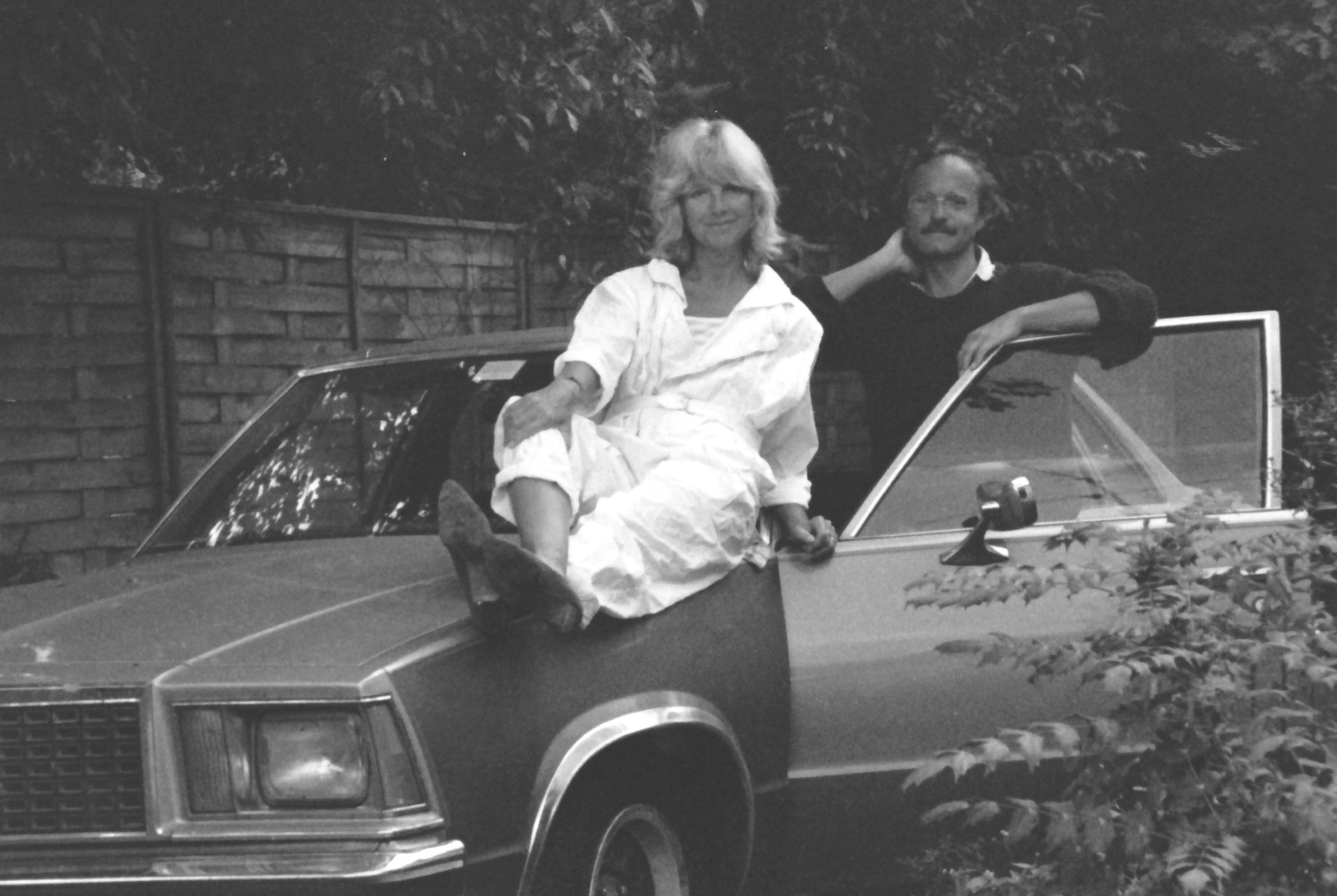
“Auto, echtgenote en ik“

Helaas moest die al vrij snel worden ingeruild omdat van de zes cilinders bij een scherpe bocht naar rechts er steevast twee uitvielen.

De Landbouwhogeschool werd Landbouwuniversiteit en de vakgroep sociologie trok een nieuwe generatie medewerkers aan. Van de oudere medewerkers was Rien Munters degene die hen vooral theoretisch inspireerde. Hij had zich verdiept in het werk van de Britse socioloog Anthony Giddens, waarvoor hij twee van zijn studenten had weten te enthousiasmeren, Hans Mommaas en Hugo van der Poel. Deze twee hadden zich na afstuderen naar de universiteit van Tilburg gespoed als zendelingen van Giddens, die hun missie daar met succes toepasten op het terrein van de vrijetijdwetenschappen. Na enige tijd, in 1987, volgde Theo Beckers hen naar Tilburg als hoogleraar Vrijetijdswetenschappen. Rien Munters bleef hun goeroe op afstand.

Rien was één van de medewerkers waar ik meer mee optrok. We gingen met enige regelmaat na afloop van het werk samen naar Nol in ’t Bos, om daar een jenevertje te drinken, met bitterballen, waarbij ik hem ook af en toe een klein sigaartje mocht aanreiken.  We spraken weinig over het werk, wel over amusantere onderwerpen. Zo vertelde hij anekdotes over Prof. Den Hollander, die ik als hoogleraar sociologie in Amsterdam had meegemaakt en die zijn studenten grote schrik placht aan te jagen, bijvoorbeeld door namen van de presentielijst op te noemen om de betreffende persoon tijdens het college een spitsvondig antwoord te laten geven. Menig student dook onder de bank. Ook liet hij een studente met gips om haar been uit de collegezaal verwijderen omdat ‘dat been’ hem stoorde. Deze handelwijze is hem bij de grote revolutie van de late jaren zestig duur komen te staan. Tevens memoreerde Rien dat hij ooit in het ziekenhuis was beland nadat hij een boomtak afzaagde waar hij zelf op zat. Over de wonderlijke hallucinaties die hij daarna kreeg raakte hij niet uitgesproken.

Ook met Albert Mok had ik goed contact, die als deeltijdhoogleraar organisatiesociologie was aangetrokken. Ik kende zijn naam van een boek over sociologie, dat hij samen met De Jager had geschreven en dat gewoonlijk werd aangeduid werd als ‘de mokkendejager’. Ikzelf was opgevoed met het boek van Van Doorn en Lammers en later het werk van Norbert Elias. Ik volgde Mok’s colleges en nam er af en toe één voor hem waar. Hij was een liefhebber van jenever. Bij mijn promotie gaf hij me een hele doos met flessen exquise Belgische jenever.

De nieuwste lichting medewerkers bij de vakgroep oriënteerde zich sterk op Jürgen Habermas, die het werk van Max Weber verder had uitgewerkt en actueel gemaakt. Het terrein waarop deze jongere generatie zich begon te bewegen raakte enigszins verwijderd van het agrarische. Milieusociologen werden ze. En, in mijn ogen, met een bewonderenswaardige inzet en begeestering. Ze mengden zich actief in de onderzoekscommissie voor milieuvraagstukken van de International Sociological Association (ISA). Voor een ISA-conferentie stelden ze een ‘marsroute’ op, zo vernam ik,  waar elk van hen naar toe zou gaan om een bijdrage te leveren. Ikzelf nam met meer gemakzucht deel aan de commissies voor vrije tijd en voor toerisme en vond me vergeleken met hen een lapzwans.

Intussen bedreigde het College van Bestuur de studierichting Sociologie met bezuinigingen of zelfs opheffing. Hetzelfde lot trof Landschapsarchitectuur, een succesvolle en in Nederland unieke academische studierichting. Ad Nooy, zo hoorde ik,  stelde voor een deel van zijn leerstoel in te leveren om financiële ruimte te creëren. Hij en hoogleraar landschapsarchitectuur Vroom waren volgens mij integere hoogleraren van het oudere stempel, die hun posities vanzelfsprekend achtten. Geen doordouwers of gewiekste strategen. Landschapsarchitectuur ging op in een gezamenlijke studie met landinrichtingsplanning. Doodzonde. Hoe het met sociologie ging weet ik niet meer. Wel, dat Jan Douwe van der Ploeg als hoogleraar werd aangesteld en hoofd werd van de vakgroep. Hij vatte zijn rol op met veel elan en voortvarendheid, met een sterke visie op agrarische regionale ontwikkeling en met een gedegen netwerk binnen en buiten de universiteit. In een landelijk tijdschrift beschreef hij zijn plannen en merkte op dat er onder de medewerkers, die hij geërfd had,  veel ‘dood hout’ zat, dat nodig weggekapt moest worden om gezonde groei mogelijk te maken. Een mens kan zich vergissen, ook een hoogleraar. Het dode hout dat hij ontwaarde bleek een verzameling wandelende takken te zijn. Wandelende takken leven en eten zo nodig zelfs hun eigen kinderen op. De bedoelde medewerkers, waaronder ik,  zijn later hoogleraar geworden, één zelfs Rector Magnificus. De nieuwe hoogleraar Van der Ploeg was hoe dan ook van zins snel flinke beslissingen te nemen, wat stuitte op argwaan en actief verzet van de milieusociologen. Ze vonden dat, in habermasiaanse termen, niet voldoende ‘communicatief werd gehandeld’. Inmiddels was ik secretaris van de vakgroep en mij werd gevraagd om in het ontstane conflict te bemiddelen. Het is allemaal wel opgelost, al weet ik niet meer hoe.

De recreatiesociologie ontwikkelde zich verder. Aanvankelijk werd veel onderzoek verricht in opdracht van rijks-, provinciale of gemeentelijke overheden naar recreatiegedrag. Theo Beckers entameerde en begeleidde onderzoek naar vrijetijdsgedrag van huisvrouwen in de stedelijke omgeving. Stedelijke recreatie was een hot item. Zelf kon ik een aantal onderzoeken op dat terrein uitzetten en begeleiden.

Bovendien liet ik studenten onderzoek doen naar de provinciale recreatieve ontwikkelingsplannen. In die tijd was er veel geld beschikbaar van de overheid om onderzoek uit te voeren, met een duidelijk praktisch doel. Later ging het onderzoeksgeld naar de DLO-instituten. Aan publiceren in buitenlandse of in landelijke wetenschappelijke tijdschriften werd nauwelijks gedacht. De wetenschappelijke belangstelling ervoor was in Nederland ook niet groot. Zoals Theo Beckers het ongeveer verwoordde ‘de recreatiestudie bewoont geen hoofdvertrek in het gebouw van de alma mater’. Ook internationale tijdschriften van allure verschenen in het buitenland nog maar mondjesmaat. Een eigen reeks publicaties van de werkgroep leek al heel wat. Omdat ik de theoretische invalshoek van sociologen en antropologen in de studies van het toerisme interessant, zo niet als mondiaal verschijnsel interessanter vond dan vrije tijd en recreatie was ik begonnen op mijn kamer werkgroepen sociologie van het toerisme te geven, met vijf alleraardigste en gemotiveerde studenten. Na het vertrek van Theo Beckers werd een bijzondere leerstoel Recreatiekunde ingesteld, waarop sociaalgeograaf Adri Dietvorst werd benoemd. Hij nam de leiding van de Werkgroep Recreatie over en ik bleef als secretaris ervan bij de vakgroep sociologie. Om het aspect toerisme meer gewicht en aandacht te geven werd René van der Duim aangetrokken, die in Tilburg sociologie had gestudeerd, docent was geweest aan het Nederlands Wetenschappelijk Instituut voor Toerisme en Recreatie in Breda en vervolgens mij had opgevolgd bij de Stichting Recreatie. In 1994 promoveerde ik op een studie naar het belang van Recreatie en Toerisme. Eén van mijn paranimfen vond het predicaat van de promotie ‘met lof’, tenslotte een gezonde groente, voor een landbouwuniversiteit wel te verwachten.

De positie van Adri Dietvorst werd geformaliseerd in een gewoon hoogleraarschap. De Werkgroep Recreatie werd een zelfstandige eenheid en gevestigd in gebouw De Hucht, waar ook Planologie, Landgebruiksplanning en Landschapsarchitectuur verbleven. De studie van recreatie en toerisme werd een interdisciplinaire aangelegenheid. Jan-Willem te Kloeze, René van der Duim en ik verhuisden van de Leeuwenborch naar De Hucht. De leeropdracht Recreatiekunde werd Sociaal-ruimtelijke Analyse (veel later veranderd in Cultural Geography). Het vervolg is inmiddels geschiedenis waar met tevredenheid op terug kan worden gekeken. Ik volgde Adri Dietvorst op, met een eigen leerstoelgroep, een masteropleiding Leisure, Tourism and Environment (één van de twee eerste opleidingen in Wageningen volgens het BaMa stelsel) en later nog een gemeenschappelijke Bachelor Tourism, samen met de University of Applied Sciences Breda.

De bakermat van dit alles blijft de vakgroep Sociologie van de Westerse gebieden. Wat ik tastbaar ervan bewaard heb hoort bij de professorale parafernalia. Van de weduwe van professor Kooy kocht ik diens toga en baret. Omdat de toga veel te groot was nam ik ook de toga over van professor van Mourik, emeritus planoloog, die deze weer had gekregen van hoogleraar Bijhouwer, de eerste hoogleraar landschapsarchitectuur. Dat ensemble vertegenwoordigt treffend mijn werkzaamheden in Wageningen, tussen sociologie, planologie en landschapsarchitectuur. De baret van Kooy, met zijn naam nog binnenin, ben ik eerbiedig blijven gebruiken.
75th Anniversary: 42) Renowned Academics teaching in PhD Course Agrarian and Food Citizenship

We are excited to announce that three world-class academics will co-teach in our PhD course on Agrarian and Food Citizenship: Prof. Hannah Wittman, Prof. Aya H. Kimura and Prof. Haroon Akram-Lodhi. For participants in this course this provides a unique opportunity for learning and exchange.

Hannah Wittman is professor at the University of British Columbia in Canada. Her research examines the ways that the rights to produce and consume food are contested and transformed through struggles for agrarian reform, food sovereignty, and agrarian citizenship. Her projects include community-based research on farmland access, transition to organic agriculture, and seed sovereignty in British Columbia, agroecological transition and the role of institutional procurement in the transition to food sovereignty in Ecuador and Brazil, and the role that urban agriculture and farm-to-school nutrition initiatives play in food literacy education. http://ires.ubc.ca/person/hannah-wittman/

Aya H. Kimura is professor of sociology at the University of  Hawai`i-Manoa. Her research analyzes the intersections of technoscience, gender, and  sustainability. She has had research projects in Indonesia, Japan, and Hawai`i, and has written on agrobiodiversity, fermentation, food safety, nutrition science and the idea of “smart food.”  Among others, she examines diverse practical experiences with citizen science on a range of food and farming issues, from seed development to toxicants to biodiversity. https://ayakimura.weebly.com/

Haroon Akram-Lodhi is professor of economics and international development studies at Trent University, Canada. His research interest is in the political economy of agrarian change, the future of smallholder peasant communities in the world food system, on the sustainability of rural social structures, relations and institutions, and gender and rights based economics. https://sites.google.com/site/aharoonakramlodhi/home

The course is organized as a one-week intensive discussion seminar.

For more info and registration see: https://www.wur.nl/en/activity/Agrarian-and-Food-Citizenship-3-ECTS.htm

75th Anniversary: 40) Registration open for PhD Course on Agrarian and Food Citizenship

The PhD course Agrarian and Food Citizenship gives participants an opportunity to intensively engage with some of the major debates about the democratization of our agricultural and food practices, so that they can continue to explore and expand these debates in their own research. The main analytical lens to this democratization of agriculture and food practices in this course is that of citizenship. The course is organized as an one-week intensive discussion seminar.

Each session in this course will have its own set of required readings, which include both foundational literature and new research perspectives on agricultural and food citizenship. Completing these readings is necessary for all students to contribute to discussion during the seminar meeting. These readings will require a substantial time commitment outside of the meeting hours, so participants will need to budget time accordingly in order to fully participate in the course.

Click the link below for more information and registration:

https://www.wur.nl/en/activity/Agrarian-and-Food-Citizenship-3-ECTS.htm

75th Anniversary: 37) Pre-announcement: PhD Course Agrarian and Food Citizenship, May 6–13, 2022

Introduction

We are delighted to announce our PhD course on agrarian and food citizenship. The course gives participants an opportunity to intensively engage with some of the major debates and approaches on the democratization of our agricultural and food systems so that they can continue to explore and expand these in their own research. The course is organized as a one-week intensive discussion seminar in the week of our 75th anniversary celebration

Agrarian and Food Citizenship

Rooted in a shared belief that our agricultural and food system has produced unsustainable social and environmental cleavages, social movements like Via Campesina have called for the right of people to define their agricultural and food practices. At the same time, various initiatives have emerged that bring this principle into practice. Instead of assuming our relationship to agriculture and food to be that of a consumer making individual decisions in the marketplace, these movements and initiatives have focused on how we organize our agriculture and food practices, and how this can be done different. The aim of this course is to investigate the shift away from a consumerist perspective in which we shop our way to a better agricultural and food system (”vote with our fork”) and towards a citizenship perspective based on the right to have a say in, as well as actively shape, our agriculture and food system. Applying a citizenship lens to an understanding of how our agriculture and food system are organized implies a consideration of the power-relations and identities concealed. In addition, is raises the question how to understand “citizenship”? Various scholars (Isin and Nielsen 2008, Wittman 2009, Carolan 2017) have argued that citizenship is not a formal status, and that people establish themselves as citizens by enacting rights. In this course we will consider agrarian an food citizenship from this perspective of “citizenship acts”.

Target Group and Min/Max Number of Participants

This course is intended for students doing a research master, PhDs, postdocs, and staff members who want to expand their engagement with the democratization of our agricultural and food practices and the citizenship approach to this. In order to ensure opportunities for full discussions during the sessions, the minimum number of participants is 10 and the maximum 20.

More information about the instructors in this course and registration will follow soon.

References

Carolan, M. (2017). No One Eats Alone: Food as a social enterprise. Washington, Island Press.

Isin, E. and G. Nielsen (2008). Acts of Citizenship. London, Zed Books.

Wittman, H. (2009). “Reframing agrarian citizenship: Land, life and power in Brazil.” Journal of Rural Studies(25): 120-130.

75th Anniversary: 32) 100 PhD graduates

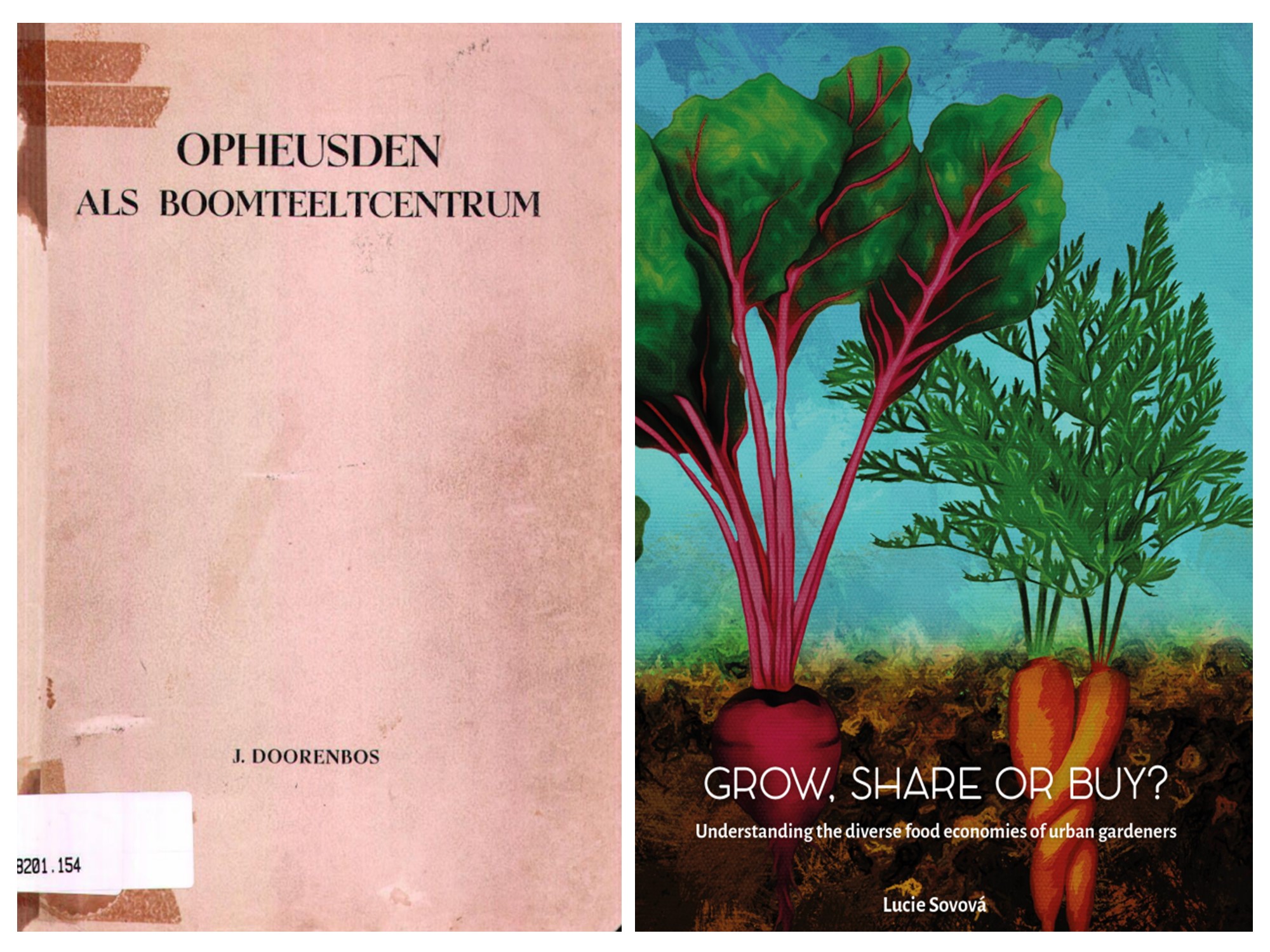
The 75th anniversary of the Rural Sociology Group also marks another milestone: 100 completed and successfully defended PhD theses. The first PhD graduate was Jan Doorenbos, who successfully defended his PhD thesis entitled ‘Opheusden als boomteeltcentrum‘ (Opheusden as tree-growing centre) on 14 June 1950. His PhD study was supervised by Prof. E.W. Hofstee. The 100th PhD graduate was Lucie Sovová, who successfully defended her PhD thesis entitled ‘Grow, share or buy? Understanding the diverse economies of urban gardeners‘ on 13 October 2020. Her PhD study was supervised by Dr. Esther Veen, Dr. Petr Jehlicka and myself. Below the covers of the 1st and 100th PhD thesis.

In this blog about 100 PhD graduates in 75 years Rural Sociology at Wageningen University, I want to present and reflect on some trends related to these 100 PhD graduates. In another forthcoming blog I will present and reflect on some trends related to the content and focus of these 100 PhD theses.

Trend 1: from less than 1 to close to 4 PhD graduates per year

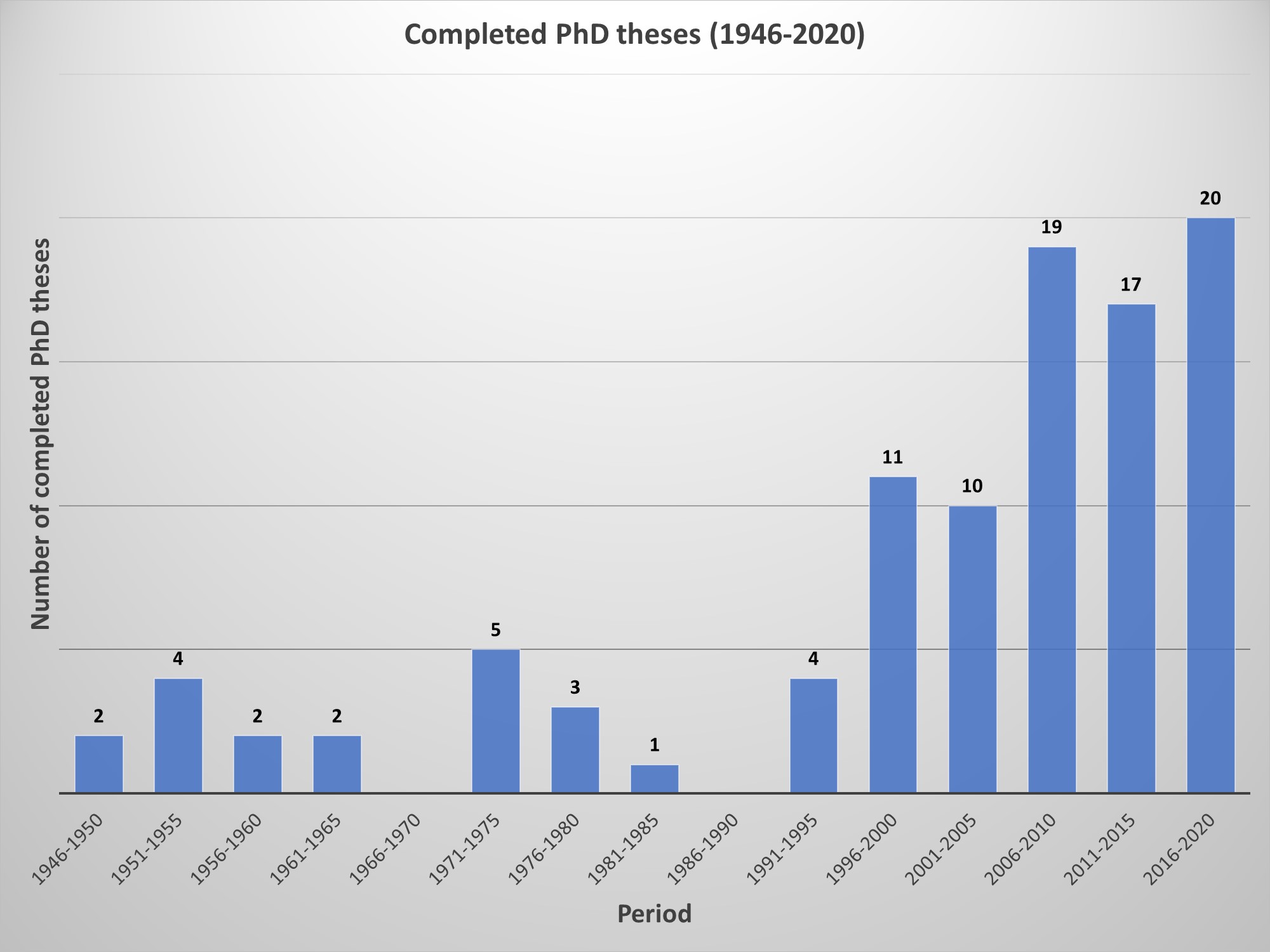
The 100 PhD theses that were completed in the last 75 years are not evenly distributed over the years, as the figure below shows. In the first 50 years 23 PhD theses were completed, meaning that the average number of PhD graduations was below 1 per year (with no PhD graduations at all in the years 1966-1970 and 1986-1990). This increased to approximately 2 per year in the 1996-2005 period and to almost 4 per year in the last 15 years. There are multiple reasons for this. First, until the 1980s having a PhD degree was not that important for an academic career as it is now. When I did my Masters in Wageningen in the late 1980s and early 1990s a large part of the courses I took were taught by assistant, associate and even full professors without a PhD degree. Nowadays, having a PhD degree is a prerequisite for an academic career. Second, in the early 1980s the Dutch government introduced the so-called ‘Two-phase structure’ for university education, with the second phase referring to a 4 year PhD program. The ambition was that 20% of the MSc graduates would continue with a PhD, and as a result universities created more PhD positions (which were then called assistant-in-training or researcher-in-training positions). Alongside, tenured staff without a PhD degree was also encouraged to write a PhD thesis. While these two reasons may explain the increase from the early 1990s onwards, they do not explain the relative high numbers in the last 15 years, with an average of 3 to 4 PhD graduations per year. These figures are a result of: a) the growth of externally funded research projects in which (part of) the research was/is carried out by PhD students; b) the acquisition of specific PhD programs with multiple PhD projects (NWO-WOTRO, INREF, and EU Marie Curie Training Networks); c) the internationalization of our PhD community (more about this below) with a growing number of PhD scholarships funded by NUFFIC and national governments in Asia (mainly China) and Latin-America. In addition, there has been an internal push for more PhD students due to PhD supervision criteria for RSO staff in Tenure Track. And last but not least, the PhD graduation allowance that we get from the national government (currently approximately € 60,000 per PhD graduate) also implies that there is a financial incentive to have a steady and preferable high inflow of PhD students and outflow of PhD graduates.

Trend 2: The average age at which a PhD degree is obtained remains the same (but becomes more diverse)

The average age at which a PhD degree is obtained has remained fairly stable over the past 75 years (just below 40 in 1950 and just above 40 in 2020), but has become more diverse in recent decades (ranging from 27 to 76 years). When making this overview I had actually expected that the average age at PhD graduation would have shown a downward trend as I assumed that the role of the PhD thesis had changed from someone’s life’s work (a middle- to end-career achievement) to a first stepping stone (an early-career achievement) in an academic career. The latter certainly holds true for a large group that obtained their PhD degree at the age of 35 or younger. However, among the PhD graduates of the last 20 years, the PhD degree has also been an important mid-career stepping stone. Many, in particular international, PhD graduates, who got their PhD degree at the age of 40 to 50, have moved up to senior academic or management positions. And throughout the years we’ve had PhD candidates that embarked on their PhD study more towards the end of their career or even after retirement (with two obtaining their PhD degree at the age of 76). For this relatively small group the PhD thesis has remained a life’s work.

Trend 3: From men only to more gender balance

One aspect that has really changed over the past 75 years is the male/female ratio of PhD graduates. In the past 75 years we’ve had twice as many male graduates as female graduates, as the figure below shows.

However, this 2:1 male-female ratio has not been like that over the past 75 years. In the first 55 years the vast majority of PhD graduates were men (32 men versus 2 women), and this changed considerably in the last 20 years (34 men versus 32 women), as the figure below shows. It clearly reflects the changing male-female ratio of BSc and MSc students at Wageningen University (and most likely also at many other universities in and outside the Netherlands). And this also has had an impact on the gender balance within the current academic staff at the Rural Sociology Group.

Trend 4: From mainly Dutch to ‘all over the world’

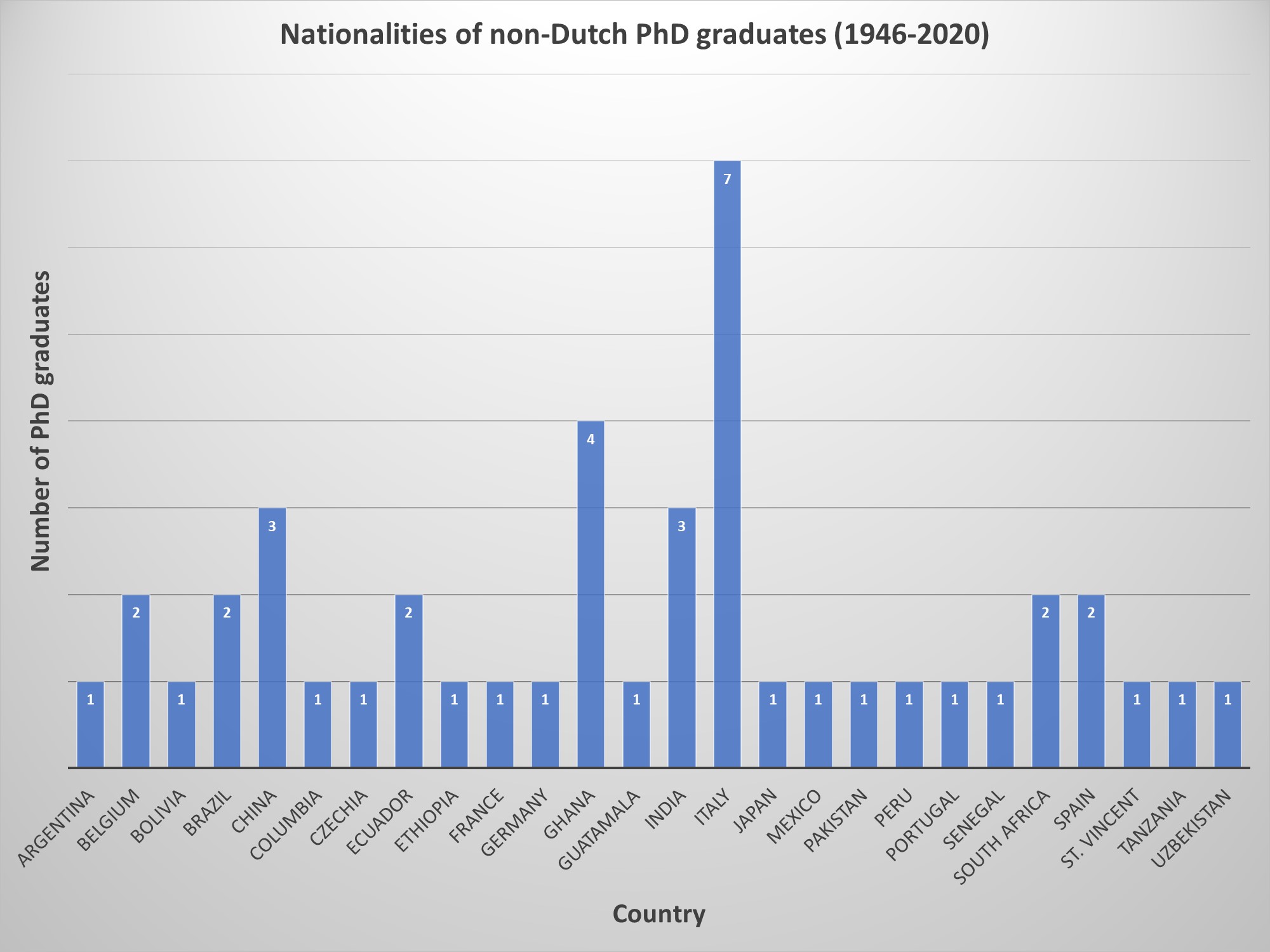
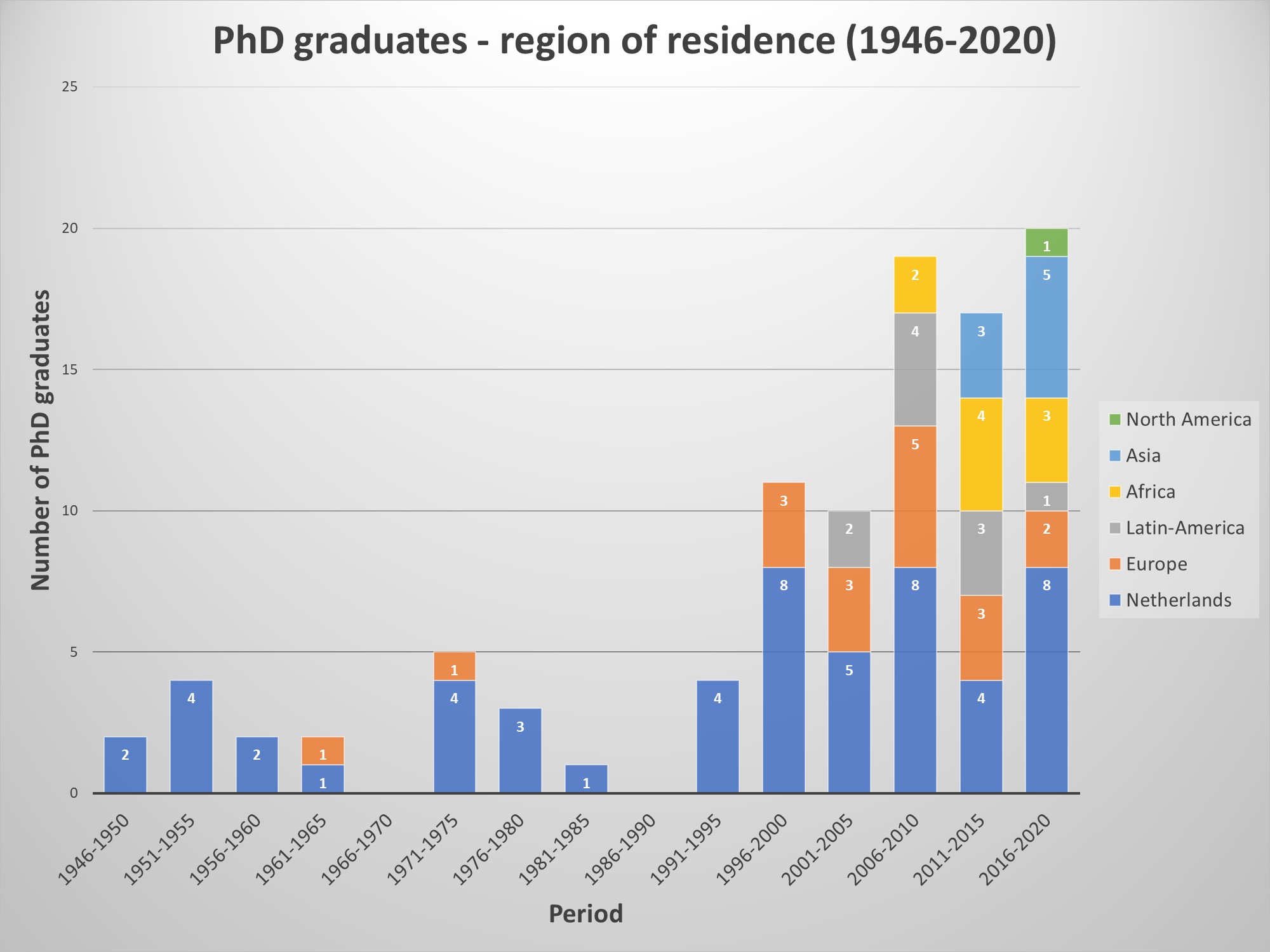
Over the past 75 years the PhD community at the Rural Sociology Group has really become international. Although there were a few non-Dutch PhD graduates in the early years, in recent years PhD students come from all over the world: other European countries, Latin America, Africa and Asia (see figures below: Europe refers to all European countries excluding the Netherlands). A large number of the PhD projects of these international PhD students are projects jointly supervised with staff members of the Sociology of Development and Change group, which traditionally has a strong network in Latin America and Africa. The former chair of Rural Sociology, Jan Douwe van der Ploeg, also has a large international network, in particular in Italy, several Latin American countries and China, and this has clearly contributed to the inflow of PhD students from these parts of the world. The aforementioned growing importance of external research funding and international PhD scholarships has also contributed to the internationalization of our PhD community. I also assumed that the international focus and status of Wageningen University, with all its MSc and part of its BSc programs taught in English, would have contributed to the internationalization of our PhD community. However, hardly any of our international PhD students has an MSc degree from Wageningen University.

In addition to looking at the countries/regions where our PhD graduates come from, I have also made a figure of where they are currently residing/working or where they were residing when they retired. This basically shows that the vast majority of PhD graduates is residing/working in the country/region where they originate from. Some have moved to other countries and a few of the international PhD graduates have stayed in the Netherlands.

Trend 5: From government official to academic/researcher

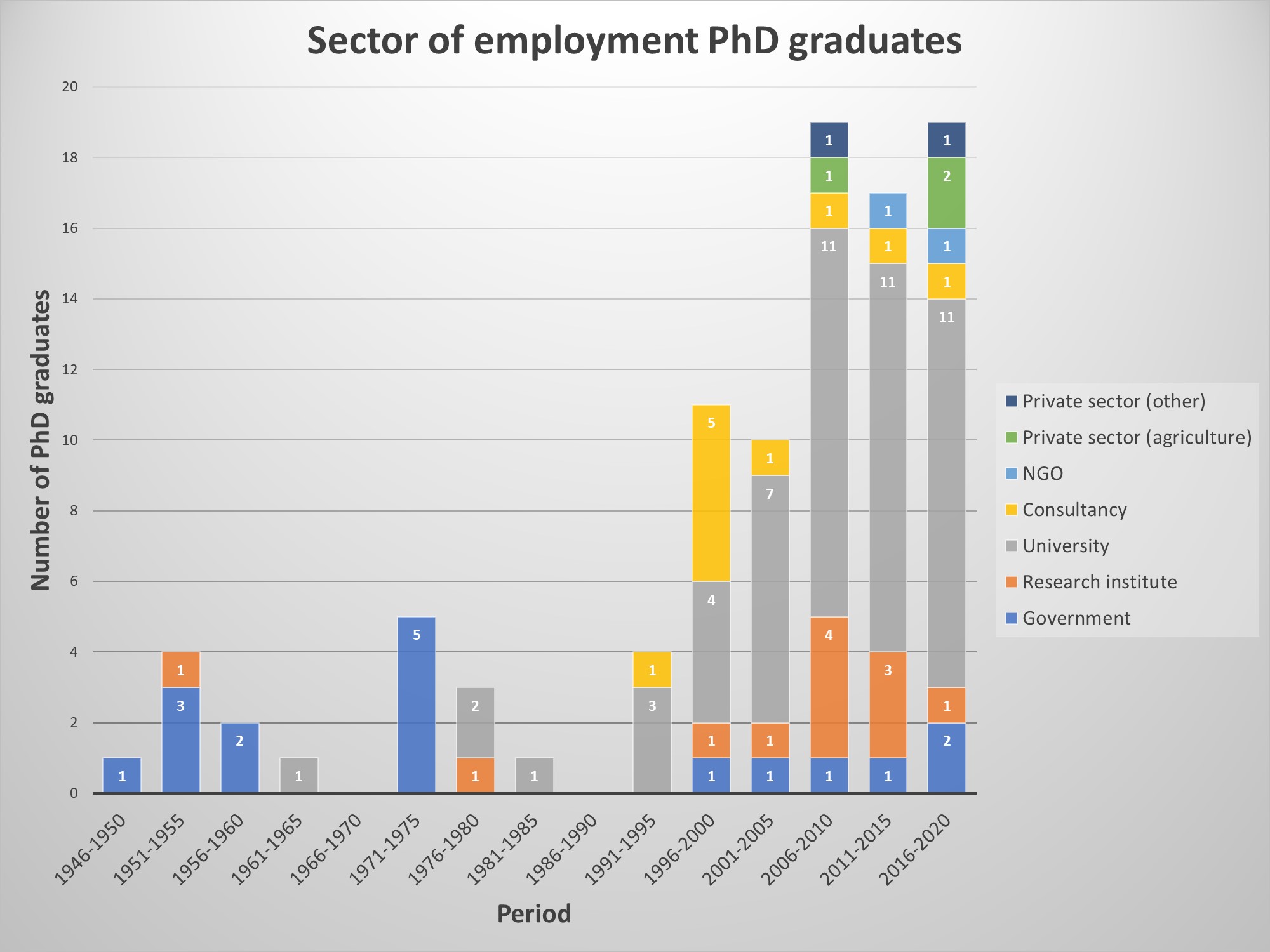
A last topic related to 100 Rural Sociology PhD graduates I want to present is their current or last (in case of retirement) sector of employment. Is a PhD degree really a stepping stone for an academic or research career or does it result in careers in a variety of sectors? This has been summarized in the figure below, which shows that many of the PhD graduates in the early years continued their career in government. To be fair, many of those PhD graduates actually had a government job and were given the time and space to do their PhD research while keeping their job as government official and continued as a government official after obtaining their PhD degree. Since the 1990s the PhD degree seems to have been favorable for a career in academia/higher education or at a research institute. Many of our international PhD graduates now have tenured positions at foreign universities as assistant, associate or full professor or as senior scientist or senior manager at a research institute. Some are self-employed as advisors/consultants and a few ended up working for a NGO or in the private sector (in or related to agriculture or elsewhere). But as the primary aim of our PhD program is to train PhD students to become independent researchers/academics, it is great to see that so many do indeed succeed in building a career in (academic) research (and higher education).