75th anniversary: 28) RSO Education: on the value of lectures

Still diving into the archives of Wageningen University Library, I found a pamphlet by Hofstee on the value of lectures written in 1965.  It includes a short argumentation about the value of live lectures and contrast sharply with the current shift to online education. This is the second blog on RSO Education.

In 1965, Hofstee published a pamphlet called Heeft College Lopen Zin? (Is it useful to attend lectures?) in which he discusses the value of old-fashioned lecturing. He starts with the following sentences:

 “Attending lectures is an issue of which its usefulness is doubted upon by students – judging from the many absentees. They are probably not alone in this. It is likely that, from time to time, many academic lecturers too get the feeling that their monologues and discussions with students are of limited value and that it might be wise to let students independently study the syllabus instead” (translated from Hofstee, 1965).

Hofstee wanted to demonstrate the value of lectures by executing a small research on students from the course Introduction to Social Sciences followed by 61 students. This course includes a complete syllabus for students to study. The exam will test their knowledge on the syllabus. In principle, students should thus be able to pass the exam by only studying the syllabus. Consequently, the lectures are to aid the study progress and are not vital to the assessment outcome. But by looking at the relationship between the lecture attendance and the grade, Hofstee concludes that attending lectures is likely to have a positive effect on the grade.

That was 1965. Fast forward to now.

At Wageningen University, the printed out thick syllabi are replaced by digital articles. A course is constructed out of various teaching methods including not only lectures but also group discussions, tutorials, excursion and so on. Academic lecturers, as Hofstee called them, deploy a range of teaching skills and learning styles to capture the attention of students. Each course is evaluated after completion and each year teachers are asked to modify their teaching as they see fit. Yearly innovation funds stimulate teachers to think about new forms of teaching, always seeking to improve the quality of teaching.

Yet, lectures remain an important ingredient in the courses and so are the issues with lecture attendance. Lecture attendance is not just a discussion at the Wageningen University but very much a wider phenomenon. In 2014, Harvard University even went as far as secretly photographing students in lecture halls to study the attendance[1]. Besides this highly criticised experiment, more research has been done on lecture attendance, its presumed benefits and the reasons for not attending (see for example Doggrell, 2020; Fernandez et al, 2008; Horton et al, 2012; Meehan and McCallig, 2019; Poirier, 2017). Interestingly, the academics writing on this issue are not unanimously in favour of Hofstee’s conclusions. On one hand, Horton et al (2012) conclude that the correlation between assessment outcome and lecture attendance is “surprisingly weak”. Lectures can even lead to students’ boredom and decreased motivation (Blouin at al, 2008; Short and Martin, 2011).

On the other hand, academics indicate that lectures have great value. The interpersonal relation between students and lecturer, a demonstrated interest of the lecturer in the subject and the critical dialogue are factors that can make any lecture an inspiration and lecturing transformative. A good lecture makes student think (Poirier, 2017). On top of that, we are now experiencing a period without live lectures. The current COVID-19 pandemic pushed academics towards digital education. The shift to online education made us aware of the value of lecturing, the teaching in front of a classroom, the social element, the chats in the hallway, or the student that lingers after class as she has a few questions left. After a year of online education, students complain about the lack of interaction, the high amounts of screen time and declining motivation. They miss the classroom and probably also miss the lectures. These very current insights can lead to a revival of the live lectures on campus and, as Hofstee states:

…reinforce the feeling of usefulness among lecturers and stimulate students to honour us with their presence.” (translated from Hofstee, 1965)

References

Doggrell, S. A. (2020). No apparent association between lecture attendance or accessing lecture recordings and academic outcomes in a medical laboratory science course. BMC medical education, 20(1), 1-12.

Fernandes, L., Maley, M., & Cruickshank, C. (2008). The impact of online lecture recordings on learning outcomes in pharmacology. J Int Assoc Med Sci Educ, 18(2), 62-70.

Hofstee, E. W. (1965). Heeft college-lopen zin?.

Horton, D. M., Wiederman, S. D., & Saint, D. A. (2012). Assessment outcome is weakly correlated with lecture attendance: influence of learning style and use of alternative materials. Advances in physiology education, 36(2), 108-115.

Meehan, M., & McCallig, J. (2019). Effects on learning of time spent by university students attending lectures and/or watching online videos. Journal of Computer Assisted Learning, 35(2), 283-293.

Poirier, T. I. (2017). Is lecturing obsolete? Advocating for high value transformative lecturing. American journal of pharmaceutical education, 81(5).


Why I support Alarm Day and the call for a 1.1 billion Euro structural investment in academic research and education

Today, Tuesday April 6 2021, is ‘Alarm Day’; a day on which the teaching and research staff, students, administrators and alumni of all 14 Dutch research universities will be congregating to call on the new government to structurally invest 1.1 billion euros in academic research and education. Since 2000 student numbers have doubled, while government funding per student has decreased by 25%. In addition research funding has not kept up with the growth in student numbers and increasingly has to be obtained via competitive research grant applications. Hence, there is a structural lack of time and financial means for high-quality research and high-quality teaching. As a result of underfunding, students no longer receive the education they deserve, while teaching and research staff are struggling to cope. So on Alarm Day we address this situation and propose to work towards a Normal Academic Standard. For more information, please check https://normaalacademischpeil.nl/ (or https://normaalacademischpeil.nl/english for the English version).

One of the activities the organizers of the Alarm Day ask us to undertake is to share our personal stories. That is what I will do in this blog, thereby also expressing my support for today’s Alarm Day and the call for a structural investment in university research and education.

Why I support Alarm Day and the call for a 1.1 billion Euro structural investment

I was appointed as Chair and Professor of Rural Sociology at Wageningen University in November 2004. Within our university system, being chair means that you are responsible for the financial situation of your chair group. Due to the way the funding of education has been organized at Wageningen University, our education income does largely keep up with growing student numbers. However, the downside is that there is hardly any funding for research. Annually our chair group gets approximately k€ 330 basic university funding (formally labelled as research funding), yet our costs for accommodation, materials, travel and overheads are equal to or exceed that, hence there is no funding for research. So to make sure that the annual operating result of my group is not negative, there are basically two options: we only teach (and make sure that the revenues from teaching plus basic funding cover the salary costs and other costs) or we obtain external funding for research (including PhD projects). We have continuously focused on the latter option (also because the first option de facto means that the key characteristic of academic education, i.e. the link between research and teaching, ceases to exist) and have been quite successful at that, BUT:

  • Over the years grant schemes have become increasingly competitive, and thus our success rate has gradually declined from approximately 50% 10-15 years ago to less than 25% at present (while the quality, based on evaluation scores, has only improved). This means that an increasing share of our research time is spent on writing proposals that do not get funded.
  • A lot of the grant writing has to be done in the evenings, weekends and holidays, simply because a) a 40 hour working week is not enough to do everything I need or am expected to do, and b) most deadlines for submitting proposals are just after the Christmas and summer holidays.
  • Due to the continuous financial pressure of obtaining external research funding I am almost permanently busy with grant writing and actually do not have enough time for the projects I did manage to get funded. And the time I have available is largely spent on project coordination, not on research;
  • A lot of our research projects are funded by the European Commission. In the EC’s framework programs (e.g. Horizon 2020, Horizon Europe) we see a gradual shift in funding focus from understanding problems and challenges to developing and implementing solutions, in other words from research to innovation and (societal) impact. Funding for curiosity driven and risky research has to come from personal grants (ERC, VENI/VIDI/VICI) or grants for training networks (e.g. Marie Curie Training Networks), and these schemes are even more competitive (with success rates between 2 and 10%).
  • Until recently I was ‘promotor’ (main supervisor) of >25 PhD projects and it is simply impossible to be sufficiently involved in all. Most of the supervision is done by daily supervisors (assistant and associate professors), who all do a great job at this, but for me PhD supervision was way more interesting when I only had a few PhD students. Yet, for financial reasons it is important that within our group we have 4 to 5 PhD graduations per year. Therefore we still have 25 to 30 PhD students, but as a few colleagues have ius promovendi (the right to award a PhD) I no longer have to be the promotor of all. So this helps to reduce my workload a bit, but doesn’t change the perverse incentive that a steady inflow and outflow of PhD students is important for financial reasons.

Will 1.1 billion Euro of structural funding solve all problems?

Unfortunately the answer is ‘no’. It will certainly help to reduce the reliance on external research funding and reduce work pressure if we can appoint more staff members who can carry out their teaching and research tasks and activities within their work week. But we also need to address a few other issues:

  • In addition to this structural investment a large share of the research funding that is now distributed via competitive grant schemes (NWO and EU for example) should go directly to academic staff: so less time wasted on proposals that do not get funded, less work pressure and more funded time for curiosity driven research;
  • A new recognition and reward system that once and for all gets rid of the publish or perish culture (or generally speaking the output performance culture) that has dominated academia in the last 25 years. Especially the current publication and PhD supervision criteria that our Tenure Trackers need to comply with only contribute to more publications and more PhD students to be supervised.
  • The time and energy consuming bureaucracy that we need to work in and which is largely based on institutionalized distrust, as if endless procedures, evaluation rubrics, assessment forms, and checks and balances will help us to become better lecturers and researchers.
  • Related to that is the time that we are spending on writing self-evaluation reports (and to that we add mid-term self-evaluation reports) for peer review committees (peer reviews of our BSc and MSc programs or of our research program). Don’t get me wrong, I really value getting feedback from peers if we can also honestly and openly share our struggles and challenges and then get constructive feedback on how to do things better. However what we are actually asked to do is to write marketing brochures to boast about our excellence, so that university management can show to the outside world how many ‘top programs’ and ‘world leading’ research units it has. And this also means that a negative evaluation (which is basically anything below ‘excellent’) will haunt you until the next peer review.

What have I decided to do to reduce my work pressure?

In addition to keep on addressing the structural causes of work pressure I have decided to do the following:

  • I will not write any project proposal until the current Horizon 2020 project I am coordinating is finished and I have the time and energy to write a new proposal;
  • I will no longer write research grants for financial reasons, but only because I want to (for curiosity reasons, because it allows me to hire PhD candidates and/or postdocs, because it enables me to collaborate with colleagues in other countries, et cetera).
  • I will not accept new PhD students until the number I am responsible has dropped below 10 and that will remain the maximum number.
  • I will publish less and review no more than two papers per paper I have submitted as (co-)author (and review no more than 3 research proposals per proposal I have submitted for review).

I realize that I am in a privileged position (permanent contract, no Tenure Track criteria to comply with and chair of a group that does really well in teaching and research) to take these decisions, but hopefully it is seen as leading by example.

75th Anniversary: 24) Rural Sociology and the making of the Health and Society Group

The inaugural lecture by Maria Koelen upon taking up the post of Professor of Health and Society at Wageningen University on 10 March 2011 (source: Health and Society website)

By Maria Koelen (Professor Emeritus of the chairgroup Health and Society)

Belief it or not, but the young Health and Society Group has its origin in the 75 years old Rural Sociology of Wageningen University. In fact, Professor Evert Willem Hofstee, the founder of Rural Sociologie (1946) as has been mentioned often in this blog, started to pave the road to it. The Agricultural University (at the time Landbouw Hogeschool) developed a lot of scientific, technological and economic insights for farming practice, which was transferred to the farmers through agricultural extension educators employed by the Ministry of Agriculture and Fisheries. The prevailing idea was that farmers would appreciate these insights and, from a kind of self-interest, would apply these insights into their daily practice. However, as Hofstee argued in 1953, just transferring these insights to the farmers would not suffice. He advocated an additional, sociological approach and to pay attention to social groups and culture. This idea caught on with the Ministry of Agriculture and Fisheries. To operationalise the idea, in 1955 the Ministry seconded its employee Anne Van Den Ban to the Rural Sociology group to advance this type of research. With his appointment, the foundation has been laid for a new interdisciplinary field “extension education”, in Dutch “Voorlichtingskunde”. In 1963 Van Den Ban obtained his PhD under supervision of Professor Hofstee and in 1964 he was appointed to be the first professor in this field. Continue reading →

75th Anniversary: 21) Geographies of power and rebellious social sciences

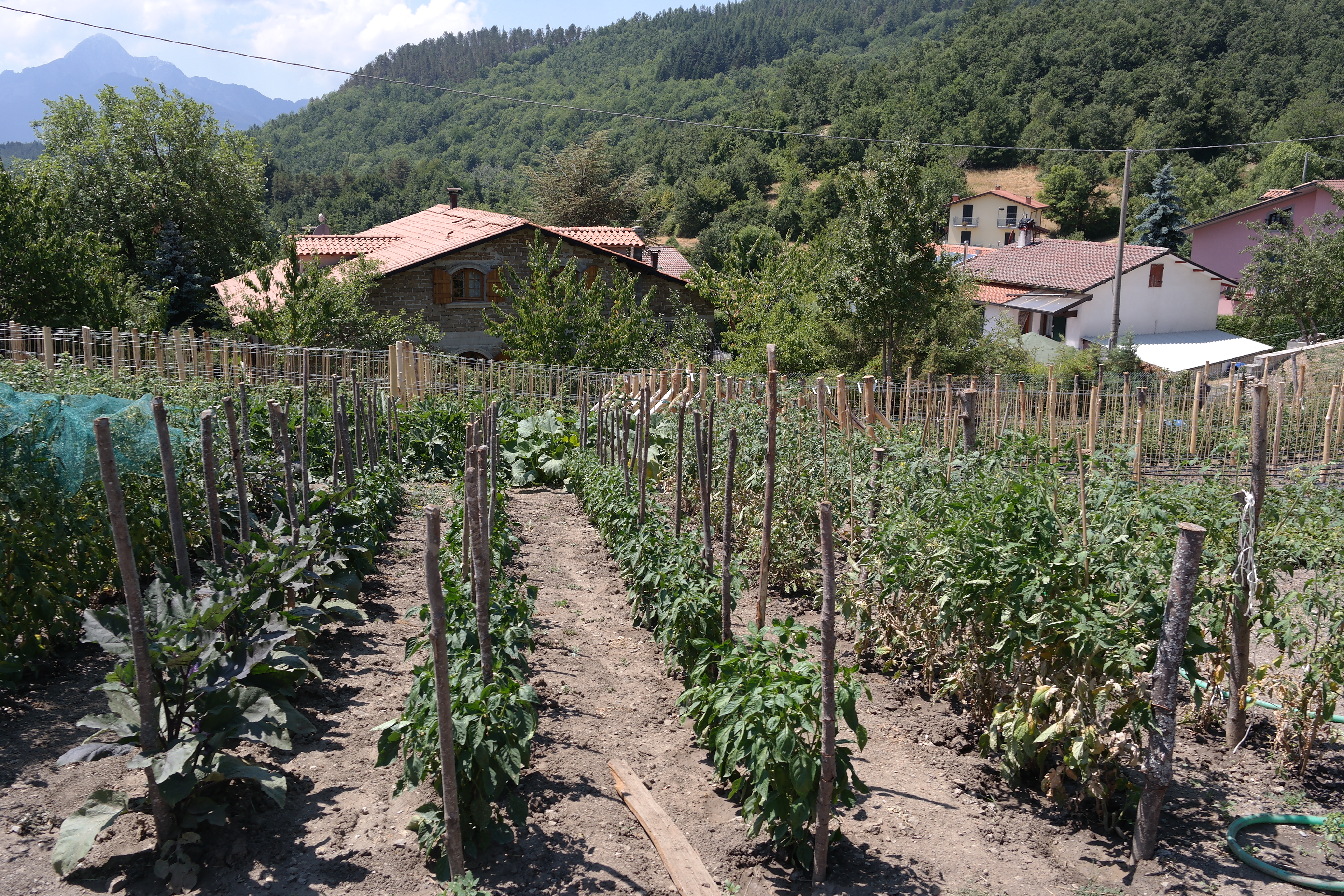
Garfagnana, Italy – picture by Jordan Treakle

by Jordan Treakle

My path to WUR’s Rural Sociology Group (RSO) differed from most of my fellow Masters students when I first arrived to Wageningen in August 2015. As a second-year student in the International Masters in Rural Development (IMRD) programme[1], I had spent the first year of my programme nomadically exploring the academic halls of the University of Ghent (Belgium), Humboldt University (Germany), and the University of Pisa (Italy) with my 27 fellow IMRDers. This unique and fast paced academic tour of Europe gave me a range of academic lens on agricultural economies and cooperative development in food systems that were enriching and informative. But these perspectives generally had not touched on the complex geographies of power and agency that I found most compelling. Luckily WUR’s small but worldly campus, with all of its contentious influences of corporate agribusiness research and rebellious social science scholarship, offered a critical forum to both intellectually digest the lessons of the other academic institutions I had visited during the first year of my programme, as well as dive into rural sociological concepts that reconfigured my relationship to place and later guided young career in farmer advocacy and agricultural policy. Continue reading →

75th Anniversary: 20) Boerengroep

Boerenprotest tegen melkprijs- ongedateerd, archief Boerengroep

Het is al weer 50 jaar geleden dat de Boerengroep[1] werd opgericht in een roerige tijd van grootschalige boerenprotesten. Een Europese demonstratie van boeren in Brussel op 23 maart 1971 liep uit op een confrontatie met de politie. Er gingen tientallen auto’s in vlammen opgingen en één boer vond de dood (klik op deze link voor een nieuwsverslag over deze betoging uit 1971)[2]. De demonstratie maakte duidelijk dat er onder boeren en boerinnen grote ontevredenheid was over het gevoerde Europese landbouwbeleid. Continue reading →