Cola-chicken and slaughtherhouse meat

In this 6th period of the academic year, I run a second course on Food Culture with similar topics as the course in February but with other teaching methods. The group is smaller, the period is longer and we can thus engage with the literature in a different way. One of the assignments in the course is the Food Assignment, where we have twice a lunch together based on brought food by half of the student group. A few weeks ago we had the first lunch and I was surprised how interesting it turned out in terms of food culture in practice.


source:travelpod blog

One of the Chinese students came with a dish he claimed as common and even widespread made in China, which has also very strong regional cuisines. He presented chicken cooked in cola. Lots of us present were first unclear if he really meant, cola, the soft drink. Indeed, this is what he meant and we could clearly taste the cola in the chicken meat. When searching the internet I found numerous examples of chicken-cola recipes, such as this one. 

Our ignorance and thus astonishment about this dish, just turned into the next astonishment when the type of meat was discussed. This student used chicken drumsticks whereas he actually needed chicken wings. But he hadn’t been able to find these in the supermarket. The Vietnamese student replied that she always bought meat at the nearby slaughterhouse. Again, eyes widened, especially among the Dutch students. Was she referring to the butcher or indeed meaning the slaughterhouse?  After asserting there was no Babylonian confusion of tongues, we were curious as to where then, this slaughterhouse is located. It turned out to be a small slaughterhouse in Opheusden within 15 kilometers from Wageningen, where it was possible to buy specific qualities and cuts of meat if sufficient quantity was bought. Hence, the Vietnamese students organise a collective order every now and then. I had no idea.

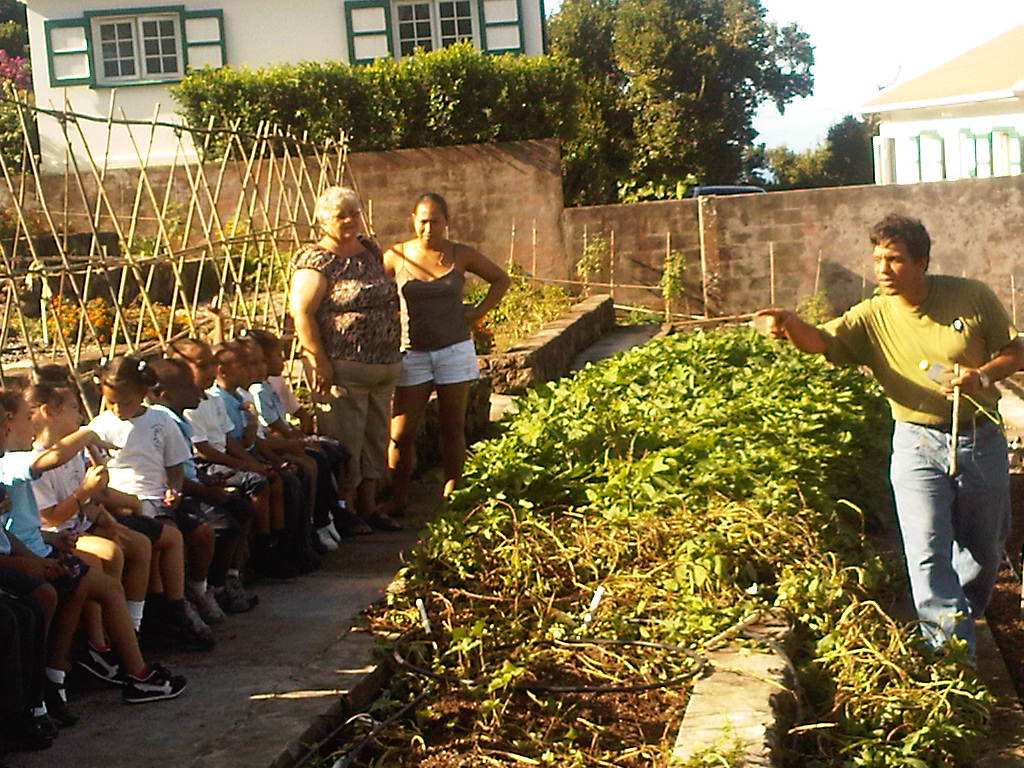
Students interested in food crisis and urban agriculture

Over a potluck diner organised by Boerengroep and Otherwise, yesterday, we evaluated the courses that we ran together this academic year. The course Food Farmers and Forks in November/December 2011 and the course Grassroots Science, from Februari until June this year. The courses were designed to give students the possibility to follow the evening lecture series as a course for 3 credits with additional mandatory literature and an essay assignment as exam. In both cases, initially around 30 students subscribed to the course, but not all students were able to finalise the course with the exam. It nevertheless gave both student organisations a steady audience of at least 30 students. However, the lectures were open just for anyone to join and in various cases there were over a hundred people participating. From the high numbers of participants and the positive feedback so far, we concluded that their evening lectures hit a nerve or a latent demand from students across study programs in this university to engage in critical thoughts on food issues.

The biggest hits were those lectures that had ‘food crisis’ and ‘urban agriculture’ in their title. Not to suggest ‘problem’ and ‘solution’ of course. Even though urban agriculture is unmistakenly a trend showing our re-engagement with food, we need more fundamental change in addition to some production in cities or more home grown activities by consumers in order to move towards a more sustainable and just food system. It seems that Dutch supermarkets pressured by NGO’s on animal welfare are finally beginning to catch up with wider societial trends and some leading examples in the food industry.

However, there is a long way to go. Both lecture series (in fall and spring) touched upon various structural inequalities and injustices such as around water rights and access, around seed sovereignity, the origin of our food, and the commodification of knowledge by vested interests (including of course universities) to name just a few. Both Boerengroep and Otherwise are dedicated to bringing food for thought for students who want to broaden their horizon.

They did a great job and are looking forward to organise more next year. If you have any suggestions for topics that you would like to know more about within the realm of sustainable food systems, please send an email to st.boerengroep@wur.nl

Thesis assignment commissioned by Foundation Social Workplace Saba (FSWS) on Food Sovereignty in Saba

The assignment is a participatory scenario development on the different possibilities to achieve a local food supply at Saba. Saba is a Caribbean island and the smallest special municipality of the Netherlands. At the moment most food is imported which makes food expensive for the inhabitants of Saba. At the same time agriculture fields aren’t being fully used. The assignment is to develop different scenarios for a local food market. Optional is a thesis assignment including an internship.
Wageningen UR Science Shop accepted the assignment of FSWS. The research will make you familiar with ‘Participatory Scenario Development’ and is a chance to achieve work experience in the field of the Science Shop and Regional Food Supply. The research will start in September.
Are you interested? Please contact project leader Margriet Goris (cocreation@live.nl or 06-28109539).

Traditional foods at IP in Romania (7) Student reflection

Four previous blogs reported on the Intensive Program on Traditional Foods in Romania which took place during the first weeks of February. Students who participated were asked to reflect on their experiences.

Written by Rineke Boonen.

Saturday the 28th of January the time was come. Four students from Wageningen University replaced Wageneningen for two weeks Cluj-Napoca in Romania. We went to the cold Romania (-20C!) to take part at the Intensive Programme (IP) with the subject:”Microbes and traditional Foods: Competitors or allies”. Continue reading

Oproep Onderzoeksstage “Smaak van het varken”

Gezocht: Studenten die in de periode mei-juni-juli een onderzoek willen uitvoeren naar aantoonbare verschillen in smaak en smaakbeleving tussen verschillend gevoerde varkens van Piggy’s palace in Bathmen.

Het Nieuwe Veehouden van Piggy’s Palace

De familie Stegink uit Bathmen is eigenaar en initiatiefnemer van het Piggy’s Palace concept. De familie bestaat uit Erik, Paula , Bart, Tim, Appie en Hennie Stegink. Appie en Hennie Stegink (ouders van Erik) zijn al in de jaren ’60 begonnen met het varkenshouderijbedrijf. In het project “het nieuwe veehouden” heeft Erik nu een bedrijfsconcept ontwikkeld, waarmee hij als varkensbedrijf duurzaam de toekomst in wil gaan.

Continue reading