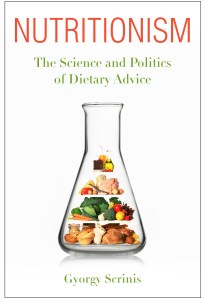
Everyone is welcome to an open lecture by Dr. Gyorgy Scrinis.
Monday June 29, 2015
12:30 – 13:30 Room C71 (Leeuwenborch) Bring your lunch
The world’s largest food and beverage manufacturing corporations (i.e. Big Food) have responded to recent health concerns associated with their processed foods by developing and marketing a range of ‘healthy’ or ‘healthier’ products. In this lecture, Dr Gyorgy Scrinis identifies three nutritional strategies that define these corporations’ nutritional engineering and marketing strategies:
the micronutrient fortification of foods to address nutrient deficiencies, particularly targeted at developing countries;
the reformulation of products to reduce harmful food components; and
the ‘functionalisation’ of foods marketed as providing optimal nutrition through addition of functional nutrients.
While urban agriculture is often used as a tool for increasing social cohesion in neighbourhoods, Esther Veen believes that it does not always lead to better relationships between residents. This is the subject of her doctoral thesis, which she successfully defended at Wageningen University on Monday 15 June 2015.
For her doctoral research, Esther Veen observed various community gardens where people from the same neighbourhood came together. She noted that not everyone participates in these gardens and how there is a tendency for groups to form.
“It is often assumed that community gardens benefit the neighbourhood, but the gardens are also a ‘real world’ in which issues arise,” Veen explains. “Municipalities, initiators of urban agriculture projects and other stakeholders should adjust their often high expectations. A neighbourhood community garden does not break through existing social structures just like that, and it is hard to bring people from different socio-economic backgrounds into contact with each other.” Veen’s research does show that neighbourhood community gardens allow people to get to know each other better and ask each other for help more easily.
Interchangeable conversations
In addition to studying neighbourhood community gardens, Veen also observed community gardens where residents are mainly interested in growing fruits and vegetables but do not necessarily come from the same area. It showed that people like chatting to each other in a community garden, but that these contacts are easily exchangeable for conversations with others. Moreover, these chats rarely lead to contacts or friendships outside the community garden.
Not against ‘the system’
Scientific literature often assumes that people who actively use community gardens have a certain resistance against the current food system, and that for them the community garden functions as an alternative food network. Veen’s studies showed that these assumptions were erroneous in the community gardens she researched. People mainly like to garden because they enjoy the act of gardening, not because they want to change the world or oppose the conventional food system. Veen: “Food from neighbourhood community gardens may fit into a lifestyle in which organic or local products play a major role for some people, but this is a personal consideration to them. They don’t see themselves as part of an alternative food network.”
Participative observation
By means of interviews and surveys, Veen studied seven community gardens in Almere (two), Amsterdam, Assen, Leeuwarden, Rotterdam and Zutphen. She also observed four of the seven community gardens via ‘participative observation’ – taking part and helping in activities organised by the community gardens, such as an Easter brunch and a harvest market. “This method allowed me to experience personally what it’s like in the community garden,” she says. “Interviewing people helped me learn much more about the social relationships that develop.”
Is culture truly a ‘fourth’ pillar of sustainability alongside ecology, society and economy? Or is it more central, more fundamental, more essential? How does culture act as a catalyst for ecological sustainability, human well-being and economic viability? What would our futures look like if sustainability was embedded within culture in all of its multiple dimensions, including different worldviews and values, ways of life, and other forms of cultural expression? A cultural transition that embeds sustainability in the cultural understandings and daily practices of society has the power to shift humanity’s currently unsustainable trajectory.
Culture plays many roles in (un)sustainability, but the scientific, policy-making and societal spheres have lacked understanding of the essence of culture in sustainability. During a four-year period (2011-2015) European research network Investigating Cultural Sustainability (www.culturalsustainability.eu) has sought out state of the art and radical research across Europe and beyond. The network has highlighted this research in order to provide researchers and policymakers with instruments for integrating culture as a key element of sustainable development.
The main results of the work are:
• A final report: “Culture in, for and as Sustainable Development” summarizing the conclusions of the work and introducing three roles of culture in sustainable development: www.culturalsustainability.eu/outputs/conclusions.pdf
• a new book series, Routledge Studies in Culture and Sustainability and its first three volumes draw directly from the Action’s work, focusing on culture and sustainability in European cities, heritage and regional development: http://www.routledgementalhealth.com/books/series/RSCSD/
• an international transdisciplinary conference Culture(s) in Sustainable Futures: theories, policies, practices in Helsinki 6-8 May, 2015 at which the results of the Action were discussed by almost 300 scholars and practitioners. On the website you can find an overview of the sessions and streamed registrations of the plenary sessions, student’ reflections, the list of abstracts and the list of participants: http://www.culturalsustainability.eu/helsinki2015/programme. Lummina Horlings of the RSO group organised a session on Values in Place and gave a presentation during the plenary session on Culture in Sustainable Futures (starting at minute 36): https://www.youtube.com/watch?v=jItM_Hd_SAg&feature=youtu.be
Altogether 100 researchers from 25 countries within the EU with additional participants from Israel, Albania, New Zealand, and Australia contributed to the work in different ways. The network incorporated a wide variety of disciplines and fields of research, ranging from cultural, humanistic and social sciences, through political and natural sciences, to planning. The profiles and research interests of the members are introduced in the publication, Investigating Cultural Sustainability: Experts and Multidisciplinary Approaches: www.culturalsustainability.eu. The work was co-ordinated by the University of Jyväskylä and supported by the European COST Association (Cooperation in Science and Technology), which is funded within the European Commission’s research programme Horizon 2020.
The challenges ahead to feed 9 billion people by 2050 are well articulated (and contested), but innovative solutions remain elusive and time is of the essence. One possible reason that solutions are slow to surface is the generally homogenous pool of ideas from which to draw inspiration: neoliberal and patriarchal ideologies continue to dominate the discourse on global solutions. A platform for diverse perspectives on these problems and for proposals of solutions, can identify potential solution pathways that are key to operationalizing timely strategies for a just and sustainable food future.
In this Special Issue of Solutions, young thinkers (under 40 years of age) from around the globe are invited to propose innovative solutions for a food secure world. The Special Issue will provide a platform for emerging scholars to contribute to solutions…
There are just a few spots left in the new RSO Capita Selecta course on Global Food Security Governance: Linking Theory and Practice.
This Capita Selecta course will examine global food security governance from theory to practice. Making use of the key themes for research on food security as identified by the Expo 2015 EU Scientific Steering Committee, this course will give students the opportunity to:
Explore the complexity of global food security governance;
Focus on a key challenge that threatens global food security;
Attend two international events (i.e., the 42nd Session of the Committee on World Food Security (Rome) and Expo 2015 (Milan)) to see, first hand, how global food security governance plays out.
More information about the course can be found here: https://www.facebook.com/groups/FoodGovernance/
If you want to follow what we are doing but do not what to attend the course, you are most welcome to join the Facebook Group as well.
If you do not have facebook and want more details, email the logistics coordinator Wouter van den Hengel: wouter.vandenhengel@wur.nl

 Everyone is welcome to an open lecture by Dr. Gyorgy Scrinis.