Crisis and capitalism: A deep dive into the Black Sea Grain Initiative and the global politics of food

Joost Jongerden & Mark Vicol

The Ukraine grain deal and the resumption of food exports from Ukraine’s Black Sea ports has been accompanied by strong narratives heralding the global food security and humanitarian impacts. However, export data suggest that Western countries, the food industry, and Turkey, are among the main beneficiaries, and not those who are food insecure.

Black Sea Grain Initiative

On the back of the impacts of the pandemic on global food systems, the Russian invasion of Ukraine in February 2022 and subsequent ongoing conflict has raised fears of global food shortages and price rises. This is because of the prominent role of Ukraine in the global food system as a major exporter of food grains and oilseeds. Most of Ukraine’s food exports leave the country via the major Black Sea ports of Odesa, Chornomorsk, and Yuzhny/Pivdennyi. These ports, however, were forced to close in the early days of the invasion, cutting off Ukrainian grain and oilseed from the global market. Under the narrative of humanitarian and global food security concerns, the UN, Russia, Turkey and Ukraine have launched the Black Sea Grain Initiative (BSGI). The Initiative is based on a UN-proposed agreement signed in July 2022 between Russia and Ukraine, brokered by Turkey, to enable the safe resumption of Ukrainian grain exports through the Black Sea.

To authorize, coordinate and monitor the export of food commodities, a Joint Coordination Centre (JCC) of representatives of Turkey, the Russian Federation, Ukraine and the United Nations was established. It was also agreed upon that the JCC protects a route between the Ukrainian Ports and Turkey, where the ships are inspected, and provides vessel movement information. Under the agreement, cargo ships carrying Ukrainian grain are escorted by Ukrainian vessels to international waters, proceeding on to the Bosphorous strait for inspection by Turkish authorities. The first shipment of grain under the Initiative left Ukraine on 1st August 2022 to much international fanfare. In recent days, the Initiative has been back in the news, with Russia announcing its intention to withdraw from the agreement on 29th October 2022, only to wind back that threat, under pressure from Turkey and other international actors, a couple of days later.

While the geopolitical intrigue around the agreement has dominated the news, what is interesting for us as critical food system scholars is the discourse regarding food, hunger and farming that has accompanied the Black Sea Grain Initiative. To our mind, this has involved the deepening/reproduction of dominant narratives of the global food system, including that of global food crisis and the appropriate responses that should follow. Taking cues from ideas around disaster capitalism and food regime theory, in this blog post we aim to disentangle the complex narratives of crisis, food security, conflict and trade that have accompanied the Black Sea Grain Initiative. To do this, we take a deep dive into the UN’s own data that documents the cargo, tonnage and port of destination of all grain ships that have left Ukrainian ports under the Initiative. We compare the picture that this data paints to the narratives about food systems and food security promoted by proponents of the Initiative, and consider what the disjuncture between data and narrative means for the broader politics of our food system. It seems to us that dominant food system actors are using the narrative of crisis as a pretext to double down on the unjust governing structures of global food that give rise to food crises in the first place. We should instead use this moment to not only advocate for an end to violent conflict in Ukraine and justice for Ukrainian farmers, but to also reimagine a just and emancipatory future food system that would radically reshape how we think about food, hunger, conflict and trade.

Unpacking food security narratives

The Black Sea Grain Initiative and the resumption of food exports from Ukraine’s Black Sea ports has been accompanied by strong narratives heralding the global food security and humanitarian impacts. In particular, a strong narrative has emerged that the resumption of Ukrainian grain exports has been vital to alleviating hunger in the world’s poorest regions in a time of food crisis. The Initiative has likewise been framed as a major victory for the UN and as ”a beacon of hope” and an “unprecedented agreement” and that the agreement would “stabilize spiraling” food prices and “stave off famine”. We do not challenge the importance of international efforts to eliminate hunger and food insecurity, and we are strong advocates for supporting Ukrainian farmers. However, we also believe it is important to scrutinize the ways in which such efforts are discursively represented, the links between discourse and actual events and movement of food crops on the ground, and the other political work regarding our global food system that dominant discourses might perform. Here, we identify three prominent narratives presented in the media and via international organizations and subject them to further scrutiny. These narratives each make claims, often presented unproblematically, about different causal mechanisms between Ukrainian grain exports and efforts to alleviate global food insecurity: first, the impact the BSGI will have on the supply of food aid; second, the impact the BSGI will have on calming global food prices; and third, the composition of exports realized under the BSGI as being about ensuring the circulation of food (and in particular, wheat) in contrast to the circulation of commodities.        

Food Security and WFP

Perhaps the most emotive and compelling narrative put forward about the BSGI is that the resumption of grain exports from Ukraine is critical to addressing famine and acute food insecurity amongst vulnerable populations in ‘food deficit’ countries, particularly in North Africa, Asia and the Middle East. In other words, the BSGI is presented as crucial for ‘feeding the world’ in a time of food crisis. At the center of this narrative is the World Food Programme (WFP) – the key international actor in emergency famine relief, food aid and food security programmes more generally. In August, the Executive Director of the WFP said that “getting the Black Sea Ports open is the single most important thing we can do right now to help the world’s hungry”. This narrative rests on the fact that Ukraine is an important source country for WFP food aid procurement, particularly wheat. In 2020, for example, the WFP procured 424,000 tons of grain from Ukraine, representing 13% of total WFP procurement that year. So, no doubt Ukraine grain is important to WFP operations. Yet, the BSGI is represented as being overwhelmingly about addressing the food crisis, famine and global food insecurity. Much attention has been given in the media to the role of the WFP in the Initiative, with the impression that a majority of the BSGI grain is really going to those ‘most in need’. UN press releases have focused on the WFP vessels leaving Ukrainian ports, and this narrative has been reinforced in the media. For example, CNN reported that on 31 October, 2022, Turkish President Recep Tayyip Erdogan said of the BSGI that “one third of the world’s wheat is produced by Russia and Ukraine. You are the closest witnesses of our efforts to deliver this wheat to the countries facing the threat of famine”. In the same article, which reported Russia’s erstwhile threat to withdraw from the agreement, the director of USAID, Samantha Power, was quoted as saying that “any attempt to undermine the agreement is an attack on hungry families around the world whose lives and livelihoods are dependent on this initiative”. In August, another CNN article quoted the US Embassy in Kyiv that “the world will be watching for continued implementation of this agreement to feed people around the world with millions of tons of trapped Ukrainian grain”.

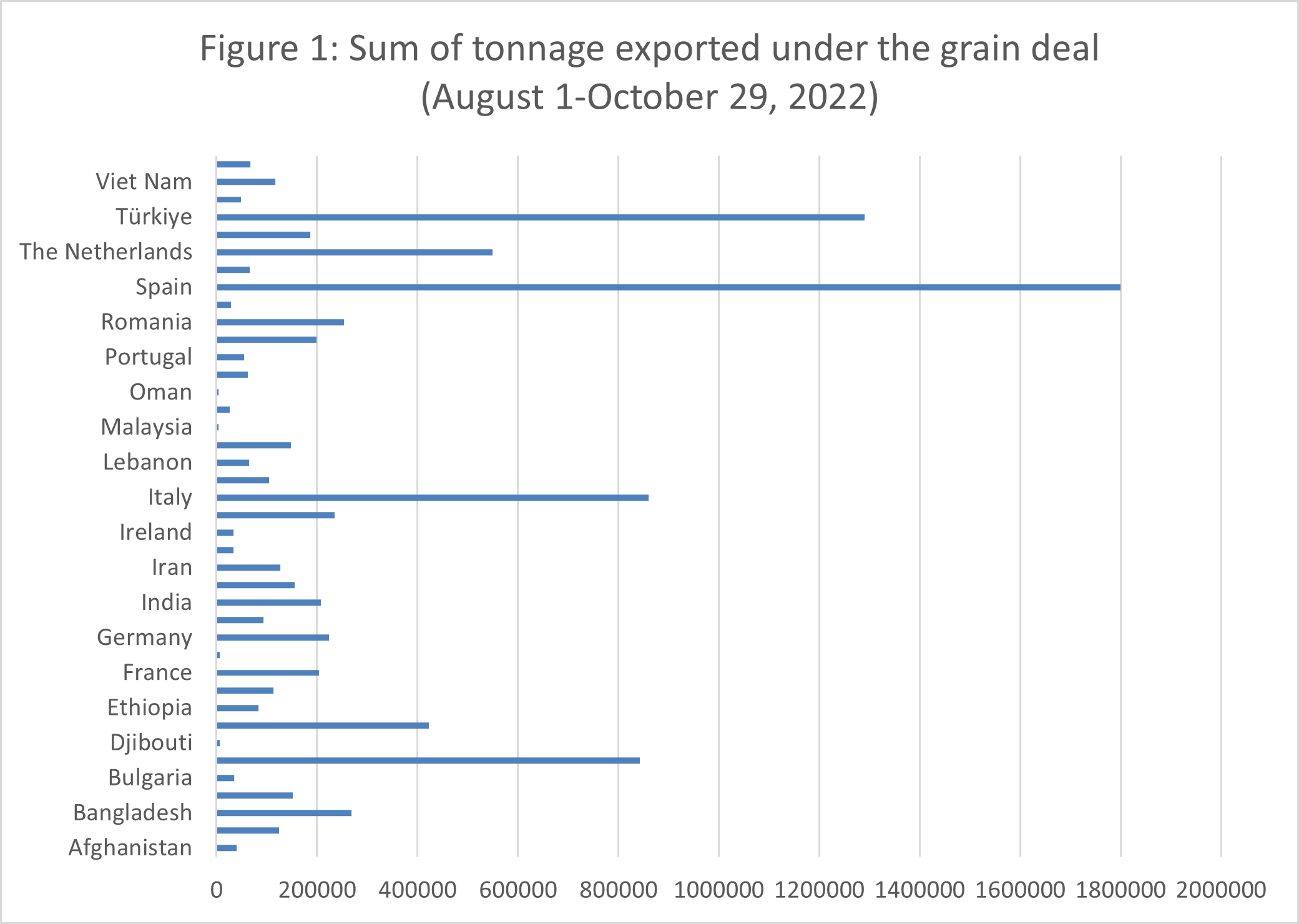
Yet the UN’s own data on the export of grain under the BSGI paints a different picture. The inspection check-list includes lading and cargo plan. On August 1, 2022 the first vessel left the port in Odessa. The ship carried 26,527 tons of corn for a number of countries, which were not specified by name. The ships that followed brought corn to Ireland, Italy, Turkey and Iran respectively. Next came shipments of sunflower meal and sunflower oil, soya beans and then wheat. On August 16, 2022, more than two weeks after the food commodity trade under the flag of Black Sea Grain Initiative was resumed, and following 19 vessels bound for China, Iran, Ireland, Italy, South Korea, and Turkey, the first vessel chartered by the World Food Program (WFP) left a port in the Ukraine. It carried wheat as part of the WFP’s “drought response in the Horn of Africa”. On August 30, a second chartered vessel left Ukraine with wheat for Yemen, after being milled in the flour in Turkey. On September 17, a third and fourth vessel brought wheat to Ethiopia and Djibouti respectively for humanitarian aid in the Horn of Africa. On September 22 and October 7 wheat vessels left with the destination Afghanistan and Somalia. This makes 6 shipments out of a total of 408. The total amount of BSGI wheat purchased by WFP was 150,800 tons. On a total of 2,674,156 tons of wheat leaving the Ukrainian ports, this is less than 5% of the total amount of wheat shipped. Up to now, in fact, 61% of the grain exported under the BSGI has gone to European countries, followed by 26% to Asian countries (mostly to China), and only 13% to African countries. Figure 1 breaks down the total grain exports per destination country, showing that Spain, Turkey, Italy, China, and the Netherlands have received the most grain shipments under the Initiative. When we break down these numbers per commodity, Spain is the main beneficiary of corn, and Turkey the main beneficiary of wheat. As a broker and protector of the grain deal, Turkey has been given priority in the export of wheat from Ukraine. Turkey’s Minister of Agriculture claimed that the country receives a 25% discount on wheat from Ukraine, yet this has been denied by the United Nations. 
Food Security and Prices

The claims that the Black Sea Grain Initiative will alleviate global hunger is not only based on the supposed direct shipment of grain to those who are food insecure. Various UN institutions have suggested a direct link between the Black Sea Grain Initiative, lower food prices, and food security, where lower world market prices would improve food access for food insecure populations. The UNCTAD may have been most explicit about this relation between prices and hunger, stating that “[t]he Initiative has helped to stabilize and subsequently lower global food prices, and move precious grain from one of the world’s breadbaskets to the tables of those in need.” (UNCTAD, 2022: 3). In a news update on the initiative, explaining its “importance for the world”, the United Nations declared “all of the grain coming out of the Ukrainian ports thanks to the Initiative benefits people in need, as it helps to calm markets, and limit food price inflation” (emphasis in the original). Others have warned that a collapse of the agreement made under the Black Sea Grain Initiative would be “an attack on hungry families around the world whose lives and livelihoods are dependent on this initiative,” according to an USAID Administrator.

Yet, precaution is required when assessing the relation between the Black Sea Grain Initiative and food prices. First, the UN and others seem to deploy language to actively avoid making any claims about causality between the Black Sea Grain Initiative and global food prices. Yet by putting the two together a causal link is implied. Second, others have questioned this relation explicitly. The International Crisis Group stated that the effect of the agreement under the Black Sea Grain Initiative on global food prices is expected to be limited. Third, critical food system scholars have long argued that price volatility in general is linked to the financialization (Clapp & Helleiner, 2012) and speculative trading of food, particularly in futures markets (Ghosh, Heintz, & Pollin, 2012). Crises provide a fruitful context for food commodity speculation (Baines, 2017). Fourth, attention should be given to other voices and visions of how to solve world hunger outside of the same tired market and trade-based solutions proposed by dominant narratives. For example the need for a prioritization of ”actions boosting production of locally grown nutritious food and making agriculture more resilient” and strategies of local farmers to address, for example, wheat shortages. Research from Wageningen Economic Research (WEcR) also argues that when wheat prices rise, local farmers often respond byproducing locally appropriate alternatives, such as cassava. These are the types of locally grounded responses that are often sidelined in the dominant global discourse on food systems and food security.

Food Security and Corn

While the Black Sea Grain Initiative has been heralded for moving grain from a cradle of wheat production to the tables of those who are food insecure (UNCTAD, 2022: 3), corn has in fact been the main crop exported (see figure 2). Between August 1 and October 29, a total of 4,001,897 tons of corn left the ports in the Ukraine compared to 2,674,156,695 tons of wheat, approximately a ratio of 3:2. Spain has been the main destination of Ukraine’s corn exports under the Initiative, receiving 833,356 tons of corn, or 30% of the total, up to now. Corn imported by Spain is mainly used as animal feed and feedstock for bioethanol production, the latter a controversial use of a food crop.

Zooming in on the Netherlands, 355,043 tons of corn, or about 9% of the total amount of corn exported in the August-October period, was sent to the Netherlands. Though no information is available for the corn specifically imported from the Ukraine, 65% of all the corn imported by the Netherlands is processed into animal feed and 15% of the corn is processed into biofuel. The remaining 20% is for human consumption. The possibility that this corn has been used to alleviate hunger in food insecure regions is low. Though, again, no statistics are available for corn in particular, and also not for corn from the Ukraine, ninety percent of Dutch cereal exports go to other EU countries (Jukema, Ramaekers, & (Red.), 2021: 98). The dominance of corn exports in the BSGI problematizes the dominant humanitarian discourse around the Initiative. Instead, the BSGI seems much more about reinforcing and shoring up the global industrial food value chains that are a hallmark of our current corporate industrial food system. Again, our goal here is not to challenge the necessity of supporting Ukrainian farmers or reopening Ukrainian ports, but instead to also encourage a deeper reflection of the broader food system politics that are at play.

Conclusions

The discourse around the Black Sea Grain Initiative suggests that the deal contributes to global food security. However, data provided by the Joint Coordination Center of the Black Sea Grain Initiative suggests otherwise. The commodities exported and the destination of these exports suggest western countries, the food industry, and Turkey are the main beneficiaries, and not those who are food insecure. Yet more research is needed, and the authors of this blog are happy to supervise WUR MSc thesis students interested in researching the relation between the Black Sea Grain Initiative or similar responses to food crisis, the restoration of international (corporate) value chains, and food (in)security, and the implications for the broader politics of our current food system and alternative futures.

Bibliography

Baines, J. (2017). Accumulating through food crisis? Farmers, commodity traders and the distributional politics of financialization. Review of International Political Economy, 24(3), 497-537. doi:10.1080/09692290.2017.1304434

Clapp, J., & Helleiner, E. (2012). Troubled futures? The global food crisis and the politics of agricultural derivatives regulation. Review of International Political Economy, 19(2), 181-207. doi:10.1080/09692290.2010.514528

Ghosh, J., Heintz, J., & Pollin, R. (2012). Speculation on Commodities Futures Markets and Destabilization of Global Food Prices: Exploring the Connections. International Journal of Health Services, 42(3), 465-483. doi:10.2190/HS.42.3.f

Jukema, G. D., Ramaekers, P., & (Red.), P. B. (2021). De Nederlandse agrarische sector in internationaal verband Wageningen: Wageningen Economic Research en Centraal Bureau voor de Statistiek.

UNCTAD. (2022). A Trade of Hope: The role of the Black Grain Grain Initiative in Bringing Ukraine Grain to the World. Geneva: United Nations Conference on Trade and Development.

The experiences of Dutch livestock owners with wolf damage compensation schemes – MSc Research practice by Jasmijn Keuning

‘The experiences of Dutch livestock owners with wolf damage compensation schemes: Analyzing compensation payments through a lens of environmental justice‘, is a MSc Research practice report by Jasmijn Keuning (jasmijn.keuning@wur.nl), MSc student International Development and Forest and Nature Conservation of Wageningen University.

A MSc student interested in an academic career can opt for a research practice in stead of an regular internship and thus gain relevant work experience at an academic level. Below the Abstract. The report also includes a Summary in both English and Dutch.

Abstract
After 140 years of absence, the Netherlands is once again housing one of Europe its largest predators, the wolf. This has caused human-wolf conflict to reemerge, of which the main cause is the depredation on livestock. To mitigate this conflict between farmers and wolves, the Dutch government has implemented a compensation scheme. Compensation schemes are one of the most common ways through which policy-makers try to mitigate human-wildlife conflict, but remain controversial. This research aims to create a deeper understanding of the perspectives, experiences and attitudes of Dutch farmers towards wolf damage compensation payments and thereby, wolf management more broadly by studying this tool through the Environmental Justice framework. A case study has been adopted on the South-Eastern provinces of the Netherlands, for which 15 semi-structured interviews have been conducted with the organization handling compensation payments, farmers organizations, an ecologist and livestock owners from this region. The findings suggest that the arrival of the wolf to the Netherlands has created new insecurities for farmers’ livelihoods, which are caused by wolf presence itself and the system that has been set up to manage this presence and its impact. By analyzing farmers’ experiences with compensation payments in a framework of environmental justice, this research demonstrates that only focusing on compensation is insufficient to create a sense of environmental justice among farmers, and thereby mitigate human-wolf conflict, since compensation payments alone are unable to address all challenges that cause insecurity among farmers. This study concludes that while compensation payments continue to be an important focus point of wolf policy, it can be understood as only a last step in building a supportive base for wolf presence in the Netherlands. Instead, more emphasis should be given to improvements at the beginning of the process, before damage has occurred.

Key words: human-wildlife conflict, compensation payments, environmental justice, livestock depredation, livestock owners.

75th Anniversary: 60) Research at the Rural Sociology Group: Engaging urban food initiatives in planning: Urban food planning in a complex, pluralistic society

Paul de Graaf

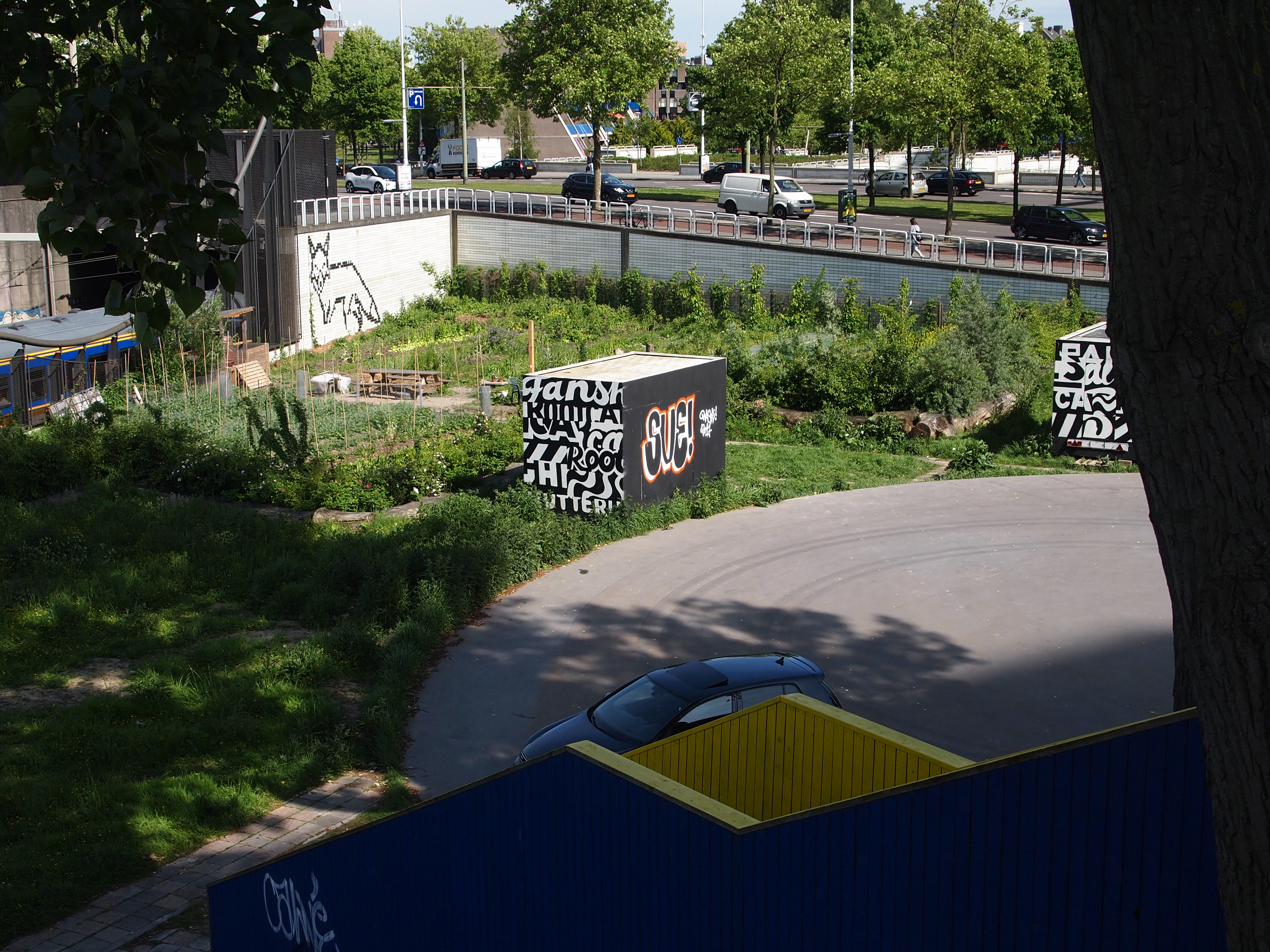
Examining urban agriculture projects in Rotterdam between 2008 and 2018, my research looks at the practice of urban food planning, its strategies, the actors involved and their roles and relations. Central to the research is the observation that in Western European society today, the increased participation of civic initiatives confronts planning with challenges related to governance, decision-making and representation. Sustainable urban food planning can be seen as a laboratory for planning concepts that deal with these challenges.

The purpose of my research is to investigate which conceptualisations of planning are relevant when 1) planning in and for a pluralistic, participative society and 2) planning for sustainable goals related to an unknown future. As there is no consensus in the planning field on what planning is or what it should do, conceptualisations of planning can range widely, from systems planning to advocacy planning and from collaborative to complexity planning. I work with a primary hypothesis that these concepts of planning are complementary rather than mutually exclusive and that in a complex, pluralistic society, different concepts of planning can be relevant in different circumstances.

The main research questions are as follows: What concepts of planning are effective in spatial planning for a common sustainable future when including multiple actors and stakeholders with a variety of frames and perspectives on sustainable food systems? How are different actors, their respective roles and action perspectives included in the decision-making process? What is the role of the planning practitioner in this, and what is the role of governmental planning at different levels?

The research is informed by my own position as a practitioner. Undertaking a professional PhD as an external researcher at RSO allows me to reflect upon and put in perspective my personal experiences in the field of spatial planning and design. Fifteen years of experience with promoting, researching, designing, planning and practicing urban food production in Rotterdam left me (and colleagues from the field) with many ideas and hypotheses on what municipal planners and urban food initiatives should and should not do when planning urban food production. Can municipal planning include the initiatives of societal actors (like myself and fellow urban farmers and activists) in their planning agenda? Would it be possible to do this in a way that respects the diverse world views of these actors? And can societal actors themselves operate in a way that aligns them with governmental planning agendas without losing sight of their own goals?

OLYMPUS DIGITAL CAMERA

Civic urban food initiatives represent a diversity of approaches to what a sustainable food system should be and how planning can contribute, but planners at different government levels struggle to facilitate and include these initiatives and their diverse approaches in their planning efforts. This has become apparent in Rotterdam but is also exemplary of a more general gap between bottom-up societal initiatives and top-down governmental planning in the Netherlands. Through a study of the Rotterdam urban agriculture movement – and taking the role of participant-observer – I examine this gap and address the questions above.

The case study of Rotterdam considers projects in which urban food production has been realised and focuses on the people involved in the planning process and their agendas and strategies, with a special emphasis on spatial planning. To avoid any bias due to my personal involvement in the object of study, I use a range of sources, including grey literature and interviews with different planners and societal actors. In terms of method, I combine this sociological approach with plan analyses (of the projects) derived from the discipline of urban planning. In combining different sources and methods from different disciplines, I try to incorporate the views of different actors and gain a more complete picture of what has happened during these past years and what lessons can be learnt for planners and urban food initiatives..

While the PhD is designed as a retrospective, transdisciplinary case study, it inevitably involves and interacts with my own practice as a designer/planner and, more recently, urban food forester. Interviewing planners about their ideas and influences and writing down their accounts of events has already provided insights that are informing my current work in urban agriculture and food forestry  (including advocacy, design and realisation). Although this can sometimes be problematic, the meeting of practical experience with academic and applied research is developing a relevant knowledge base. A professional PhD makes knowledge from practice available to academic research and offers a place of reflection to practitioners.

75th Anniversary: 48) Research at Rural Sociology: Urban gardens as alternative economic spaces  

Lucie Sovová

My doctoral research explored the role of urban gardens in people’s food provisioning practices, framing them as spaces of diverse food economies operating largely outside the market. In order to understand how gardens work as food sources, I observed the food provisioning practices of 27 households involved in gardening in Brno, Czechia, throughout a period of one year.

The research contributes to the broader discussion about more sustainable ways of food production and consumption, alternative food networks and urban agriculture. Research on sustainable food systems is often biased towards initiatives embedded in market relationships (Rosol 2020). Literature on urban gardening in global North mostly focuses on a specific kind of this practice (community gardens), and it discusses the multiple non-productive functions of these spaces, such as community building (Veen et al. 2016), place-making (Koopmans et al. 2017) or the improvement of urban environment (Timpe et al. 2016). Another stream of literature presents urban gardens as activist spaces questioning the status quo of neoliberal urbanism (Tornaghi 2017, McClintock 2013). This literature recognizes the potential of urban gardens to contribute to localized and sustainable food provisioning (Kosnik 2018). Nonetheless, actual data on food self-provisioning (FSP) in urban areas of the global North remains insufficient (Taylor and Lovell 2013).

Furthermore, some geographical areas seem to be excluded from the debate. FSP is wide spread in the post-socialist countries of Central and Eastern Europe (CEE): 50% inhabitants of the region grow some of their food, compared to 10% in Western European countries (Alber and Kohler 2008). Despite this potential, lessons from CEE are only recently appearing in the literature on urban gardening or alternative food networks. This discrepancy can be explained by an unequal geography of knowledge production, in which CEE rarely figures as a source of original knowledge (Jehlička 2021). In light of the failed experiment of state-socialism, CEE countries are often regarded as underdeveloped and in need of catching up with the West (Kuus 2004, Müller 2019). This transition discourse results in the framing of local informal economies (such as FSP or informal food sharing) as remnants of the past which will be eventually substituted by market economy (Alber and Kohler 2008, Acheson 2008). My research adds to more emancipatory works showing the relevance of these traditional practices for sustainable food provisioning (Jehlička et al 2020, Goszczyński et al., 2019, Mincyte 2012).

My theoretical approach is further inspired by the diverse economies framework (Gibson-Graham 2008) which points out that economic practices are not limited to capitalist markets and monetized transactions, and which calls for attention to alternative, nonmarket and informal economies. This approach is increasingly adapted in the study of more sustainable food provisioning, which recognizes the importance of economic arrangements fostering social justice and environmental wellbeing (Rosol 2020, Tornaghi 2017, Morrow 2019). It is also particularly pertinent for the post-socialist context, seemingly caught between the gloomy heritage of state socialism and the sweeping neoliberalization of the last three decades.

Recent representative surveys show that the share of Czechs involved in FSP remains steady at around 40% of the population, spread equally across income groups and educational levels (Smith and Jehlička 2013, Jehlička and Daněk 2017, Sovová et al 2021). Unpacking these statistics, my research assessed the role of FSP in terms of quantity of food produced as well as its position within broader food provisioning practices and the diverse economic arrangements they constitute. Inspired by the perspective of social metabolism (González de Molina and Toledo 2014, Burger Chakraborty et al. 2016), I used food logs to monitor the flows of fruits and vegetables entering and leaving respondent households. These flows were categorized based on the type of economic arrangements as non-market, alternative-market or market economies. Using conceptual borrowings from social practice theory (Reckwitz 2002, Shove et al. 2012), I further investigated the meanings and competences these material flows entailed.

The field work consisted of four rounds of data collection of one month, spread over the course of one year. During each round, respondents recorded fruits, and vegetables which they produced at their gardens or obtained from other sources. Next to the amount, type and source of food, they also kept track of the use of these foods, i.e. own consumption, preserving, sharing or other forms of distribution. The purpose of the multi-staged research design was to observe seasonal variations and to gradually build theory with the respondents’ participation, accompanying the quantitative accounts with a qualitative understanding of their food provisioning practices.

The results reveal complex interactions between gardens, other food sources, respondents’ eating habits and dietary preferences. FSP plays a central role in gardeners’ food provisioning practices. The gardens provide a significant amount of food, covering on average one third of fruits and vegetables consumed in gardeners’ households – results consistent with a national survey using self-reporting (Sovová et al 2021). In addition, respondents’ experience as producers shapes their food provisioning practices beyond FSP. Home-grown food is seen as the best in terms of taste, freshness and transparent origin. This creates a hierarchy of food sources, in which FSP and other nonmarket and semi-formal food provisioning practices (e.g. receiving home-grown foods from family and friends, foraging or buying directly from producers) are preferred over shopping for food in conventional venues. Alternative food networks typically associated with conscious consumerism (community supported agriculture, farmers’ markets, organic food shops) were marginal in respondents’ shopping practices. Instead, they provisioned food from a number of diverse channels spanning market and nonmarket relations, in which social relations merged with environmental considerations and subjective notions of food quality. The centrality of FSP in these practices also resulted in strong seasonal patterns in both food sources and diets.  

None of the respondents aimed to be fully self-sufficient, nor did they grow their own food in order to save money. Instead, they saw gardening first and foremost as a hobby. The link of this way of food provisioning to leisure, fulfilment, and, broadly speaking, gardeners’ identities, strengthened the position of FSP in gardeners’ food provisioning practices. Similarly, other informal and semi-formal food practices were often grounded in social relations, such as visiting family and acquaintances in the countryside. Gardeners’ food practices also contributed to fostering social relations, for instance when they shared home-grown food with others, a practice which was common for most respondent households. Indeed, FSP is a generous practice in which the joy of sharing and appreciation of home-grown food prevails over expectations of reciprocity or economic considerations, as also documented by Daněk and Jehlička (2017) or Pottinger (2018).

While practiced as a hobby, FSP is mobilized as a food provisioning practice through a number of specific competences. Using the conceptualizations of social practice theory, I interpret FSP as intersection of two sets of practices, those relating to the garden (‘gardening’), and those relating to the kitchen (‘food provisioning’). Based on both quantitative and qualitative data, I identified four different types of relations between gardening and food provisioning. Put simply, some respondents were keen gardeners but did not necessarily integrate their harvest into their diets. Others strived to eat plenty of fruits and vegetables but were not always successful in their gardening efforts. Gardens are multifunctional spaces which hold different meanings for different users. Using the gardens as food sources requires not only gardening and cooking skills, but also coordination and integration of both on a daily as well as seasonal basis.

My research shows that when thinking about sustainable food provisioning, scholars and practitioners need to look beyond market venues and beyond people’s roles as consumers. The search for future-proof urban food systems cannot be restricted to environmentally-minded affluent Westerners, but it needs to consider everyday practices already existing in diverse contexts. I have shown that there is a plethora of under-researched informal food practices whose potential for sustainable provisioning, diverse economic arrangements and mutually beneficial human–nature relations merits further investigation.

Sovová, L. (2020). Grow, share or buy? Understanding the diverse economies of urban gardeners. Wageningen University. https://doi.org/10.18174/519934

75th Anniversary: 47) Research at Rural Sociology:  Gender and rural development in Europe – once upon a time and now

Bettina Bock

Once upon a time.

It is almost 44 years since my first research project; it considered the position of women in non-academic positions at the University of Nijmegen. More studies into gender and professions followed; in academia and public service, as well as technical and assumedly masculine occupations such as woodwork and firefighters, and eventually farming.

Women farmers stole my heart – first in Italy and later in the Netherlands when working on my PhD on the role of women in rural development practice and policy. They were so creative and courageous, developing new business activities and conquering a position in a sector in desperate need of transition but often so stubbornly holding on to conventions. In this case, the conventional image and success formula of the male farmer running his farm as a modern business striving to increase production and growth, with the farmwife offering assistance. In the early 90s, some women stood up against these beliefs – men being the head of the farms and farming as regular businesses interested in increasing production and profit. There were women pioneers innovating agriculture by initiating a new model and paradigm of farm diversification and multifunctionality. They introduced new income-generating activities and created new markets with direct communication between producers and consumers. In doing so, these women farmers and their partners developed new knowledge and skills and adapted their agricultural production methods, with less monocultural and more environmentally friendly production methods. Hence, women significantly contributed to the continuity of farming financially through such new business activities, others by gaining off-farm income. Initially, the turn towards diversification and multifunctionality met a lot of criticism and suspicion by mainstream farmers and the farm union – this was not real farming anymore, they said. Or this meant the end of agriculture as a real business and profession. As a result, many women farmers downplayed their activities as hobbies or downplayed the importance of their money. In time, however, the success of these new businesses became evident, and multifunctional agriculture became formally recognised even by the farm unions.

In academia, the role of women in multifunctional farming was cherished in two ways: first as a proof of long due empowerment and recognition of the vital role of women in agriculture; second as one of the elements of the transition of farming, with multifunctionality, high-quality production and direct marketing as the way forward, and thirdly as proof of the sustainability of family farming. Studies into gender relations in agriculture confirmed the presence of more equal gender relations on farms engaged in diversified productions and novel production methods. The situation is quite different in most production-oriented farms that remained conventional also in terms of gender relations. The political interest in women farmers diminished over time, at least at the national level. The EU continued to call attention to the position of rural women, stressing their vulnerability and the importance of strengthening their position in farming and rural areas. However, gender agriculture and rural development did not figure prominently in public, political or academic debates for a long time – in Europe. In international development debates, this was quite different, and gender remained a prominent issue and target of policymakers, donors and academics. Women were presented as important actors, able to enhance production and warrant food security, yet needing support to overcome traditions and realise their potential. Maybe, the global South was again ahead of the North when it came to gender debates – as they were when research into gender and agriculture took place in Europe in the seventies.

Most recently, the interest in gender and rural development seems to be reawakening also in Europe. Looking into a recently published HORIZON, the EU expresses high hopes for women’s engagement in innovations. They expect women to ensure the future of agriculture and rural areas and significantly contribute to climate change mitigation and, hence, our future. It is interesting to see that women who figured in agricultural and rural policies so far, mainly as a vulnerable group, become suddenly framed as our saviours. However, as the EU calls for ways to boost women’s innovations, women are still expected to need a hand to realise their potential, with many hurdles arising from what we may best identify as institutionalised sexism.

What does that mean for academics like me who have fallen for these amazing women who experiment with new ideas, innovate new products and methods, and institutions? Should we worry about their instrumentalisation, as some warn us (reference)? I always have difficulty with that argument – because are we instrumentalised if we choose to do what needs to be done? Do we not all carry the responsibility to be instruments in the realisation of a better world? And is women’s agency to innovate against all odds not in itself transforming structures, identities and relations, self-empowering? Is innovation, hence, not their instrument of empowerment? Yes, they deserve more respect, reward, and support. What they do is valuable and critical, and we need to ensure their engagement has an impact.

In my view, it is not up to me as a researcher to protect women from instrumentalisation. However, I can be of more assistance when understanding what drives, enables and hinders them and where change is essential to realise their potential. The transformation of gender relations is part and parcel of that process, be it explicitly or implicitly. We should also not forget that women do not necessarily view their actions as individual or independent; farm women often feel part of the family business, and many collaborate with others and men. The latter does not make gender equality less relevant yet nuances women’s interest in gender transformation. And what about the kind of innovations in which women engage? Many are novel, of course, but not all are about agroecology or climate change. Or that might not be the leading motive. Women’s primary reason is often to assure the business’s profitability, and not all they do is good for the environment. Does that mean we should then not support their initiatives and engagement in innovation? Do women only as saviours deserve support? The right of agenda-setting is another matter to consider. Which issues should politics and science address, and when are women ‘invited’ to join? Even formulating the question is awkward as, of course, women have the right to set the agenda. Reality is more complex. Generally, interest groups are involved in such negotiations, and as studies report time and again, women farmers are hardly represented in farm organisations.

Intriguing questions that are difficult to answer. As an academic, I might argue that my first task is to understand how innovations emerge when ‘female’ agency fights traditional structures, irrespective of their motive. On a more personal note, I believe it is our responsibility as scientists, policymakers, and practitioners to choose which innovations to support, whether promoted by men or women. In today’s world, it is irresponsible to support innovations that add to the problem of climate change and social injustice.

Some suggestions for overviews of rural gender literature

  • Asztalos Morell I. and BB. Bock (2008) (eds), Gender regimes, citizen participation and rural restructuring, Elsevier: Rural Sociology and Development Series, pp. 3-30
  • Bock B.B. and S. Shortall (2006) (eds), Rural Gender Relations: Issues and case- studies, Oxfordshire: CABI
  • Bock, B.B. and S. Shortall (2017) (eds), Gender and rural globalisation: international perspectives on gender and rural development, Oxfordshire: CABI
  • Bock, B.B. and M. van der Burg (2017), Gender and international development, in B.B. Bock and S. Shortall (eds) Gender and rural globalisation: international perspectives on gender and rural development, Oxfordshire: CABI
  • Bock B.B. (2016), The Rural, in: I. van der Tuin (ed.), MacMillan Interdisciplinary Handbooks: Gender, volume 2: Nature, MacMillan, 199-216
  • Cornwall, A. , E. Harrison and A. Whitehead (2007) (eds),. Gender myths and feminist fables: the struggle for interpretive power. Gender and Development, 38(1998) (special issue)
  • Mohanty, C.T. (2003), Feminism without borders; decolonizing theory, practicing solidarity, Durham & London:  Duke University Press (reprint from 1984)
  • Pini B., B. Brandth and J. Little (2015) (eds). Feminisms and Ruralities. London: Lexington Book
  • Plas van der L. and M. Fonte (1994) (eds). Rural gender studies in Europe. Assen: van Gorcum
  • Sachs C. (2019) (ed.), Gender, agriculture and agrarian transformations, changing relations in Africa, Latin America and Asia: London: Routlegde, Taylor & Francis Group
  • Shortall S. and B.B. Bock (2015) (eds) Rural, gender and policy; Rural women in Europe: the impact of place and culture on gender mainstreaming the European Rural Development Programme; Gender, Place and Culture, 22(5), special issue