Insurgent movements have commonly re-located to isolated rural areas with weak state presence where their security was guaranteed by a hostile environment to launch insurgencies. The more recent field of rebel governance also draws on predominantly rural cases. Yet, some groups have chosen to predominantly base their armed mobilisations in cities with much higher security risks where they are obliged to mobilise clandestinely. Clandestinity is often seen as an impediment to insurgent consolidation. This article explores the forms of rebel governance adopted by the M-19 in Colombia to construct networks of social ties needed to embed itself in urban environments. It highlights a case of urban rebel governance without territorial control, thus extending the scope of the rebel governance literature. It addresses the spatial variation of the M-19’s insurgency by analysing its diverging experiences of its clandestine mobilisation in Bogota and Cali, as well as a brief window where it conducted more public urban mobilisation. Based on qualitative interviews conducted with former militants and an extensive qualitative, coding of M-19 primary archival sources, the findings show that M-19 could maintain its urban campaigns because of its parallel rural infrastructures. When the conditions for urban mobilisation deteriorated, its militants could flee to the relative safety of the rural fronts. The article’s findings hint at potential avenues for further research, notably more detailed assessment of the ties between urban and rural units and support networks, and a more explicit comparison between patterns of social tie creation in urban and rural environments.
“Clandestinity and insurgent consolidation: The M-19’s rebel governance in urban Colombia” is a new publication by Francis O’Connor, a Marie Curie Skłodowska Post-Doctoral Fellow in Rural Sociology at Wageningen University in the Netherlands. Read the full article here: https://doi.org/10.1016/j.polgeo.2023.102930
We are looking for a research intern to conduct scientific research on food sharing and governance in the Municipality of Utrecht as part of the EU-funded project CULTIVATE. Knowledge of Dutch and experience with qualitative research methods and analysis are essential.
CULTIVATE uses a multi-actor approach to build sustainability and resilience in urban and peri-urban areas through a ground-breaking online social innovation support platform – The Food Sharing Compass. Built with and for five key stakeholder groups – food sharing initiatives, policy makers, food supply actors, researchers and citizens – the platform will make it possible to navigate diverse food sharing landscapes and cultures, in order to understand, develop, replicate, expand and strengthen sustainable food sharing in Europe. In essence, CULTIVATE will establish the EU as the global frontrunner in the development of resilient and inclusive food sharing economies, identifying drivers and implementation gaps and challenging existing theories and practices which currently constrain sustainable food sharing.
Internship description: The intern will be participating in research which aims to better understand the evolution of, and help transform, existing policies, regulatory regimes, governance structures and habits to strengthen local food sharing economies, promote sustainable food sharing and prevent and reduce food waste.
The intern will part of the Rural Sociology Group of Wageningen University but the work will be based mainly in Utrecht from September 2023 to January 2024 (4 months, full time).
For questions about the position, please contact Dr Lucie Sovova lucie.sovova@wur.nl
Generally, the intern will support the WUR Research team and other members of the CULTIVATE to collect, organize and analyse information and data to help achieve the scientific objectives of the project, develop effective task management and collaboratively work, publish and disseminate project findings.
We seek highly motivated candidates to:
work in an international, innovative and multistakeholder project,
develop qualitative research skills while working with different types of stakeholders,
communicate and amplify scientific, policy and innovation knowledge around food sharing in Utrecht.
Key responsibilities:
Follow research protocols to analyse the urban food sharing governance landscape in the city of Utrecht with special focus on food waste, social and solidarity economies, and urban agriculture with support from the research team.
Work closely with university researchers and the Municipality of Utrecht to identify leverage points and pathways for transformative change, using scenario and backcasting tools.
Support the organisation of project meetings.
Expertise/Competence/Skills:
Excellent Dutch and English language skills are a requirement
Capable of working independently and meeting deadlines
Proven capacity to synthetize and communicate complex ideas
Experience with qualitative research methods, especially interviewing is an asset
Experience with data collection and policy analysis is an asset
Experience with food sharing initiatives is an asset
The issue of gender and agriculture has been on the research agendas of civil society organisations, governments, and academia since the 1970s. Starting from the role of women in agriculture, research has mainly focused on the gendered division of work and the normative constitution of the farm as masculine. Although the gendered division of work has been questioned, the idea of binary gender has mostly been taken as a given. This explorative research shifts the attention from the production of (traditional) gender roles to the making and unmaking of binary gender. An ethnographic study of four farms in Switzerland is drawn on to explore queer farming practices and investigate how queer farmers navigate gender normativity and what this tells us about gender in agriculture more broadly. After considering the mechanisms through which queer farmers are discouraged from farming as a livelihood on the basis of their sex, gender or sexuality, this article argues that queer farmers de- and re-construct gender and farming identities differently, which has research and policy implications for a more diverse and resilient rurality.
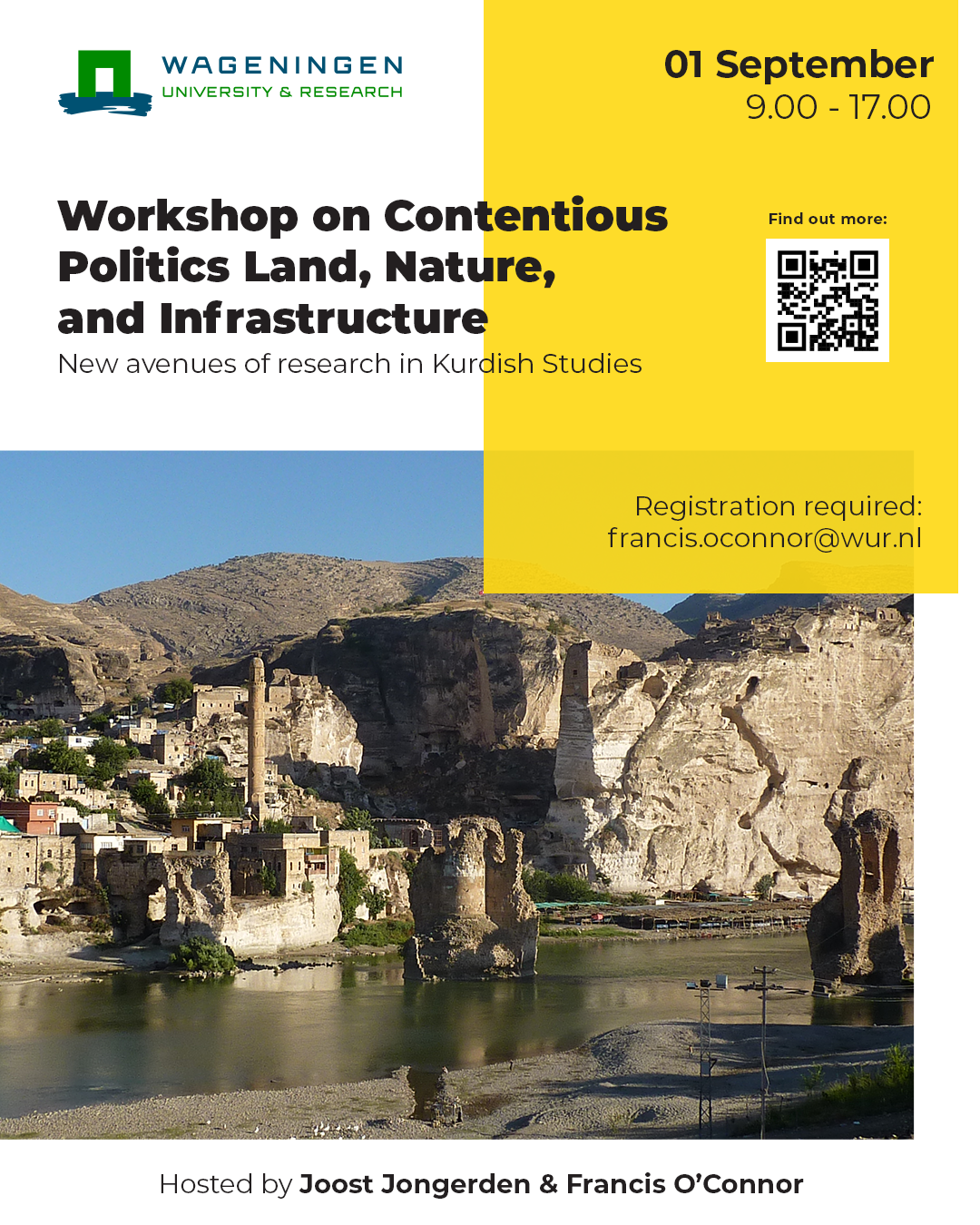
Hosted by the Rural Sociology Group, Wageningen University and Research, September 1, 2023
In Kurdistan occupations and demonstrations by landless workers and peasants demanding land reform have taken place on a large scale since the middle of the 20th century. In more recent years, this contestation over land has overlapped with the rise of environmental activism. The workshop Contentious Politics in Kurdish Studies: Land, Nature, and Infrastructure addresses a number of theoretical debates and questions related to land.
Affiliations of the participants
Kamuran Akin is an independent researcher who recently defended his PhD at the Institut für Europäische Ethnology, Humboldt Universität zu Berlin.
Seda Altuğ is a lecturer at the Atatürk Institute for Modern Turkish History at Boğaziçi University, Istanbul.
Aysegul Aslan is a Ph.D. candidate in geography at Fırat University, Turkey, and a visiting fellow at the Environmental Policy Group at Wageningen University, the Netherlands
Eray Çaylı is a professor of Human Geography with a Focus on Violence and Security in the Anthropocene, Hamburg University, Germany
Pinar Dinc is a researcher at the Centre for Advanced Middle Eastern Studies at Lund University.
Ayhan Işık is a Postdoctoral Researcher at Centre de Recherche Mondes Modernes et Contemporains, Université libre de Bruxelles.
Adnan Mirhanoğlu is a researcher in the Department of Earth and Environmental Sciences at KU Leuven, Belgium.
Zeynep Oguz is a lecturer in Social Anthropology at the University of Edinburgh.
Murat Öztürk is associate professor at the Department of Economics at Kırklareli University in Turkey.
Marcin Skupiński is a Ph.D. candidate at Warsaw University, Poland.
Necmettin Türk is a PhD Candidate in the Working Group “Critical Geographies of Global Inequalities” at the Institute of Geography, Hamburg University, Germany.
Filyra Vlastou-Dimopoulou is a Ph.D. candidate in Human Geography (NTUA & Paris 1 Panthéon-Sorbonne University.
Dobrosława Wiktor-Mach is professor of Economics, Cracow University, Poland.
Organizers
Joost Jongerden – Associate professor at the Rural Sociology Group, Wageningen University, the Netherlands joost.jongerden@wur.nl
Francis O’Connor – is a Marie Curie Skłodowska Post-Doctoral Fellow in Rural Sociology at Wageningen University in the Netherlands. Francis.oconnor@wur.nl
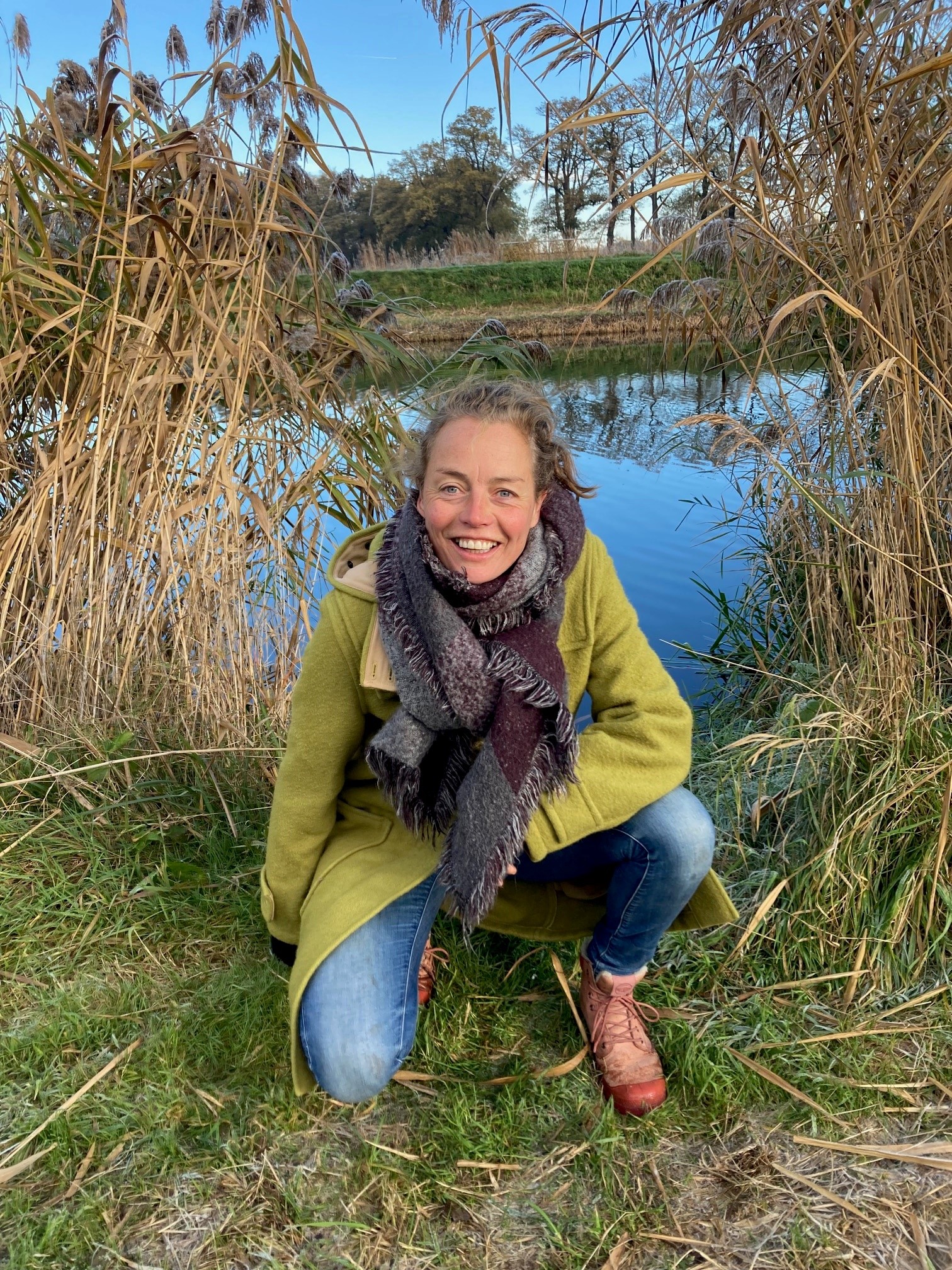
Els Hegger is a farmer and researcher working with RSO on the SWIFT project. In this post, she reflects on the role of women in dominant agricultural debates and her own experiences at the SWIFT project kick-off meeting.
Els writes:
Because of the Brazilians (representing the MST movement), I realised what is going on and how -maybe- there is an alternative. When reading this project proposal I was both very interested and at the same time, I thought: “Didn’t we have this whole feminine thing, is this really necessary? Aren’t women in the Netherlands already empowered? Is this discussion about inclusion, LHBTIQ+ etc., really necessary?” I didn’t raise these questions out of resistance but because I didn’t see it. For me, women have the same opportunities as men. At least… I thought so.
However… women are absent in their fullness. We participate under certain set conditions, set by a white male capitalist-dominated history. It is so entrenched that I guess we don’t fully realize this.
Look at the main agricultural stage in the Netherlands. Yes, we now have Caroline v/d Plas, but is that a female representation? As a farmer, as a woman, as an Agroecological entrepreneur, I don’t feel represented. It’s not my arena. The method, the sound, the non-verbal language. We withdraw because we don’t feel at ease, we don’t feel home. Lethargy kicks in.
So, we need to create our home where we feel at home. Which language fits this? Which stories resonate? Is it singing, dancing, mystica, poems, histories…? Only if we re-create and co-create these, we can connect and only then we can enter the political arena. It’s rather obvious, but at the same time it is so interwoven with everything that we stop realising, it settles in the subconscious.
Within Toekomstboeren we’ve had quite some discussions about exactly this (although not specified through women) as I nearly withdrew from Toekomstboeren. I said I didn’t feel comfortable with the way we enter politics. For me, agroecology (AE) is so different from the dominant narrative that I cannot lobby in a traditional way, being drawn to the tables and tell what we need.
It is not my language and then we are tempted to withdraw. That’s why women are invisible. AE is a way of life, not a job you hold. It is running through my veins, it’s in every cell and bone. AE is not about ecologic farming, the word logic is not fitting. It’s beyond any rationale in a traditional sense; it is like the rhizomes of Deleuze and Guattari. Mapping these could be an interesting insight.
Then there are the Brazilians (and there are more examples), who have developed their own language in a broad sense. They are able to mobilise an energy that truly connects: it is not only hierarchical, vertical talkative way of getting what you want. It is more horizontally moving, feeling as part of something not being united because you’re against something. This Brazilian way of mobilizing creates a togetherness that gives power to act. On a physical level, I feel backed, not such a naked back.
Obviously, this is a language beyond words. It is an all-encompassing language. A body language as much as a nature-language. It knows no race, ethnic origin, colour, male-female, it just is. You could say it is a feminine energy that complements the very overly present male energy. But.. is that correct? Or do we need to redefine? Is it a scale that is round, the edges are stretched so much that the ends are the beginning again? One of the Brazilians said: “Dare to acknowledge the woman inside you.” That goes for everyone, not only women. Vertical and horizontal.
Could you say that we need to tilt this structure of power?
The extremes are voiced, but the big middle group is searching. Is it a Western thing, a capitalistic view on male/female? Power? I think of Indonesia where I saw much more softness with men and at the same time a pride and dignity with both men and women. Equal in a very different sense. How does this result in voicing?
To come back to the beginning: changing the narrative. Which stories do we want to tell, to share, to connect to and built upon? We need to reframe, reconstruct and reclaim the words farmer, farming and food production. Stop talking about nature, start being it. Stop trying to fit in. Empower ourselves through language (including non-verbal language). Which future do we want to live now?
—
Els Hegger runs a small CSA market garden in the east of the Netherlands. Besides running this small-scale farm, she is an active member of Toekomstboeren and has a seat in the Federation of Agroecological Farmers in the Netherlands. One day a week she is a researcher at the Rural Sociology Group for the SWIFT-project. Els is passionate about flipping around dominant stories of food production and consumption, in order to reclaim truths and recognise the rich diversity of which human beings are an inherent entwined part.



 Rural Sociology Wageningen University