Gert Spaargaren[i] (with illustrations by Emily Liang)
‘Modern Environmentalism’
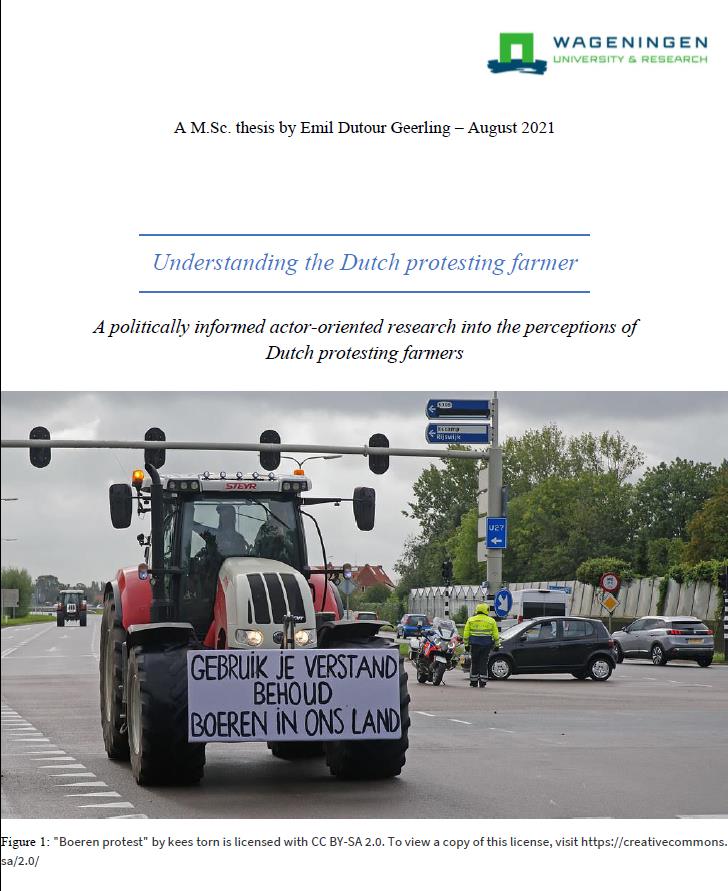
Environmental problems are of all ages, but in historical perspective one could argue that the awareness that something can and must be done about the deterioration of soils, water and air quality is of rather recent origin. In his book on ‘modern environmentalism’, David Pepper (1984, 1996)[ii] identified three landmark publications that expounded the principle ideas of ‘modern environmentalism’ as emerging from the 1970s onward.
First and most important has been the ‘Limits to Growth’ report to the Club of Rome (Meadows et al, 1972)[iii]. With hindsight, this MIT[iv]-based modelling of the planetary limits to industrial societies must be regarded as the single most important trigger for environmentalism to become a permanent issue both for politicians and citizens around the world. It was ‘modern’ environmentalism since the report was science based and because it urged key actors in society to take their responsibility for a common future at risk. Secondly, the ‘Blueprint for Survival’ (Ecologist, 1973), a special issue of a journal published by the emerging environmental social movements in the UK, has been an important trigger. The ‘new social movements’ in the UK and Germany in particular aimed at translating the Club of Rome message to the local (UK; EU) situation. They did so by translating the call for ‘limits to growth’ into a design for a strictly closed loops oriented, local, de-central, bounded network of eco-communities, sharing and caring for natural resources in a way we would later on come to refer to as ‘sustainable’ or ‘circular’. To underpin their design of the Blueprint Society with socio-cultural, economic and political arguments, they heavily relied on the third major source of modern environmentalism: Fritz Schumachers’ ‘Small is Beautiful’ book series (Schumacher, 1973; 1979)[v]. Schumacher was an enlightened British economist who resigned from a leading position in the energy (coal) sector to dedicate the rest of his life to the promotion of a radically different kind of society. His books became popular around the world and in the late 1980s, Schumacher himself came over to Wageningen to address a lecture hall[vi] filled with eager and critical students to discuss his core idea that recognizing limits to growth should lead one to consider new, small-scale, local, size-limited forms of (agro)industrial production and consumption from now on.
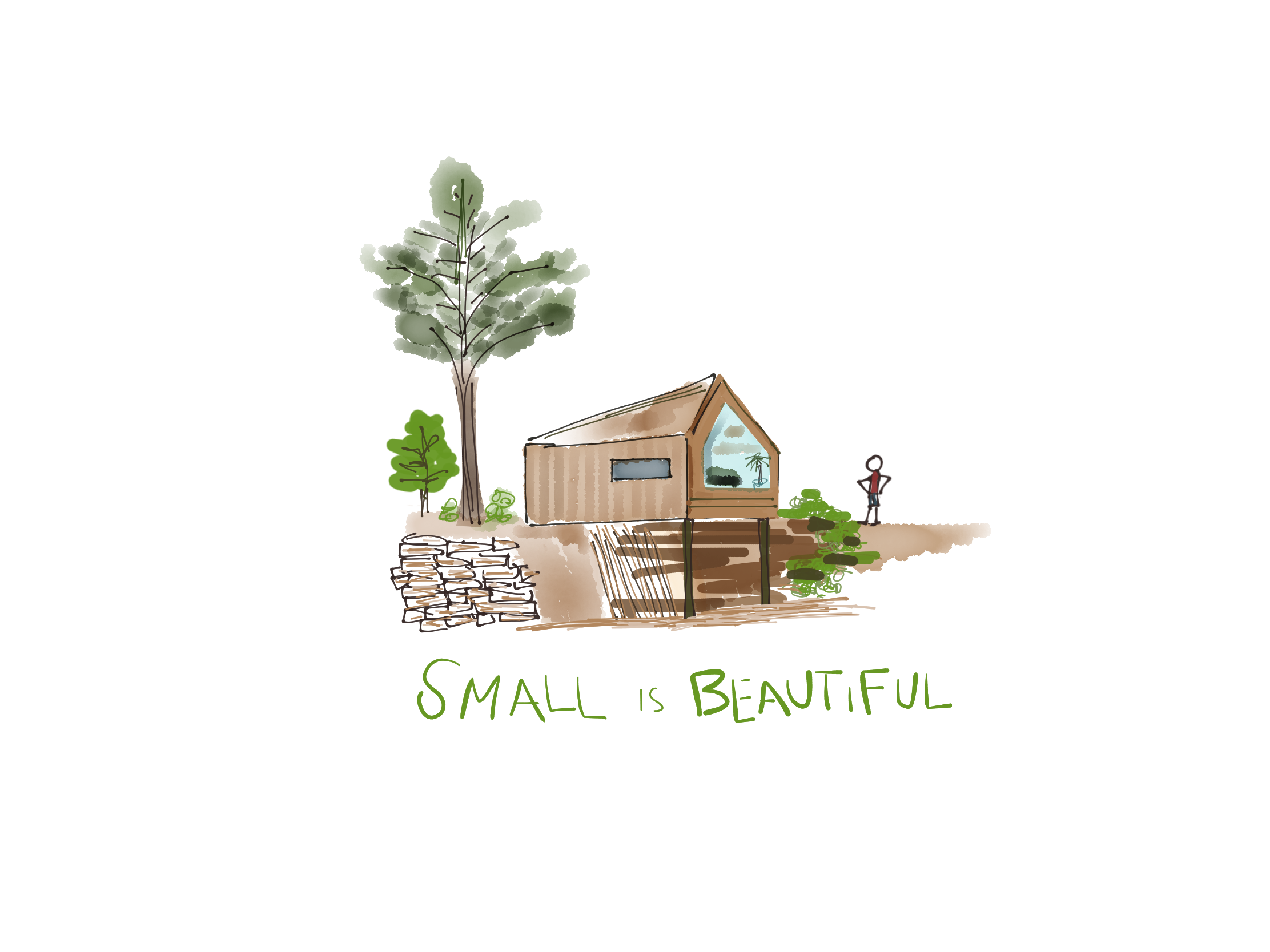
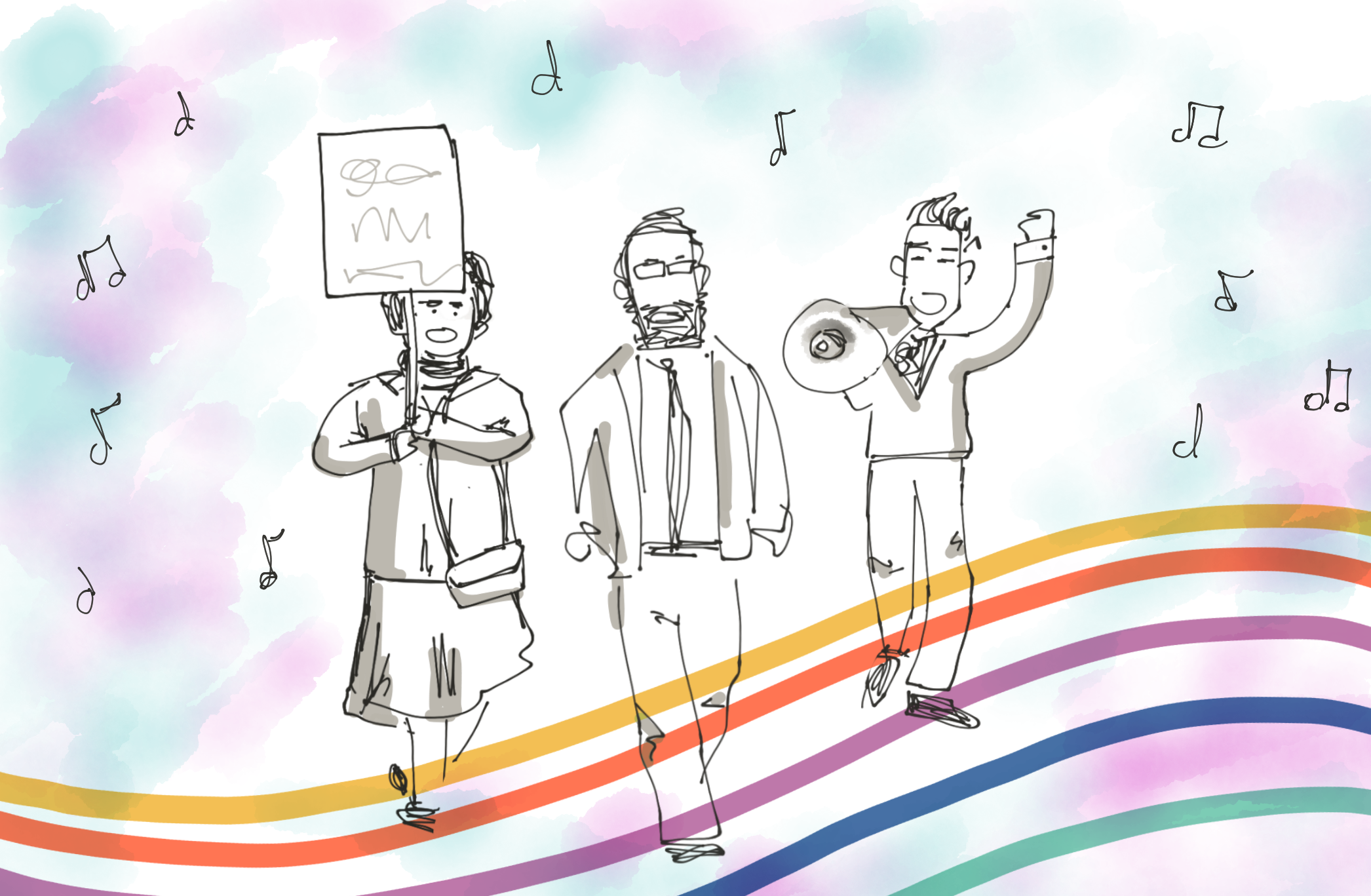
Three publications with a different character – one scientific modeling report, one NGO-article and one popular book series for a broad audience – but on a similar topic: the ‘environmental future of modern industrial societies’. From a contemporary point of view, they were positioned more on the sideline of society, were more Eurocentric, and did not confront climate and biodiversity issues in ways we are familiar with today. But the idea of radical change, the framing of the planet as resource for future generations, and the sense of urgency and unconventional forms of action I would argue to be pretty much the same. It is the engagement with transitions and transformation as we know of them today, but at the background you should imagine the sound of the pop-music of the second half of the 1960s (Dylan, the Beatles, folk-music) and pictures of student revolts and the rise of the so-called counter-culture in the 1970’s.
E.W. Hofstee and ‘Modern Environmentalism’ at WUR in the 1980s
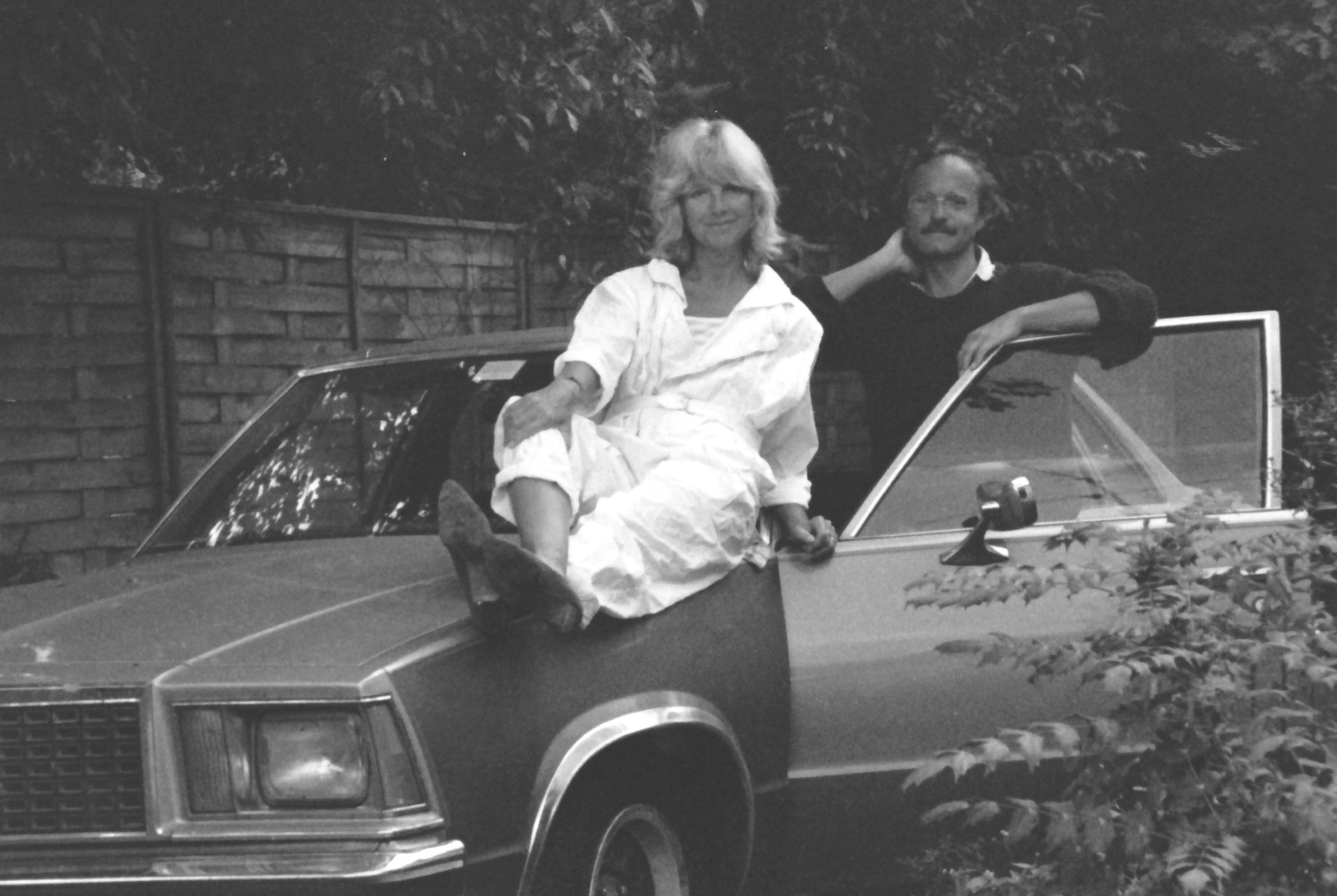
When I started my academic career in Wageningen in the late 1970s, all ‘engaged students’ were more or less familiar with the wake-up call that was represented by the three publications introduced in the above. So were staff members and even some professors…. Evert Willem Hofstee (1909 – 1987) being one of them.
Professor Hofstee was a social scientist who very early on recognized the urgency of environmental problems and the fact that the future of modern societies would be affected by problems of (air, water, soil) pollution and the exhaustion of resources. As early as mid-1971, he drafted an advisory Report for the Dutch Royal Academy of Science Committee on the task for social sciences to confront “Milieubederf en Milieubeheersing als maatschappelijke verschijnselen” (environmental deterioration and environmental control as societal phenomena)[vii]. During the period of redrafting this advisory report, the Club of Rome Report was published, and Hofstee in his preface to the final version of his KNAW report noticed that one of the remarkable characteristics of the Club of Rome report was the fact that it “hardly mentions the social scientific aspects of the environmental problem” (Hofstee, 1972, preface).
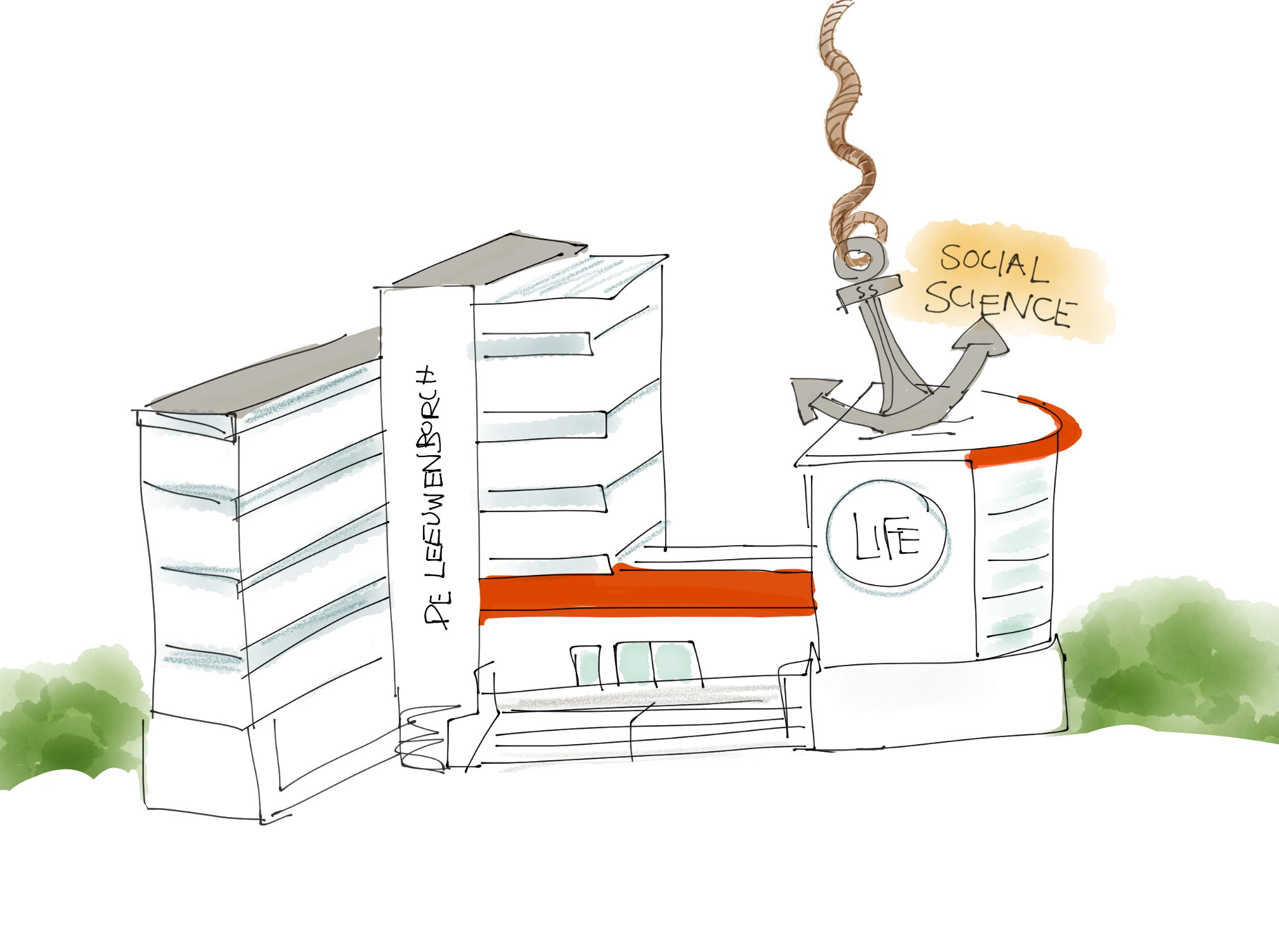
Hofstee himself was in a position to do something about that. He was a respected professor in (rural) sociology at the Landbouw Hogeschool (the predecessor of WUR) and one of the driving forces behind the construction of the Leeuwenborch-building as an anchor point for the social sciences. Hofstee was an empirical sociologist, raised in the tradition of demography and sociography e.g. historically informed, applied and policy relevant social science research. I was told that Hofstee was standing member of more than 150 committees and advisory boards that were involved in the socio-spatial redesign of the Netherlands after the second World War. So he knew ‘from within’ that policy makers were confronted with all kinds of expected and not expected negative consequences of the accelerating modernization process as it was happening in rural and urban spaces in the Netherlands and in Europe at the time. Hofstee noticed as well that in the Netherlands ecological/environmental issues were not eagerly taken up and given any serious theoretical or empirical consideration by sociologists. Only Nico Nelissen in Nijmegen and Egbert Tellegen – in collaboration with Peter Ester and later on with Maarten Wolsink- in Amsterdam were publishing on ecological issues. Nelissen was building on the ecological sociology of the Chicago school in the USA, while Tellegen and colleagues depicted environment and energy as new societal issues, thereby providing support for the new social movements without much theorizing. In his theoretical work however also Hofstee himself did not pay much attention to environmental issues. His (three volumes) reader we as students were instructed to read, was titled “Differentiële Sociologie” (Sociology of Differentiation) and it did not consider the modernization process from an environmental point of view. Wageningen sociology was first and for all agrarian, rural sociology, focusing on the differential adoption of modern ideas (on religion, family life etc.) and (life)styles – interior design, diets, styles of farming – by different segments of the population in different parts of the Netherlands.[viii]
Sociology, Environment and Modernization at WUR after Hofstee
Because Hofstee was aware of the need for environmental sociology and because he was still leading the ‘vakgroep sociologie van de Westerse Gebieden’, it was decided that someone in Wageningen should be appointed as ‘environmental sociologists’ to confront the challenges put forward by the Club of Rome and the emerging Environmental/Energy movements in the Netherlands and Europe. Henry Hilhorst – specialized in the sociology of religion – was asked to take environmental issues on board. He tried to make a start with a course in environmental sociology in 1985, building upon the study of Hofstee (1972) on ‘Environmental Deterioration and Control’. Along the way however, he discovered that his heart was not in environmental sociology and the ‘material matters’ (flows of energy, water, waste, nitrogen, phosphate) associated with it. Henry left for a job in the sociology of religion in Utrecht, and in 1986 I was assigned the task of developing for the (chair)group ‘Sociologie van de Westerse Gebieden” a Wageningen relevant version of environmental sociology[ix].
Since the course had to start right away and I only just took office as staff member, a guest lecturer from the USA was attracted to join me/guide me in giving the first course on ‘environmental sociology’/milieu-sociologie in Wageningen. Rabel Burdge came over to stay with me for a month, telling the students about ‘social’ (SIA) next to ‘environmental’ impact assessments (EIA) as happening in the USA. He used the classes to discuss with the students his survey results of SIA-studies, but as well for sharing his family holidays pictures of lake Michigan and the natural beauty it represented…..The students liked his American style, his story telling and his holiday pictures in particular. I was however not convinced that impact assessment would be the (restricted empirical) way forward for environmental sociology at Wageningen University. I used the first years to reflect on the society-nature interactions from a sociological perspective, using social ecology as well as ‘eco’- neo-Marxism as sources of inspiration.
In the years to follow, a team of environmental sociologists was build. Kris van Koppen and Arthur Mol became close colleagues, and the first PhDs were attracted to build not just a relevant theory but to develop at the same time a body of empirical knowledge on Environmental Deterioration and Control. Ecological Modernization, with an emphasis on the environmental damage stemming from material flows running through socio/ecological systems, was the general heading of this theoretical and empirical work. It resulted from a critical confrontation with ‘small-is-beautiful’ (romantic?) thinking as the dominant paradigm in the grassroot environmental NGOs in Germany in particular. Instead of de-modernization, we argued that the environmental side effects of simple modernization should be dealt with by redesigning/reforming the agro-industrial structures of production and consumption. Enlightenment thinking versus Romantic thinking; Europeanization and Globalization versus localization; market dynamics next to policy dynamics etc. The debate on ‘how to green modern societies’ had begun.
The number of students and staff members were (gradually) growing. In the meantime other social science groups in the Leeuwenborch started with research and specialized courses on environmental topics. Next to economics, also history, law, extension sciences and spatial planning developed their own portfolios in the environmental field, with their activities being coordinated in the context of the so called Leeuwenborch Milieu Overleg (LMO).
By the end of 1990s, it was decided that the environmental sociology section of the Western Sociology Group should become a separate group, including not just sociologists but political scientists and cultural geography scholars as well. The Environmental Policy Group (ENP) – from 2000 onwards headed by Arthur Mol and since 2015 in good hands of Simon Bush – became one of the leading groups both within WUR and in the national and international social science (RC-24 of the ISA) arena’s. The excellent reputation of the ENP-group is based on characteristics that I would argue to go well along with Hofstee’s worldview, and they run as follows. First, look at differentiation (now at different regions of the global network society in particular). Second, combine innovative theoretical work always with sound empirical research. Third, try to investigate why social groups at different levels of society do or do not want to engage themselves with processes of change for a more sustainable world in the future. The present ENP-work on energy/water/sanitation transitions in different continents, and on global (fish) food system transformations can be regarded as adequate responses to Hofstee’s wake up call for the environmental social sciences in the 1970s. Their education and research are examples of social science knowledges that help shape the ‘great transition’ towards a more ecological sound, reflexive, and global modernity.
[i] I would like to thank Anton Schuurman for his useful comments on the draft version of the present text
[ii] D.Pepper (1984) The Roots of Modern Environmentalism. London, Croom Helm
[iii] The Limits to Growth (1972) D.H. Meadows et al. Potomac Associates.
[iv] MIT = Massachusetts Institute of Technology
[v] E.F. Schumacher (1973) Small is Beautiful. London, Blond and Briggs; E.F. Schumacher (1979) Good Work. New York. Harpers & Row
[vi] The big lecture-hall of the Leeuwenborch building was named the ‘Hofstee-room’ at the time, but unfortunately this name is no longer in use to refer to the main lecture hall of the social science building of WUR.
[vii] E.W. Hofstee (1972) Milieubederf en Milieubeheersing als maatschappelijke verschijnselen; poging tot een overzicht van de maatschappij-wetenschappelijke problematiek van een actueel onderwerp. Amsterdam. Noord-Hollandsche Uitgevers Maatschappij
[viii] The concept of differentiation was offered by Hofstee as a critique of ‘generalizing, functionalist’ analyses of modernization as dominant in the USA (Parsons) at the time. Mainstream drivers have to be specified – so Hofstee argued – in terms of time-space specific trajectories and dynamics
[ix] The chairgroup (at the time named ‘vakgroep’) Sociologie van de Westerse Gebieden already had several thematic sections to organize the empirical work. Next to the dominant rural sociology section, there were section on the sociology of family life, on the sociology of leisure, and on methodology.