New RSO student authored article on Ayurveda and commodification in Europe

Former RSO thesis student Marine Viale has had an article based on her thesis published in the Journal of Ayurveda and Integrative Medicine. The article’s title is Conserving traditional wisdom in a commodified landscape: Unpacking brand Ayurveda, and is co-authored with Mark Vicol from RSO. Fantastic to see a very good thesis leading to a peer-reviewed publication. You can read the full article here https://authors.elsevier.com/sd/article/S0975-9476(22)00126-7 and the abstract is pasted below.

Abstract

As Ayurveda continues to gain global recognition as a sanctioned system of health care, the essence of Ayurveda’s identity has become prey to commoditization and commodification for commercial undertakings in the holistic health milieu of India, but also in emerging markets such as Europe. This paper critically assesses the commodification of Ayurveda as a cultural signifier within Europe that separates the indigenous artefact from its Vedic origins. Often presented as an elite commodity in Western settings, Ayurveda has become embedded as a cultural artifact within consumer society as the epitome of holistic care with an emphasis on its spiritual attributes, yet simultaneously isolating it from the customary elements that motivated its inception. The paper argues that Ayurveda’s discursive detachment from its ontological tenets facilitates its rearticulation as a malleable experience as it crosses national boundaries, and in this process fosters the misinterpretation of the ancient healing tradition. This process may provide Ayurvedic treatments and principles with increased visibility in Europe’s health sector. However, brands are exploiting this niche with push-marketing strategies to capitalize on the budding Ayurveda industry, turning traditional medicines into emblematic commodities. To advance this argument, we examine product diversions in the commodification of classical Ayurvedic medicines in the Netherlands and Germany, focusing on the over-the-counter (OTC) segment. We present an interpretive analysis of the processes that are (de)constructing traditional practices and principles as Ayurveda travels beyond India, and how this complicates issues of authenticity and expertise as herbal medicines diverge from the indications ratified in Ayurveda’s classical compendiums.

‘Eliciting Aspirations’, MSc-thesis by Esmee van Schuppen

Esmee van Schuppen finished her Master International Development Studies with an excellent thesis on the aspiration of youth in Ghana. In her thesis she argued that the aspired livelihood trajectories of youth in Ghana are poorly understood. Her thesis moves beyond the binary representation of rural youth aspirations in academic research, in which these aspirations are portrayed in a dichotomy of rural versus urban and farming versus non-farming.

“Eliciting aspirations: Understanding the role of aspirations and opportunity space in the livelihood trajectories of rural youth in Kwaebibirem and Atiwa-West”, MSc Thesis Rural Sociology by Esmee van Schuppen. See the abstract below.

Abstract
With a third of Ghana’s population currently between 15-35 years old, efforts to revitalise the agricultural sector in Ghana are increasingly geared towards youth. However, the full range of aspirations of rural youth and the opportunities and constraints that shape them, are often overlooked in policy and academic research.

This thesis aimed to elicit the role of aspirations and the opportunity space – the spatial and temporal distribution of viable options that a young person can exploit to establish an independent life – on the livelihood trajectories of rural youth. A total of 41 life history interviews and eight FGDs were conducted in order to gather data on the aspirations, opportunity space and livelihood trajectories of rural youth in Kwaebibirem and Atiwa-West, in Ghana’s Eastern Region. The results suggest that rural youth especially aspire occupations in waged employment, but that the options for waged employment are limited in Kwaebibirem and Atiwa[1]West. As a result, the majority of youth engages, and aspire to engage, in mixed livelihood trajectories, in which the capital generated from one activity is invested in the farm, and vice versa. This thesis therefore found that even though youth do not aspire to engage in farming full-time, agricultural activities do play an integral part of the livelihood trajectories and aspirations of rural youth. The perennial crops that are dominant in the landscape, cocoa and oil palm, can help youth to claim temporary ownership over the land and can therefore serve as an investment, a means to guarantee a stable retirement and a way to leave a legacy for their children. However, this thesis also found that the opportunity space for farming is narrowing due to a decrease in the availability and affordability of land and an increase in prices for inputs and hired labour. Moreover, climate change and a decrease in the quality of natural resources make farming a risky investment, subsequently making youth hesitant to engage in farming in the future.
This thesis concludes that the opportunity space plays an important role in shaping the livelihood trajectories of youth. It appears that youth re-evaluate their life and their livelihood at the moment an important change occurs, and change the course of their livelihood trajectory as a result. However, this thesis also suggests that aspirations also play a role in the livelihood trajectories of rural youth, by demonstrating that rural youth does have the capacity to navigate through the opportunity space and take steps towards those futures by employing different strategies, such as adjusting their aspirations to fit with the opportunity space, by putting aspirations on hold or for instance by exploiting the distant opportunity space. In pursuit of their aspirations, youth are able to enforce their agency to expand their opportunity space and shape their livelihood trajectory according to their aspirations. As this thesis only captured the perspectives of youth residing in Kwaebibirem and Atiwa-West, where perennial crops are dominant, future research is needed to expose how the aspirations and opportunity space of youth differ from youth in regions where annual crops are dominant. Moreover, due to the oversampling of youth who did not migrate, future research could focus on how the aspirations and opportunity space of migrated youth enabled them to move down a different trajectory than the youth who stayed behind. Policymakers should consider making more comprehensive agricultural policies for youth, hereby not only focusing on improving the conditions for young farmers, but also on the provision of off-farm opportunities, as mixed livelihood activities are central in the aspirations and livelihood trajectories of rural youth.

As the Soil, So the Human: Narratives of Ontological Entanglement and Soil Management in Regenerative Agriculture – MSc thesis report by Levi Kingfisher

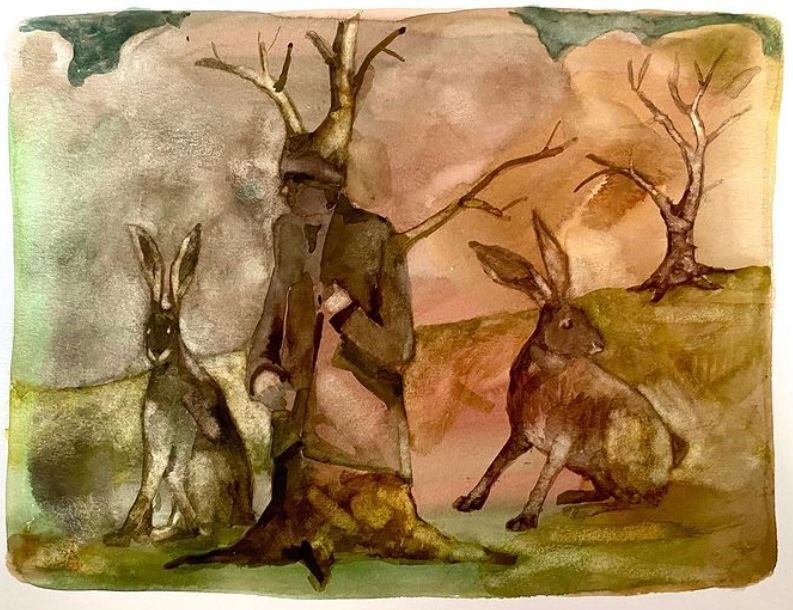
The Glen by Travis Shilling

As the Soil, So the Human: Narratives of Ontological Entanglement and Soil
Management in Regenerative Agriculture
‘, MSc-thesis report by Levi Kingfisher graduated as MSc Organic Agriculture, Wageningen University.

Abstract
Regenerative agriculture is a diverse, highly contested, and rapidly developing sustainable agriculture movement. It has been lauded for its transformative potential, and criticized for its incoherence and susceptibility for corporate co-option. At the heart of regenerative agriculture is an effort to engage with soil life rather than bypass it; this ethos and the messiness of the movement indicate that a range of novel human-soil relations may emerge within this space. Semi-structured interviews were conducted with members of intermediary organizations – research institutes, consultants, and NGOs, among others– that are active in promotion and advocacy for adoption of regenerative practices in order to explore these changing human-soil relations. Interviews focused on conceptualizations of soil (life), forms of analysis and knowledge production around soils, regenerative soil management, and the larger goals of regenerative agriculture, including addressing climate change and improving the economic situation of farmers. Results were subject to narrative analysis, which indicated that respondents acknowledged the fact that soils are living, rather than inert substrates reducible to chemical and physical criteria. Soil biology was understood and engaged with to different extents, and a wide range of analytical tools were used to scrutinize soil, including microscopy, genetic testing, measurement of soil organic carbon, among others. Overall, narratives indicate that a wide range of human-soil relations can be identified within regenerative agriculture, including care, exploitation, and relatively novel mechanisms of commodification and financialization of soil life through the development of soil carbon credits. Further, results indicate that this variation is produced by differences in human approaches to understanding, analyzing, and managing soil life; different approaches to producing knowledge about soils facilitates the creation of different kinds of relations. Building on the narratives, it is argued that the human should be theoretically (re)centered in the social science study of regenerative agriculture and human-soil relations, in order to maintain a uniquely human sense of responsibility to address, among other challenges, climate change. Similarly, the role of alternative ontological outlooks on soils and nature in food system transformation is discussed.

The experiences of Dutch livestock owners with wolf damage compensation schemes – MSc Research practice by Jasmijn Keuning

The experiences of Dutch livestock owners with wolf damage compensation schemes: Analyzing compensation payments through a lens of environmental justice‘, is a MSc Research practice report by Jasmijn Keuning (jasmijn.keuning@wur.nl), MSc student International Development and Forest and Nature Conservation of Wageningen University.

A MSc student interested in an academic career can opt for a research practice in stead of an regular internship and thus gain relevant work experience at an academic level. Below the Abstract. The report also includes a Summary in both English and Dutch.

Abstract
After 140 years of absence, the Netherlands is once again housing one of Europe its largest predators, the wolf. This has caused human-wolf conflict to reemerge, of which the main cause is the depredation on livestock. To mitigate this conflict between farmers and wolves, the Dutch government has implemented a compensation scheme. Compensation schemes are one of the most common ways through which policy-makers try to mitigate human-wildlife conflict, but remain controversial. This research aims to create a deeper understanding of the perspectives, experiences and attitudes of Dutch farmers towards wolf damage compensation payments and thereby, wolf management more broadly by studying this tool through the Environmental Justice framework. A case study has been adopted on the South-Eastern provinces of the Netherlands, for which 15 semi-structured interviews have been conducted with the organization handling compensation payments, farmers organizations, an ecologist and livestock owners from this region. The findings suggest that the arrival of the wolf to the Netherlands has created new insecurities for farmers’ livelihoods, which are caused by wolf presence itself and the system that has been set up to manage this presence and its impact. By analyzing farmers’ experiences with compensation payments in a framework of environmental justice, this research demonstrates that only focusing on compensation is insufficient to create a sense of environmental justice among farmers, and thereby mitigate human-wolf conflict, since compensation payments alone are unable to address all challenges that cause insecurity among farmers. This study concludes that while compensation payments continue to be an important focus point of wolf policy, it can be understood as only a last step in building a supportive base for wolf presence in the Netherlands. Instead, more emphasis should be given to improvements at the beginning of the process, before damage has occurred.

Key words: human-wildlife conflict, compensation payments, environmental justice, livestock depredation, livestock owners.

The joy of fermentation

written by Noortje Giesbers based on her MSc thesis

Fermentation is a practice that has been around for ages, with the earliest archaeological finds dating back to 13.000 BC (Liu et al., 2018). It is a natural process provided by the microorganisms present on the food, they ferment the food through their metabolism (Katz, 2012). In the past, but also in the present does fermentation of food contribute to food security all over the world by enabling people to preserve food (Hesseltine & Wang, 1980; Quave & Pieroni, 2014). Many well-known and daily products incorporate a fermentation process, such as bread and beer. But also coffee, yoghurt, chocolate, wine, cheese and soy sauce, to name a few.

In the recent years, I got interested in fermentation, in the process and making my own foods. I shared this interest with a growing number of people. It got me my thesis topic: Motivations for home-fermentation in the Netherlands. From January till August 2021 and with the help of five experts and ten home-fermenters, I conducted this study. My fermentation knowledge and food technology background, as well as Satters’ hierarchy of food needs and the social practice theory helped me to understand the workings at play in the fermentation trend.

Fermentation might seem old-fashioned, but is more intertwined with modern day life than one would expect: it draws attention to craft food-making, taste, identity, and to traditional ecological knowledge put into practice to sustain microbiological ecologies (Flachs & Orkin, 2019). As Tamang et al. (2020) note: “The nutritional and cultural importance of these ancient foods continue in the present era.”. Lee & Kim (2013) state that fermented food is deeply rooted in the ways of life, the local environment, eating habits and deeply related to the produce, in different regions. So, when studying fermented foods, one is studying the close relationships between people, organisms, and food, since the practice of fermentation involves both biological and cultural phenomena, which simultaneously progress (Steinkraus, 1996). This can be showcased by kimchi, which is a part of culture and identity for Koreans, or fermenting fish is for the islanders of the Faroe Islands (Jang, Chung, Yang, Kim, & Kwon, 2015; Svanberg, 2015; Tamang et al., 2020). Yet, by some Dutch consumers, it has also become a part of their food identity, creating ways to lower their food waste, increasing flavour profiles, increasing their gut health.

Fermentation fits well with a more sustainable way of living, with a hedonistic approach to food and a healthy lifestyle, all often reasons to ferment for Dutch consumers. One of the experts noticed three groups of fermenters: those who ferment for the experimentation and flavour; for the health benefits; or to relieve health problems. A fourth group was mentioned by another expert: those who ferment to be self-sufficient. This motivation can stem from the distrust in the global food system and/or the lower ecological impact of growing your own foods. Each home-fermenter included in this study could be linked to one or more groups, following their personal reasons for home-fermenting.

The main motivations for home-fermentations are established, but how is this practice recreated in society? The social practice theory states that for a social practice to be reproduced, one needs three things (Hargreaves, 2011; Reckwitz, 2002; Shove, Pantzar, & Watson, 2012; Vermeer, 2018):

  1. The actual “Things” that compose social practices;
  2. Meanings, that provide the practice with direction; and
  3. Competence, to carry out the practices.

I propose the idea that by making ferments, sharing them, sharing knowledge (competence), starters (“things”) and ideas (meanings), one socially reproduces the practice of home-fermentation, spreading the home-fermentation practice and inspiring more people to home-ferment. By fermenting home-fermenters have enjoyable foods, but also encounter a lot of joy. Statements included enjoying working with foods and sharing the outcomes, as well as the practice. The feeling of accomplishment and being proud of making something yourself, like with other hobbies, is true for home-fermentation as well, as seen by this and other studies (Click & Ridberg, 2010; Murray & O’Neill, 2015; Sofo, Galluzzi, & Zito, 2021; Yarbrough, 2017). Home-fermenters are proud of their ferments and proudly share them too. Which also brings joy to those that they share it with, as acknowledged by an expert.

This liking of sharing ferments, how it can positively influence relationships was also noticed by one of the experts. It was found that fermentation can (re-)connect people, just like foods and other hobbies can do. By having a hobby to talk about and ferments and starter cultures to share, home-fermenters made new friends, reconnected to old ones, or strengthened their current friendships.

It is not uncommon, as sharing food with others has been observed not only to be enjoyed, but can also express creativity and care (Clair, Hocking, Bunrayong, Vittayakorn, & Rattakorn, 2005). Similarly, home-fermenters would prepare a certain ferment for guests later that week. Others share their starters, recipes, and tips & tricks; teach others and make it a fun activity. You could say that next to sharing the actual product of their practices, home-fermenters also share some of the “things” and competence.

To conclude, next to adding to health, sustainability and specific personal feelings, fermentation brings joy, above all else. So dear reader, if you would like to know more, find the full thesis via the link below. If you would like a starter or learn, I am happy to share and teach!

Cheers, Noortje

References

Clair, V. W.-S., Hocking, C., Bunrayong, W., Vittayakorn, S., & Rattakorn, P. (2005). Older New Zealand Women Doing the Work of Christmas: A Recipe for Identity Formation. The Sociological Review, 53(2), 332–350. https://doi.org/10.1111/j.1467-954X.2005.00517.x

Click, M. A., & Ridberg, R. (2010). Saving food: Food preservation as alternative food activism. Environmental Communication, 4(3), 301–317. https://doi.org/10.1080/17524032.2010.500461

Flachs, A., & Orkin, J. D. (2019). Fermentation and the ethnobiology of microbial entanglement. Ethnobiology Letters, 10(1), 35–39. https://doi.org/10.14237/ebl.10.1.2019.1481

Hargreaves, T. (2011). Practice-ing behaviour change: Applying social practice theory to pro-environmental behaviour change. Journal of Consumer Culture, 11(1), 79–99. https://doi.org/10.1177/1469540510390500

Hesseltine, C. W., & Wang, H. L. (1980). The Importance of Traditional Fermented Foods. BioScience, 30(6), 402–404. https://doi.org/10.2307/1308003

Jang, D. J., Chung, K. R., Yang, H. J., Kim, K. S., & Kwon, D. Y. (2015). Discussion on the origin of kimchi, representative of Korean unique fermented vegetables. Journal of Ethnic Foods, 2(3), 126–136. https://doi.org/10.1016/j.jef.2015.08.005

Katz, S. E. (2012). The Art Of Fermentation (M. Goodman & L. Jorstad, Eds.). White River Junction: Chelsea Green Publishing.

Lee, J. O., & Kim, J. Y. (2013). Development of cultural context indicator of fermented food. International Journal of Bio-Science and Bio-Technology, 5(4), 45–52.

Liu, L., Wang, J., Rosenberg, D., Zhao, H., Lengyel, G., & Nadel, D. (2018). Fermented beverage and food storage in 13,000 y-old stone mortars at Raqefet Cave, Israel: Investigating Natufian ritual feasting. Journal of Archaeological Science: Reports, 21(May), 783–793. https://doi.org/10.1016/j.jasrep.2018.08.008

Murray, D. W., & O’Neill, M. A. (2015). Home brewing and serious leisure: Exploring the motivation to engage and the resultant satisfaction derived through participation. World Leisure Journal, 57(4), 284–296. https://doi.org/10.1080/16078055.2015.1075899

Quave, C. L., & Pieroni, A. (2014). Fermented foods for food security and food sovereignty in the Balkans: A case study of the gorani people of Northeastern Albania. Journal of Ethnobiology, 34(1), 28–43. https://doi.org/10.2993/0278-0771-34.1.28

Reckwitz, A. (2002). Toward a Theory of Social Practices. European Journal of Social Theory, 5(2), 243–263. https://doi.org/10.1177/13684310222225432

Shove, E., Pantzar, M., & Watson, M. (2012). The dynamics of social practice: Everyday life and how it changes. SAGE Publications Ltd.

Sofo, A., Galluzzi, A., & Zito, F. (2021). A Modest Suggestion: Baking Using Sourdough – a Sustainable, Slow-Paced, Traditional and Beneficial Remedy against Stress during the Covid-19 Lockdown. Human Ecology, 49(1), 99–105. https://doi.org/10.1007/s10745-021-00219-y

Svanberg, I. (2015). Ræstur fiskur: Air-dried fermented fish the Faroese way. Journal of Ethnobiology and Ethnomedicine, 11(1), 1–11. https://doi.org/10.1186/s13002-015-0064-9

Tamang, J. P., Cotter, P. D., Endo, A., Han, N. S., Kort, R., Liu, S. Q., … Hutkins, R. (2020). Fermented foods in a global age: East meets West. Comprehensive Reviews in Food Science and Food Safety, 19(1), 184–217. https://doi.org/10.1111/1541-4337.12520

Vermeer, A. (2018). Enacting social practices of food: performing food and nutrition security (Wageningen University). Retrieved from https://edepot.wur.nl/450868

Yarbrough, E. (2017). Kombucha Culture: An ethnographic approach to understanding the practice of home-brew kombucha in San Marcos, Texas (Texs State University). Retrieved from https://digital.library.txstate.edu/bitstream/handle/10877/6756/YarbroughElizabeth.pdf?sequence=1&isAllowed=y