
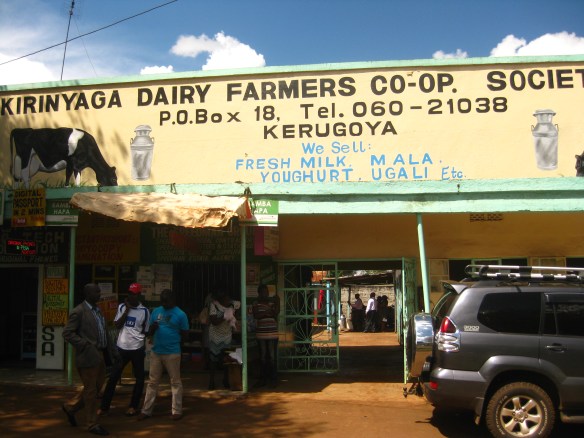
 Last autumn Jordan Treakle successfully defended his Master of Science thesis ‘Agricultural cooperatives and the social economy in Kenya’s changing governance landscape’ in Wageningen’s Rural Sociology Group to complete his International Master in Rural Development. Below a synopsis of the thesis. Continue reading
Category Archives: Thesis and internship possibilities
An impact assessment of potentially radical niche developments in the Dutch dairy sector – MSc-thesis Anne Verschoor
October 11 2016, Anne Verschoor successfully defended her MSc-thesis ‘An impact assessment of potentially radical niche developments in the Dutch dairy sector‘. She thus completed the Specialization Gastronomy of the Master Food Technology of Wageningen University. Applying a Social Science perspective in her thesis research was extra challenging but she managed very well to do so. Below an abstract of the thesis. Continue reading
Thesis opportunity: Thuisafgehaald
Note: as I am looking for a Dutch-speaking student for this thesis, the text of this post is in Dutch.
Het stedelijk voedsellandschap verandert. Bestaande kanalen bieden andere soorten voedsel aan (supermarkten verkopen steeds meer biologische en/of lokale producten) en er ontstaan nieuwe kanalen die het mogelijk maken op andere manieren aan voedsel te komen (kopen bij de boer, zelf verbouwen). Consumenten hebben hiervoor zowel ethische overwegingen (diervriendelijker, milieubewuster consumeren) als sociale overwegingen (elkaar ontmoeten rondom eten). Ondanks het bestaan van al die verschillende kanalen kopen de meeste mensen het grootste deel van hun voedsel in de supermarkt. Blijkbaar is het in de praktijk nog best lastig om de supermarkt te omzeilen. Continue reading
Resistance in action in the Mayan region: “NO to GMO’s”

Mayan women in a concert of the Ma OGM campaign. Source maria Boa
August 18 María del Refugio Boa Alvarado successfully defended her MSc-thesis ‘Resistance in Action; Mobilization of Mayan beekeepers against GM soy: The case of the ‘Colectivo MA OGM‘ for the Master International Master in Rural Development. Below a post by Maria.
Are you interested on social movements? On Indigenous rights? On collectives and their practices? For years, many social scientists have been fascinated by the study of social movements and collective action. In my case, I am fascinated by the research of complex associations that frame and articulate their claims or grievances. Particularly, the processes of social transformation that have their grassroots within indigenous communities. Continue reading
Exploring Consumer-Producer Relationships and Consumer Involvement Practices in AFN in Oldenburg

MSc-thesis by Katharina Prause, MOA student Wageningen University
June 2016 Katharina Prause completed her MSc-thesis for the Master of Organic Agriculture of Wageningen University. The full thesis is available here. Below an abstract of her thesis. Continue reading
 Rural Sociology Wageningen University