Master and PhD thesis possibilities in Mozambique and India

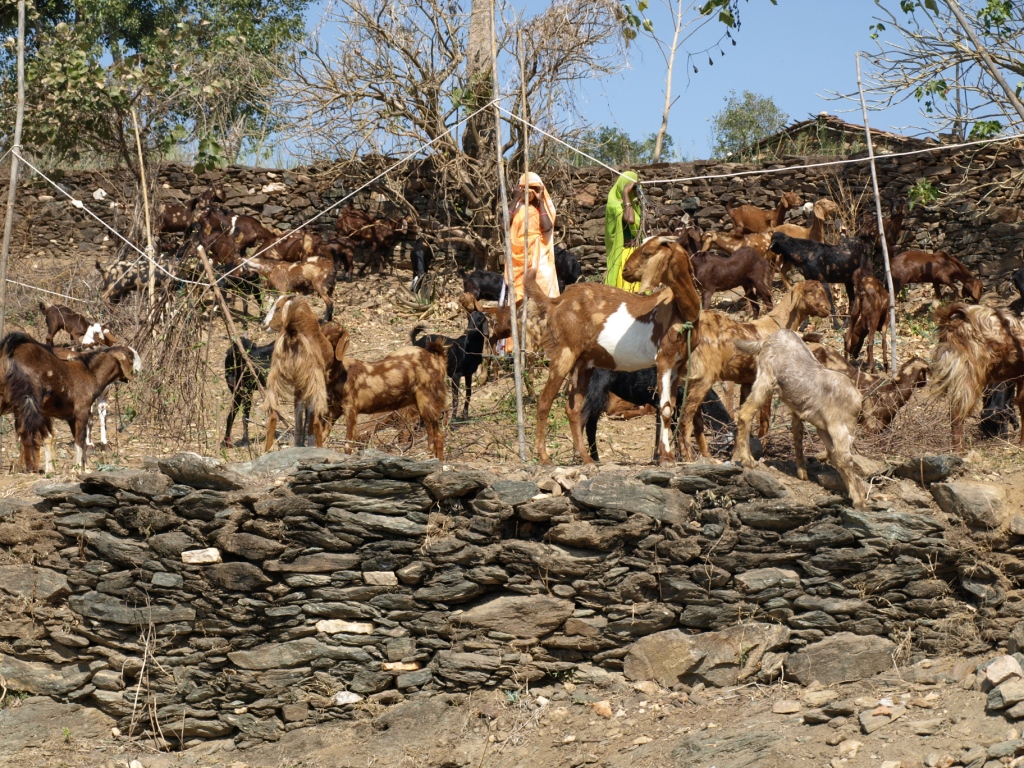
 The International Livestock Research Institute (www.ilri.org ) offers thesis possibilities for Masters and PhD students of various disciplines in their imGoats project (2011-2012/13) in India and Mozambique. The project entitled ‘Small ruminant value chains as platforms for reducing poverty and increasing food security in dryland areas of India and Mozambique’ aims to transform the livelihoods of goat keepers in India and Mozambique through a transformation of their subsistence level goat production into a viable and profitable enterprise. The project goal of imGoats is to  increase incomes and food security of the poor in a sustainable manner by improving performance of goat value chains in India and Mozambique . The specific objectives of the project are (a) to pilot sustainable and replicable organizational and technical models to strengthen goat value chains in India and Mozambique that increase incomes, reduce vulnerability and enhance welfare amongst marginalized groups, including women and (b) to document, communicate and promote appropriate evidence-based model(s) for sustainable, pro-poor goat value chains.

The target group is about 500 vulnerable households in the semi-arid Inhassoro district in the Northern Inhambane province of Mozambique, of which 25% will be Female Headed Households and 20% households living with HIV and AIDS. In India, the project operates in Udaipur district of Rajasthan state and Dumka district of Jharkhand state, covering a total of 5000 scheduled caste and scheduled tribe and landless households. CARE International in Mozambique (http://www.care.org/ ) and BAIF in India (http://dev.ikf.in/baif/index.asp ) are leading the development aspects and local project administration in their respective project sites. More information on the project can be obtained at www.imgoats.org.

For more information on specific Msc and Ph D thesis research areas, please see here. For other information or questions please contact Ranjitha Puskur (r.puskur@cgiar.org) or Birgit Boogaard (b.boogaard@cgiar.org ) of the International Livestock Research Institute.
PUREFOOD vacancies closed

For the 12 PUREFOOD positions we have on offer (posted in an earlier blog) we received more than 300 applications. The quality of the applications is high, which means the deadline of 3 January 2011 will not be extended. The vacancies have been closed. At the moment the PUREFOOD consortium is busy shortlisting 4 candidates for each position. We anticipate to notify all candidates whether or not they will be invited for an interview by the end of January.

Wanted: Students for an international experience!

Every year, the Rural Sociology Group participates in a two week intensive programme on rural development in the EU. A diverse group of students from various European countries (a.o. Portugal, Poland, Germany, Hungary, Italy, Spain, Lithuania, Slovenia) work together on a case study. Through lectures and field trips scientific and practical knowledge will be aquired and then implemented in the case study analysis. See past experiences of Marlies, Petra and Wiebke
 
This year the IP is organised by the university of Padova and takes place in San Vito Di Cadore in the Italian Dolomites. The general topic is: “the role of agriculture in territorial identity and competitiveness of rural areas”. More specificly, the general question is related to how these (territorial identity and competitiveness) contribute to rural development in the Dolomites (Alps region). For more information on the content see below. 
 
Are you a student of Wageningen University and looking for an international learning experience? Then sign up for two intensive weeks from 3 to 16 April 2011! For subsciption or more information contact Els Hegger (els.hegger@wur.nl). 
 

Urban farm providing care for the homeless in Rotterdam

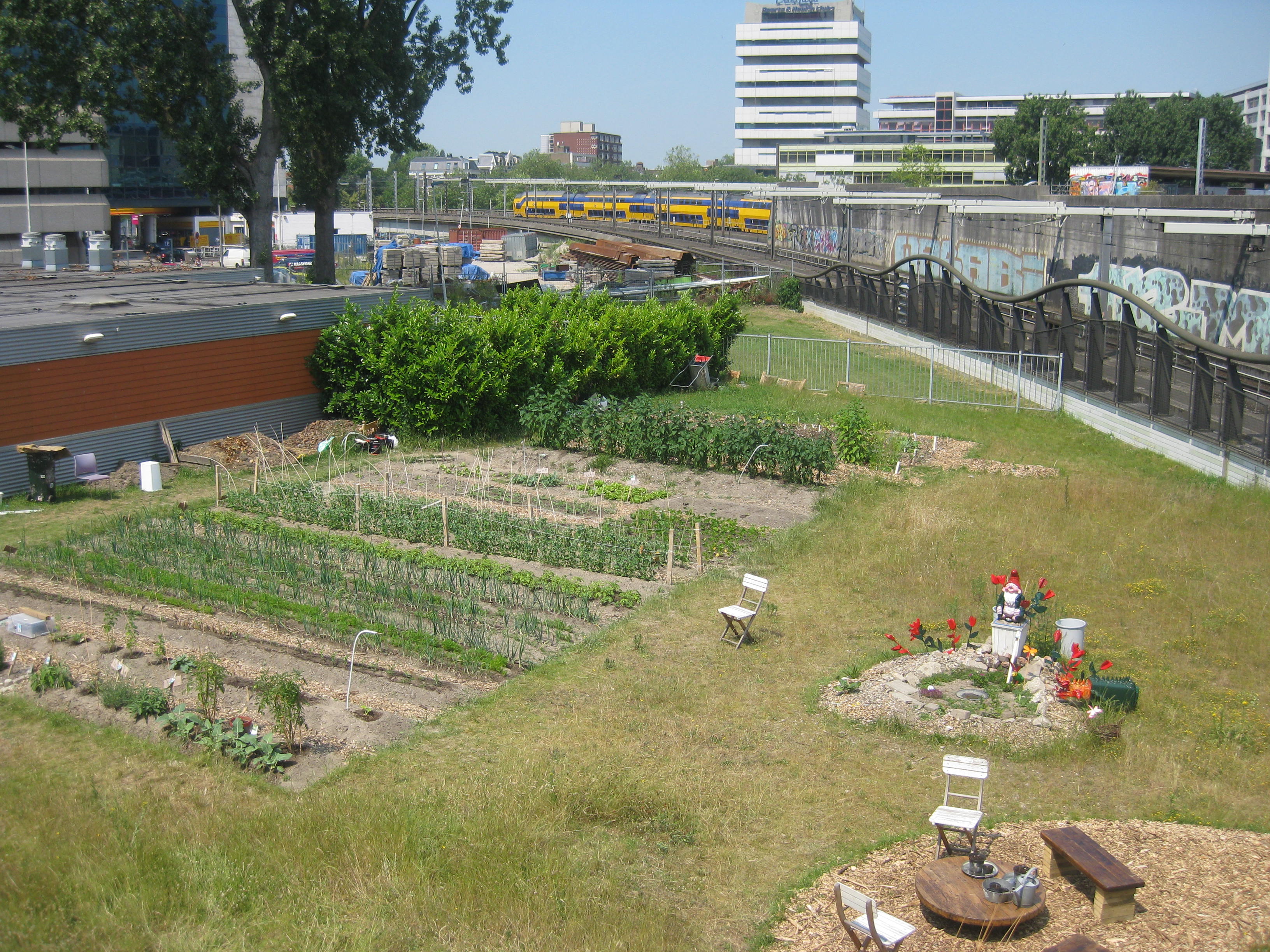
Last week I visited a vegetable and flower garden right in de centre of Rotterdam, on a triangular piece of land squeezed in between the former Shell Head Quarters, the railway going into the tunnel heading South, and the Pompenburg road, flying over the mouth of the railway tunnel towards Hofplein. This garden suddenly appeared on the scene last summer, it is visible from the Pompenburg road and many people passing by wondered what was going on down there.


We had no clue who was running the place, except that Transition Town Rotterdam is apparently involved in its design and operation, and that there is a link with the Nico Adriaans Foundation. But last week I set out to visit this remarkable garden.

It was a freezing cold winter day with snow, but I was assured that there was still some kale and Jerusalem artichoke in the garden. Soon when I got inside the provisional barracks located next to the garden I felt welcome. There was a relaxed atmosphere among the people that were staying there, most of them homeless, some of them with drug problems, I was explained by Jan Blankers, the garden coordinator. Jan works for the Nico Adriaans Foundation, an organisation in Rotterdam providing care and coaching for the homeless. The Foundation is an initiative of the Paulus Church, a church community in down town Rotterdam very dedicated to provide support to homeless people. When the original Paulus Church was removed (in order to make space for new residential development), it was decided to separate the church from the day care of homeless people both organisationally (the Nico Adriaans Foundation was established) as well as geographically (the Paulus church is located at the Mauritskade, the barracks and garden are close to the Hofplein).

Continue reading

Eat-in’s. Delicious Protest

Two Eat-in’s in two weeks; it is the newest trend. Eat-ins are an opportunity to meet colleagues from other groups, such as today in our first Eat-in at work. Eat-ins are dinners where, good, clean and fair food is being shared in a public place. Since those adjectives to the food are lacking in our canteen (see earlier blogs on an arising lunch food market) the Eat-in provided delicious home cooked lunch for some 30 people. We were told of course that we could not do this, that we could not bring home cooked food and share it, that we could not nibble from 20 different dishes. It is somehow different from bringing your home cooked lunch in a lunchbox for yourself only. The collective meal was a statement which did not need any additional words.

The next Eat in is organised by Rural Wageningen Foundation (RUW), the Farmer Foundation (Boerengroep) and Study Group Biological Farming on the 30th of September, 18.00 hours at Experimental Farm ‘Droevendaal’ (Kielekampsesteeg 32, Wageningen).  

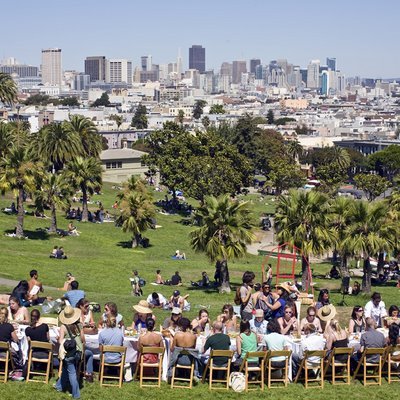
Delores Park SF 2008


According their press release, an Eat-In is also a potluck: a gathering of people where each person or group of people contributes a dish of food to be shared among the group. So bring your own food! At the same time local farmers and cooks will present themselves and sell food at a regional food market. But it’s more…Wageningen students, farmers and cooks will meet. Besides, in short interviews (max. 3 minutes) different actors (e.g. scientists, farmers) will answer the question: What do you contribute to our food? 

For more information visit the website: www.stichtingruw.nl or www.boerengroep.nl or send an e-mail to ruw@wur.nl.