Cursus ‘Voedsel en Stedelijke Ontwikkeling’

Op 29 en 30 november 2010 en 24 januari 2011 verzorgen Carolyn Steel en ik voor Wageningen Business School een cursus over de relatie tussen voedsel en stedelijke ontwikkeling. Deze cursus is toegankelijk voor een breed publiek: beleidsmakers, architecten, landschapsarchitecten, stedelijk ontwerpers, eco-ontwerpers, docenten en mensen die in de landbouw, voedingsmiddelen- of gezondheidsindustrie werken. Daarnaast is iedereen die geïnteresseerd is in duurzame (stedelijke) ontwikkeling van harte welkom.

De aanleiding voor deze cursus is gelegen in de trend van bevolkingsgroei en voortschrijdende verstedelijking en het daarmee samenhangende spectrum aan sociale, economische en ecologische uitdagingen. Klimaatverandering, slinkende olie voorraden en het uitputten van natuurlijke hulpbronnen, gecombineerd met sociale kwesties als armoede, honger en obesitas, vormen de achtergrond voor complexe beleids- en planningsvraagstukken. De verbindende vraag in deze is hoe steden in de toekomst te voeden op een rechtvaardige en duurzame manier.

Als de toekomst inderdaad verstedelijkt is, moeten we dringend (her)definiëren wat dit inhoudt. Huidige aannames over verstedelijking, ontstaan in een tijd die voornamelijk ruraal was, zijn verouderd. We hebben een nieuwe visie nodig op steden en de relatie die zij hebben met het platteland dat hen moet voeden. Als wijzelf en onze toekomstige generaties “goed” willen kunnen leven, moeten we nieuwe inzichten ontwikkelen met betrekking tot wonen, ontwerpen en samenwerkingsverbanden. Hoe we dat moeten doen, is de kern van deze cursus.

Deze cursus is gebaseerd op en geïnspireerd door het boek Hungry City van Carolyn Steel. Hierin analyseert ze stedelijke ontwikkeling vanuit het perspectief van voedsel. Voedsel is de verbindende factor tussen tal van stedelijke uitdagingen, variërend van de ecologische footprint en klimaatverandering tot welzijn en gezondheidsvraagstukken. Door de verbinding met voedsel zichtbaar te maken, krijgen planners en beleidsmakers een middel in handen om hun aanpak te herdefiniëren en deze meer toe te spitsen op een duurzame stedelijke en rurale ontwikkeling. Cursisten leren door dit perspectief de relatie te zien tussen voedsel en verschillende publieke domeinen. Door deze relatie te begrijpen, wordt inzicht verkregen in de kwaliteit van beleid, in de samenhang van beleidsterreinen en in de verbanden tussen lokale en globale kwesties. Cursisten leren werken in multi-disciplinaire teams, waarbij voedsel als gemeenschappelijke taal en verbindende factor gebruikt.

Klik op de volgende links om je in te schrijven of om de cursusfolder te downloaden.

Food, agriculture and cities

Recently the Food and Agricultural Organisation (FAO) has published a brochure and briefing note about food and agriculture in and around cities. Like many international public bodies, national governments and NGOs the FAO is concerned about the social, economic, ecological and health consequences of the concentration of the world’s population in and around large cities. In the brochure the FAO states that there is an urgent need to invest in urban food programmes: 

The 4th World Urban Forum cited the need for policies and interventions to ensure that the increasing number of urban poor do not get left behind. The food dimension of poverty in urban areas still has not been translated into sufficient policy action in many countries. Rural-urban linkages will become increasingly important. Urban policies also need to acknowledge the role of urban and peri-urban agriculture in urban development, ensure urban food supply and strengthen livelihoods of poor urban producers. This includes removing barriers and providing incentives for urban and peri-urban agriculture (UPA) as well as improving natural resource management in urban and peri-urban areas. … A paradigm shift in both urban and agriculture development, planning and policy formulation is required in order to ensure access to urban food security, improved environmental management and enhanced rural-urban linkages.

In order to broaden the approaches and to gather new insights for cities both of developing, intermediate or developed countries,  the FAO’s Global Forum on Food Security and Nutrition (FSN Forum) has opened a debate which is, in terms of contributing to the debate, only open for FSN forum members. However, everyone can read contributions to the debate. Furthermore, for those interested in this topic, I can highly recommend the website of the FAO’s Food for the Cities Initiative. It contains a lot of interesting fact sheets and publications about the multiple aspects related to food, agriculture and cities.

Farming the City: thesis possibilities

Thesis possibilities at the Rural Sociology Group

Contact person: Petra Derkzen. Petra.derkzen@wur.nl

Growing food in and around cities is gaining momentum (see urban agriculture on our blog). From allotment gardens to vertical farming and rooftop production, new initiatives are appearing on a daily basis. Reasons are divers but urgent; the fight against obesity, the need for social cohesion in neighborhoods, reduction of food miles, education about the origin of our food, climate change buffering and preservation of green space in cities. The exact contribution of urban agriculture to these divers goals, however, has so far received little systematic attention. Contacts with initiatives in the Netherlands and worldwide make interesting research possible, for example:

1. To research small scale intensive urban agriculture farms

According to the conventional norms for agriculture, it is not possible to make a living from half a hectare. However, different types of urban agriculture farms show they can. How can this be the case?

2. To research the development possibilities and constraints for urban farmers

To start a farm outside the city, a few million euro’s are needed. Urban agriculture, however, has not the same costs for land acquisition. In this respect, urban agriculture is accessible for newcomers from all ethnic backgrounds. There are, however, other constraints such as planning legislation and policies which are focused towards food production outside the city, leaving those inside the city unrecognized. What is the background of people who are or who want to be active as urban farmers? What are the possibilities and constraints for these farmers?

3. To research the effects of urban agriculture

Over half of the population lives in cities nowadays. The Netherlands too, is a highly urbanized society. The current trend is that more affluent urban citizens seek a better living space in suburban or rural places. The future city will have to be a more attractive living space to keep a divers population. How can urban agriculture contribute to the quality of life of inner cities? What are the disadvantages and risks of food production in high density environments? What are the (potential) effects of urban agriculture?

4. To research to role of urban agriculture in the local food economy

STA72051

Farmers market Des Moines

The current food system is dominated by long chains and a lack of connection between the place of production and the place of consumption. Urban farmers are exploring new local markets for their produce. How do these emerging local chains relate to larger and global chains? Which crops and livestock are suitable for urban farming and which products can better be sourced globally?


Boeren in de stad; Afstudeer mogelijkheden

Mogelijke afstudeer opdrachten bij Rurale Sociologie (RSO)

Contact persoon: Petra Derkzen. Petra.derkzen@wur.nl

STA72195

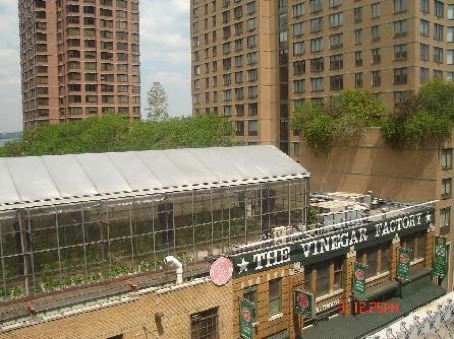
Red Hook urban farm New York

Voedselproductie in en om de stad is dé trend van het moment (zie urban agriculture op deze blog). Van volkstuintjes tot vertical farming en eetbare daken, er ontstaan aan de lopende band initiatieven. De redenen zijn divers maar urgent; het bestrijden van obesitas, het versterken van sociale cohesie, reduceren van voedselkilometers, waar-komt-het-eten-vandaan-educatie, klimaatverandering en behoud van groen in de stad. Echter, de meer precieze bijdrage van voedselproductie in de stad aan deze doelen is nog weinig systematisch aangetoond. Onze contacten met tal van initiatieven in Nederland en wereldwijd maken interessant onderzoek mogelijk; bijvoorbeeld:

1. Onderzoek naar intensieve kleinschalige stadslandbouw bedrijven

Een inkomen halen uit een halve hectare is volgens de gangbare normen voor landbouw onmogelijk. Echter, verschillende stadslandbouwbedrijven laten zien dat het toch kan. Hoe kan dit?

2. Onderzoek naar ontwikkelingsmogelijkheden en beperkingen voor boer-zijn in de stad

Om als nieuwkomer een landbouw bedrijf te beginnen heb je enkele miljoenen euro’s nodig. Stadslandbouw volgt echter niet het gangbare grondverwervings- en opvolgensmodel. Dit maakt stadslandbouw wellicht beter toegankelijk voor nieuwe boeren en voor grotere (etnische) diversiteit in achtergrond. Anderzijds is de wet- en regelgeving alsmede de technische kennis en het ruimtelijk beleid vooralsnog gericht op voedselproductie buiten de stad, en hebben de initiatieven binnen de stad vaak een informeel (niet officieel erkent) karakter. Welke achtergrond hebben boeren die in de stad aan de slag willen? Wat zijn de ontwikkelingsmogelijkheden en beperkingen voor deze nieuwe boeren?

3. Onderzoek naar de effecten van stadslandbouw

Meer dan de helft van de wereldbevolking leeft inmiddels in de stad. Ook Nederland is een zeer verstedelijkte samenleving. Nu vertrekken mensen met genoeg inkomen naar buitenwijken en het platteland. De duurzame stad van de toekomst zal aantrekkelijker moeten worden. Hoe kan stadslandbouw bijdragen aan een beter leefbare stad? Welke nadelen en risico’s zitten er aan voedselproductie in de stad? Wat zijn de (potentiële) effecten van stadslandbouw?

4. Onderzoek naar de plaats van landbouw in en rond de stad in de lokale voedselvoorziening

Het huidige voedselsysteem wordt gedomineerd door lange ketens en het ontbreken van een geografische band tussen de voedselproductie in een bepaald gebied en de consumptie daarvan in de stad. Stadsboeren zoeken nieuwe afzetmogelijkheden voor hun voedselproductie. Hoe verhouden deze lokale ketens zich tot de globale? Voor welke gewassen en houderijen heeft lokale productie een grote meerwaarde en voor welke is global sourcing een duurzaam alternatief?

The tension between rural and regional development

Last week I participated in a conference in Vienna entitled “Rural potentials for regional development“. One of the issues discussed in one of the workshops at that conference was the field of tension between rural development and regional development policies. Rural development policies focus on the sustainable provision of agriculture’s primary products (food, feed and fibre) and on the other good and services provided by farmers, such as biodiversity, landscape, tourism and care in rural areas. The importance of urban and peri-urban agriculture tends to be somewhat neglected. Regional development policies focus on spatial development and on the economic development of and employment in industry and non-agricultural or rural activities and services. The importance of agriculture in regional development largely remains unnoticed.   Continue reading