Rural regional learning in Alytus County, Lithuania

Last week (October 21-22, 2010), I was given the opportunity to visit our DERREG project partner Emilija Kairyte (Institute NeVork) in her case study area of Alytus County in the South of Lithuania. In this blog, Emilija and I would like to share our experiences.

Like the Dutch DERREG case study region Westerkwartier in the province of Groningen, Alytus County comprises four rural municipalities. In terms of demography and economy, both areas are very different from each other. For example, the Westerkwartier has a population density of 173.4 inhabitants/ km², whereas the population density of Alytus County is estimated as 32.6 inhabitants/ km². While the Westerkwartier has witnessed an increase in citizens over the last years, amongst them a large number of young families, rural development in Alytus County is strongly affected by an increasing out-migration and an aging population. Living standards differ considerably. In the Westerkwartier, the GDP per capita was estimated as 55.400 Euro in 2006 while the GDP in Alytus County was estimated as 19.100 Litai in 2007 (equals 5.531,74 Euro, October 2010). Also in geographical terms the two regions are very different. The Westerkwartier is characterized by open grasslands in the North and small fields with framing hedgerows in the South. Alytus County is renowned for its vast forests and lakes.

During my visit to Alytus County, I accompanied Emilija to two workshops, one for the LAG and other public administration authorities on the 21st of October and one for rural initators and actors on the 22nd of October, which she organized in order to evaluate existing arrangements for support and facilitation of joint learning-by-doing activities within rural development initiatives. At these workshops, I presented supportive arrangements and benefiting rural development initiatives that we found during our investigations in the Westerkwartier and which we evaluated together with local stakeholders at a workshop organized by the Rural Sociology Group in the Westerkwartier on the 18th of October.
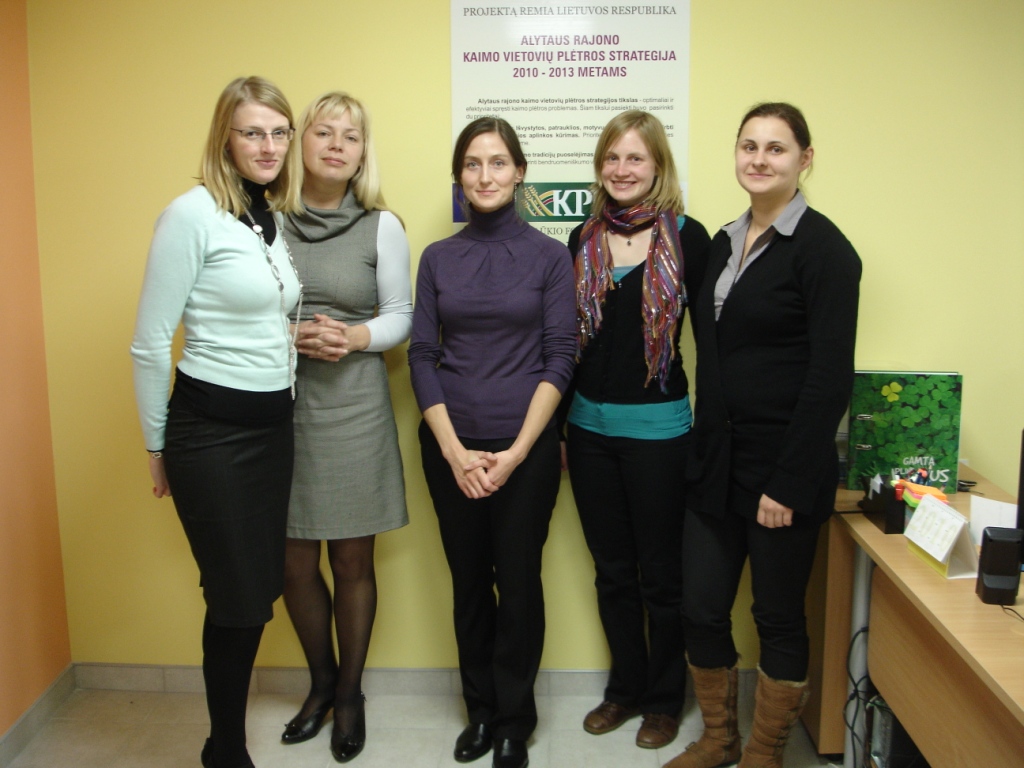
Meeting with rural development initiative supporters in Alytus District LAG office, Alytus

To my surprise, both regional learning supporters (including the LAG) and rural initiators did not see striking differences between the existing arrangements and support given to rural development initiatives in Alytus County and the Westerkwartier. Emilija and I however learned that there are some basic differences in the foundation and operation of the Countryside House (Plattelandshuis) in Westerkwartier and Seniūnija (NUTS5) in Alytus County. Continue reading

Rural regional learning in the Westerkwartier (NL)

The Westerkwartier is a predominantly rural area in the province of Groningen (NL), situated between the cities of Leeuwarden and Groningen. The Westerkwartier is one of the case-study areas in the research project DERREG funded by the European Commission (see www.DERREG.eu for more info). Capacity building and governance of regional learning and innovation is one the four research task (see also previous posts on DERREG).

Last Monday, October 18, Rural Sociology Group facilitated a group discussion in the Westerkwartier. The discussion focussed on: a) how the support rural regional learning and innovation is actually arranged in the area and b) how beneficiaries evaluate the quality of the support.

DERREG Group discussion at the Hayema Heerd

17 representatives from collective (grassroot) development initiatives in the area, from local and regional government and from knowledge institutes participated in the discussion.

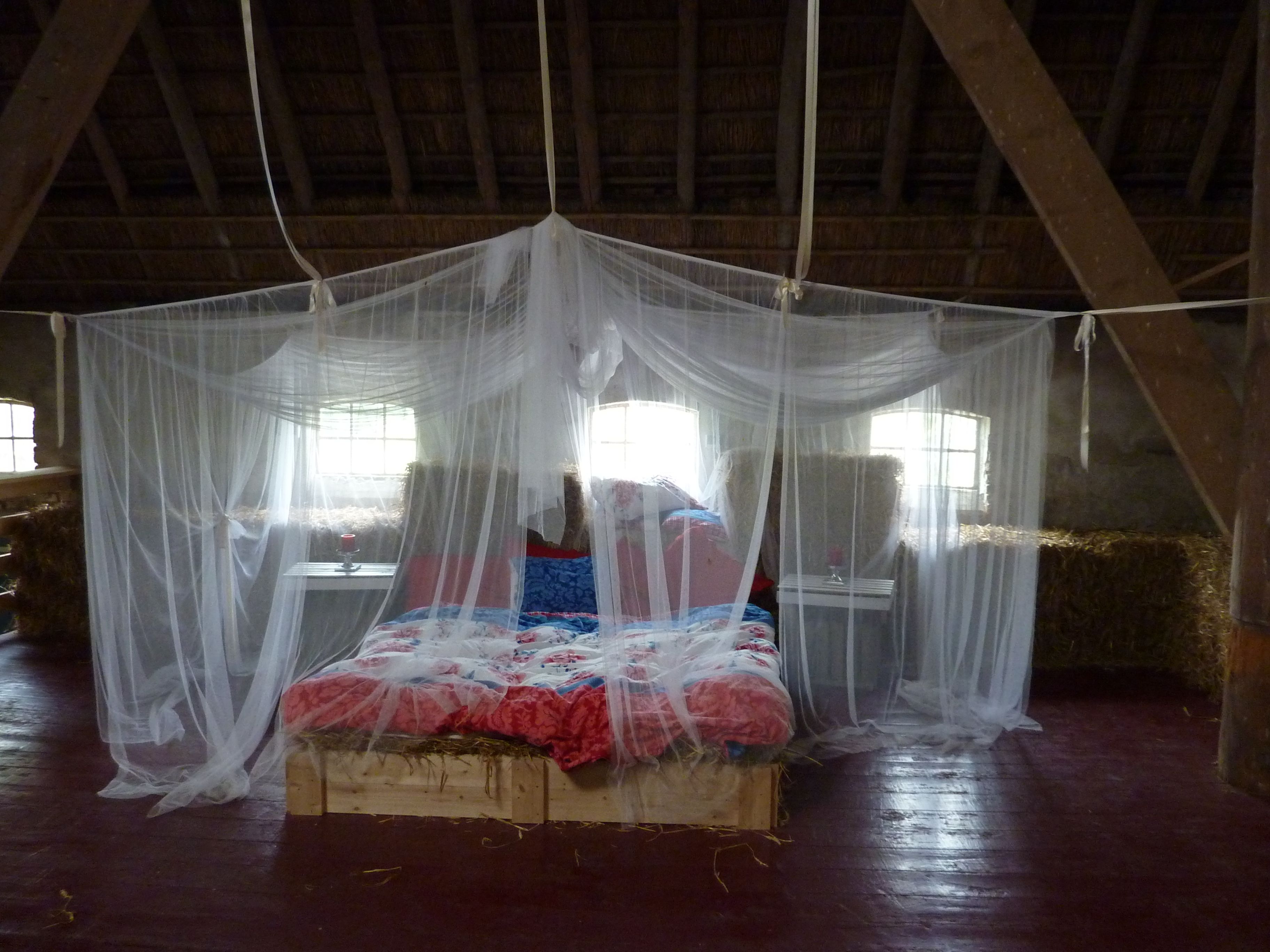
Sleeping in straw beds at Hayema Heerd

The workshop was organised at an inspiring location: the barn of the former farm Hayema Heerd in Oldehove (see www.hayemaheerd.nl), now offering citizens the special countryside experiences to sleep on straw beds. In addition Hayema Heerd also offers to learn more about real-life farming at nearby farms. this has been set up jointly with local farmers and is called In-Boeren, what refers to learning about being a farmer.

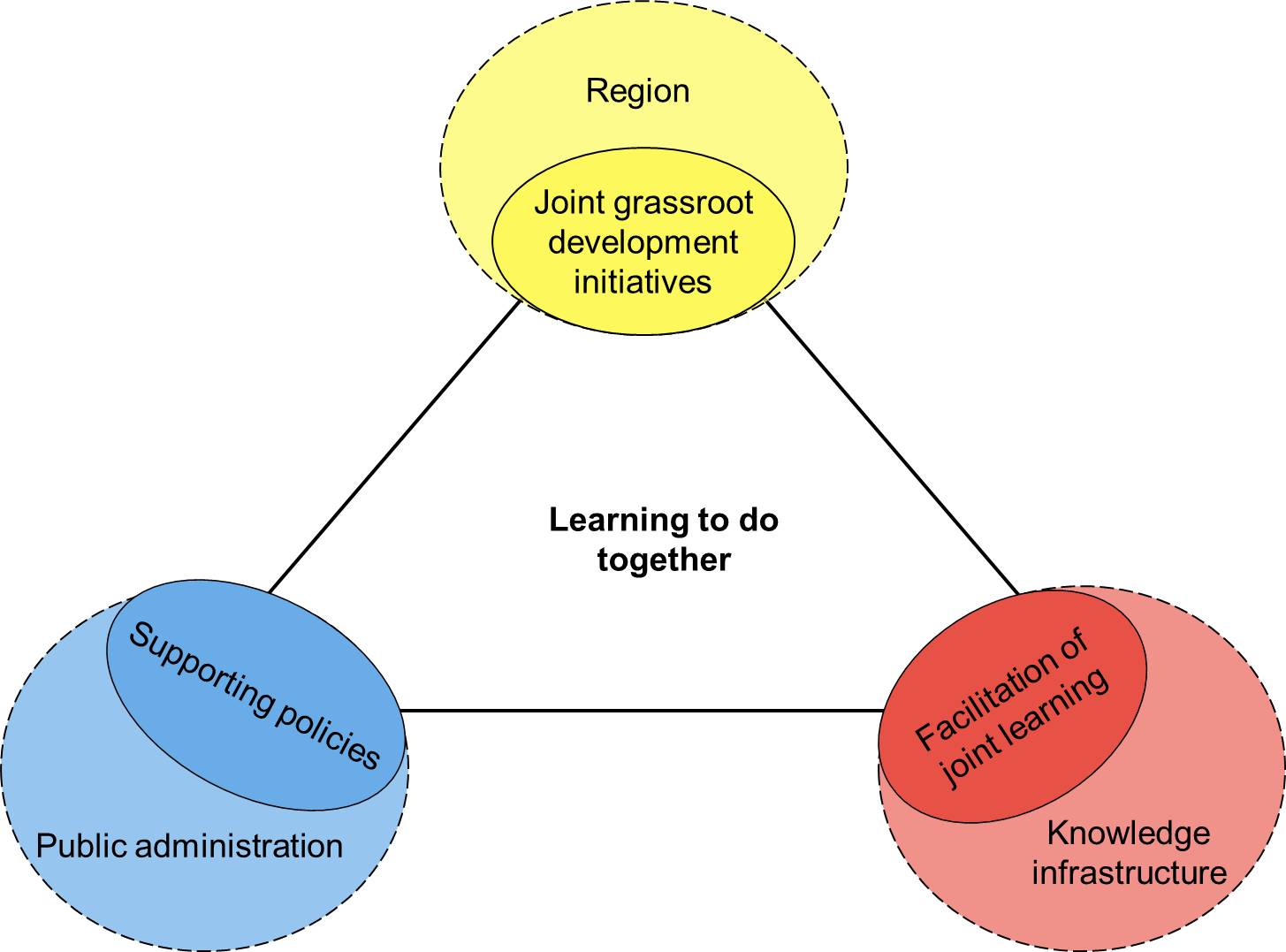
Mapping the governance of rural regional learning and innovation (Source: Wellbrock and Roep, 2010)

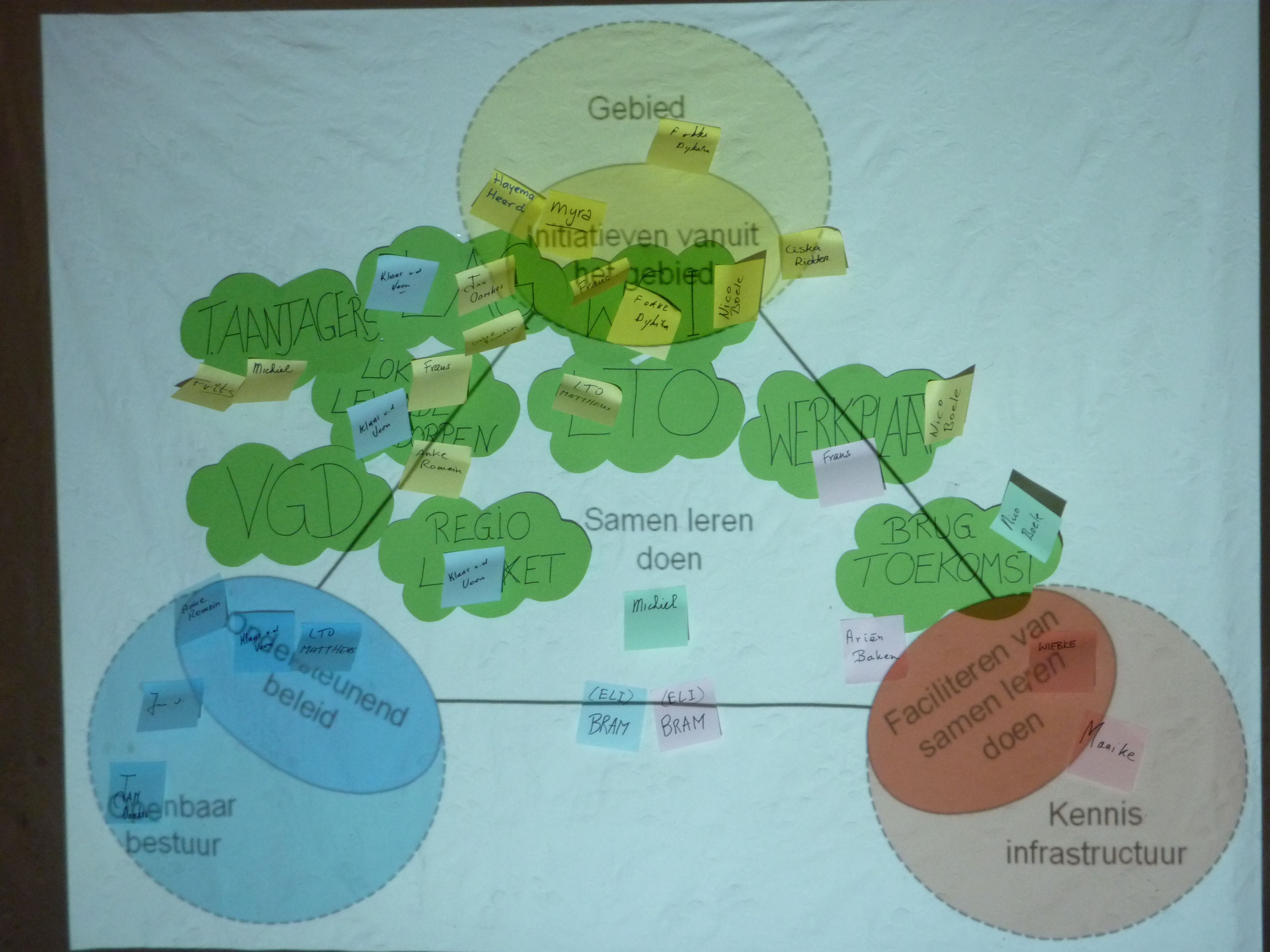
Other collective initiatives represented in the workshop were Wichterwest, a group of women entrepreneurs setting up their own business, and the regional Agricultural Nature Association. The collaboration and joint learning-by-doing in these networks is supported by several arrangements. These arrangements can be mapped as operational interfaces between grassroot development activities in the region, supporting public policies and learning and innovation supporting facilities in the framework of what we call a learning region (see the figure), reflecting thus a map of how the support of joint rural regional learning is actually arranged (see picture).

Mapping the arrangements and personal roles of the participants

Examples of arrangements operational in the Westerkwartier are:

  • The Local Action Group (Leader);
  • The Countryside House (Plattelandshuis) serving amongst others as a window for entrepreneurs and citizens with new ideas and development initiatives;
  • An Atelier, which is under construction building on previous experiences with the aim to get public funded education and research engaged on a structural base in the support of development activities in the region;
  • Three Touristic catalysts, supporting indivudual and collective initiatives of recreational entrepreneurs in the area.

The discussion made clear that these arrangements are important to channel the various types of support to individual and collective development activities: information, financial suport, expertise, feedback, maneuvring within (public) regulations, etc. Especially the Countryside House serves well as an entry to support as it lowers the threshold for initiators, a place were people from the area can meet and find themselves someone who coaches them and get them known in the unknown, complex world of numerous subsidies, regulations and networks. Continue reading

Second European Sustainable Food Planning Conference – a last reminder

As mentioned in one of my previous blogs the  Urban Performance Group of the University of Brighton (UK) will host the second European Sustainable Food Planning Conference on 29 and 30 October 2010 under auspices of the Association of European Schools of Planning (AESOP). Although the deadlines for submission of abstracts and selection of papers and posters have passed, there are still a few places available to attend the conference. It promises to become an interesting conference due to the diversity of disciplinary and interdisciplinary contributions and the geographical range of cases and experiences that are going to be presented. And, furthermore, it also seems to be a vary timely conference; the attention for urban agriculture, food and health, food and urban design and food governance is rapidly increasing, not only in the academic realm but also in political and societal debates.

For more information about the conference you can download the conference brochure or have a look at the conference website.

PUREFOOD research and training network

The Rural Sociology Group has been granted the coordination of a Marie Curie Initial Training Network  entitled ‘Urban, peri-urban and regional food dynamics: toward an integrated and territorial approach to food (PUREFOOD)’ funded by the European Commission’s Seventh Framework PEOPLE program. The PUREFOOD research and training programme aims to reduce the enormous knowledge and skills deficit that is negatively affecting the capacity to design and deliver appropriate political and developmental solutions in the crucial supra-disciplinary fields of food security, public food procurement, public health and sustainable urban and regional development. Hence, the objective of PUREFOOD is to train a pool of 12 early-stage researchers (ESRs) in the socio-economic and socio-spatial dynamics of the (peri-)urban and regional foodscape. The research and training program will therefore provide knowledge and innovation for the Commission’s aim to deal with economic, social and environmental policies in “mutually reinforcing ways” which reflects the core of the Lisbon and Gothenburg agenda’s call for integrated solutions towards economic prosperity, social cohesion and environmental sustainability. The PUREFOOD network is centred around food as an integrated and territorial mode of governance and studies the emergence of the (peri-)urban foodscape as an alternative (as opposed to a globalised) geography of food, including the ways in which, and the extent to which, sustainability aspects generally considered to be intrinsic to the alternative food geography are incorporated by the more conventional food companies.

The PUREFOOD Initial Training Network consists of 7  university partners who will each host one or more ESRs:

  1. Wageningen University Rural Sociology Group (The Netherlands)
  2. Cardiff University School of City and Regional Planning (United Kingdom)
  3. Pisa University Department of Agronomy and Agro-ecosystem Management (Italy)
  4. Latvia University Faculty of Social Sciences (Latvia)
  5. City University London Centre for Food Policy (United Kingdom)
  6. Federal University of Rio Grande do Sul Postgraduate Program in Rural Development (Brazil)
  7. Makerere University School of Public Health Department of Community Health and Behavioural Sciences (Uganda)

In addition to these universities as full consortium partners, the PUREFOOD network consists of 8 associated partners, a combination of private firms, public authorities and civil society organisations:

  1. Peri-Urban Regions Platform Europe (PURPLE)
  2. Sustainable Agriculture Initiative (SAI) Platform
  3. Sodexo UK
  4. Willem&Drees
  5. Slow Food Study Center
  6. Stroom Den Haag
  7. Sustain – the alliance for better food and farming
  8. Tukums municipality

The associated partners will contribute to the PUREFOOD training program by contributing to courses, participating in Communities of Practice and by hosting ESRs for a secondment. The active involvement of these associated partners is also of great importance for safeguarding the practical applicability of scientific research in the commercial, public as well as civic realm and for the dissemination of results.

The seven universities have opened (or soon will open) vacancies for 12 early-stage research positions. The launch of the vacancies has been announced on this weblog. As of now the PUREFOOD vacancy brochure with information about ESR projects, eligibility criteria, contact persons for additional information and addresses for submitting applications is available. For potential prospective ESRs an information pack has been compiled with information about the PUREFOOD research and training programme, the individual ESR projects, the timeline of the project and short descriptions of the full and associated consortium partners.

Food: The Link between City and Countryside

In spring 2007 the Amsterdam Food Strategy entitled Proeftuin Amsterdam , which was inspired by the London Food Strategy, commenced. Proeftuin Amsterdam combines policies, initiatives and activities which serve the following objectives in Amsterdam and the surrounding region:

  • Provide naturally-grown and preferably local food for everybody while minimizing environmental impacts;
  • Promote healthy eating habits, especially among children & young people;
  • Achieve a balance between the demands of urban consumers and the supply of food products from the surrounding countryside;
  • Preserve the surrounding agricultural landscapes of Amsterdam.

In order to achieve these objectives Proeftuin Amsterdam seeks to act as lubricant for existing and emerging initiatives, as a facilitator for new alliances between public and private parties and as an initiator of new initiatives. Some examples of the targets of Proeftuin Amsterdam are:

  • The availability of organically produced and preferably local food in:
    • all school canteens;
    • municipal canteens, hospitals and care institutions;
    • the tourist industry;
    • local day markets.
  • Preserving agriculture in the immediate surroundings of the city for the long term.
  • Kitchen amenities in new schools.
  • Every primary school to have access to a nearby school working garden.
  • Simplified regulations for retail and day markets for organic and local food.
  • Reduction of food miles, lower emissions as a result of cleaner transport.
  • School curricula to include life style and eating habits.

According to a DG Regional Policy document about Proeftuin Amsterdam[i] the

“action programme for healthy and sustainable food chains has shown impressive impact and resonance. … This is especially evident for initiatives in the field of education (schools gardens, school meals, farm-related projects) and the promotion of regional markets to connect producers and consumers. All in all the Proeftuin Amsterdam testifies to the good sense of connecting environmental and health aspects of food systems with the preservation of the peri-urban area around Amsterdam. … Such regional food strategies can be instrumental in meeting the challenges Europe will have to face with respect to changing global food markets and demographic developments.”    

Despite the fact that Proeftuin Amsterdam has achieved, albeit sometimes partially, many of its initial goals and has inspired other cities in the Netherlands to incorporate food in urban development plans, the municipality has decided to end the programme by the end of this year, although some projects will continue in the Amsterdam boroughs. To mark the end of 4 years of Proeftuin Amsterdam a special issue of Plan Amsterdam, the magazine of the spatial planning department, about food has been issued entitled ‘Voedsel – Schakel tussen Stad en Platteland’. This special issue, in Dutch but with an English summary, reflects on Amsterdam’s food strategy but also contains a very interesting article about the history of the Amsterdam food markets.


[i] See http://www.proeftuin.amsterdam.nl/aspx/download.aspx?file=/contents/pages/100532/case_study_amsterdam_food_strategy.pdf