Rural regional learning in Alytus County, Lithuania

Last week (October 21-22, 2010), I was given the opportunity to visit our DERREG project partner Emilija Kairyte (Institute NeVork) in her case study area of Alytus County in the South of Lithuania. In this blog, Emilija and I would like to share our experiences.

Like the Dutch DERREG case study region Westerkwartier in the province of Groningen, Alytus County comprises four rural municipalities. In terms of demography and economy, both areas are very different from each other. For example, the Westerkwartier has a population density of 173.4 inhabitants/ km², whereas the population density of Alytus County is estimated as 32.6 inhabitants/ km². While the Westerkwartier has witnessed an increase in citizens over the last years, amongst them a large number of young families, rural development in Alytus County is strongly affected by an increasing out-migration and an aging population. Living standards differ considerably. In the Westerkwartier, the GDP per capita was estimated as 55.400 Euro in 2006 while the GDP in Alytus County was estimated as 19.100 Litai in 2007 (equals 5.531,74 Euro, October 2010). Also in geographical terms the two regions are very different. The Westerkwartier is characterized by open grasslands in the North and small fields with framing hedgerows in the South. Alytus County is renowned for its vast forests and lakes.

During my visit to Alytus County, I accompanied Emilija to two workshops, one for the LAG and other public administration authorities on the 21st of October and one for rural initators and actors on the 22nd of October, which she organized in order to evaluate existing arrangements for support and facilitation of joint learning-by-doing activities within rural development initiatives. At these workshops, I presented supportive arrangements and benefiting rural development initiatives that we found during our investigations in the Westerkwartier and which we evaluated together with local stakeholders at a workshop organized by the Rural Sociology Group in the Westerkwartier on the 18th of October.
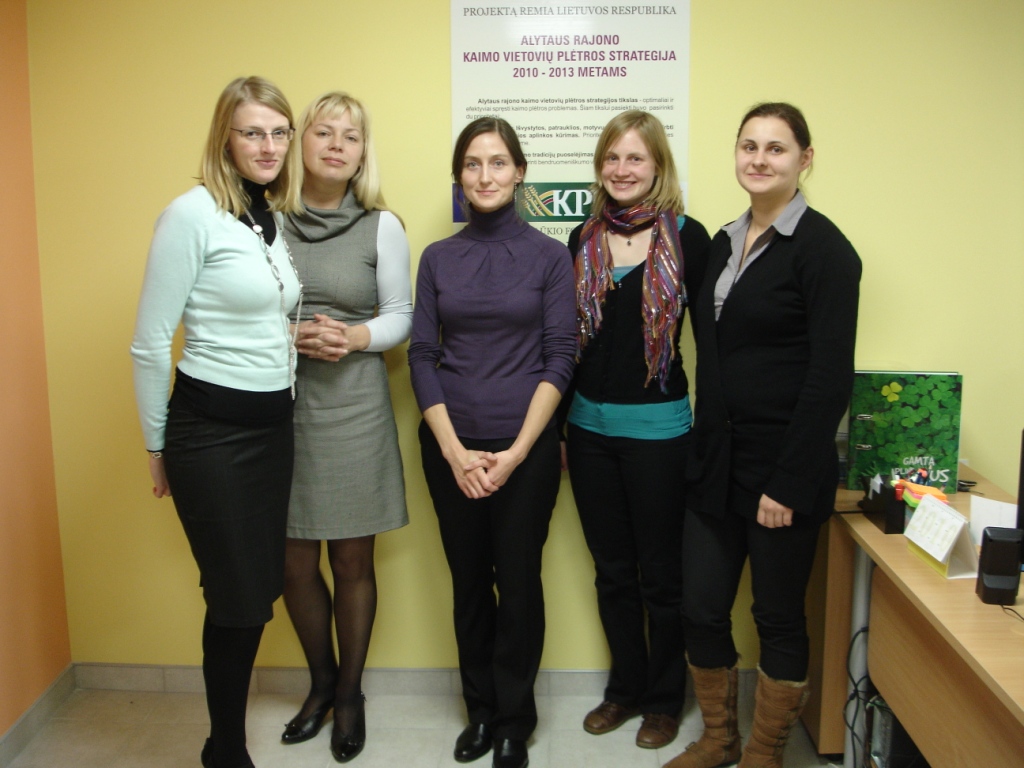
Meeting with rural development initiative supporters in Alytus District LAG office, Alytus

To my surprise, both regional learning supporters (including the LAG) and rural initiators did not see striking differences between the existing arrangements and support given to rural development initiatives in Alytus County and the Westerkwartier. Emilija and I however learned that there are some basic differences in the foundation and operation of the Countryside House (Plattelandshuis) in Westerkwartier and Seniūnija (NUTS5) in Alytus County. Continue reading

Food: The Link between City and Countryside

In spring 2007 the Amsterdam Food Strategy entitled Proeftuin Amsterdam , which was inspired by the London Food Strategy, commenced. Proeftuin Amsterdam combines policies, initiatives and activities which serve the following objectives in Amsterdam and the surrounding region:

  • Provide naturally-grown and preferably local food for everybody while minimizing environmental impacts;
  • Promote healthy eating habits, especially among children & young people;
  • Achieve a balance between the demands of urban consumers and the supply of food products from the surrounding countryside;
  • Preserve the surrounding agricultural landscapes of Amsterdam.

In order to achieve these objectives Proeftuin Amsterdam seeks to act as lubricant for existing and emerging initiatives, as a facilitator for new alliances between public and private parties and as an initiator of new initiatives. Some examples of the targets of Proeftuin Amsterdam are:

  • The availability of organically produced and preferably local food in:
    • all school canteens;
    • municipal canteens, hospitals and care institutions;
    • the tourist industry;
    • local day markets.
  • Preserving agriculture in the immediate surroundings of the city for the long term.
  • Kitchen amenities in new schools.
  • Every primary school to have access to a nearby school working garden.
  • Simplified regulations for retail and day markets for organic and local food.
  • Reduction of food miles, lower emissions as a result of cleaner transport.
  • School curricula to include life style and eating habits.

According to a DG Regional Policy document about Proeftuin Amsterdam[i] the

“action programme for healthy and sustainable food chains has shown impressive impact and resonance. … This is especially evident for initiatives in the field of education (schools gardens, school meals, farm-related projects) and the promotion of regional markets to connect producers and consumers. All in all the Proeftuin Amsterdam testifies to the good sense of connecting environmental and health aspects of food systems with the preservation of the peri-urban area around Amsterdam. … Such regional food strategies can be instrumental in meeting the challenges Europe will have to face with respect to changing global food markets and demographic developments.”    

Despite the fact that Proeftuin Amsterdam has achieved, albeit sometimes partially, many of its initial goals and has inspired other cities in the Netherlands to incorporate food in urban development plans, the municipality has decided to end the programme by the end of this year, although some projects will continue in the Amsterdam boroughs. To mark the end of 4 years of Proeftuin Amsterdam a special issue of Plan Amsterdam, the magazine of the spatial planning department, about food has been issued entitled ‘Voedsel – Schakel tussen Stad en Platteland’. This special issue, in Dutch but with an English summary, reflects on Amsterdam’s food strategy but also contains a very interesting article about the history of the Amsterdam food markets.


[i] See http://www.proeftuin.amsterdam.nl/aspx/download.aspx?file=/contents/pages/100532/case_study_amsterdam_food_strategy.pdf

Balancing between governing styles – participatory processes in Galicia

By Marlies Meijer, graduated MSc-student

In previous blogs (see e.g. my second post on Planning realities in Galicia) I have written about my journey to Galicia and the difficulties and interesting views I came across while investigating planning and rural development practices there. In June this journey came to an end, I finished my master thesis and graduated (full thesis report ‘Balancing between governing styles: participatory practices in rural Galicia‘   is available online).

When writing my thesis I spent a lot of time on untangling the complex background of problems experienced in rural Galicia. Now I have been asked to write shortly about the conclusions to introduce the thesis. It is not an easy task, but I will try. 

One of the main problems in Galicia is land abandonment. Many people own land, but most parcels are too small and dispersed to manage. Due to many reasons most owners are not willing or able to maintain or sell their land. A great deal of these parcels have been afforested, with EU-subsidies. Unfortunately also forested parcels turned out to be ill-managed and not economically viable. With the implementation of forest management units the government of Galicia (Xunta) tried to tackle these problems. Within these units parcels are managed jointly, as one area. This makes forestry more economic viable and diverse; and forest fire safety measures or road construction more feasible. The most important precodition and goal of this project is the active involvement of citizens. Though this is the first participatory project in Galicia, many have been implemented in the EU. Galicia followed this example.

The problem with citizen involvement (or participatory processes) is that it takes two to tango, and sometimes even the ability of citizens to dance on their own. In Galicia the Xunta was a step ahead. Citizens did not show an endogenous will to participate actively, they were involved on paper and felt that maintenance was the task of Xunta. The Xunta conversely was very willing to make this policy a succes. Setting good examples and attracting as many owners as possible dominated. By overtaking responsibilities of owners (like administratory tasks and costs) and with charisma this process was streamlined. Nonetheless, as many interviewees responded, a participatory approach was also “the only way” to deal with problems like land abandonment or ill-managed forests. And it is true, inactive ownership forms the root of these problems and needs to be dealt with.

By studying this project it became clear that Galicia’s government was balancing between different style of governance. On the one hand are the old, clientalistic, ways of policy making in which the governments are in charge and take care of everything. On the other hand there is the new participatory approach that the Xunta aimed for when implementing the uxfor-policy. While looking for a balance, several areas of tensions emerged:

  • The policy-makers wanted to establish success quickly. By taking care of almost all aspects of implementation, it was possible to found uxfors in an efficient and quick way. However, creating active citizenship takes usually much more time and patience.
  • It was difficult to involve the citizen actively. The Xunta wanted to create active citizenship, but citizens expected the government to take care of common affairs. Citizens felt this was out of their responsibilities.
  • Land abandonment and depopulation are deep-rooted problems at the Galician countryside. The uxfor-policy tried to deal with these developments. But how can active citizenship be stimulated if the largest part of the population is well over 65, and most landowners live in other regions?

These conclusions hold close relations with other parts of Europe. Also here the participatory approach is gaining ground and are governments and citizens struggeling (in different ways) with its implementation. Depopulation and land abandonment also prevail in other marginal rural areas.

Despite the above mentioned comments on participatory processes in Galicia I respect the Xunta highly for their ability to ‘just’ do something, to start a project and not getting diluted by all kinds of problems (like bureaucracy) that might rise in the beginning.

Repeasantisation in Araponga, Brazil – a quest for space

By Leonardo Ayabe van den Berg, MSc graduate International Development Studies

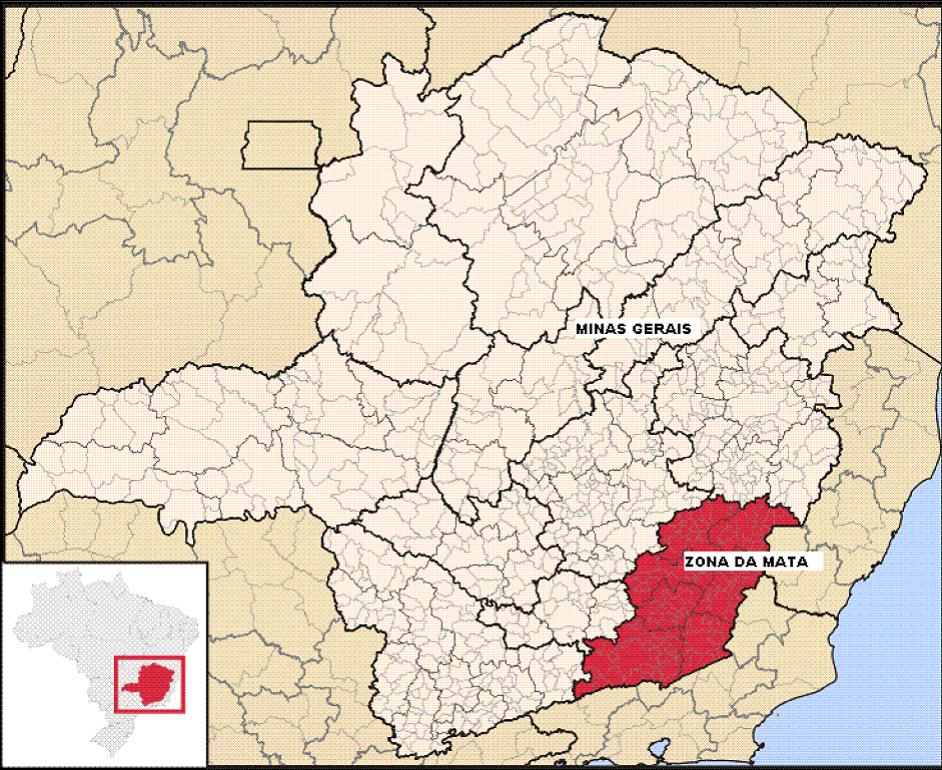
Recently I completed my MSc-thesis. The thesis research is set in the municipality of Araponga in Brazil, where (re)peasantisation occurred and continues to occur. Here I describe some of the findings of my research.  When interested you can downlaod a pdf of my thesis ‘Invisible peasant movements: A case study of (re)peasantisation in Brazil‘.

Araponga

Araponga

When I started to read about the peasantry there were two major things that occurred to me as striking. First, in policy peasants are often considered as a group of laggards: who are unable to take care of themselves and therefore need social assistance; who rely on primitive forms of technology and therefore must be modernized; or who are impeded by a stagnant, traditional mentality and must therefore be converted into small entrepreneurs. The peasant mode of farming is seldomly considered in its own right. Second, in academic theory peasants are predicted to disappear, weaken or live a life of poverty as a result of their inferior mode of production and their helplessness. Departing from the assumption that actors are driven by a specific economic-rational logic, neo-liberal approaches roughly theorise that peasants commoditize, compete with other farms as a result of which there will be regional growth. Tradition or culture can block economic rationality and the transition from peasant to entrepreneur. The peasant will then be doomed to poverty. In contrast to the neo-liberal approach, neo-Marxist approaches, most of which also assume that the peasant is driven by an economic logic and commoditize, theorise that commoditization will either lead to the destruction of the peasant enterprise or to a fate of poverty. This is the result of price fluctuations, squeeze in agriculture (caused by the trend of decreasing produce prices and increasing input prices for farmers), or newly emerging food networks (through which income from weaker, peasant, parts of the chain are squeezed in favour of the more powerful, retailers, part of the chain). These predictions and preconceptions contradict with what happened in Araponga, a rural municipality in the state of Minas Gerais in Brazil where there was a rise in the number of peasants and an increase in welfare. The objective of this thesis was to find out how this was possible: how had (re)peasantisation occurred in Araponga. Continue reading

Wichterwest: A network meeting with gains for everybody

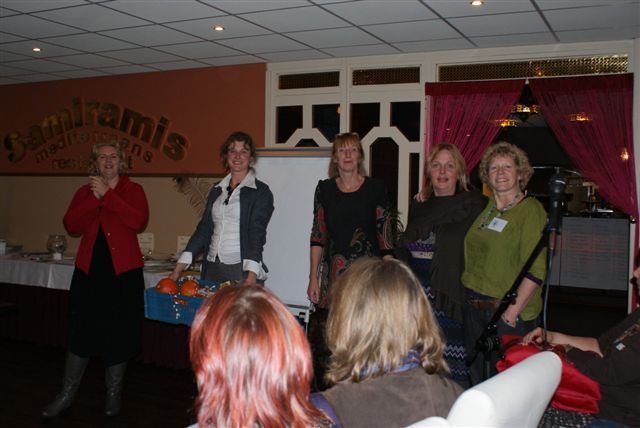
Yesterday, I – together with 66 rural business women- attended a meeting of the rural women’s business network ‘Wichterwest’ at Restaurant Samiramis in Grootegast.

 The establishment of women business networks was initiated by Groningen Province in an attempt to stimulate networking amongst rural business women in the province. Today, each region within Groningen province has a rural women’s network. In the Western region of Groningen province (a.k.a. Westerkwartier) the network is called ‘Wichterwest’ and is organised by the project leader ‘Vereiniging Groningen Dorpen.

 ‘Wichterwest’ acts as a platform for business women to network, to exchange ideas and to receive information about business. The organisers also arrange offers for business courses and trainings. For example, the organisers are arranging a new training programme which will focus on three different business aspects: a) business start-ups, b) business management and c) market/ marketing strategies. To respond to the great interest of business women in the network and to accommodate its growing number of participants, the organisers are now considering options to set up a foundation with the aim to increase income and offers.

 Yesterday’s meeting started with a speed dating session in which everybody got to know the fellow participants and their businesses. I was impressed by the variety of activities carried out by the women of the Westerkwartier. For example, I met a photographer, a Bed & Breakfast owner, an administrator, a clothes designer, several advisors, an interior designer and the owner of an online farm shop for regional products. The evening proceeded with an exercise to practice efficient networking skills and a delicious three course menu made of organic products produced in the Westerkwartier. Filled with food, excitement rose as the winners of a lottery game were announced. Each business woman was asked to bring a gift made by her company. By winning vouchers for advice, massage and acupuncture sessions, bags of sheep wool and cushions for man and beast, everybody was able to get an impression of the variety of products offered by business women in the Westerkwartier. The evening was completed with three different workshops concerning a) optimal business plans, b) press releases and c) the importance of the entrepreneur for making business.

Even though I am not a business women myself, I returned home filled with positive impressions regarding the innovative spirit and versatility of business women in the Westerkwartier- and a business arrangement made during the networking game- let me recall, I said I was not a business women?