
In Lisbon, Portugal, the World Congress of Rural Sociology is currently on. It is a stimulating week with researchers from all over the world in plenary sessions as well as smaller parallel groups where results and concepts are presented and discussed. While listening to some presentations, I had to think of the book “Food Movements Unite!” edited by Eric Holt-Giménez. Leaders of the food sovereignty movement talk about the future of the movement and about the need to unite. From the academic work currently presented, there seems to be hopeful news that this is happening. Patricia Allen explained how there is “basket of social movements in convergence” around food and agriculture in the US currently. Whereas the Sustainable Agriculture coalition would talk about environmental degradation and profitability of farm enterprises and certainly not about food security and social justice in a wider sense, this move is now being made. This makes linkages possible with the Community Food Security Movement. To describe this development, Patricia used the metaphor of a tree trunk with a non-negotiable core and branches with leaves of slightly different colour. Continue reading
Tag Archives: Social Movement
IFSA 2012 workshop ‘The meaning of semi-subsistence farming in different cultural contexts’
Together with Imre Kovach and Catherine Darrot, I will be hosting a workshop at the IFSA symposium in Aarhus, Denmark from the 1st of July until the 4th of July 2012.
The workshop is aimed at exploring the multiple meanings of semi-subsistent food production strategies in different cultural context. Two questions are at the centre of attention: 1) How has the meaning of semi-subsistent food production changed over time for producers, society and institutions? and 2) What recommendations can be derived from the research for policy makers of multi-state institutions (e.g. EU?). We invite researchers from diverse countries to present their empirical research in order to stimulate a fruitful discussion and knowledge exchange.
The deadline for submitting abstracts is the 31st of December 2011. More information and a link to submitting your abstract can be found here. I hope to see you there!
Urban Ag and Revolution
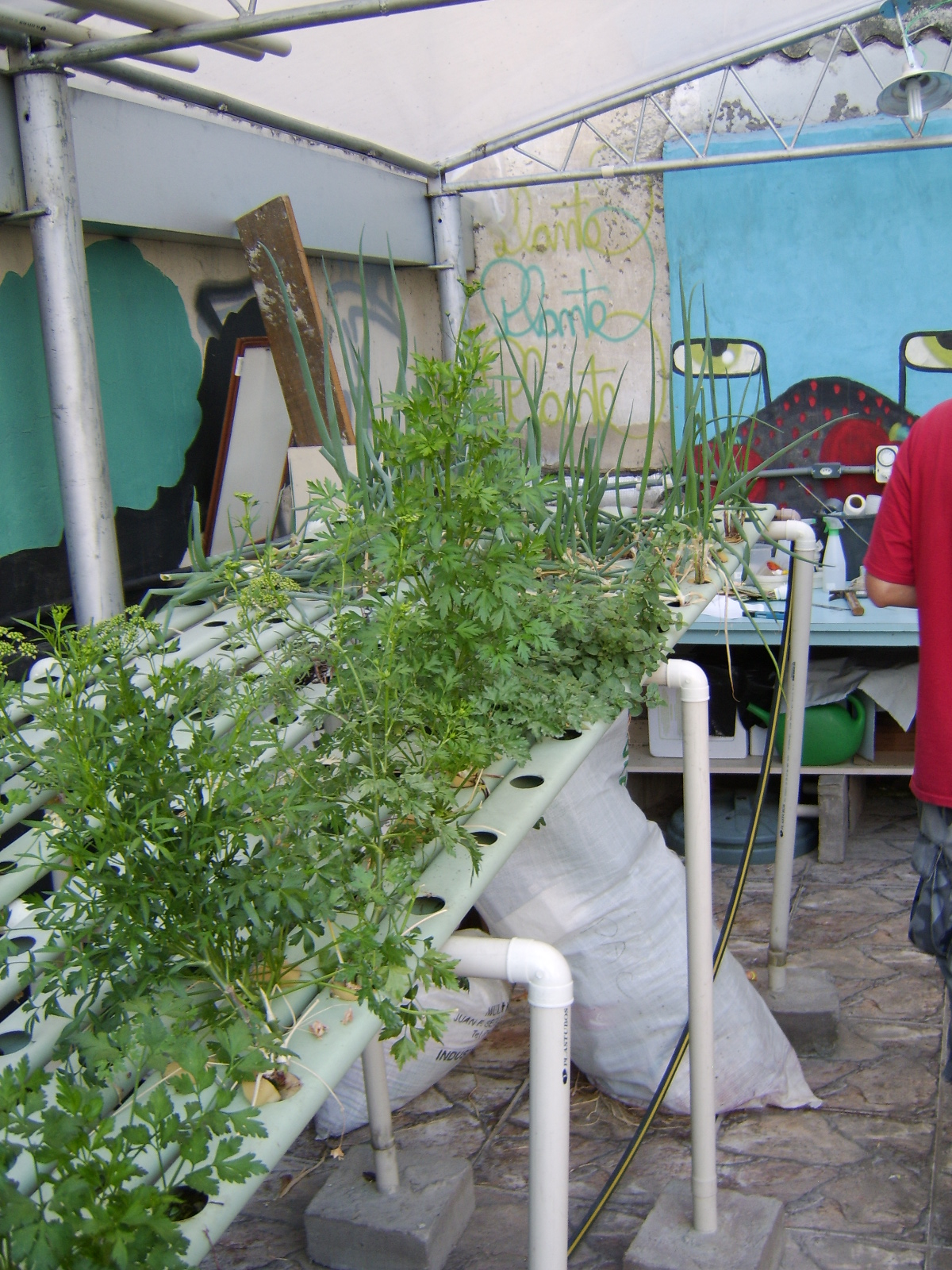 They claim to be the only example of rooftop farming in Porto Alegre. Hence, a revolutionary example in many ways. A student of last week’s class kindly offered to showed me around in Porto Alegre including unusual places such as the movement-community-cooperative COOPSUL. Right in the middle of the centre a building was squatted in 2005 related to the World Social Forum marches. The building was long-term abandoned and the movement of (somehow translated) ‘roofless’ people, the urban counterpart of the MST, asked with the squatting for the right to good housing. Their slogan; ‘Utopia e Luta’ which means Utopia and Struggle/Fight.
Against the odds, their fight was productive and they were given the right to stay in the building in 2007 under the condition that it would be a community place, open for the public. The building was turned into 42 individual apartments and community spaces for 5 separate cooperative economic activities; baking, gardening, sewing, laundry services and t-shirt printing. With the years, reality hit utopia from the inside. Tensions around individual needs and collective organisation, around leadership and running the cooperative emerged. It was originally envisaged that the people who were selected for the individual apartments would also work in the cooperative activities. This turned out to be difficult for various reasons. As a result, the 5 activities are not all running in the way it was envisaged and the rooftop farm is still very much in construction and produces for the building only.
Despite internal difficulties, the successful access to living space by squatting is still charged with a lot of symbolic energy. The movement and the building became a symbol for other urban groups and movements and the organisation is asked to assist in demonstrations and other revolutionary activities. For example today, they went out to assist MST land occupation demonstration in the face of evacuation.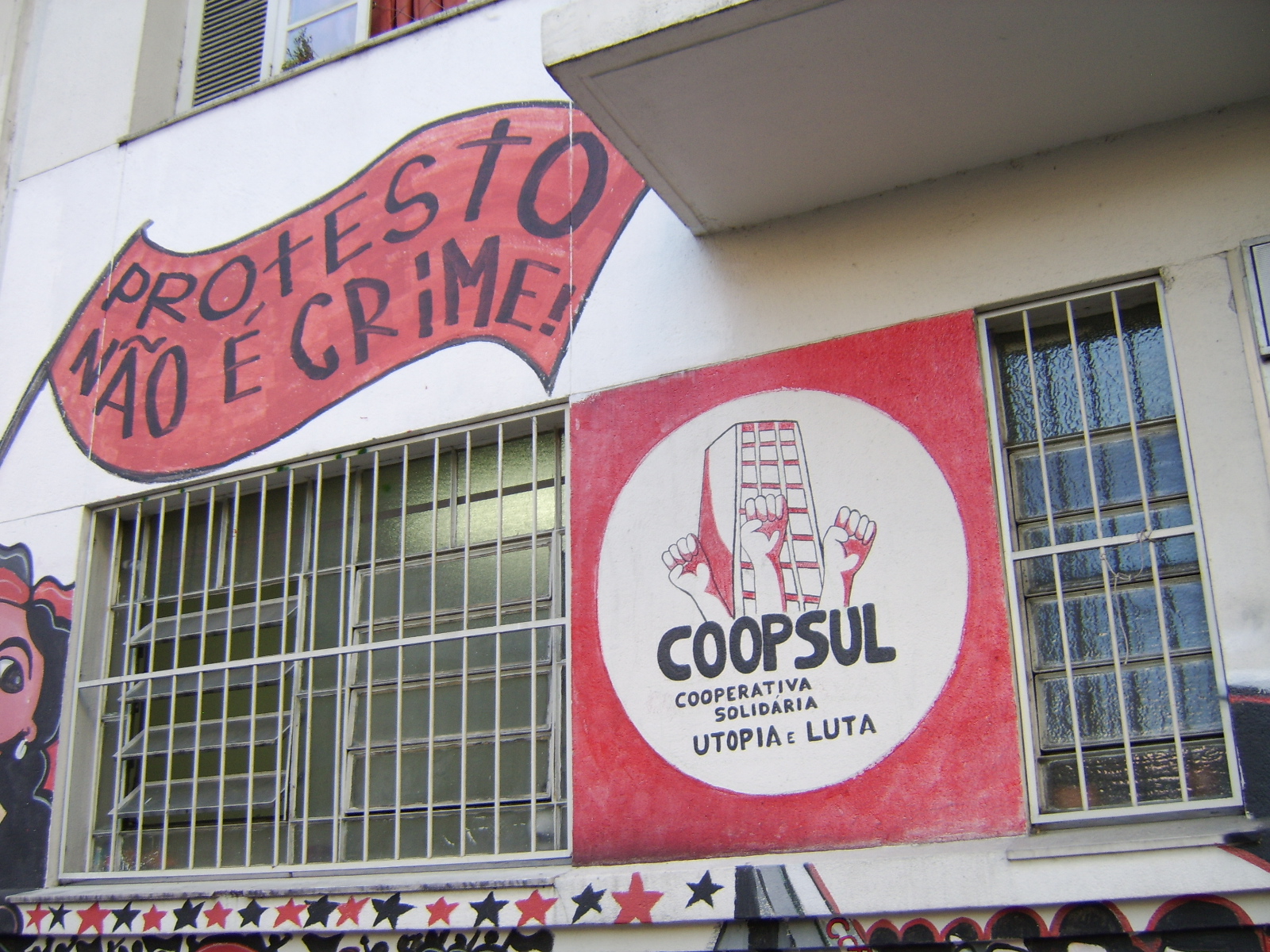
CS: Food crisis? Strategies to transform our food system: course outline
 On the 16th of October it is World Food Day. The theme this year 2011 is ‘Food prices –from crisis to stability’. Price swings, upswings in particular, represent a major threat to food security in developing countries. It is predicted that instability in the world food economy will continue during the decade to come. What can we do? How can we create resilient food systems? The World Food Day has inspired the NGO’s Otherwise, RUW and the Boerengroep, to jointly organise a series of activities and lectures: Food, Farmers and Forks: moving beyond the crisis in agriculture.
In collaboration with Petra Derkzen of the chairgroup Rural Sociology (RSO) the series can be followed as one of the learning activities in this Capita Selecta course under the code RSO 51303 ‘Agricultural and Rural Innovation Processes’. The Food Farmer Fork lecture series together with the book: Food movements Unite! Strategies to Transform Our Food System (ed. Eric Holt-Giménez; see foodfirst.org) and a written essay form the basis of the course.
So, listen to critical lectures on the role that social movements can play in rural development, the future for European farmers after the CAP, the contribution of urban agriculture to food security and consider your own Ecological Footprint in the Food Farmer Fork series! And, the course literature consists of a just released and super timely book which gives the necessary background and concepts to understand the relationships between food sovereignty, resilient food systems and social movements. We will read Part I. You will learn to formulate your own vision on these relationships through the course essay assignment. The full course outline will be available soon.
Credits: 3. See under this link the course outline: Capita Selecta RSO 51303 v2
Language: English
Start: Tuesday evening 1th of November. Lectures/activities; every tuesday evening until 13th of December. Deadline essay delivery 14 of December.
Subscribe to the course until 31 of October at Boerengroep st.boerengroep@wur.nl
Working group at 24th ESRS congress in Chania, Greece 22-25 August 2011: Call for papers
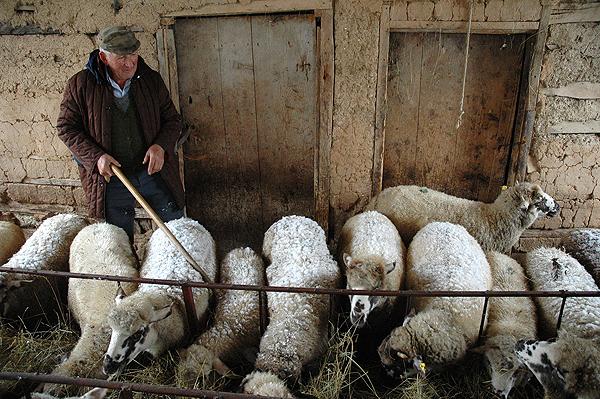
Imre Kovách ( Institute for Political Science of the Hungarian Academy of Sciences, Budapest), Petra Derkzen and I are organising a working group on “the governance of semi-subsistent food and farming strategies in the countryside and city- a compartive perspective” at the 24th ESRS congress in Chania (Greece) from 22-25 of August 2011. We would like to invite all interested researchers to submit their papers dealing with empirical or theoretical reflections on the driving forces, structure and mechanisms of semisubsistence food and farming strategies in the countryside and-or cities, both within developed and developing countries. Abstracts may be submitted to Imre Kovach (ikovach@mtapti.hu) AND chania2011@agr.unipi.it until the 30th of April 2011. For a more detailed description of the workshop please read further…
Courtesy of European Forum on Nature Conservation and Pastoralism

 Rural Sociology Wageningen University