DERREG – Final conference and proceedings

Two weeks ago, from October 12-13, we had our final conference of the EU-funded research project DERREG (www.derreg.eu)  in Murska Sobota, Slovenia. Here the major findings of the project were presented.

DERREG coordinator prof. Michael Woods first presented (see presentation) an overwiew of the project and an interpretative model (see below) on how regions are affected by and respond to forces of globalisation mediated by various catalyst and he ended with a typology of regional responses based on the research done in the 10 case study regions. See also the DERREG Summary Report by Michael Woods.


Successively the coordinators of the four Work Packages presented the main findings along four themes:

  1. Rural Businesses, Global Engagement and Local Embeddedness (presented by Andrew Copus)
  2. International Migration and Rural Europe (presented by Birte Nienaber)
  3. The Global Environment and Rural Sustainable Development (presented by Joachim Burdack & Michael Kriszan)
  4. Rural regional learning (presented by Dirk Roep and Wiebke Wellbrock)

Each overview was illustrated with findings for two case study areas presented by the respective partners.

A separate session was dedicated to policy perspective on globalisation and rural development in Slovenia and in particular the Pomurje region in the north of Slovenia were Murska Sobota is located and the Final conference took place.

At the end, guest speakers from the Goriška region in Slovenia, the Övre Norrland in Sweden, the Westerkwartier region in the Netherlands and the Steirische Mur-Drau-Bioenergie-Region in Austria highlighted four good practices of how regions can respond to global processes and benefit from it.

All presentations can be downloaded from the DEREG website: http://www.derreg.eu/content/events/final-conference-derreg-project (at the bottom of the webpage).

At the DERREG resource-centre other proceedings are made accessible too, such as the WP reports, the case study context reports and case study summary reports. Look at http://www.derreg.eu/content/resource-centre.  Finally, a database of good practice across the WP theme’s and case study areas has been built and made accessible: look  at http://www.derreg.eu/content/good-practice-database.

Last but not least: video clips are made for each of the ten case study regions and when ready these will be published on You tube and announced at the website.

The project will finish by the end of this year. The partners are now working on several scientific publications in journals and books. By the end of this year and beginning of 2012 DERREG related articles will be published in two special issue of the European Countryside, an online journal (see the content of latest issue). Next will be an edited book published by Ashgate titled ‘Globalization and Europe’s Rural Regions‘  which will capitalise the findings for the 10 case study areas.

Publications will be announced at the resource-centre of the DERREG website, as for the video clips, and information will be posted on this blog.

Rural regional learning in the Comarca de Verín, Galicia, Spain

Within the European research project DERREG, we are investigating how public policy can best be arranged to stimulate capacity building within development initiatives operating at grassroots level in rural areas across the European Union.

To find out how public policy interventions can best be arranged, we and our research partners have spoken to various stakeholders in different rural regions across the European Union to find out how they intend to support and facilitate learning and innovation and- most importantly- how the support and facilitation agreed upon is actually provided to the grassroots development initiatives. To find out what is working well and what isn’t working well yet, we have spoken to a number of grassroots development initiators in the participating DERREG case study areas and ask them to evaluate the current support and facilitation received.

To be able to compare the results obtained in the different case study areas, I have travelled to Alytus County, Lithuania in October and Oberlausitz, Germany in December of 2010. In January of this year, I was able to visit our colleague Lola Dominguez Garcia of  Universidade de Vigo in the Comarca de Verín in the South-West of Galicia, Spain. In this blog, we intend to share our experiences. Continue reading

Rural regional learning in the Westerkwartier (NL)

The Westerkwartier is a predominantly rural area in the province of Groningen (NL), situated between the cities of Leeuwarden and Groningen. The Westerkwartier is one of the case-study areas in the research project DERREG funded by the European Commission (see www.DERREG.eu for more info). Capacity building and governance of regional learning and innovation is one the four research task (see also previous posts on DERREG).

Last Monday, October 18, Rural Sociology Group facilitated a group discussion in the Westerkwartier. The discussion focussed on: a) how the support rural regional learning and innovation is actually arranged in the area and b) how beneficiaries evaluate the quality of the support.

DERREG Group discussion at the Hayema Heerd

17 representatives from collective (grassroot) development initiatives in the area, from local and regional government and from knowledge institutes participated in the discussion.

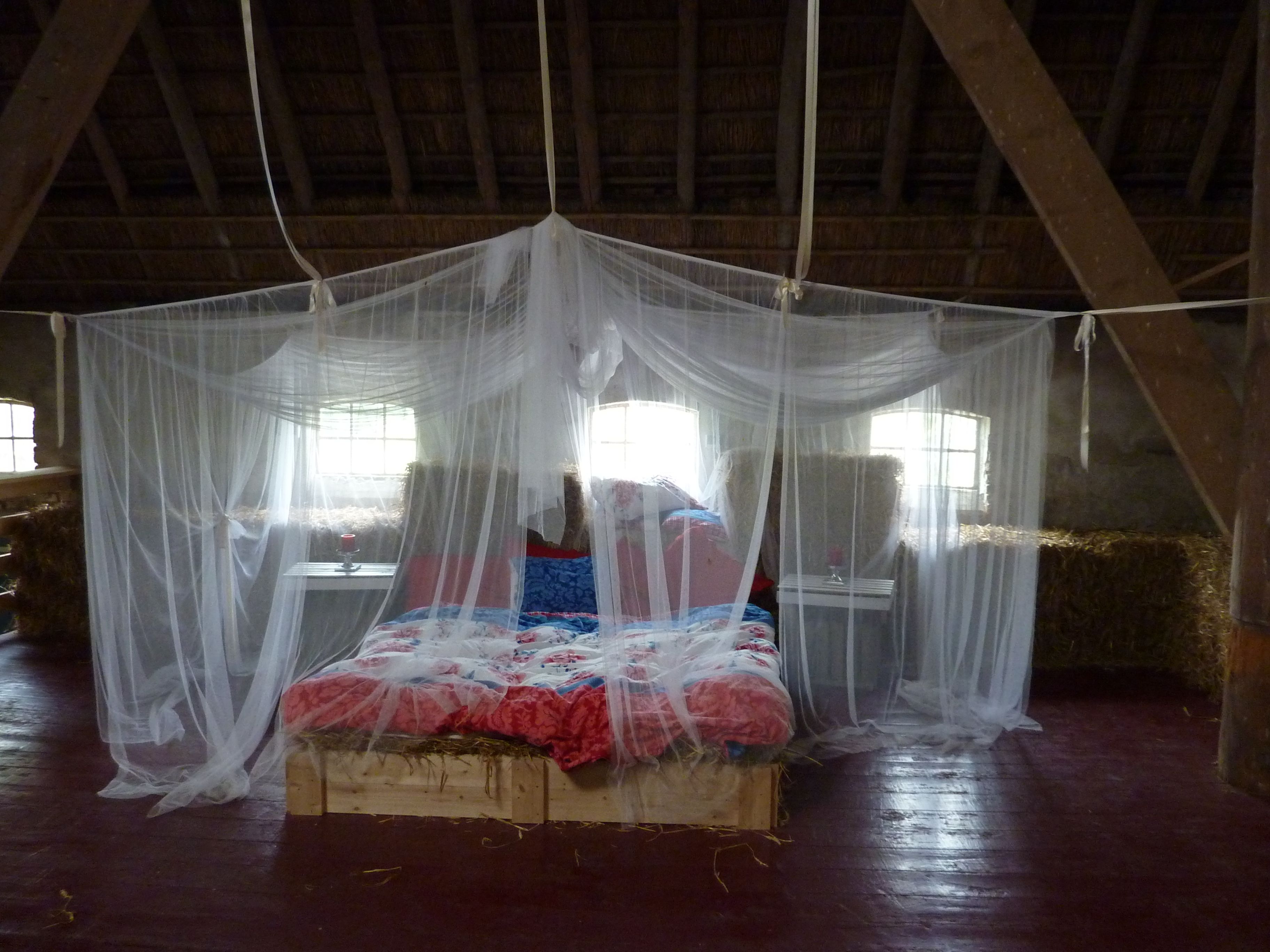
Sleeping in straw beds at Hayema Heerd

The workshop was organised at an inspiring location: the barn of the former farm Hayema Heerd in Oldehove (see www.hayemaheerd.nl), now offering citizens the special countryside experiences to sleep on straw beds. In addition Hayema Heerd also offers to learn more about real-life farming at nearby farms. this has been set up jointly with local farmers and is called In-Boeren, what refers to learning about being a farmer.

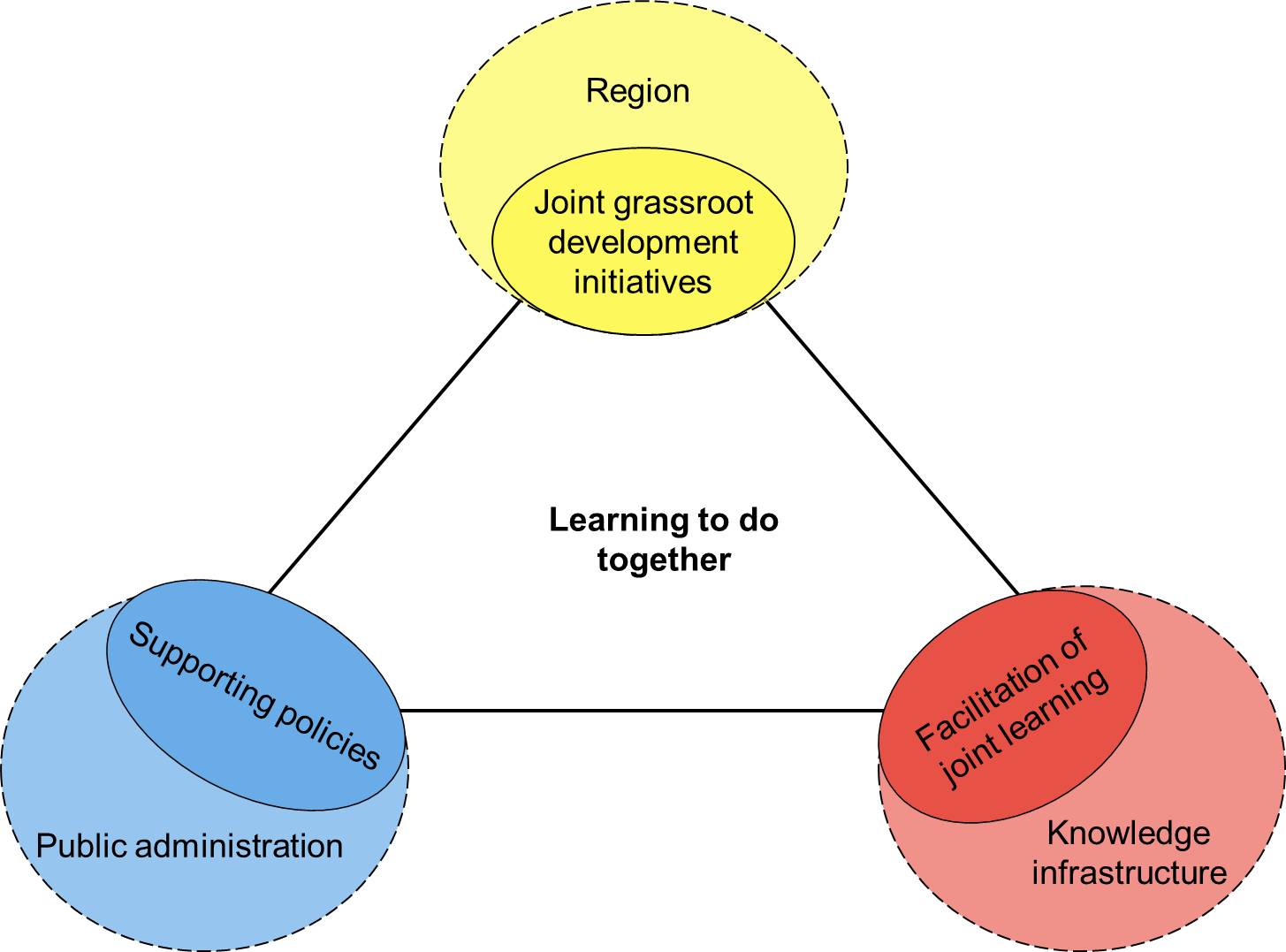
Mapping the governance of rural regional learning and innovation (Source: Wellbrock and Roep, 2010)

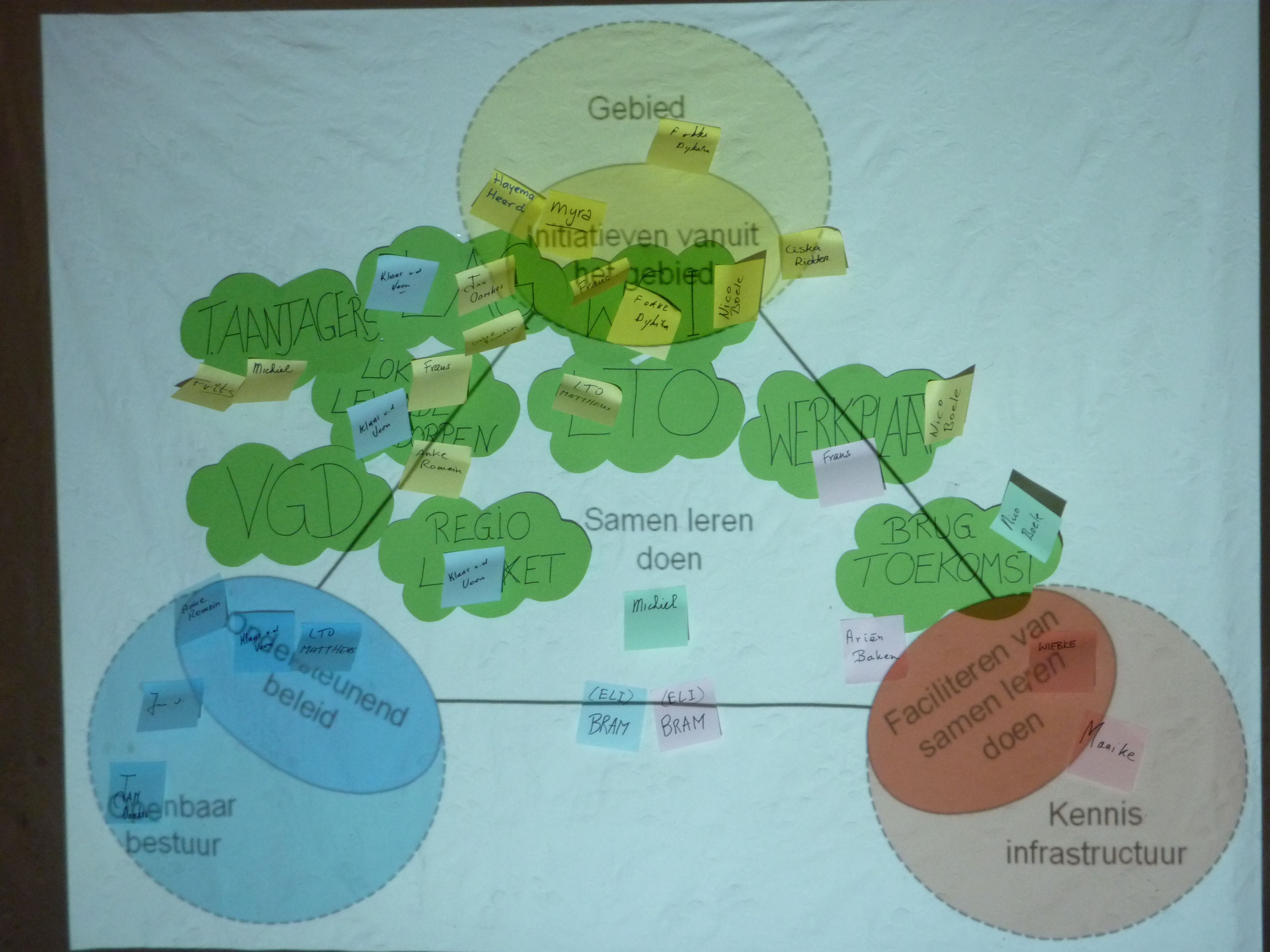
Other collective initiatives represented in the workshop were Wichterwest, a group of women entrepreneurs setting up their own business, and the regional Agricultural Nature Association. The collaboration and joint learning-by-doing in these networks is supported by several arrangements. These arrangements can be mapped as operational interfaces between grassroot development activities in the region, supporting public policies and learning and innovation supporting facilities in the framework of what we call a learning region (see the figure), reflecting thus a map of how the support of joint rural regional learning is actually arranged (see picture).

Mapping the arrangements and personal roles of the participants

Examples of arrangements operational in the Westerkwartier are:

  • The Local Action Group (Leader);
  • The Countryside House (Plattelandshuis) serving amongst others as a window for entrepreneurs and citizens with new ideas and development initiatives;
  • An Atelier, which is under construction building on previous experiences with the aim to get public funded education and research engaged on a structural base in the support of development activities in the region;
  • Three Touristic catalysts, supporting indivudual and collective initiatives of recreational entrepreneurs in the area.

The discussion made clear that these arrangements are important to channel the various types of support to individual and collective development activities: information, financial suport, expertise, feedback, maneuvring within (public) regulations, etc. Especially the Countryside House serves well as an entry to support as it lowers the threshold for initiators, a place were people from the area can meet and find themselves someone who coaches them and get them known in the unknown, complex world of numerous subsidies, regulations and networks. Continue reading

Vitaal Oldambt – film over bijdrage ondernemende vrouwen aan vitaal platteland

Wiebke Wellbrock berichtte al over netwerken van ondernemende vrouwen in Groningen, die door de Vereniging Groninger Dorpen worden ondersteund met een bijdrage vanuit een LEADER-gelden (Mit mekander), en in het bijzonder over het netwerk Wichterwest in het Westerkwartier en bijeenkomst van 8 december 2009.  Harry van Schokkenbroek heeft een mooie film gemaakt over ondernemende vrouwen in Oldambt en hun bijdrage aan een vitaal platteland. De film is te bekijken op de website www.h-schokkenbroek.nl/Film.html (in de map films 2009/2009).

Wichterwest: A network meeting with gains for everybody

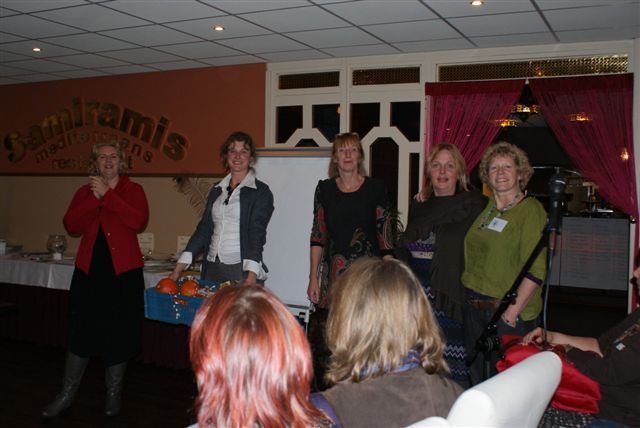
Yesterday, I – together with 66 rural business women- attended a meeting of the rural women’s business network ‘Wichterwest’ at Restaurant Samiramis in Grootegast.

 The establishment of women business networks was initiated by Groningen Province in an attempt to stimulate networking amongst rural business women in the province. Today, each region within Groningen province has a rural women’s network. In the Western region of Groningen province (a.k.a. Westerkwartier) the network is called ‘Wichterwest’ and is organised by the project leader ‘Vereiniging Groningen Dorpen.

 ‘Wichterwest’ acts as a platform for business women to network, to exchange ideas and to receive information about business. The organisers also arrange offers for business courses and trainings. For example, the organisers are arranging a new training programme which will focus on three different business aspects: a) business start-ups, b) business management and c) market/ marketing strategies. To respond to the great interest of business women in the network and to accommodate its growing number of participants, the organisers are now considering options to set up a foundation with the aim to increase income and offers.

 Yesterday’s meeting started with a speed dating session in which everybody got to know the fellow participants and their businesses. I was impressed by the variety of activities carried out by the women of the Westerkwartier. For example, I met a photographer, a Bed & Breakfast owner, an administrator, a clothes designer, several advisors, an interior designer and the owner of an online farm shop for regional products. The evening proceeded with an exercise to practice efficient networking skills and a delicious three course menu made of organic products produced in the Westerkwartier. Filled with food, excitement rose as the winners of a lottery game were announced. Each business woman was asked to bring a gift made by her company. By winning vouchers for advice, massage and acupuncture sessions, bags of sheep wool and cushions for man and beast, everybody was able to get an impression of the variety of products offered by business women in the Westerkwartier. The evening was completed with three different workshops concerning a) optimal business plans, b) press releases and c) the importance of the entrepreneur for making business.

Even though I am not a business women myself, I returned home filled with positive impressions regarding the innovative spirit and versatility of business women in the Westerkwartier- and a business arrangement made during the networking game- let me recall, I said I was not a business women?