Unknown's avatar

About FoodGovernance

Jessica Duncan is Associate Professor in Rural Sociology at Wageningen University (the Netherlands). She holds a PhD in Food Policy from City University London (2014). Jessica’s main research focus concerns the practices and politics of participation in food policy processes, particularly the relationships (formal and non-formal) between governance organizations, systems of food provisioning, the environment, and the actors engaged in and across these spaces. More specifically, she maps the diverse ways that actors participate in policy-making processes, analysing how the resulting policies are shaped, implemented, challenged, and resisted, and she theorizes about what this means for socio-ecological transformation. Participation and engagement is at the core of her approach. In turn, she is active in a broad range of local, national and international initiatives with the aim of better understanding participation processes with a view towards transitioning to just and sustainable food systems. She is involved in several research projects including ROBUST, HortEco & SHEALTHY. Jessica is published regularly in academic journals. She recently co-edited the Handbook on Sustainable and Regenerative Food Systems (2020). Her other books include Food Security Governance: Civil society participation in the Committee on World Food Security (2015) and an edited volume called Sustainable food futures: Multidisciplinary solutions (2017). Jessica has received several awards for her teaching and in 2017 she was awarded Teacher of the Year for Wageningen University (shortlisted again in 2018 and 2019, longlisted in 2020). With the funds she has received for these awards she launched a story-telling workshop for students and faculty, with storytelling trainer, Emma Holmes. Jessica is on the Editorial Board of the journal Sociologia Ruralis and is an advisor to the Traditional Cultures Project (USA). She is a member of the Wageningen Young Academy and sits on the Sustainability Board of Experts at Wageningen University.

(Re)framing of Global Food Security at Wageningen

On Monday September 22, MSc student Lara Sibbing will present her thesis entitled:  “Two times more with two times less”: Framing and reframing of Global Food Security at Wageningen UR.

If you are interested in learning more about the topic or about how the MSc thesis works in the Rural Sociology Group, please come along.

When: 12:30-13:30, September 22

Room: V72 (Leeuwenborgh)


“Our culture is being eroded”: 2nd report from the field

Florian Neubauer is working on an M.Sc. Thesis with RSO titled `Understanding changes in land tenure and livelihoods among the pastoral Maasai in southern Kenya´. Here he shares some reflections from his field work. All quotations are either taken from interviews or from informal conversations. Florian’s first post can be found here.

Part 2: Maasai culture


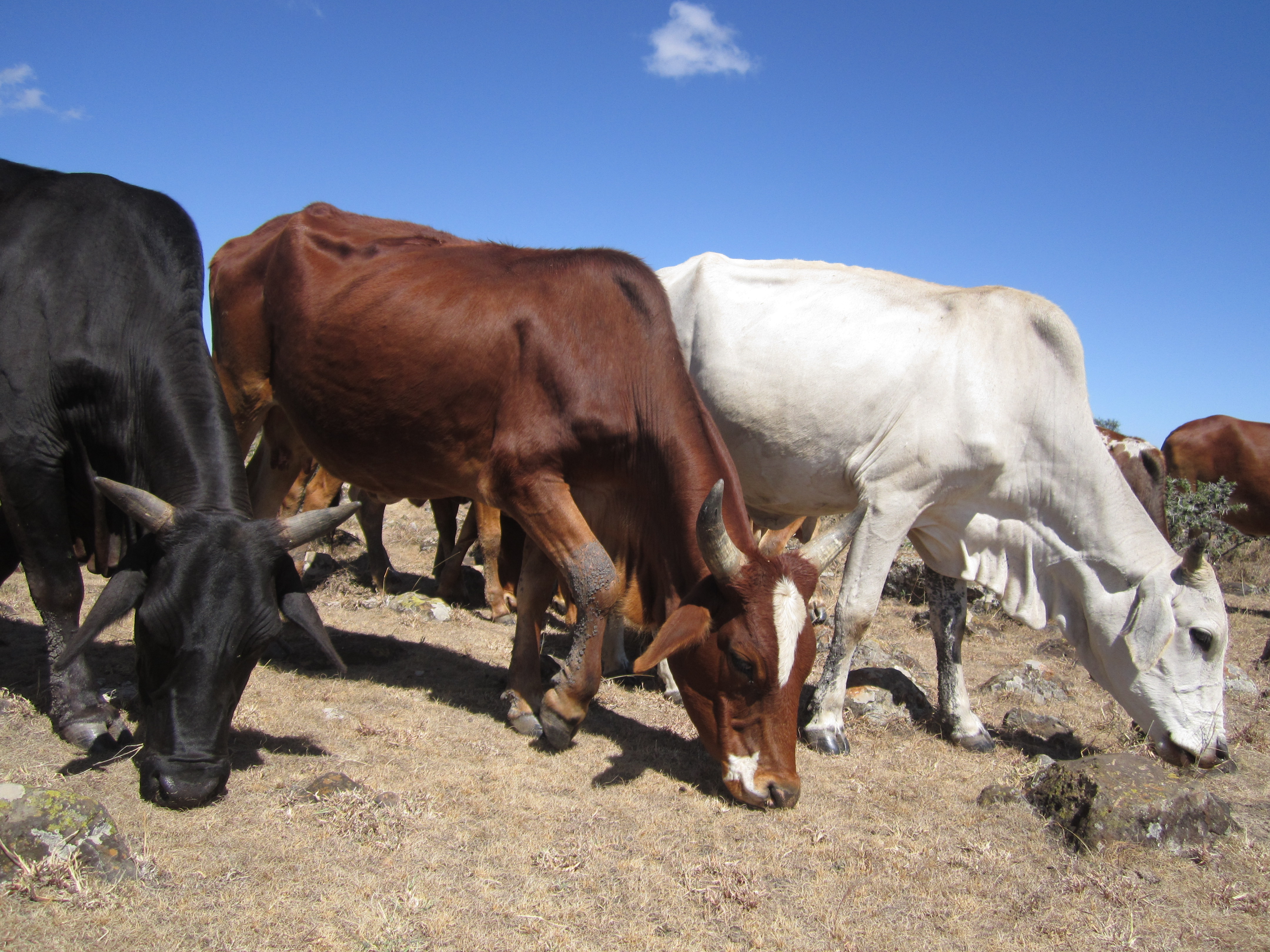
Still what it is all about? – Maasai cattle

Still what it is all about? – Maasai cattle


`We don’t have something like that here anymore´

He slants his head, looks at me and smiles. I don’t know what he is thinking. Is he reminiscing? Does he feel sorry to disappoint me? Or, is he amused by the naivety of the mzungu, the `white´? `We don´t have something like that here anymore´, he says after some time. I am sitting in the homestead of an old Maasai man, having a cup of tea with him. I am somewhere in the remote area of Kajiado County in southern Kenya at the very Continue reading

Food and the City: free online short course

Registrations are now open for the Universities West Midland online short
course: Food and the City.

The course will run for 6 weeks from 2nd June 2014 and is completely free.
The course consists of 12 lessons, with 2 released each week.

It is designed to take around 20 hours to complete and will comprise of a
mixture of written materials & videos along with other media and links to optional background reading.

There will be a light level of assessment throughout and opportunities to interact with the course tutors and other participants. The course has designed the materials to be suitable for participants from a range of backgrounds who are interested in urban food issues.The course has been developed by academic experts from West Midland universities though the Food-Smart City project.

For more information and to sign up please visit http://www.foodcitycourse.com

Research Dispatches: Karibu mzungu!

This post is the first of three reports  by RSO student Florian Neubauer about the MSc research he is conducting in Kenya. Florian has kindly agreed to blog about his research and to provide us with a review of :

  1.  First reflections on researching in Kenya and his host institution, Maasai Mara University.
  2.  Living among the Maasai with a focus on their culture and way of living.
  3.  Results of the thesis. 
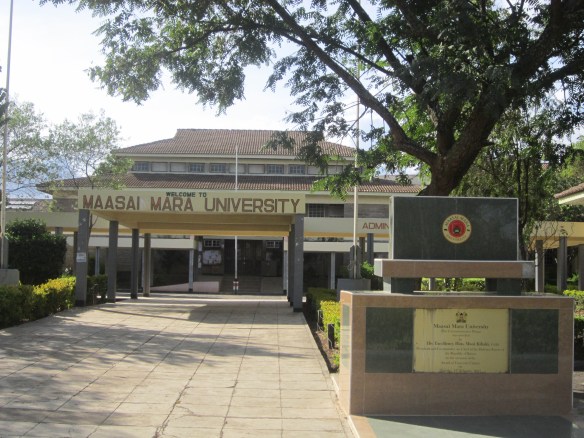
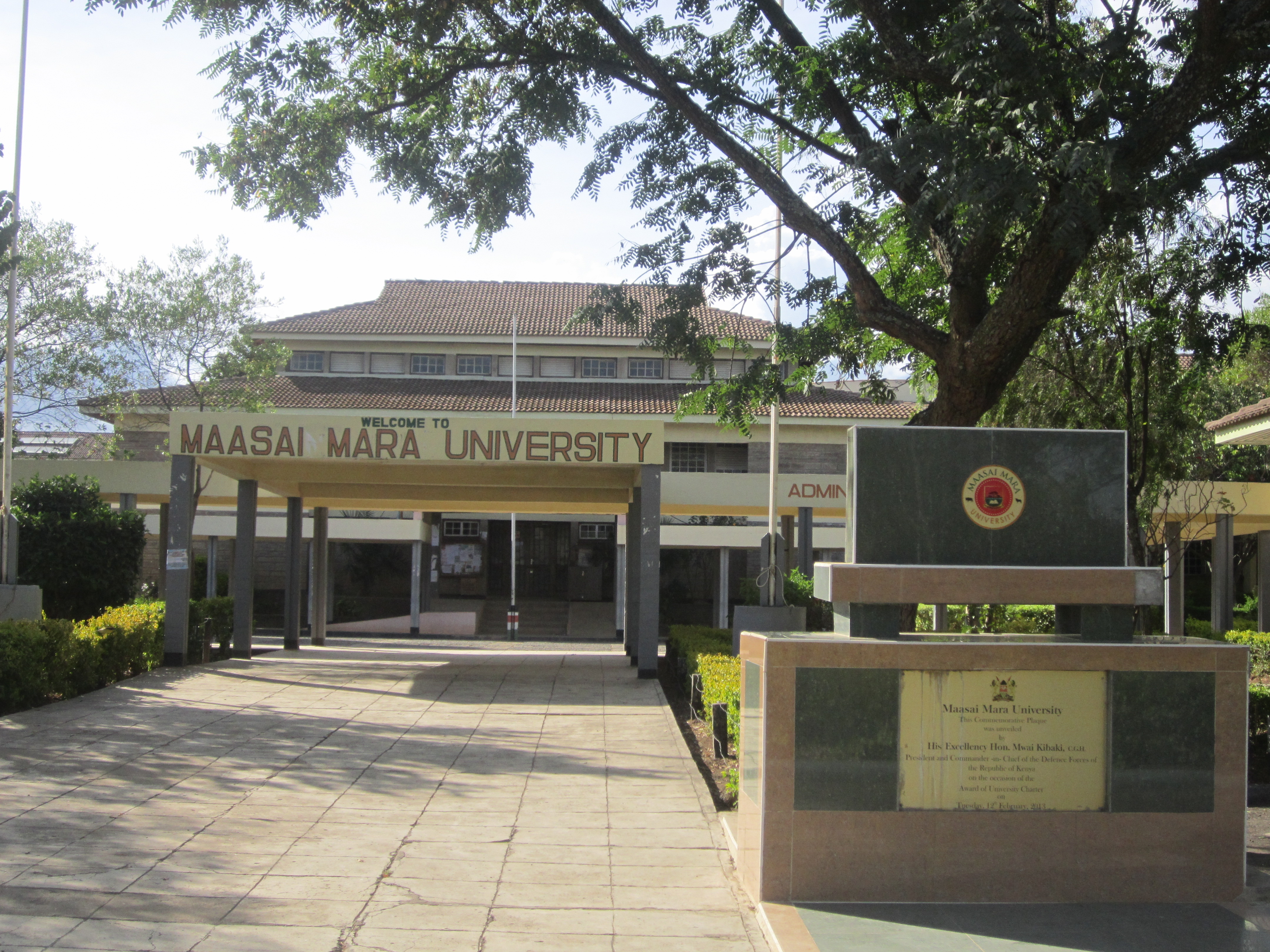
Main entrance of Maasai Mara University with the student library in the background.

Main entrance of Maasai Mara University with the student library in the background.

Part 1: Introduction and Maasai Mara University (MMU)

`Karibu´ and ´karibu mzungu` – `Welcome´ or `welcome white person´ – are probably two of the most frequent sentences, I have heard here, since I arrived in Kenya around three weeks ago. Here in the south of the country, I am conducting the field work for my master thesis with RSO group on Understanding changes in land tenure and livelihoods among the pastoral Maasai in southern Kenya.

Over the past decades, pastoral Maasai have been increasingly exposed to various pressures to their pastoral livelihoods such as demographic development, the spread of national and games parks or an increased privatization and commercialization of land. One of the biggest pressures and also the focus of my research are changes in land tenure, or more specifically, transformation processes from formerly communally owned land towards increasingly individualized and privatized land (ownerships) – a development thatroughly began during the 1970s and 1980s and continues since then. I am interested in investigating how this transformation in land tenure is shaping and impacting Maasai pastoral livelihoods and Maasai households on a local level, with a specific focus on implications and impacts on local food (in)security. I will explore the current situation at the local level, as well as retrospectively the past decision-making processes of households, in order to understand when, how and why a household decided for instance (not) to change, diversify or maintain a certain livelihood strategy.      Continue reading

(Un)accepted foods: Why are some edible substances considered food and others not?

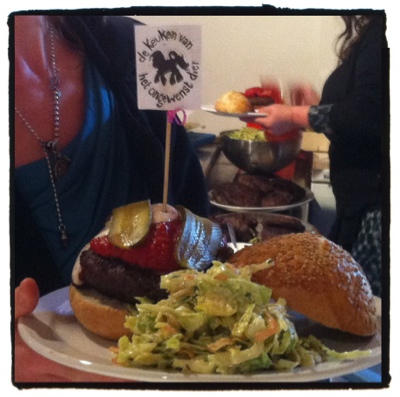
My Little Pony Burger

Last night Stichting Ruw hosted an event on “(Un)accepted Foods”.

The goal of the evening was to learn more about the potential of insects as food and about eating unconventional food products like horse and goose meat. 

There were excellent presentations.

Rob Hagenouw, an artist, spoke about his project Keuken van het Ongewenst Dier(Kitchen of the Unwanted Animal) where they make and sell  “My Little Pony Burgers” and croquettes from geese shot at the airport.

Arnold van Huis, author of ‘The Insect Cookbook’ and Professor of Entomology (see his TED talk here) gave a fascinating talk covering the opportunities and challenges association with the development of an insect eating culture in Europe.

Jessica Duncan, from the Rural Sociology Group, provided a socio-cultural perspective on food categorisation: why are some edible substances considered food and others not. The presentation is available here.