Request for a master student interested in product development and marketing for an organic farm and macro-distillery in Wales

Glynhynod is an organic farm where artisan cheeses are produced, situated in west-Wales and managed by a Dutch family. The firm is highly innovative, applying sustainability guidelines to all their activities and producing food of high quality; several cheeses have received prices on national and international level. The family is now developing the first organic Welsh whisky and an orange liqueur at their newly established organic micro-distillery. They are looking for a master student- preferably one in food technology- who will be able to do an internship and/or thesis inWales. The student should be interested in organic, artisan food production. The student will be during his/her intership:.

  1. actively involved in developing, testing and trying out new liqueur and spirit recipes using organic ingredients and trial batches of different orange liqueurs using different ingredients and different amounts of ingredients. The student will be required to accurately measure the amounts of ingredients e.g. total weight, of oranges, orange peel amounts of sugar etc; ‘age’ the different liqueurs for 3 different periods e.g. 40, day, 50 day and 60 day infusions. The same method will be used to develop various recipes for spirits e.g. sloe gin and seaweed gin.
  2. Doing research on marketing aspects to try out the new recipes such as implementing a sensory evaluation in a real life situation where the public will be asked to judge the product. The student will be expected to develop a statistical sensory evaluation method that will determine which liqueur the public prefers and this liqueur will then proceed to bulk production.

 His/her master thesis can be focused on of the following themes:

  1. Marketing and/or gastronomy: how to enhance the supply of local artisan products in this rural area;
  2. Consumer demands towards locally produced speciality products in west-Wales;
  3. Develop guidelines for food quality and taste of new alcoholic local products
  4. Research on food safety of organic artisan products

 The student will start around the beginning of April 2012 and stay on the farm for 3-4 months in the beautiful setting of the Teifi Valley in Llandysul near Carmarthen, not far from the sea in west-Wales. The research will be supervised by a staff member of the relevant chair group and co-supervised by Ina Horlings (Rural Sociology Group). If you are interested please apply or ask for more information by sending a mail to (lummina.horlings@wur.nl) before the end of February, 2012.

Participate in project Participand

Robin BukenyaWhat are the relationships between the ‘developing’ and ‘developed’ world? How does our perception of the difference shape this relationship? What can then be a basis for cooperation when diversity needs be cherished as a fundamental right to be different? What is then YOUR responsibility as global citizen in your own community? How then can we work together in our community as OUR responsibility to act together?
If you are interested in these questions, please join the meeting on the evening of December 15th!

What?
In collaboration with the Dutch NGOs OIKOS and COS Gelderland our researches feed into a larger project by the Wageningen University ‘Science Shop’ (which aims at giving science more practical relevance). We (Franziska Nath & Robin Bukenya) are part of a larger team conducting an ‘Action Research’ Master thesis project (linking theory to practise) attempting to ‘do’ research differently. The main objective is:
‘Mapping and strengthening of the network of development initiatives and its active and potential actors in the Wageningen region’
There is always room for increased collaboration among individuals, initiatives and fields of knowledge. This research project seeks to actively develop open creative inter-active spaces and sessions where links and balanced inter-action can occur between peoples sharing ideas (across perceptual boundaries) based on their inner motivations.

Who?
Anyone within the Wageningen region (incl. Ede, Rhenen, Bennekom, Doorwerth) whom seeks to be part of this research project to cooperate and complement their development initiatives or fields of knowledge.

How?
Rather than looking only at understanding how to solve problems, our focus is to build on your potential. Past struggles and obstacles have been overcome through the dreams and visions of those whom looked beyond their apparent limitations. So, why not build on what is and drives the vision of what could be, to achieve what may become!
Hope, joy and love are fundamental human emotions and energies of abundance from which creativity flows, overcoming the limits of obstacles. Creativity is the resource that will empower this research. This ‘opportunity’ and ‘dream’ driven research is to be positively steered by all whom are directly or indirectly involved into the research process. The theme is thus enhancing development cooperation in Wageningen. The outcome(s) or limits, YOU decide…

YOU?
We are looking for a varied mix of interested participants for this ‘research project’ whom are willing to venture with us on this endeavour to bring out that which is within us from the local to the global community.
Are you active, or seeking to be, in development cooperation as a professor, student, project manager, founder, researcher, organization, institution, etc. and interested to be part of a different ‘way of doing’ and basis for collaboration? Please email us at Participand.Now@gmail.com for information, ideas and ways of collaborating with this research project.

***First meeting***
On the evening of December 15th there will be an introductory workshop session, initiating the first exploratory phase of the research. It will be held at the Vredehorst, Tarthorst 1 in Wageningen (near the C1000). Note! It will start at 17.30 with a tapas dinner! Places are limited so please sign up as soon as possible (Before Monday 12th December) with your:
• Name
• Age
• Gender
• Nationality(s)
• Name of initiative(s)/organization(s)/institution(s)/company in which you are currently active
• Your position or role in initiative(s)/organization(s)/institution(s)/company
• Your future desired role and dream for development cooperation (be creative!)
• Dietry needs

Questions, comments and ideas? Login to our Facebook site ‘Participand Now’. Send your details to: Participand.Now@gmail.com. You can also show your appreciation of the Platform: http://www.facebook.com/platform
Sign up fast as space for the workshop sessions is. Nonetheless, there will be opportunities for other ways to engage with the research project.

We hope to hear from you soon!

Franziska Nath and Robin Bukenya

Human Values and Place-based Development – WASS seminar by dr Marilyn Hamilton

WASS Seminar Human Values and Place-based Development by dr Marilyn Hamilton: Tuesday August 30th, 13.30-15.30, Venue: Room C75, Leeuwenborch

How can human values be the starting point for community and regional development? How can capacities be built, leadership developed and community learning in multi-cultural places be enhanced? How can we create an integral framework for place-making and place-caring?

This seminar is a unique opportunity to hear about Dr. Hamilton’s work in cities and eco-regions and how she sees that sustainability for both are interlinked as a complex adaptive system. Marilyn Hamilton ‘meshworks’ or weaves people, purpose, priorities, profits, programs and processes to develop strategies for resilience. She facilitates sustainable development programs, develops practical tools and supports multi-stakeholder groups in transforming cities and eco-regions into a glocally resilient ‘meshwork’. She states that we need to balance subjective/ intersubjective capacities of people (‘the inner dimensions’) with objective/interobjective capacities (‘the outer dimensions’).

An example is Abbotsford, which had been headlined by the media as the ‘murder capital of Canada’. Here the youth perceived that community didn’t value them as a resource for community. Community workers wanted Abbotsford’s food-based agricultural sector to “cook up cultural harmony” by renewing opportunities for the youth linked to the food chain. The research project used an integral framework and meta-mapping (based on the theory of ‘spiral dynamics integral’) to identify differences and opportunities for the city and develop a monitor (the vital signs monitor) for strategic planning.

Dr. Marilyn Hamilton is Professor of Sustainable Community Development and Leadership Studies at Royal Roads University in Canada. She is a leader, coach, teacher, researcher and Founder of “Integral City Meshworks Inc” http://www.integralcity.com/, and Jury Member of Globe Sustainable City Awards. She wrote the book, “Integral City: Evolutionary Intelligences for the Human Hive”.

More information: Ina Horlings, Rural Sociology Group (lummina.horlings@wur.nl) or Anouk Brack, Education and Competence Studies (anouk.brack@wur.nl).

Moonlight farmers and Lump suckers; The ICRPS Summer School in Norway

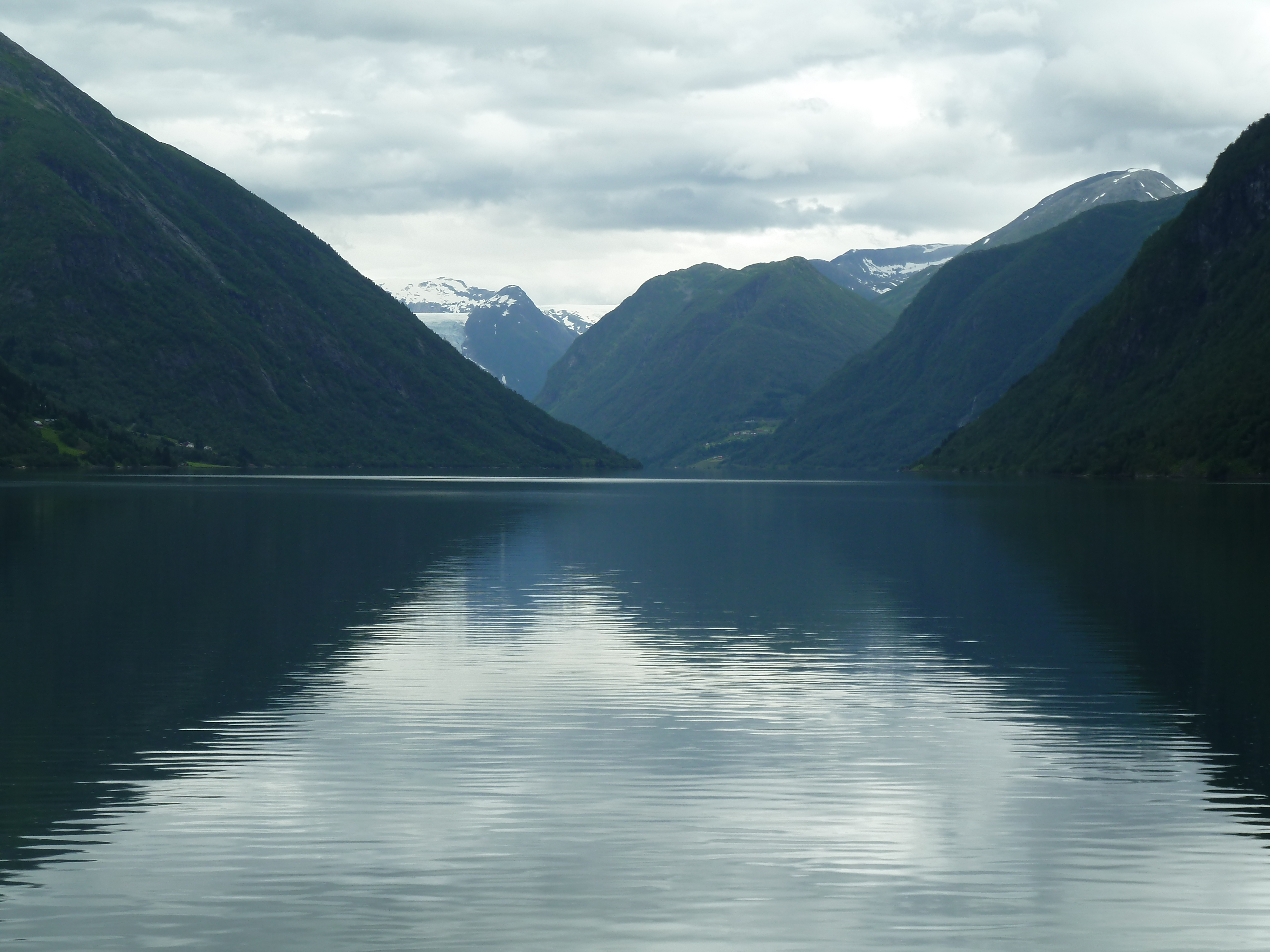
This Summer School about policies for rural development took place from June 25th to July 9th 2011 on 2 locations in Norway, in Oslo and in Sogndal. The course involved a variety of lectures, discussions and group word on issues such as natural resources, community development, rural services, renewable energy, food & agriculture, policy and climate change. The diverse group of students (some of them already working in rural development), faculty members and two OECD researchers included mainly people from Europe and the US (especially Canada) and discussed not only rural development in Norway, but compared this with interesting cases in their own countries. I only attended the second week in Sogndal, a town located between Bergen, Oslo and Trondheim, at one of the most beautiful fjords in Norway. Sogndal is located near the largest glacier in Europe.
Moonlight farmers refers to the agricultural situation in Norway: only 3% of the land is used as arable land, the average size of a farm is small and many landowners have a job which they attend in the daytime, while doing farm work during ‘moonlight’ (in fact in summer the daylight lasts very long in Norway).
Lump suckers refers to innovation in aquaculture in the Norwegian fisheries. Norway is a large exporter of fish, especially salmon. In aquaculture farms salmon is produced under controlled conditions. One of the biggest problems is lice-infection on salmon. An ex-professor which runs a research station and aquaculture farm in Sogndal is developing some important innovations: he grows a special type of fish, called lump suckers, which suck the lice of the salmon. He also experiments with improving the immune system of salmon.

More information can be found on the ICRPS website: http://www.umb.no/icrps2011. The papers and presentations are on the X-drive of the Rural Sociology Group. For a report with some impressions of the lectures or other information you can  mail to lummina.horlings@wur.nl . There is also a special Linked in group: International Comparative Rural Policy Studies Consortium.

Continue reading

Summer School ICRPS 2011 in Norway: about the group project

From: Meng, Xiangdan (xiangdan.meng@wur.nl). 

From June 25 to July 10, 2011, I attended the ICRPS (international comparative rural policy studies) Summer Institute in Norway. It is a good chance to know more things about OECD countries, especially rural policies from the comparative perspective.
The summer institute covered some general themes, such as making policies for sustainability, sustainable rural communities and research and analysis methods. We also discussed some Nordic topics about Nordic rural, regional and districts policy, farming and forestry, nature based tourism, renewable energy, and ecological approaches to sustainable development.
These lectures and discussion helped me understand the general situation and also helped me consider some similar issues in my own country, China. However, the most impressive part for me is the project work, which is an effective way to use what you learn. In this summer institute, all the students and professors were divided into 7 groups, which cover seven topics in Sogn og Fjordane in Norway. The seven topics are social structure and change, government and governance, tourism (based on nature and culture), renewable energy and local development, mitigation of climate emissions and new policy initiatives, new direction for farming and food in a challenging environment, and information and communications.
To understand these basic issues is basic thing, but how to use the comparative cases you know or examples from your own country to apply some ideas to Sogn og Fjordane in Norway is more important in my opinion. For example, there were four students (two from America and one from Norway) and four faculty (two from America and two from Canada) in my group, the “social structure and change group”. Based on some demography and policy review, we decided to focus on how to absorb the youth, high-educated women and immigrants to Sogn og Fjordane. The students played the main role of discussion and writing the chapter under the supervision of the faculty. Later, the chapters we wrote can be published as a book. It is really a good way to understand the policies and situation there and also a nice brainstorming method to consider things comparatively.
In addition, you can use the spare time to discuss you own topic with the faculty. Although not always helpful, it is nice to know and keep contact with more academic people by using this network. Many professors told me Wageningen Universiy is a very important university for ICRPS, they really hope more faculty and students from Wageningen could attend the next ICRPS. If you want to know more things about the ICRPS 2011, please see this website: http://www.umb.no/icrps2011/. The next ICRPS 2012 will be in Canada.