Course Global Sense of Place starting on October 29th!

For whom?

We invite all master students interested in sustainable development, spatial development, community building, place-based policy, rural socio-logy and anthropology for this course.

What?

This course gives an overview of place-based approaches in development. A relational place-based approach is key to the understanding of interrelated rural and urban transformation processes and sustainable development. Places are considered as contingent but in time and space differentiated outcomes of three interrelated, unbounded, transformative processes: political-economic, ecological and social-cultural.
We will have discussions about:

  • Sense of place
  • Places as sites of negotiation and power struggles
  • The constitution of identities, subjectivities and difference.
  • Politics of place.

Why should you follow this course?

  • Interesting international guest lectures (if enough students attend the course)
  • Inter-disciplinary approach
  • Urban and rural cases
  • Interactive discussions in small groups

Some practical information:

Course code: RSO 55306;   ECTS: 6,  When: Period 2;

Lectures and Workhops on: Monday-, Tuesday-, Thursday- mornings.

Interested? For more information on the course see the online study handbook or send  an email to L.G. Horlings: lummina.horlings@wur.nl. A detailed Course outline will be available soon.

Student(en) gevraagd voor Wetenschapswinkel project zelforganisatie in Kloosterburen

Stichting SintJan is een bijzonder particulier initiatief uit Kloosterburen, gemeente De Marne, in de provincie Groningen. Kloosterburen ligt in Noord-Groningen, in de gemeente De Marne – een krimpgemeente bij uitstek. Burgers zijn hier met kennis, inzicht en een grote maatschappelijke betrokkenheid bezig hun eigen leefomgeving vorm te geven.
De initiatiefnemers van SintJan willen de leefbaarheid en vitaliteit van het dorp versterken. Wat SintJan vernieuwend maakt, is de integrale benadering die aan het plan ten grondslag ligt: de initiatiefnemers willen wonen, werken, zorg en cultuur zodanig in Kloosterburen borgen dat de leefbaarheid en vitaliteit van het dorp versterkt worden.
De inwoners van Kloosterburen worden door SintJan actief betrokken bij het ontwikkelen van de plannen, zodat zij zich hierin herkennen. Op termijn wil de stichting de inwoners ook een duurzame rol geven in het uitvoeren van de plannen. Met het opzetten van een dorpscoöperatie hoopt de stichting de inzet van de inwoners permanent te organiseren/af te stemmen en ook op de langere termijn te garanderen.
Wat de ontwikkeling van het burgerinitiatief van Sint Jan in de weg staat is het realiseren van voldoende betrokkenheid en draagvlak bij de inwoners van het eigen dorp. Er blijkt een zekere afstand te bestaan tussen de initiatiefnemers van het burgerinitiatief en (een deel van) de inwoners uit het dorp.
De opdrachtgevers zijn: Stichting SintJan Kloosterburen, Wetenschapswinkel Wageningen UR en de Provincie Groningen. De stichting wil weten hoe inwoners duurzaam betrokken kunnen worden bij het uitvoeren van de plannen.

Het onderzoek richt zich daarom op de volgende vraagstelling:
Hoe kan voor voldoende draagvlak en eigenaarschap voor het plan gezorgd worden bij de inwoners van Kloosterburen zodat het initiatief een duurzaam karakter krijgt?

Vragen die daarbij aan de orde komen zijn:
– Wat zijn factoren die draagvlak en betrokkenheid in de weg staan?
– Hoe zorg je als organisatie voor voldoende massa om echt iets te kunnen doen?
– Wat is de juiste organisatie- en financieringsvorm om het plan verder te ontwikkelen?
– Hoe is men bij vergelijkbare initiatieven tot een bepaalde organisatievorm gekomen?

Naast het ontwikkelen van een heldere kijk op sleutelfactoren rondom draagvlak en eigenaarschap is het ook van belang om dit te vertalen naar een strategisch handelingsperspectief voor het burgerinitiatief van SintJan en om dit te kunnen plaatsen in een breder, theoretisch perspectief wat ook van meerwaarde kan zijn voor de ontwikkeling van andere (vergelijkbare) burgerinitiatieven.
De voorkeur gaat uit naar een student met een achtergrond op het gebied van sociologie, communicatie of landgebruiksplanning. Het is belangrijk dat je zelfstandig kunt werken en een proactieve houding hebt.
Contactpersonen:
Bas Breman – Alterra Wageningen UR – 0317-481636
Albert Aalvanger – Wageningen University, leerstoelgroep Landgebruiksplanning – 0317 – 482210.
Ina Horlings – Rural Sociology Group – lummina.horlings@wur.nl; Tel: 0031 317 485969. Mobiel: 0031 6 51126725

Invitation for the next Participand meeting on cooperation in international sustainable development

Participand, Business Café Wageningen, COS Gelderland/MVO Loont and Oikos introduce an International Business Cafe on Thursday, 21st of June in the afternoon.

Program:
16:00 Welcome by MVO loont and Participand. Participand is a new network in the region Food Valley of companies, organizations and (inter)national students internationally active in the field of sustainability.

16:10 Lecture on subsidies for International Entrepreneurship (Private Sector Investment Programme PSI, http://www.agentschapnl.nl/programmas-regelingen/private-sector-investeringsprogramma-psi) by drs. Bas van Engelen, Hezelburcht (www.hezelburcht.nl)

16:45 Short interviews by Qader Shafiq, COS Gelderland with international entrepreneurs, among which Ir. Samson J. Nibi, ‘Samson & Open Source Housing in Ghana’

17:00 Network borrel

Location: Hof van Wageningen, Lawickse Allee 9, Wageningen
Registration: www.start-life.nl/businesscafe

Thesis assignment commissioned by Foundation Social Workplace Saba (FSWS) on Food Sovereignty in Saba

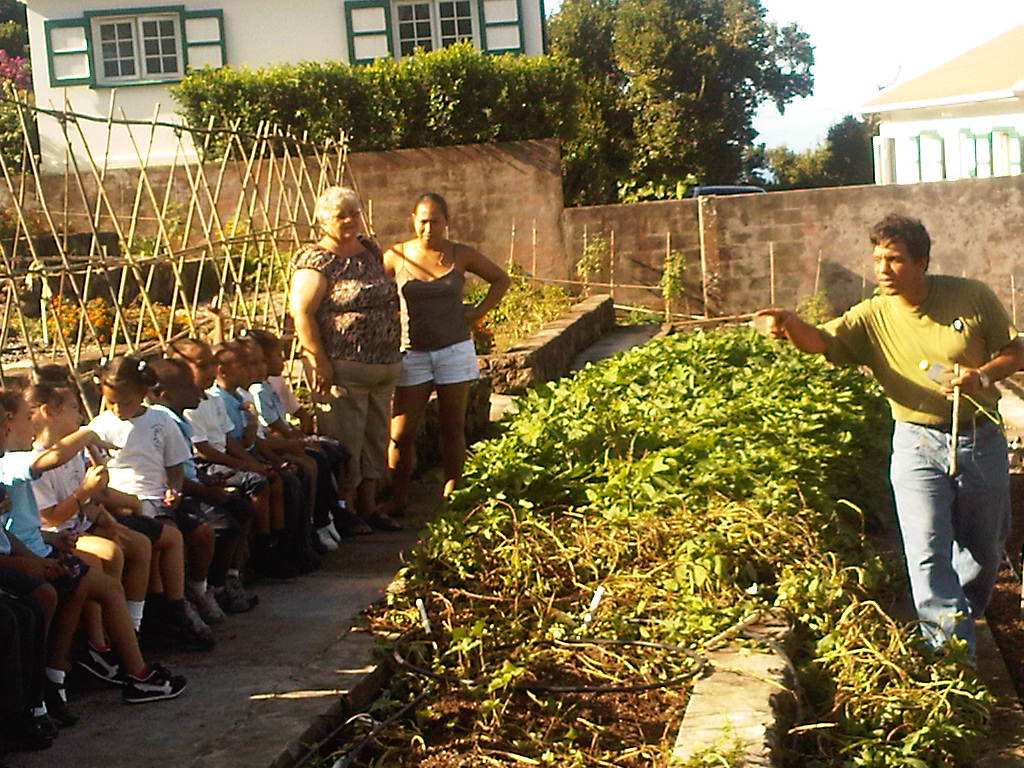
The assignment is a participatory scenario development on the different possibilities to achieve a local food supply at Saba. Saba is a Caribbean island and the smallest special municipality of the Netherlands. At the moment most food is imported which makes food expensive for the inhabitants of Saba. At the same time agriculture fields aren’t being fully used. The assignment is to develop different scenarios for a local food market. Optional is a thesis assignment including an internship.
Wageningen UR Science Shop accepted the assignment of FSWS. The research will make you familiar with ‘Participatory Scenario Development’ and is a chance to achieve work experience in the field of the Science Shop and Regional Food Supply. The research will start in September.
Are you interested? Please contact project leader Margriet Goris (cocreation@live.nl or 06-28109539).

Request for a master student in the ‘Reestdal’ (Drenthe)- new call

The PeerGrouP is a location-art group that specializes in site-specific theatre and visual arts in the northern provinces of the Netherlands. The PeerGrouP consists of a lively mix of theatre makers and artists who are inspired by the landscape, the location and the local inhabitants. The quality of food, ecology, practical knowledge of the landscape, community spirit and the supply of energy are recurring themes within the PeerGrouP’s projects.

The PeerGroup is looking for artists and researchers willing to participate in their P.A.I.R. (Portable Artist in Residence) project. The P.A.I.R.-project promotes artistic social commitment while focusing attention on man and his surroundings. This year the P.A.I.R. theme is Landscape Population: the landscape and its meanings in relation to the inhabitants and other users will be looked at on different levels. The P.A.I.R. will be visiting the Wolden in the ‘Reestdal’, near the village De Wijk, in the north of the Netherlands (Drenthe) from the second half of September till the end of October to meet local inhabitants and to investigate their surroundings. On 13th of September also an art-route initiated by inhabitants will be opened in this area.

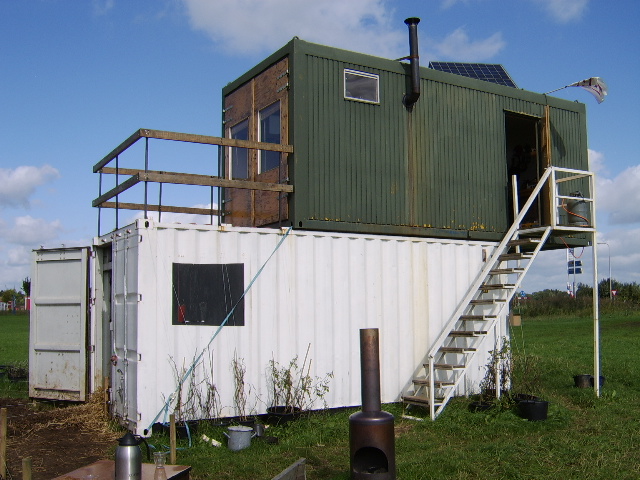
The Rural Sociology Group and the Peer Group are looking for a master student interested in landscape, place, values and population, who is enthusiastic to do his/her internship or thesis in this site-specific project, starting preferably around July-September. The student-researcher will actually stay in the P.A.I.R. (see photo) in September in the ‘Reestdal’ and participate with inhabitants. The P.A.I.R. will then partly be a ‘Reestdal-library’ and partly accomodation for the student-researcher. Preliminary research questions are:
– What is ‘sense of place’ for the local population in the Wolden?
– Which meanings to people give to the landscape? What do people appreciate? What are important cultural markers in the landscape?
– Do inhabitants experience local identities? Which stories can be told related to the landscape?
– How are meanings, identities and sense of place linked to underlying values of people?
– How can meanings identities and sense of place be translated to recommendations for practice and policy? (people’s participation, community cohesion, networks)
Methods that can be used are e.g. social (deep) mapping, visualization methods, appreciative inquiry, integral theory. The student researcher will carry out ‘on-site’ participatory research on the sense of place and values of the local population in this area. The research will be supervised by the RSO group (Ina Horlings) and the Peer Group (Henry Alles). If you are interested, please send a mail as soon as possible to Ina Horlings (lummina.horlings@wur.nl).